 Preview
 Send
Send Share
Share
 Details

 Download
 Similars
 X-Ray
X-Ray Diaporama
Glass

 Read More
Giclée / Art Print
Museum-quality giclée or canvas print with fast production and flexible finish options. ( Buy Hand Made Painting Buy Image)




































Pick from our preset sizes that match the artwork's original proportions.

You may enter your own dimensions to fit a specific frame or space. If your selected size does not match the original image's proportions, we will either crop the artwork or extend the image with a mirrored or solid-fill edge. A digital mockup will be sent for your approval before production begins.
Please note that the on-screen preview does not reflect the actual cropping or extension. Only the mockup will accurately show the final composition.
While custom sizes are available, we recommend selecting a dimension from the predefined list to preserve the original proportions.
Worldwide Delivery () in 2 weeks instead of standard 4/5 weeks. (27 August)

Free Worldwide Express Shipping

High-Quality Linen Canvas

Full Shipping Insurance

Customs Tax Refund Guarantee

True Color Matching Guarantee

60-Day Return Policy (Defects Only)

100% Money-Back Guarantee

Bulk Discount Offer
 Glass option is only available in size under 110 CM

Glass
Giclée / Art Print
Reproduction Size
-


Total Price
$ 63
Related Artworks






Artist Biography
The Enduring Legacy of Marinha Grande Glassmaking
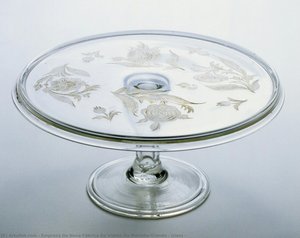
The story of glass in Portugal is inextricably linked to the town of Marinha Grande, and within that narrative, the name of António Augusto Dias de Freitas, Conde de Azarujinha, stands as a pivotal figure. While not an artist in the traditional sense of brushstrokes and canvas, his vision and entrepreneurial spirit birthed Empresa da Nova Fábrica de Vidros da Marinha Grande, established in 1894, which fundamentally shaped the region’s identity and propelled Portuguese glassmaking onto the European stage. To understand the significance of this factory is to delve into a history of innovation, craftsmanship, and a unique blend of industrial ambition with artistic potential.
A Foundation Built on Vision
Prior to 1894, glass production in Marinha Grande was characterized by smaller, often family-run workshops. António Augusto Dias de Freitas recognized the untapped potential for large-scale manufacturing and sought to modernize the industry. He wasn’t merely interested in producing functional glassware; he envisioned a factory capable of rivaling those across Europe in both quality and design. The establishment of Empresa da Nova Fábrica de Vidros da Marinha Grande was therefore not simply an economic venture, but a deliberate attempt to elevate Portuguese craftsmanship and compete on an international level. The initial investment came from Freitas himself alongside other forward-thinking investors who shared his belief in the region’s resources – particularly its abundant pine forests crucial for fueling the glass furnaces – and the skill of its artisans.
From Industrial Hub to Artistic Expression
The factory quickly became a significant economic force, employing a substantial portion of the local population. It wasn’t long before Empresa da Nova Fábrica de Vidros da Marinha Grande began producing a wide range of glassware, from everyday items like bottles and jars to more decorative pieces. While early production focused on practicality, a growing emphasis was placed on artistry. The factory attracted skilled glassblowers and designers who introduced new techniques and styles, drawing inspiration from the prevailing Art Nouveau movement sweeping across Europe. This period saw an increase in ornate designs, intricate patterns, and a focus on color and texture.
Evolution and Transformation: IVIMA and Beyond
The mid-20th century brought significant changes to the factory’s trajectory. In 1955, Empresa da Nova Fábrica de Vidros da Marinha Grande was acquired by Vista Alegre, another prominent Portuguese ceramics and glass manufacturer. This acquisition led to the creation of IVIMA (Indústrias Vidreiras da Marinha Grande), a new entity that consolidated the strengths of both companies. While this marked a shift in ownership, it also allowed for further investment in technology and design. IVIMA continued to produce high-quality glassware, building upon the legacy established by Freitas’s original factory.
Preserving a Heritage: The Glass Museum
Despite eventual closure of the factory itself, its story is far from over. Recognizing the importance of preserving this unique industrial and artistic heritage, the Glass Museum of Marinha Grande was founded in 1998 on the site of the original factory. The museum showcases the evolution of glassmaking in the region, highlighting the contributions of Guilherme Stephens – a key figure predating Freitas but integral to the town’s glass history – and the impact of Empresa da Nova Fábrica de Vidros da Marinha Grande. Today, it stands as a testament to the enduring power of vision, craftsmanship, and the transformative potential of industry. The museum not only displays exquisite examples of Portuguese glassware but also offers insights into the social and economic context that shaped this remarkable story, ensuring that the legacy of Marinha Grande glassmaking continues to inspire future generations.
empresa da nova fábrica de vidros da marinha grande
1894 - , Portugal
Quick Facts
- Artistic Movement Or Style: Glass Art
- Current Status: Legacy studio & museum
- Date Of Birth: 1894
- Full Name: Empresa Da Nova Fábrica De Vidros Da Marinha Grande
- Nationality: Portuguese
- Notable Artworks: ['Glassware']
- Place Of Birth: Marinha Grande, Portugal