 Preview
 Send
Send Share
Share
 Details

 Download
 Similars
 X-Ray
X-Ray Diaporama
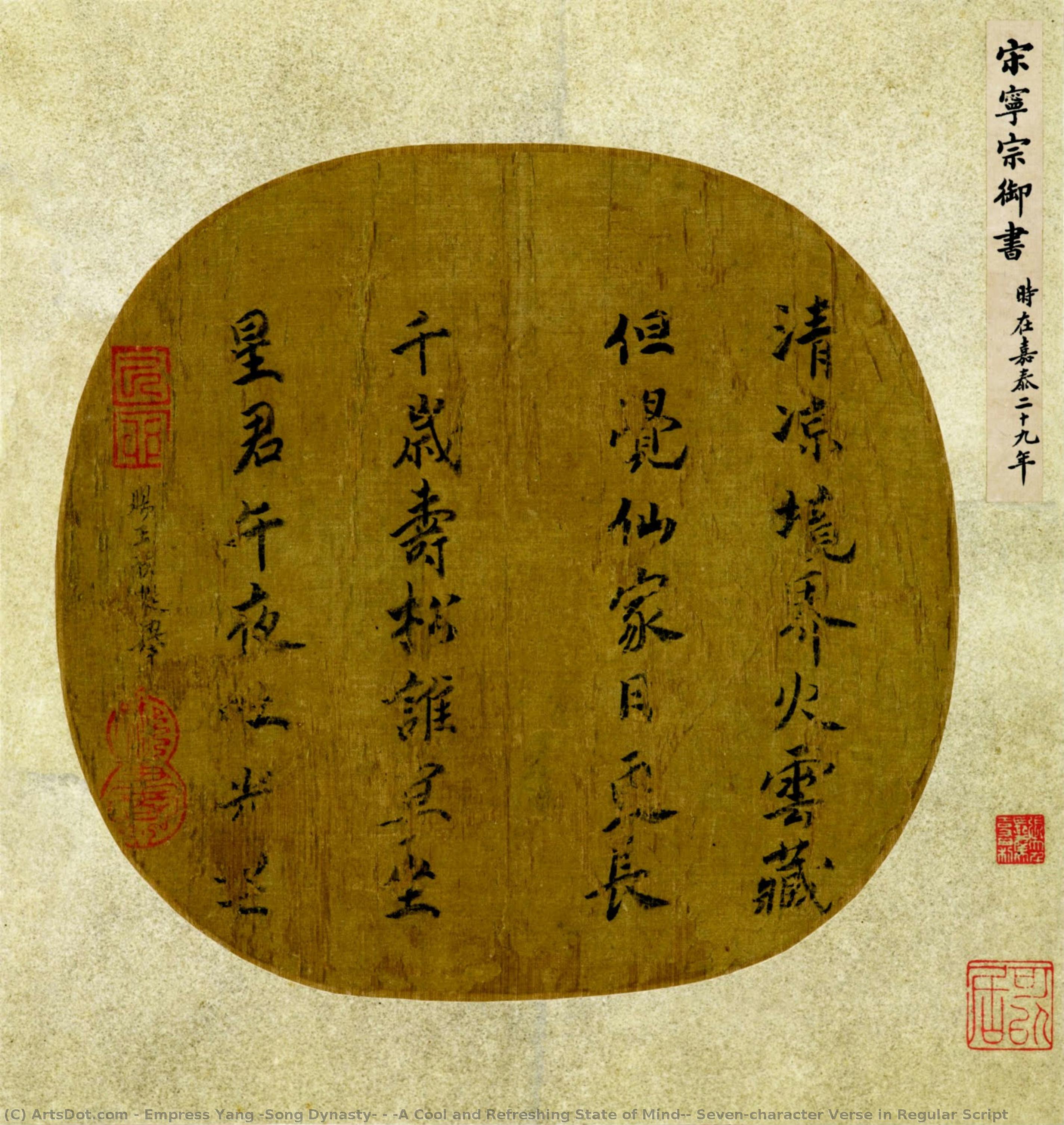
“A Cool and Refreshing State of Mind”, Seven-character Verse in Regular Script


 Read More
Giclée / Art Print
Museum-quality giclée or canvas print with fast production and flexible finish options. ( Buy Hand Made Painting Buy Image)




P118B $10

P118H $10

P118W $10

P438Z $10

P508JH $12

P508YH $12

P805H $10

P805Z $10

P919BZ $10

P919G $10

P919XJ $10

P959ZH $10

P968JZ $12

W106C $8

W218G $10

W218JH $8

W218Y $10

W307PJ $10

W316G $10

W316PJ $8

W316Y $10

W398PJ $8

W4111J $10

W500HY $15

W500JH $15

W692G $12

W849H $8

W940BG $15

W953PJ $8




Pick from our preset sizes that match the artwork's original proportions.

You may enter your own dimensions to fit a specific frame or space. If your selected size does not match the original image's proportions, we will either crop the artwork or extend the image with a mirrored or solid-fill edge. A digital mockup will be sent for your approval before production begins.
Please note that the on-screen preview does not reflect the actual cropping or extension. Only the mockup will accurately show the final composition.
While custom sizes are available, we recommend selecting a dimension from the predefined list to preserve the original proportions.
Worldwide Delivery () in 2 weeks instead of standard 4/5 weeks. (23 August)

Free Worldwide Express Shipping

High-Quality Linen Canvas

Full Shipping Insurance

Customs Tax Refund Guarantee

True Color Matching Guarantee

60-Day Return Policy (Defects Only)

100% Money-Back Guarantee

Bulk Discount Offer
 Glass option is only available in size under 110 CM

“A Cool and Refreshing State of Mind”, Seven-character Verse in Regular Script
Giclée / Art Print
Reproduction Size
-


Total Price
$ 63
Collectible Description
The Poetic Resonance of Calligraphy
In the delicate dance between ink and void, “A Cool and Refreshing State of Mind”, Seven-character Verse in Regular Script emerges as a profound meditation on tranquility and spiritual clarity. This exquisite piece, attributed to the legendary Empress Yang, transcends the boundaries of mere writing to become a visual symphony of rhythm and restraint. At first glance, the viewer is drawn into the warmth of the circular composition, which glows with a soft, yellowish tint reminiscent of aged silk or sun-drenched parchment. This circular form, often symbolizing heaven or the cyclical nature of existence in traditional Chinese philosophy, serves as a sacred vessel for the characters contained within. The artwork does not merely present text; it invites the observer into a meditative state, where the structured elegance of the regular script mirrors the disciplined yet fluid movement of a peaceful mind.
The technique employed in this masterpiece reflects the rigorous mastery of the Song Dynasty tradition. Each stroke of the brush is a testament to the artist's control, balancing the weight of the ink with the breath of the paper. The Regular Script (Kaishu) used here is characterized by its clarity and architectural stability, yet within these disciplined lines, one can sense an underlying vitality—a pulse of life that prevents the work from feeling static. The way the characters are arranged in an organized, rhythmic manner creates a visual cadence that guides the eye in a continuous loop around the circular frame. For the discerning collector or interior designer, this piece offers a sophisticated focal point that brings a sense of historical weight and scholarly grace to any contemporary space.
Beyond its formal beauty, the artwork carries a deep emotional and historical resonance. Drawing from the complex legacy of Empress Yang—a figure whose life was defined by both political intrigue and artistic brilliance—the verse serves as an anchor of serenity amidst the chaos of history. The title itself suggests a sanctuary for the soul, offering a "cool and refreshing" respite from the heat of worldly ambitions. To possess a reproduction of this work is to invite this sense of equilibrium into one's environment. It acts as a silent interlocutor in a room, sparking conversations about Eastern philosophy, the beauty of minimalism, and the enduring power of the written word. Whether placed in a quiet study or a grand living hall, the piece radiates an aura of timelessness, making it an invaluable acquisition for those who seek art that nourishes the spirit as much as it adorns the eye.
Related Artworks
Artist Biography
Empress Yang (Song Dynasty): A Legacy Forged in Art and Intrigue
Born Anshan, China, in 1986, Empress Yang – also known as Yang Meizi – is a figure whose life transcended the conventional roles of courtly woman. More than just an actress and comedian, she became a pivotal force in the politics of the Southern Song Dynasty, wielding influence through her sharp intellect, strategic maneuvering, and ultimately, a remarkable ability to shape history. Her story isn’t one of gentle grace alone; it's a compelling narrative of ambition, resilience, and a profound understanding of power – all expressed through the evocative lens of Chinese art and calligraphy.
Yang’s early life was marked by an unexpected path to prominence. Rather than a noble lineage, she emerged from humble beginnings as the daughter of Zhang Shansheng, a talented courtesan employed in the service of Empress Dowager Wu. Recognizing her daughter's exceptional musical talent – particularly on the pipa (a Chinese lute) – Zhang Shansheng orchestrated Yang’s entry into the imperial court, transforming her into a celebrated performer and establishing a foundation for her future political ascent. This early exposure to the intricacies of palace life, coupled with her innate intelligence, would prove crucial in shaping her later actions.
The Rise to Power: A Calculated Ascent
Yang’s journey from entertainer to imperial consort was anything but straightforward. She initially served as a lady-in-waiting for Emperor Ningzong, skillfully navigating the complex social dynamics of the court. However, it was her strategic brilliance that truly set her apart. Recognizing the vulnerability of the existing power structures – particularly after the death of Empress Han – she masterfully orchestrated a series of events to secure her position as the favored consort. Legend recounts a cunning maneuver involving a staged dinner party, where she subtly manipulated the Emperor’s judgment and outmaneuvered her rivals, including the influential Grand Empress Dowager Wu. This calculated move culminated in her elevation to the title of guifei (贵妃), the highest honor a secondary wife could attain.
Crucially, Yang understood that mere beauty and charm were insufficient for maintaining power. She actively cultivated relationships with key figures within the court, including the ambitious official Han Tuozhou, who became instrumental in consolidating her influence. Her claim to a distinguished military family – a fabrication designed to bolster her legitimacy – further solidified her position, allowing her to bypass traditional barriers to advancement and ultimately challenge established hierarchies.
Artistic Expression: Verse, Calligraphy, and the Pursuit of Beauty
While renowned for her political acumen, Empress Yang was also a skilled artist, particularly in calligraphy and verse. Her work reflects a sophisticated understanding of aesthetics and a deep appreciation for nature – themes frequently explored in Song Dynasty art. One of her most celebrated pieces is “A Cool and Refreshing State of Mind” (Yù shěng zhì jì), a seven-character verse rendered in regular script, which captures the essence of tranquility and contemplation. This piece, now available as a hand-painted reproduction on ArtsDot.com, exemplifies her artistic sensibilities – a blend of elegant simplicity and profound meaning.
Furthermore, she is associated with a beautiful quatrain on yellow roses, painted by Ma Yuan during the reign of Emperor Ningzong. This work, now housed at The Metropolitan Museum of Art, offers insight into her appreciation for floral beauty and her connection to the artistic circles within the court. The inscription accompanying the painting reveals Yang’s own hand, demonstrating her active participation in the cultural life of the empire.
A Complex Legacy: Power, Intrigue, and Enduring Influence
Empress Yang's reign as a de facto ruler of the Southern Song Dynasty was marked by both prosperity and political instability. Her influence extended far beyond the palace walls, shaping policy decisions and impacting the lives of countless people. She skillfully navigated treacherous alliances, suppressed dissent, and maintained a carefully constructed image of virtue – a testament to her diplomatic skills and strategic thinking.
Recent historical research has shed new light on Yang’s life, revealing a more nuanced portrait than previously imagined. The discovery that she was, in fact, the same person as Yang Meizi—a talented musician who had been mistakenly identified for centuries—has fundamentally altered our understanding of her story. This revelation highlights the complexities of historical narratives and challenges traditional interpretations based on limited evidence.
Empress Yang’s legacy continues to resonate today, serving as a reminder of the remarkable women who shaped Chinese history – not just through their beauty or grace, but through their intelligence, ambition, and unwavering determination. Her story, vividly brought to life in hand-painted reproductions available on ArtsDot.com, offers a captivating glimpse into a fascinating era of political intrigue and artistic expression.
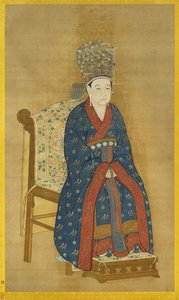
empress yang (song dynasty)
1986 - , China
Quick Facts
- Artistic Movement Or Style: Calligraphy, Verse painting
- Artists Or Movements Influenced By This Artist: ['Song Dynasty Art']
- Artists Who Influenced This Artist:
- Feng Gong
- Jia Ling
- Date Of Birth: June 30, 1162
- Date Of Death: January 18, 1233
- Full Name: Empress Yang (Song Dynasty)
- Nationality: Chinese
- Notable Artworks: ['A Cool and Refreshing State of Mind']
- Place Of Birth: Anshan, China
Related Articles
The Tactile Canvas: Exploring Texture as Subject, Materiality & Meaning in Art History
Explore the rich history of texture in art! Discover how artists from Van Gogh to contemporary masters use materiality & technique to create captivating tactile experiences. Deepen your art appreciation with ArtsDot.
F.A.Q.: Textured Prints – Achieving the Oil Painting Look & Feel for the Elite Collector
Discover how ’s textured prints authentically replicate the look & feel of original oil paintings. Expert artists, premium materials, and a commitment to quality for discerning collectors. Explore our FAQ.
Max Ernst's Masterpieces: 25 Surreal Visions for Art Lovers & Home Decor
Journey into the surreal world of Max Ernst! Explore 25 iconic paintings, from Dada to abstract expressionism. Discover the stories behind his masterpieces & find museum-quality art reproductions for your home decor at ArtsDot.com.
Beyond Sight: Exploring Tactile Dimensions and Illumination in Abstract Painting
Explore the captivating world of tactile abstraction! Discover impasto techniques, influential artists like Richter & Hoyland, and expert insights for collecting textured art. Elevate your space with museum-quality pieces.
Alte Pinakothek's Masterpieces: 25 Iconic Paintings for Art Lovers | ArtsDot
Journey through Alte Pinakothek's 25 most iconic paintings! Explore masterpieces by Dürer, Rembrandt & Rubens. Discover art history, techniques & find museum-quality reproductions for your home at ArtsDot.com.