 Preview
 Send
Send Share
Share
 Details

 Download
 Similars
 X-Ray
X-Ray Diaporama
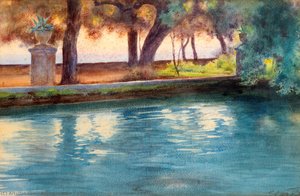
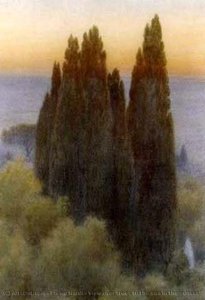
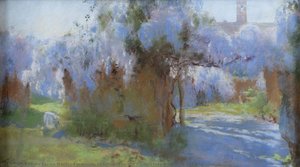
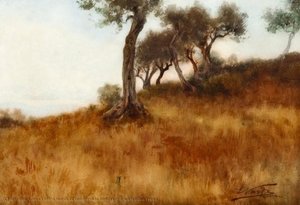
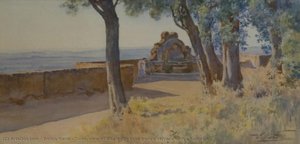
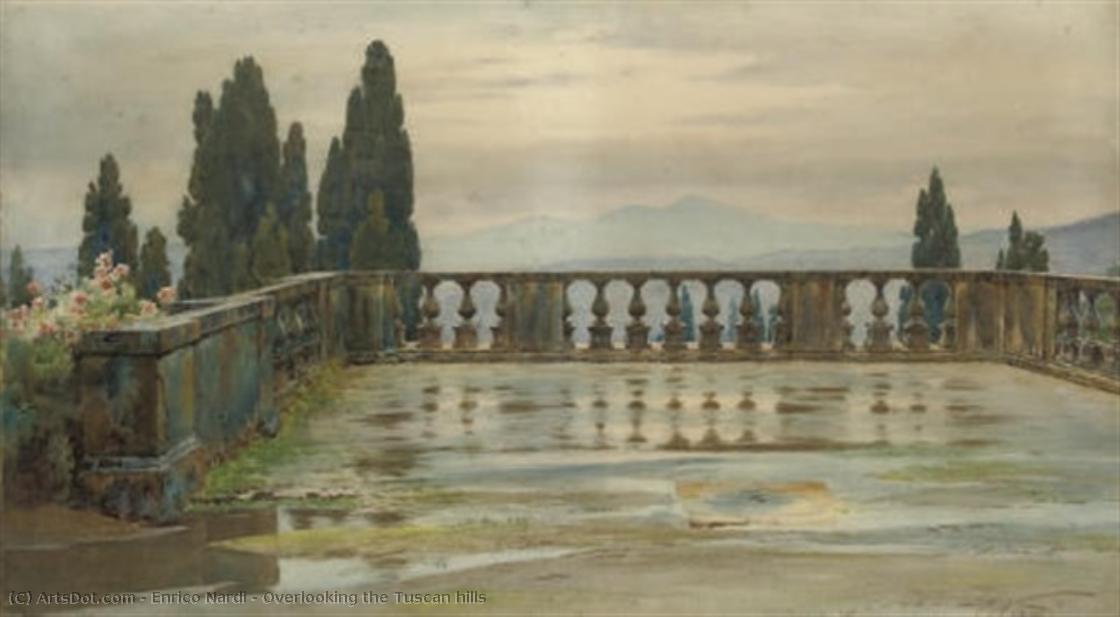
Overlooking the Tuscan hills
 Realism
 56.0 x 98.0 cm
 Read More
Hand Made Oil Reproduction
Hand-painted oil on canvas in your size and frame, made to order by our artists. ( Buy Print Buy Image)




































Pick from our preset sizes that match the artwork's original proportions.

You may enter your own dimensions to fit a specific frame or space. If your selected size does not match the original image's proportions, we will either crop the artwork or extend the painting with additional hand-painted elements. A digital mockup will be sent for your approval before production begins.
Please note that the on-screen preview does not reflect the actual cropping or extension. Only the mockup will accurately show the final composition.
While custom sizes are available, we recommend selecting a dimension from the predefined list to preserve the original proportions.
After order, ArtsDot.com team will email client for instructions and provide a mockup preview
Worldwide Delivery () in 3/4 weeks instead of standard 5 weeks. (21 August). No compromise on quality.

Free Worldwide Express Shipping

High-Quality Linen Canvas

Full Shipping Insurance

Customs Tax Refund Guarantee

True Color Matching Guarantee

60-Day Return Policy (Defects Only)

100% Money-Back Guarantee

Bulk Discount Offer
 Glass option is only available in size under 110 CM

Overlooking the Tuscan hills
Reproduction Medium
Reproduction Size
-


Total Price
$ 263
Related Artworks








Artist Biography
The Dual Legacy of Enrico Nardi: Speed and Soul
In the grand tapestry of twentieth-century Italian culture, few figures possess a legacy as uniquely bifurcated as Enrico Nardi. To the world of motorsport, he remains a titan of engineering and a pioneer of automotive design, a man whose hands shaped the very essence of racing heritage through his work with Lancia and Scuderia Ferrari. Yet, beneath the grease and grit of the workshop lay the soul of a sensitive observer, an artist capable of translating the kinetic energy of the racetrack and the serene beauty of the Italian landscape onto canvas. Born in Bologna in 1907, Nardi’s life was a continuous dialogue between the mechanical precision of his engineering education and the evocative, fluid expressions of his artistic temperament.
Nardi’s early years were defined by a rigorous pursuit of technical mastery. His formal training in mechanical engineering provided him with a structural understanding of the world, an expertise that would later allow him to innovate within the automotive industry. During his formative years with Lancia between 1929 and 1937, he demonstrated a remarkable ability to blend function with forward-thinking design. This period saw the birth of the Nardi-Monaco Chichibio, a vehicle that challenged the conventions of its time through its innovative air-cooled engine. This same spirit of experimentation—the desire to push boundaries and redefine what was possible—would become the hallmark of both his engineering prototypes and his visual compositions.
The Intersection of Motion and Canvas
As Nardi’s reputation as a racing driver grew, so too did his ability to capture the visceral intensity of competition. His participation in legendary endurance races like the Mille Miglia provided him with a front-row seat to the drama of speed. This experience profoundly influenced his artistic output, leading to works that do not merely depict machines, but rather capture the very atmosphere of racing intensity. In pieces such as "Armed at the gate," one can sense the tension and the fleeting moments of adrenaline that defined his era. His brushstrokes often mirrored the velocity of the cars he designed, blending a realist's eye for detail with an impressionistic sense of movement.
Beyond the roar of engines, Nardi possessed a profound reverence for the timeless elegance of Italy. His artistic range allowed him to pivot from the mechanical to the pastoral, finding deep inspiration in the light and architecture of his homeland. His depictions of Venice, St. Mark’s Square and the Island of San Giorgio reveal a different facet of his genius—a contemplative artist mesmerized by the interplay of water, stone, and sky. In these works, the precision of an engineer is softened by a romanticist's touch, creating a sense of enduring peace that stands in stark contrast to the high-octane world of Scuderia Ferrari.
A Lasting Impression on History
The post-war era saw Nardi establishing himself as a master of bespoke automotive creation in Torino. Alongside collaborators like Renato Danese, his workshop became a sanctuary for racing prototypes and specialized engineering. Even as he contributed to the development of iconic components like the Nardi steering wheel—an object that would become a staple in the cockpits of legendary racers—his artistic identity remained inextricably linked to his mechanical pursuits. He did not see these two worlds as separate, but rather as two different methods of documenting the human experience: one through the tangible evolution of technology, and the other through the ephemeral beauty of paint.
Though his life was tragically cut short in 1966, the impact of Enrico Nardi continues to resonate across disciplines. He remains a singular figure who bridged the gap between the industrial revolution's mechanical triumphs and the enduring traditions of Italian fine art. His legacy is found not only in the roar of a vintage engine or the grip of a classic steering wheel but also in the quiet, evocative power of his paintings, which continue to invite viewers to experience the dual heartbeat of speed and serenity.
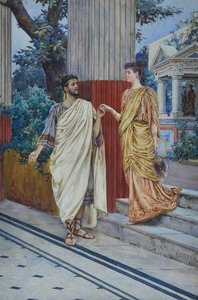
Enrico Nardi
1907 - 1966 , Italy
Quick Facts
- Artistic Movement Or Style: Realism & Impressionism
- Artists Or Movements Influenced By This Artist: ['Automotive design']
- Artists Who Influenced This Artist: ['Michelotti']
- Date Of Birth: 1907 Bologna Italy
- Date Of Death: 1966
- Full Name: Enrico Nardi
- Nationality: Italian
- Notable Artworks:
- Armed at the gate
- Scene from antiquity
- Wedding procession in the Rieti area
- Place Of Birth: Bologna Italy