

 Preview
 Send
Send Share
Share
 Details

 Download
 Similars
 X-Ray
X-Ray Diaporama
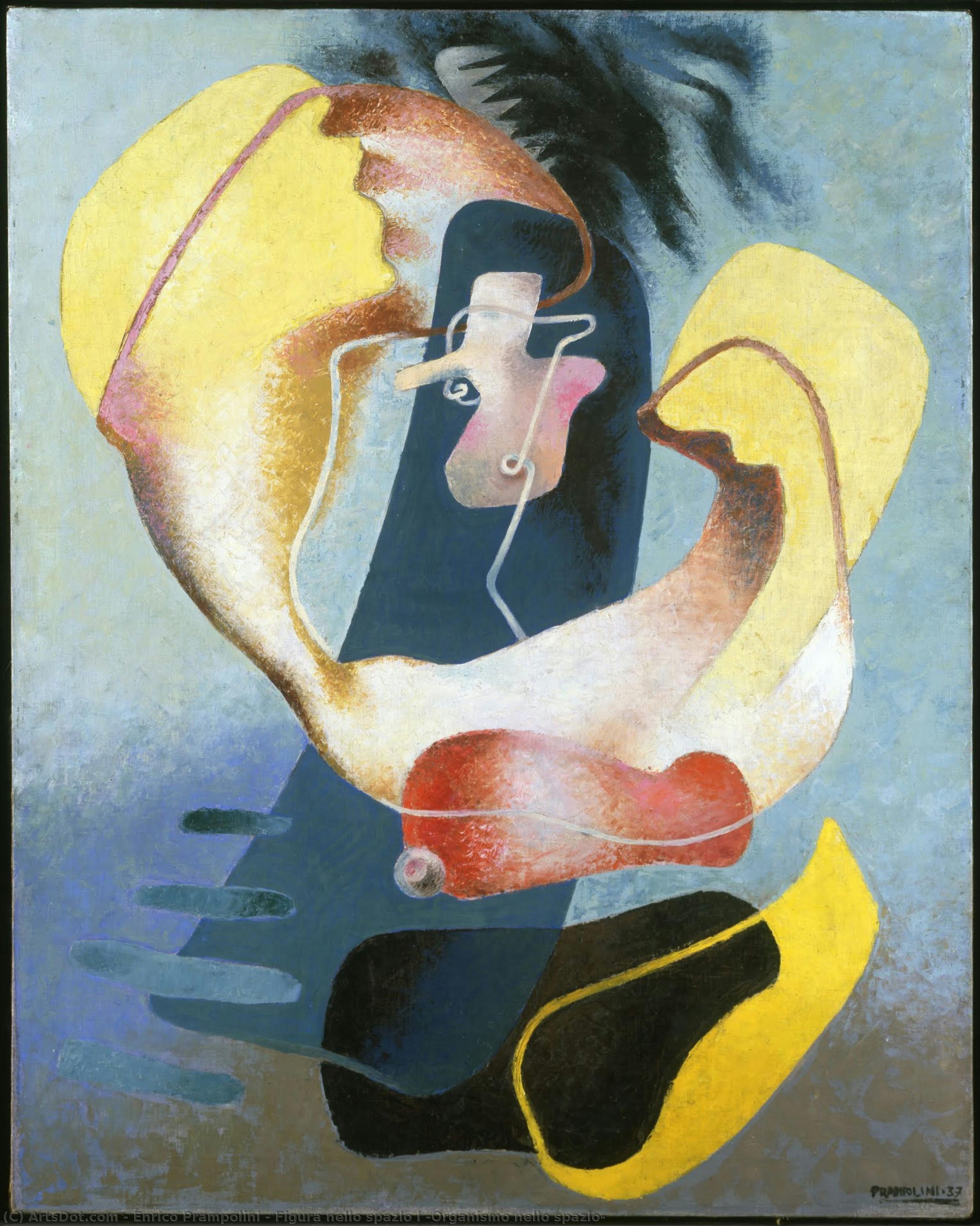
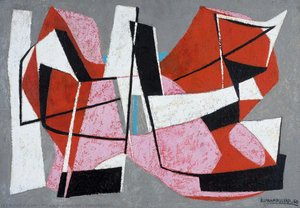
Figura nello spazio I (Organismo nello spazio)
 80.0 x 99.0 cm
 Read More
Purchase a high-resolution, enhanced digital image, far superior to the online preview.
Each file is meticulously prepared by our in-house specialists using advanced tools and expert manual retouching. We ensure every image has exceptional clarity, precise color accuracy, and fine detail.
The final file is delivered via email within 72 hours, optimized for immediate use in professional, editorial, and print environments. This is the same quality trusted by top-tier design studios, publishers, and galleries.
Digital Image
Download a high-resolution file for personal display, printing, and creative projects. ( Buy Print Buy Hand Made Painting)
Included in Every Digital Image Order
Expert Digital Delivery, Guaranteed
When you choose ArtsDot.com, you're not just getting an image - you're receiving a professionally enhanced digital artwork, crafted with precision and backed by a satisfaction guarantee. Here's everything that comes with your order, automatically:

Fast Email Delivery
Your high-resolution digital image file will be emailed to you within 72 hours of ordering - ready for immediate use.

AI-Enhanced Digital File
Your artwork is professionally optimized using advanced AI tools and manual editing, ensuring maximum detail, clarity, and color accuracy.

Free Lifetime Re-Delivery
Accidentally deleted or lost your file? No worries - we'll resend it to you anytime, free of charge.

No Import Fees - Ever
Enjoy your artwork instantly with zero customs, duties, or delivery fees - digital downloads are always tax-free.

Color Accuracy Guarantee
We ensure your digital image reflects the original colors as closely as possible using professional tools and color management.

60-Day Satisfaction Guarantee
If you're not satisfied with your digital image, we'll revise it or refund 100% within 60 days - no questions asked.

100% Money-Back Guarantee
Not satisfied? Get a full refund within 60 days of receiving your digital file - no questions asked.

Bulk Order Discounts
Buy 3 images, save 10% - Buy 5, save 15% - Buy 10+, save 20%. Great for creative projects, galleries, and agencies.
Related Artworks







Artist Biography
The Architect of Motion: The Life and Vision of Enrico Prampolini
In the turbulent landscape of early twentieth-century Europe, few artists captured the restless pulse of modernity as vibrantly as Enrico Prampolini. Born in Modena in 1894, Prampolini emerged not merely as a painter, but as a multidisciplinary force—a sculptor, scenographer, and theorist who sought to dismantle the static boundaries of traditional art. His journey began under the tutelage of Duilio Cambellotti at the Accademia di Belle Arti di Roma, an education that provided him with a classical foundation even as his spirit yearned for the radical disruptions of the avant-garde. This tension between established tradition and the feverish pursuit of innovation would become the defining characteristic of his entire oeuvre.
By 1913, Prampolini had fully embraced the Futurist movement, aligning himself with the provocative manifestos of Filippo Tommaso Marinetti. He became a vital architect of the movement's visual language, contributing to the dissemination of its ideals through collaborative ventures and influential publications. In 1917, alongside Bino Sanminiatelli, he co-founded the magazine Noi, creating a platform for artistic discourse that challenged the very essence of academic convention. His talent for spatial manipulation found a unique outlet in the world of cinema; his scenography for the groundbreaking film Thaïs, directed by Anton Giulio Brancaglia, utilized dreamlike, suffocating interiors decorated with spirals and lozenges to create an atmosphere of psychological disorientation—a technique that would leave a lasting imprint on the development of German Expressionist filmmaking.
From Dynamic Landscapes to Cosmic Abstraction
The evolution of Prampolini’s style is a fascinating study in the metamorphosis of form. His early works, such as Spatial-Landscape Construction (1919), utilized bold, flat areas of red, orange, and deep blue to bridge the gap between recognizable scenery and pure abstraction. As his career progressed, he moved toward a state of total abstraction, exemplified by the Simultaneous Landscape (1922), where perspective was abandoned in favor of rhythmic, flat color planes. This period of experimentation was deeply intertwined with the rise of Aeropainting, a subset of Futurism that sought to capture the exhilarating sensation of flight and the bird's-eye view of the modern world.
However, Prampolini’s vision was never static. By the early 1930s, he transitioned into what critics call "cosmic idealism," a phase characterized by biomorphic abstractionism. In works like Pilot of the Infinite (1931) and Biological Apparition (1940), the aggressive geometry of his youth gave way to organic, fluid shapes that suggested the vast, unseen energies of the universe. This shift demonstrated his profound ability to adapt to the changing intellectual currents of Europe, moving from the mechanical obsession of early Futurism toward a more spiritual, almost biological, exploration of space and existence.
A Legacy of Interdisciplinary Mastery
The historical significance of Enrico Prampolini lies in his refusal to be confined by a single medium or movement. His influence radiated through various artistic circles, connecting him to the Section d'Or, Dadaism, the Bauhaus, and De Stijl. He maintained a sophisticated dialogue with the giants of modernism, including Pablo Picasso, Piet Mondrian, and Wassily Kandinsky, positioning himself at the very heart of the European avant-garde.
To look upon a Prampolini masterpiece today is to witness a symphony of form and color. Whether through his structural clarity in post-war compositions or his earlier, more turbulent landscapes, his work remains a testament to the power of movement. His legacy is defined by several key artistic contributions:
- The Integration of Scenography and Painting: He revolutionized how theatrical space could reflect psychological depth and modern dynamism.
- Pioneering Aeropainting: He helped redefine the landscape through the lens of technological advancement and aerial perspective.
- Chromatic Innovation: His use of "timbric values"—treating color as musical tone—brought a new sensory dimension to abstract art.
- The Bridge to Concrete Art: His ability to transition from Futurist energy to the refined, structural precision of mid-century abstraction helped shape the trajectory of modern European art.
Ultimately, Enrico Prampolini remains an essential figure for anyone seeking to understand the heartbeat of the twentieth century—an artist who saw the world not as a collection of fixed objects, but as a continuous, beautiful, and ever-changing state of motion.
enrico prampolini
1894 - 1956
Quick Facts
- Artistic Movement Or Style: Futurist Painter
- Artists Or Movements Influenced By This Artist:
- Bauhaus
- De Stijl
- Artists Who Influenced This Artist: ['Dulio Cambellotti']
- Date Of Birth: 20 April 1894
- Date Of Death: 17 June 1956
- Full Name: Enrico Prampolini
- Nationality: Italian
- Notable Artworks:
- Composition
- Untitled (521)
- Scenografia
- Place Of Birth: Modena, Italy

