

 Preview
 Send
Send Share
Share
 Details

 Download
 Similars
 X-Ray
X-Ray Diaporama
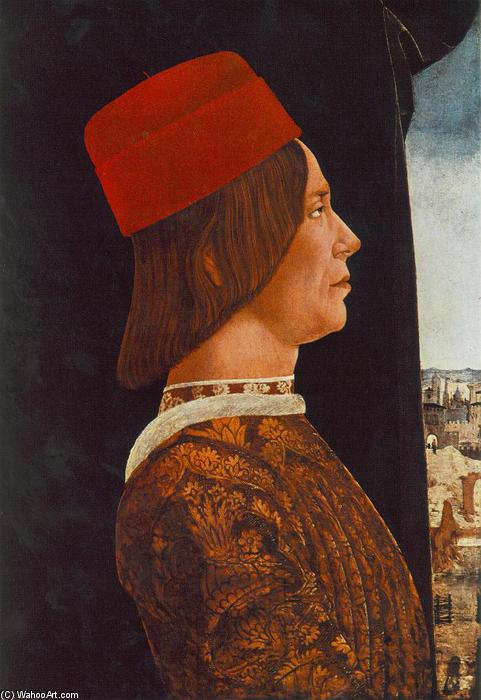
Portrait of Giovanni II Bentivoglio
 Oil On Canvas
- WallArt
- Renaissance
 1480
1480- Renaissance
 54.0 x 38.0 cm
 National Gallery of Art
 Read More
Purchase a high-resolution, enhanced digital image, far superior to the online preview.
Each file is meticulously prepared by our in-house specialists using advanced tools and expert manual retouching. We ensure every image has exceptional clarity, precise color accuracy, and fine detail.
The final file is delivered via email within 72 hours, optimized for immediate use in professional, editorial, and print environments. This is the same quality trusted by top-tier design studios, publishers, and galleries.
Digital Image
Download a high-resolution file for personal display, printing, and creative projects. ( Buy Print Buy Hand Made Painting)
Included in Every Digital Image Order
Expert Digital Delivery, Guaranteed
When you choose ArtsDot.com, you're not just getting an image - you're receiving a professionally enhanced digital artwork, crafted with precision and backed by a satisfaction guarantee. Here's everything that comes with your order, automatically:

Fast Email Delivery
Your high-resolution digital image file will be emailed to you within 72 hours of ordering - ready for immediate use.

AI-Enhanced Digital File
Your artwork is professionally optimized using advanced AI tools and manual editing, ensuring maximum detail, clarity, and color accuracy.

Free Lifetime Re-Delivery
Accidentally deleted or lost your file? No worries - we'll resend it to you anytime, free of charge.

No Import Fees - Ever
Enjoy your artwork instantly with zero customs, duties, or delivery fees - digital downloads are always tax-free.

Color Accuracy Guarantee
We ensure your digital image reflects the original colors as closely as possible using professional tools and color management.

60-Day Satisfaction Guarantee
If you're not satisfied with your digital image, we'll revise it or refund 100% within 60 days - no questions asked.

100% Money-Back Guarantee
Not satisfied? Get a full refund within 60 days of receiving your digital file - no questions asked.

Bulk Order Discounts
Buy 3 images, save 10% - Buy 5, save 15% - Buy 10+, save 20%. Great for creative projects, galleries, and agencies.
Collectible Description
A Glimpse into Renaissance Grandeur: The Portrait of Giovanni II Bentivoglio
To stand before this portrait is to step directly across the threshold of the Italian Renaissance, to breathe the rarefied air of 15th-century courtly life. Ercole De' Roberti’s depiction of Giovanni II Bentivoglio is far more than a mere likeness; it is a meticulously preserved moment in time, an eloquent testament to status, power, and artistic mastery. The subject himself, adorned in garments rich with intricate patterns, commands attention. His contemplative gaze, directed subtly away from the viewer, suggests a mind deeply engaged in matters of state or philosophy, lending the entire piece an air of profound introspection that resonates even today.
Mastery in Oil: Technique and Detail
The technical brilliance displayed by De' Roberti is breathtaking. The artist employed oil paint with a virtuosity that allowed for unparalleled depth and luminosity. Observe how the light seems to emanate from within the subject himself, catching the folds of his ornate attire and illuminating the subtle contours of his face. This masterful handling of chiaroscuro—the dramatic interplay of light and shadow—is what grants the figure such a palpable three-dimensionality. The contrast between the vibrant red of the hat and the deep, velvety darkness of the background curtain serves not merely as decoration, but as a sophisticated compositional device, forcing the eye inexorably back to the subject’s compelling presence.
The Context of Power: History and Symbolism
This painting functions as both portraiture and historical document. Giovanni II Bentivoglio was a figure embedded within the powerful tapestry of Italian nobility. The richness of his clothing, the very weight of the fabric depicted, speaks volumes about the societal strata he inhabited—a world where visual display was inextricably linked to political standing. While every element invites scholarly debate, the overall effect is one of contained authority. The careful rendering of texture, from the soft sweep of the hair to the stiffness of the hat band, anchors the viewer in a specific cultural moment, allowing us to feel the gravity and ceremony surrounding such powerful families.
Bringing History Home: Owning a Masterpiece
For those who wish to integrate this segment of Renaissance history into their own curated spaces, owning a high-quality reproduction is an act of aesthetic reverence. A hand-painted oil reproduction allows art lovers, collectors, and designers alike to possess the emotional weight and technical splendor of De' Roberti’s original vision. It offers not just decoration, but a conversation piece—a tangible link to the artistic genius that flourished in Ferrara during the dawn of the modern era. Let this portrait inspire your walls with its enduring narrative depth.
Related Artworks

Artist Biography
A Ferrarese Master: The Life and Art of Ercole de' Roberti
Ercole de’ Roberti, born in Ferrara around 1451, remains a somewhat enigmatic figure within the pantheon of Renaissance artists. His relatively short life – he died in 1496 – belies a profound impact on Ferrarese painting and a distinctive style that blended meticulous detail with an almost mystical intensity. Unlike many of his contemporaries who benefited from extensive workshop training or patronage networks, de’ Roberti's path to artistic prominence appears largely self-directed, fueled by innate talent and a keen observation of the world around him. Ferrara at the time was under the rule of the Este family, known for their sophisticated court and burgeoning interest in humanist ideals; however, de’ Roberti did not seem to be directly tied to the ducal patronage as some other artists were. Instead, he garnered commissions from prominent local families and religious institutions, establishing a reputation for portraits that captured not merely likeness but also psychological depth.Early Influences and Artistic Development
Pinpointing de’ Roberti's early influences is challenging due to the scarcity of documented training. It is believed he initially worked as a goldsmith, an occupation which undoubtedly honed his precision and eye for detail – qualities that would become hallmarks of his painting style. The influence of Cosmè Tura, another leading Ferrarese artist known for his dramatic compositions and intricate patterns, is evident in de’ Roberti's early works. However, de’ Roberti quickly moved beyond mere imitation, developing a unique approach characterized by a softer modeling of forms, a more naturalistic rendering of drapery, and an increased emphasis on emotional expression. His palette, while still rich and vibrant, tended towards cooler tones than Tura’s often fiery hues. He also demonstrated a fascination with Northern European painting, particularly the work of Jan van Eyck, evident in his meticulous attention to texture and light. This synthesis of diverse influences resulted in a style that was distinctly Ferrarese yet uniquely de’ Roberti's own.Major Achievements: Portraits and Polyptychs
De’ Roberti is best known for his portraits, which stand as remarkable achievements in Renaissance portraiture. His Portrait of Ginevra Bentivoglio, painted around 1475-80, exemplifies his ability to convey both the sitter's aristocratic status and her inner life. The subject’s gaze is direct and penetrating, suggesting intelligence and strength, while the delicate rendering of her clothing and jewelry speaks to her wealth and refinement. He wasn’t limited to portraits; he also excelled in complex altarpieces. His masterpiece, the Griffoni Polyptych (1475-79), commissioned for the church of San Francesco in Ferrara, is a monumental work that showcases his technical skill and compositional ingenuity. The polyptych depicts scenes from the life of Saint Francis alongside portraits of the Griffoni family, seamlessly integrating religious narrative with secular commemoration. The intricate details of the architectural setting, the expressive faces of the figures, and the harmonious color scheme all contribute to the polyptych’s enduring power. Another significant work is his St John the Baptist, a painting that reveals his mastery of anatomy and emotional intensity.Technique and Symbolism
De’ Roberti's technique was characterized by meticulous layering of paint, creating a luminous surface with subtle gradations of tone. He employed tempera on wood panel as his primary medium, allowing for precise detail and vibrant color. His compositions were often complex and carefully planned, reflecting the humanist emphasis on order and harmony. Beyond technical skill, de’ Roberti imbued his works with symbolic meaning. The objects depicted in his portraits – jewelry, clothing, books – were not merely decorative but served as indicators of the sitter's social status, intellectual interests, and moral character. In his religious paintings, he drew upon traditional iconography while also incorporating contemporary symbolism, creating a rich tapestry of meaning that resonated with his audience. He was known for using drapery to create dynamic forms and convey emotion; the folds often seem to move and breathe, adding life and vitality to his figures.Historical Significance and Legacy
Despite his relatively short career, Ercole de’ Roberti left an indelible mark on Ferrarese painting. His influence can be seen in the work of subsequent generations of artists, including Francesco del Cossa and Lorenzo Costa. He helped to establish Ferrara as a major center of Renaissance art, rivaling Florence and Venice in its artistic innovation. While his output was limited, the quality and originality of his surviving works ensure his place among the most important painters of the 15th century.- Rediscovery: De’ Roberti's work remained relatively obscure for centuries, but has been increasingly recognized in recent decades as a significant contribution to Renaissance art.
- Influence on Later Artists: His emphasis on psychological realism and meticulous detail influenced many subsequent painters.
- Preservation of Works: The preservation of his major works, such as the Griffoni Polyptych, allows for continued study and appreciation of his artistic genius.
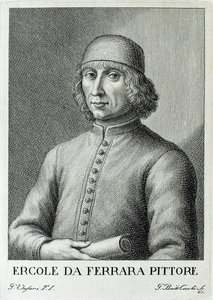
ercole de' roberti
1451 - 1496 , Italy

