 Preview
 Send
Send Share
Share
 Details

 Download
 Similars
 X-Ray
X-Ray Diaporama
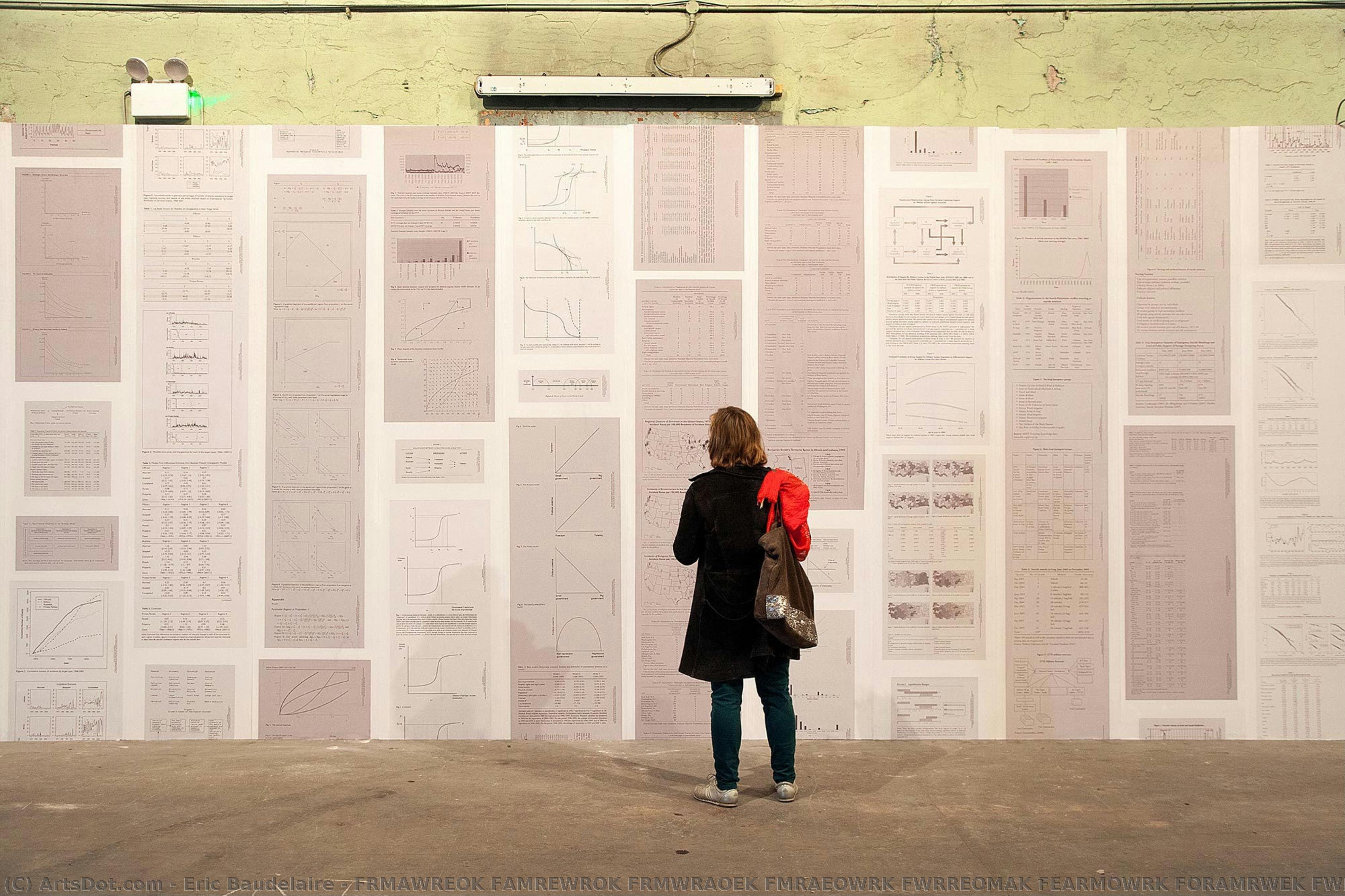
FRMAWREOK FAMREWROK FRMWRAOEK FMRAEOWRK FWRREOMAK FEARMOWRK FORAMRWEK FWMAOERRK FOMARERWK FEMORWARK FMRWREAOK


 Read More
Hand Made Oil Reproduction
Hand-painted oil on canvas in your size and frame, made to order by our artists. ( Buy Print Buy Image)




































Pick from our preset sizes that match the artwork's original proportions.

You may enter your own dimensions to fit a specific frame or space. If your selected size does not match the original image's proportions, we will either crop the artwork or extend the painting with additional hand-painted elements. A digital mockup will be sent for your approval before production begins.
Please note that the on-screen preview does not reflect the actual cropping or extension. Only the mockup will accurately show the final composition.
While custom sizes are available, we recommend selecting a dimension from the predefined list to preserve the original proportions.
After order, ArtsDot.com team will email client for instructions and provide a mockup preview
Worldwide Delivery () in 3/4 weeks instead of standard 5 weeks. (5 September). No compromise on quality.

Free Worldwide Express Shipping

High-Quality Linen Canvas

Full Shipping Insurance

Customs Tax Refund Guarantee

True Color Matching Guarantee

60-Day Return Policy (Defects Only)

100% Money-Back Guarantee

Bulk Discount Offer
 Glass option is only available in size under 110 CM

FRMAWREOK FAMREWROK FRMWRAOEK FMRAEOWRK FWRREOMAK FEARMOWRK FORAMRWEK FWMAOERRK FOMARERWK FEMORWARK FMRWREAOK
Reproduction Medium
Reproduction Size
-


Total Price
$ 263
Related Artworks








Artist Biography
Éric Baudelaire: Cartographer of Absence
Éric Baudelaire’s work isn't simply about depicting places; it’s a profound excavation of absence, memory, and the lingering echoes of history. Born in Salt Lake City in 1973, his journey from American pragmatism to the evocative landscapes and fraught narratives of Franco-American art has been marked by a relentless pursuit of the unseen – the territories both physical and conceptual that resist easy definition. His trajectory began with an academic grounding in political science, a field he quickly recognized as inadequate for grappling with the complexities of conflict and displacement, leading him toward the visual arts as a means to explore these themes more deeply.
Baudelaire’s early career was shaped by a critical engagement with the Caucasus region. His research trip in 2000, alongside Dr. Dov Lynch at King's College London, proved pivotal. This immersion into the unrecognized states of Abkhazia and South Ossetia ignited a fascination with contested borders, historical narratives, and the ways in which geography itself can be manipulated to construct identity. The resulting book, *États Imaginés* (2005), wasn’t merely a photographic record but an act of archival reconstruction—a deliberate attempt to resurrect silenced histories and challenge dominant perspectives on these volatile regions. The photographs themselves are imbued with a quiet melancholy, capturing the stark beauty of crumbling buildings and empty streets, hinting at stories untold and memories fading.
Film as Cartography
Baudelaire’s transition into filmmaking represents a significant expansion of his artistic vocabulary. His early short films, *sic* and *The Makes*, produced during his residency at Villa Kujoyama in Kyoto (2008), demonstrated an immediate mastery of cinematic language—a deliberate rejection of traditional narrative structures in favor of evocative imagery and atmospheric soundscapes. These works established a key element of his practice: the exploration of landscapes not as mere backdrop, but as active participants in storytelling. His feature films build upon this foundation, employing innovative techniques to confront viewers with uncomfortable truths and challenging conventional notions of representation.
*The Anabasis of May and Fusako Shigenobu, Masao Adachi and 27 Years without Images* (2012) is a particularly compelling example. Drawing on the Japanese concept of “fûkeiron” – a shift in perspective that prioritizes the landscape over the subject – Baudelaire constructs a narrative through fragmented legal documents, wiretap transcripts, and voice recordings, creating a layered and unsettling portrait of the Japanese Red Army’s descent into Lebanon. The film isn't about providing a straightforward account; it’s an investigation into the spaces where memory resides, and how those spaces are shaped by power, violence, and the enduring legacy of conflict.
Echoes of History & Contemporary Concerns
Baudelaire’s work consistently engages with themes of statelessness, nationalism, and the manipulation of historical narratives. *Letters to Max* (2015), a film based on his correspondence with former Abkhaz Foreign Minister Maxim Gvinjia, exemplifies this commitment. The film's premise—sending letters through the French postal system to a state unrecognized by France—is both absurd and profoundly poignant, highlighting the persistent denial of political reality and the enduring power of bureaucratic systems. The inclusion of Adachi’s voice recordings, meticulously assembled from fragments of the director’s own work, adds another layer of complexity, creating a dialogue between past and present, personal and collective memory.
More recently, *Also Known As Jihadi* (2017) confronts the complexities of radicalization through a reimagining of Masao Adachi's 1969 film *A.K.A. Serial Killer*. By interweaving landscape shots with legal documents detailing the investigation into a young Frenchman’s involvement in ISIS, Baudelaire forces viewers to confront the human cost of conflict and the insidious ways in which narratives are constructed through surveillance and documentation. The film's stark beauty and unsettling juxtapositions underscore Baudelaire’s ongoing interrogation of image, memory, and the enduring power of representation.
A Legacy of Absence
Éric Baudelaire’s work resists easy categorization—it occupies a space between documentary, fiction, and installation art. His films are not simply stories; they are cartographies of absence, meticulously constructed to reveal the hidden histories and unspoken narratives that shape our understanding of the world. His commitment to exploring contested territories, both physical and conceptual, has established him as one of the most significant artists working today, a chronicler of forgotten places and silenced voices—a testament to the enduring power of art to confront us with the uncomfortable truths of our past and present.
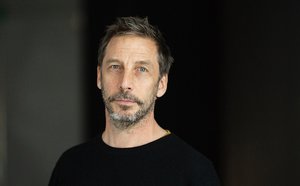
eric baudelaire
1973 - , United States of America
Quick Facts
- Artistic Movement Or Style: Visual narratives/Film
- Artists Or Movements Influenced By This Artist:
- Avant-garde art
- Symbolic art themes
- Artists Who Influenced This Artist:
- Masao Adachi
- Philip Zelikow
- Date Of Birth: 1973-Salt Lake City
- Full Name: Éric Baudelaire
- Nationality: Franco-American
- Notable Artworks:
- Les Inrockuptibles
- The Anabasis...
- Also Known As Jihadi
- Place Of Birth: Salt Lake City, USA