 Preview
 Send
Send Share
Share
 Details

 Download
 Similars
 X-Ray
X-Ray Diaporama
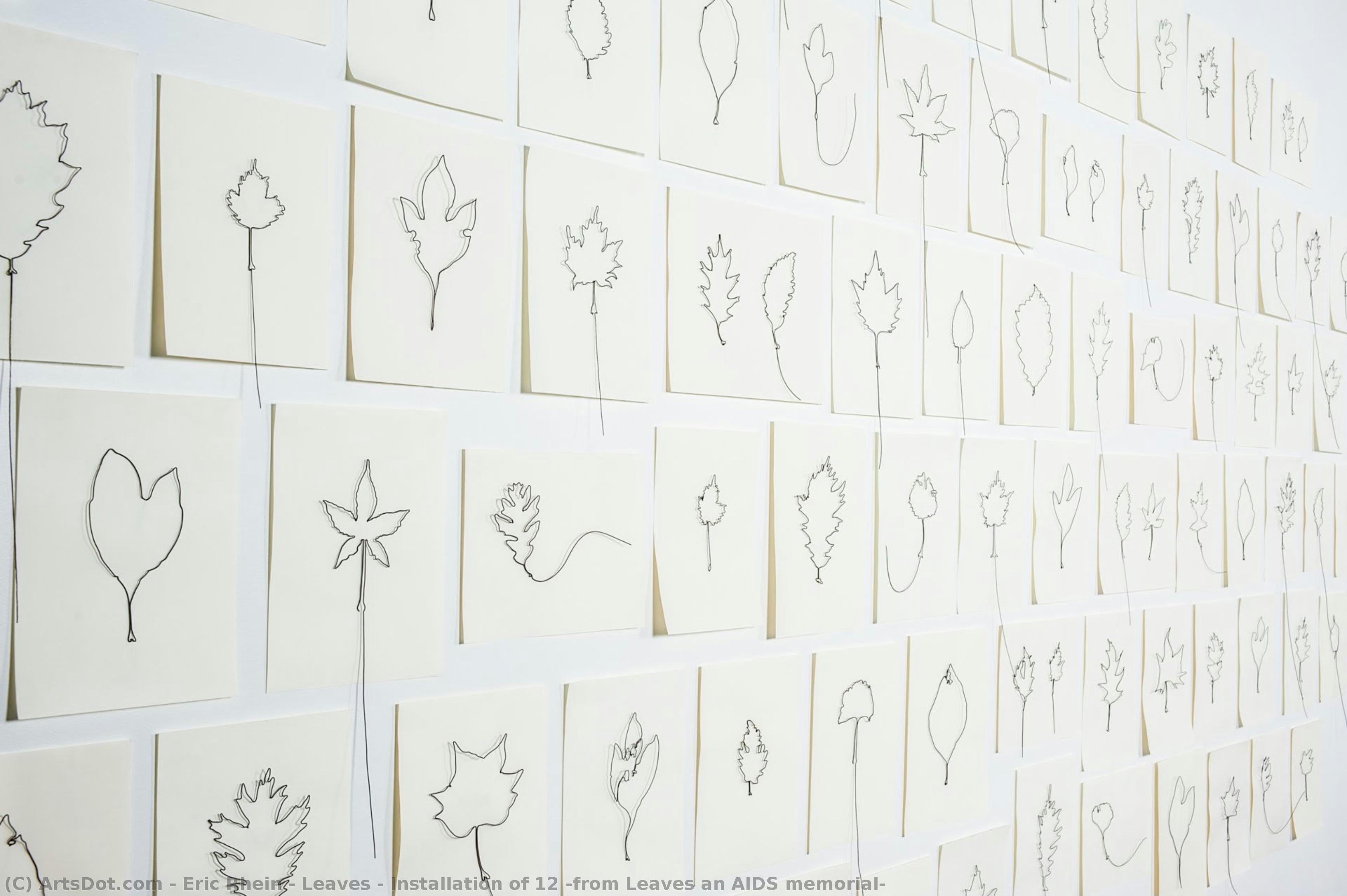
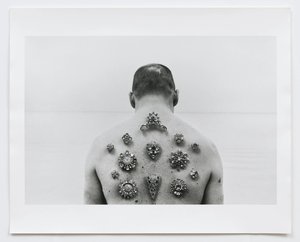
Leaves - Installation of 12 (from Leaves an AIDS memorial)

 Read More
Giclée / Art Print
Museum-quality giclée or canvas print with fast production and flexible finish options. ( Buy Hand Made Painting Buy Image)




































Pick from our preset sizes that match the artwork's original proportions.

You may enter your own dimensions to fit a specific frame or space. If your selected size does not match the original image's proportions, we will either crop the artwork or extend the image with a mirrored or solid-fill edge. A digital mockup will be sent for your approval before production begins.
Please note that the on-screen preview does not reflect the actual cropping or extension. Only the mockup will accurately show the final composition.
While custom sizes are available, we recommend selecting a dimension from the predefined list to preserve the original proportions.
Worldwide Delivery () in 2 weeks instead of standard 4/5 weeks. (25 August)

Free Worldwide Express Shipping

High-Quality Linen Canvas

Full Shipping Insurance

Customs Tax Refund Guarantee

True Color Matching Guarantee

60-Day Return Policy (Defects Only)

100% Money-Back Guarantee

Bulk Discount Offer
 Glass option is only available in size under 110 CM

Leaves - Installation of 12 (from Leaves an AIDS memorial)
Giclée / Art Print
Reproduction Size
-


Total Price
$ 63
Collectible Description
Related Artworks
Artist Biography
Eric Rineh: A Weaver of Memory and Resilience
Born in the Hudson River Valley, amidst the echoes of Appalachian landscapes and nurtured by a vibrant East Village art scene, Eric Rineh’s artistic journey is inextricably linked to both personal experience and profound social awareness. His work, characterized by intricate wire drawings, evocative sculptures, and poignant photographic explorations, transcends mere representation; it becomes a deeply felt meditation on life, loss, sexuality, and the enduring spirit of community. From his early days crafting puppets for George Balanchine to his current status as an internationally recognized artist grappling with the legacy of HIV/AIDS, Rineh’s trajectory is one of constant evolution, informed by both artistic discipline and unwavering empathy.
Rineh's childhood spent in Kentucky instilled a deep connection to nature—a theme that consistently surfaces throughout his oeuvre. The rugged beauty of the Appalachian Mountains, with their layered histories and intimate relationship with the natural world, provided an early foundation for his artistic sensibility. This formative experience was further shaped by summers spent in New York City, immersing him in the dynamic energy of the East Village art scene—a crucible where experimentation flourished and social consciousness took root. This juxtaposition of rural simplicity and urban intensity informs a unique visual language, blending organic forms with geometric precision.
Early influences included his uncle Elijah “Lige” Clarke, a pioneering figure in the gay rights movement who co-founded *Gay*, the first national gay weekly newspaper, and the Washington Mattachine Society. Clarke’s activism served as a potent catalyst for Rineh's own artistic explorations, particularly his engagement with themes of identity, vulnerability, and social justice. The impact of this familial connection is evident in Rineh’s willingness to confront difficult subjects—particularly the AIDS crisis—with honesty and profound sensitivity.
The Weight of Leaves: A Memorial and a Meditation
Rineh's most recognized body of work, “Leaves,” emerged from a pivotal moment in his personal life – his HIV diagnosis in 1987. Initially conceived as a response to the escalating tragedy of the AIDS epidemic, the project quickly evolved into something far more expansive—a deeply personal memorial to the individuals he had known and loved who succumbed to the disease. Beginning with an initial collection of eighty wire portraits, “Leaves” has since grown to encompass over three hundred meticulously crafted tributes, each a testament to a lost life.
The process of creating these intricate wire drawings is itself a meditative practice for Rineh. He describes it as a way of "picking up leaves until a host of kinsmen was gathered in my arms," suggesting a profound sense of connection and responsibility. The delicate, almost skeletal forms of the wire figures—often imbued with subtle details that hint at personality and history—evoke both fragility and resilience. The use of salvaged materials – wire, paper, hardware – further underscores the project’s themes of transformation and renewal.
Holland Cotter, writing for *The New York Times*, aptly described Rineh's work as “a combination of art and craft, delicacy and resiliency, feminine and masculine, is exquisitely wrought and is, as it should be, seductive but disturbing.” This evocative assessment captures the complex emotional landscape of "Leaves"—its capacity to simultaneously evoke sorrow, beauty, and a profound sense of connection.
Beyond Portraits: Sculpture, Photography, and the Expanding Universe
While “Leaves” remains Rineh’s most celebrated project, his artistic practice extends far beyond this singular memorial. Throughout his career, he has explored a diverse range of mediums—including wire sculptures, mixed media collages, and photographic self-portraits—each offering a unique lens through which to examine the human condition. His work frequently grapples with themes of eroticism, mortality, and spirituality, often interwoven with elements of personal history and social commentary.
His series of “Hospital Drawings” (1994), created during a residency at St. Vincent’s Hospital, stands as a particularly poignant example of Rineh's ability to find beauty and meaning in the face of suffering. These delicate, almost ethereal drawings capture the liminal spaces between life and death, inviting viewers to contemplate the fragility of existence.
Rineh’s photographic self-portraits, beginning in 1992, are a powerful testament to his own journey with HIV/AIDS—a process of confronting vulnerability, embracing resilience, and forging a new sense of identity. These images, often nude and intensely personal, reveal the artist's willingness to expose his own body and spirit, inviting viewers to engage with difficult questions about health, sexuality, and mortality.
Legacy and Recognition
Eric Rineh’s work has garnered widespread recognition both nationally and internationally. His pieces have been exhibited in prestigious venues such as the Victoria and Albert Museum, The New Art Gallery, Walsall, England; the Pera Museum, Istanbul; American embassies in Austria, Cameroon, and Malta; the Addison Gallery of American Art; Lincoln Center; the Morris Museum, Morristown, NJ; the Islip Art Museum, NY; the Leslie-Lohman Museum of Gay and Lesbian Art; the Portland Museum of Art; the Smithsonian's Traveling Exhibition for the Millennium; Johnson & Johnson, New Brunswick, NJ; and Pavel Zoubok Gallery, New York, NY. His work has been reviewed by leading art critics and featured in numerous publications, including *The New York Times*, *ArtNews*, and *Art In America*.
Rineh’s commitment to visual activism extends beyond his artistic practice through his involvement with Visual AIDS, where he helped establish the Frank Moore Archive Project—a vital resource for preserving the work of artists living with HIV/AIDS. His ongoing dedication to raising awareness about the AIDS crisis and honoring the lives lost serves as a powerful reminder of the enduring impact of this epidemic and the importance of artistic engagement in confronting social injustice.
eric rhein
United States of America
Quick Facts
- Artistic Movement Or Style: Wire drawings, sculpture
- Artists Who Influenced This Artist: ['Lige Clarke']
- Date Of Birth: Hudson Valley, USA
- Full Name: Eric Rineh
- Nationality: American
- Notable Artworks:
- Leaves
- Lazarus
- Place Of Birth: New York, USA