

 Preview
 Send
Send Share
Share
 Details

 Download
 Similars
 X-Ray
X-Ray Diaporama
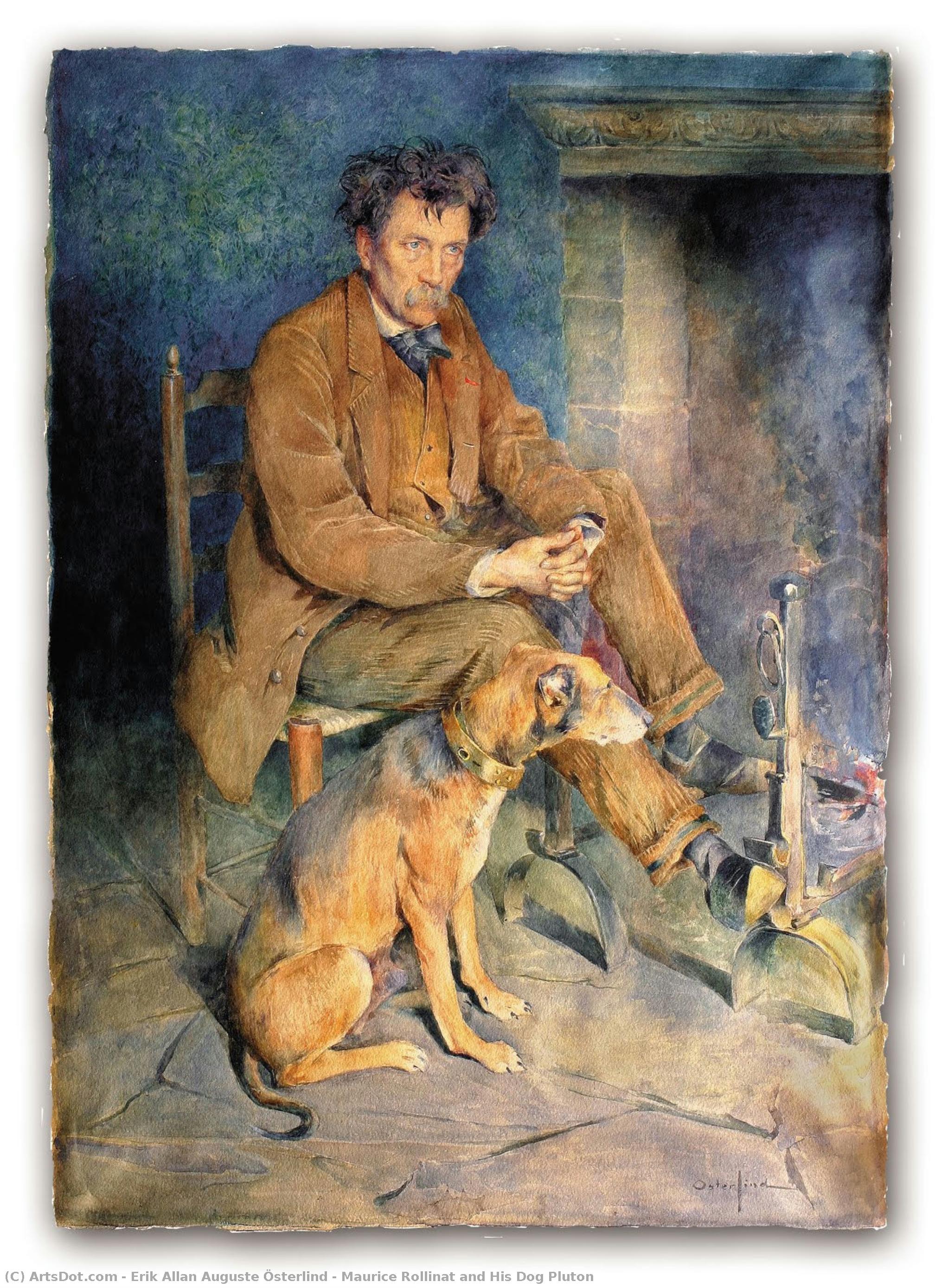
Maurice Rollinat and His Dog Pluton

 Read More
Purchase a high-resolution, enhanced digital image, far superior to the online preview.
Each file is meticulously prepared by our in-house specialists using advanced tools and expert manual retouching. We ensure every image has exceptional clarity, precise color accuracy, and fine detail.
The final file is delivered via email within 72 hours, optimized for immediate use in professional, editorial, and print environments. This is the same quality trusted by top-tier design studios, publishers, and galleries.
Digital Image
Download a high-resolution file for personal display, printing, and creative projects. ( Buy Print Buy Hand Made Painting)
Included in Every Digital Image Order
Expert Digital Delivery, Guaranteed
When you choose ArtsDot.com, you're not just getting an image - you're receiving a professionally enhanced digital artwork, crafted with precision and backed by a satisfaction guarantee. Here's everything that comes with your order, automatically:

Fast Email Delivery
Your high-resolution digital image file will be emailed to you within 72 hours of ordering - ready for immediate use.

AI-Enhanced Digital File
Your artwork is professionally optimized using advanced AI tools and manual editing, ensuring maximum detail, clarity, and color accuracy.

Free Lifetime Re-Delivery
Accidentally deleted or lost your file? No worries - we'll resend it to you anytime, free of charge.

No Import Fees - Ever
Enjoy your artwork instantly with zero customs, duties, or delivery fees - digital downloads are always tax-free.

Color Accuracy Guarantee
We ensure your digital image reflects the original colors as closely as possible using professional tools and color management.

60-Day Satisfaction Guarantee
If you're not satisfied with your digital image, we'll revise it or refund 100% within 60 days - no questions asked.

100% Money-Back Guarantee
Not satisfied? Get a full refund within 60 days of receiving your digital file - no questions asked.

Bulk Order Discounts
Buy 3 images, save 10% - Buy 5, save 15% - Buy 10+, save 20%. Great for creative projects, galleries, and agencies.
Related Artworks








Artist Biography
A Life Bridging Two Worlds: Allan Österlind and the Spirit of Barbizon
Erik Allan August Österlind, a name perhaps less familiar than some of his contemporaries, nevertheless embodies a fascinating intersection of Swedish heritage and French artistic sensibilities. Born in Stockholm on November 2nd, 1855, Österlind’s life was one of deliberate migration – not geographically permanent, but artistically profound. He wasn't content to simply *be* Swedish; he sought to become part of the vibrant Parisian art scene, a journey undertaken by many ambitious Scandinavian artists of his era seeking training and recognition. This pursuit led him to a lifelong connection with France, specifically the idyllic landscapes and tonalist principles championed by the Barbizon school.
Österlind’s early education began at the Royal Swedish Academy of Fine Arts in 1874-1875, providing him with a foundational skillset. However, it was his arrival in Paris in 1877 that truly ignited his artistic development. He quickly integrated into the community of expatriate Swedes, forging lasting friendships with figures like Ernst Josephson and Ville Vallgren. This network proved crucial for navigating the competitive Parisian salons – the gatekeepers to success at the time. He enrolled at the École des Beaux-Arts in 1878, initially studying sculpture under Pierre-Jules Cavelier, but was soon steered towards painting and illustration, a decision that would define his career.
The Embrace of Barbizon and Corot’s Legacy
Österlind's artistic trajectory took a decisive turn with his frequent visits to the artists’ colonies of Barbizon and Grez-sur-Loing. These enclaves, nestled in the forests surrounding Paris, were havens for painters rejecting the rigid academic style in favor of direct observation of nature. The Barbizon school, with its emphasis on *plein air* painting – working outdoors directly from life – resonated deeply with Österlind’s temperament. He wasn't merely copying landscapes; he was attempting to capture their atmosphere, their emotional resonance. This pursuit led him to a style characterized by muted tones, soft edges, and a palpable sense of tranquility.
The influence of Jean-Baptiste Camille Corot is particularly evident in Österlind’s work. Like Corot, he favored landscapes imbued with a melancholic beauty, often featuring figures subtly integrated into the natural world. His watercolors from this period reveal a delicate touch and a mastery of light and shadow. While his early portraits sometimes displayed darker undertones, it was the landscape that became his true passion. He found inspiration not only in Barbizon but also in the regions of Brittany and Creuse, which offered unique atmospheric qualities he sought to translate onto canvas.
A Swedish Voice within a French Tradition
Despite his immersion in French artistic circles, Österlind remained connected to his Swedish roots. He participated in joint exhibitions with fellow expatriates in Stockholm and Gothenburg in 1884 and 1886, attempting to introduce the Barbizon-inspired aesthetic to his homeland. More significantly, he became a signatory of the “Opponenterna” manifesto in 1885 – a group challenging the dominance of the Academy and advocating for greater artistic freedom. This act demonstrates his commitment to progressive ideals, even while operating within the established art system.
Österlind’s work often depicts scenes of everyday life—children playing, figures in contemplative repose—but these are not simply genre paintings. They are imbued with a sense of quiet dignity and emotional depth. His landscapes, meanwhile, transcend mere representation; they evoke a feeling of harmony between humanity and nature. He skillfully blended the technical lessons learned from French masters with a uniquely Scandinavian sensibility – a subtle restraint and an appreciation for the beauty of simplicity.
Legacy and Historical Significance
Allan Österlind’s career unfolded primarily during the 19th century, a period of rapid artistic change. He died in Juvisy-sur-Orge, France, on June 23rd, 1938, leaving behind a body of work that reflects his dedication to capturing the essence of the natural world. While he may not be as widely recognized as some of his more famous contemporaries, Österlind’s contribution lies in his ability to synthesize different artistic traditions – Swedish and French—into a cohesive and deeply personal style.
His paintings offer a glimpse into a specific moment in art history, bridging the gap between academic realism and the emerging Impressionist movement. He was a member of both the Académie Royale Suédoise des Beaux-Arts and the École Nationale Supérieure des Beaux-Arts, demonstrating his acceptance within established artistic institutions while simultaneously advocating for change. Today, Österlind’s work is appreciated for its quiet beauty, technical skill, and evocative atmosphere—a testament to a life dedicated to the pursuit of artistic truth.
erik allan auguste österlind
1855 - 1938 , Sweden
Quick Facts
- Artistic Movement Or Style: Barbizon School
- Artists Who Influenced This Artist:
- Corot
- Millet
- Date Of Birth: November 2, 1855
- Date Of Death: June 23, 1938
- Full Name: Erik Allan August Österlind
- Nationality: Swedish-French
- Notable Artworks:
- Portraits
- Landscapes
- Place Of Birth: Stockholm, Sweden

