 Preview
 Send
Send Share
Share
 Details

 Download
 Similars
 X-Ray
X-Ray Diaporama
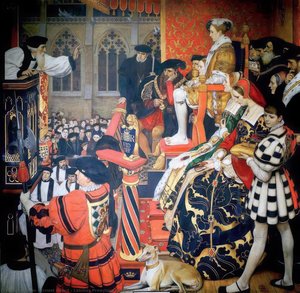
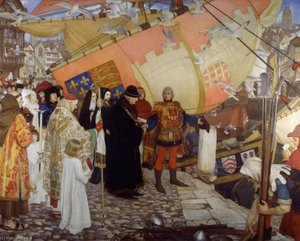
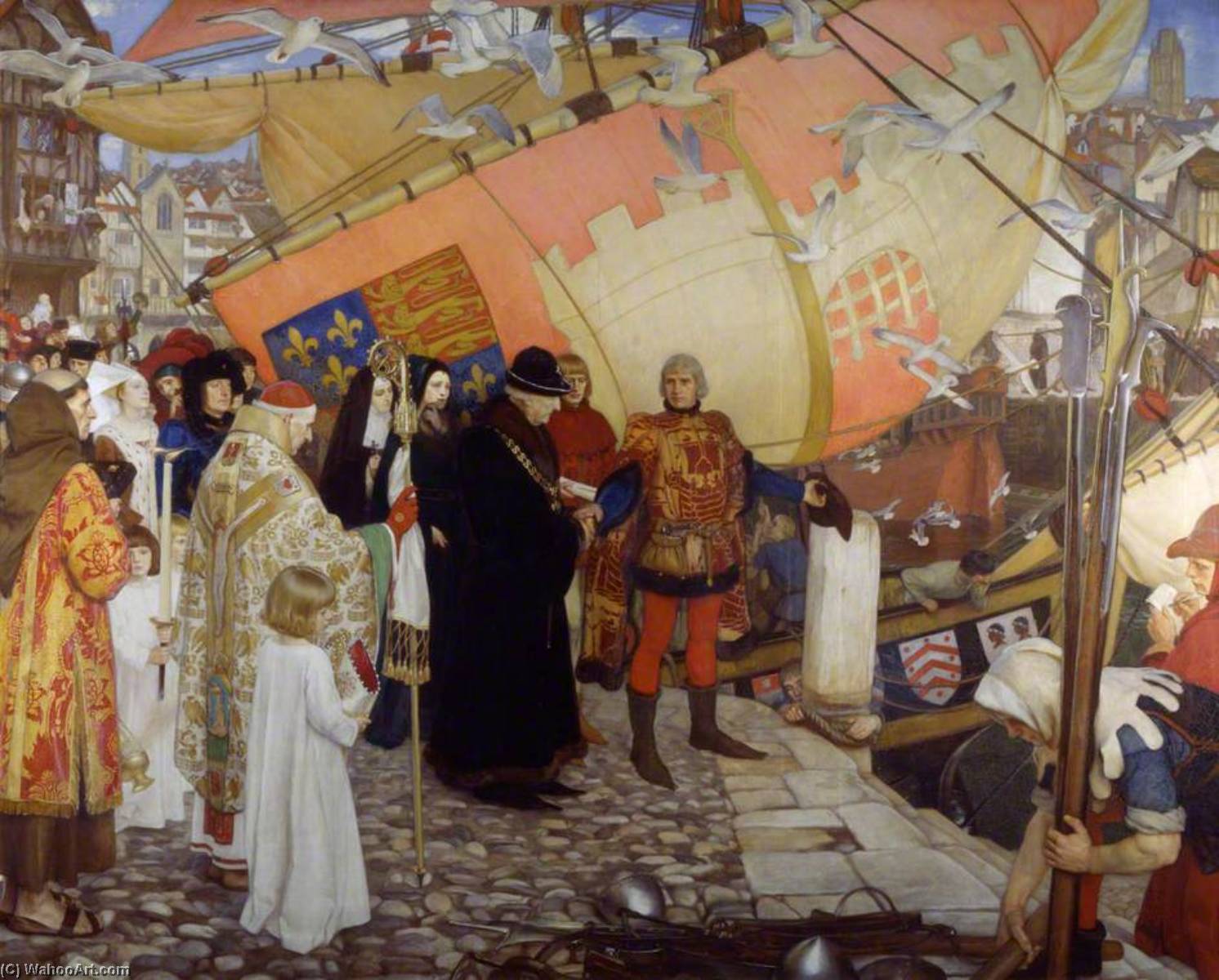
The Departure of John and Sebastian Cabot on their First Voyage of Discovery, 1497
 Painting
- Contemporary Realism
 1906
1906- 19th Century
 173.0 x 215.0 cm
 Bristol Museum - Art Gallery
 Read More
Giclée / Art Print
Museum-quality giclée or canvas print with fast production and flexible finish options. ( Buy Hand Made Painting Buy Image)




P118B $10

P118H $10

P118W $10

P438Z $10

P508JH $12

P508YH $12

P805H $10

P805Z $10

P919BZ $10

P919G $10

P919XJ $10

P959ZH $10

P968JZ $12

W106C $8

W218G $10

W218JH $8

W218Y $10

W307PJ $10

W316G $10

W316PJ $8

W316Y $10

W398PJ $8

W4111J $10

W500HY $15

W500JH $15

W692G $12

W849H $8

W940BG $15

W953PJ $8




Pick from our preset sizes that match the artwork's original proportions.

You may enter your own dimensions to fit a specific frame or space. If your selected size does not match the original image's proportions, we will either crop the artwork or extend the image with a mirrored or solid-fill edge. A digital mockup will be sent for your approval before production begins.
Please note that the on-screen preview does not reflect the actual cropping or extension. Only the mockup will accurately show the final composition.
While custom sizes are available, we recommend selecting a dimension from the predefined list to preserve the original proportions.
Worldwide Delivery () in 2 weeks instead of standard 4/5 weeks. (30 August)

Free Worldwide Express Shipping

High-Quality Linen Canvas

Full Shipping Insurance

Customs Tax Refund Guarantee

True Color Matching Guarantee

60-Day Return Policy (Defects Only)

100% Money-Back Guarantee

Bulk Discount Offer
 Glass option is only available in size under 110 CM

The Departure of John and Sebastian Cabot on their First Voyage of Discovery, 1497
Giclée / Art Print
Reproduction Size
-


Total Price
$ 63
A Grand Tapestry of Discovery: The Departure of the Cabot Brothers
In this sweeping historical mural, created in 1906 by the meticulous hand of Ernest Board, we are transported to the cusp of a new era. The Departure of John and Sebastian Cabot on their First Voyage of Emplacement is not merely a painting; it is a cinematic window into the late 15th century, capturing the breathless moment when the known world began to expand. The composition is a masterclass in narrative density, presenting a bustling, crowded scene that vibrates with the energy of a port city on the brink of monumental change. As the eye wanders through the layered figures—ranging from high-ranking royalty and armored knights to solemn clergy—one feels the weight of history being made. The sheer scale of the work suggests a grander purpose, inviting the viewer to step into a world where every flag unfurled and every ship prepared for departure carried the destiny of nations.
The technique employed by Board evokes the timeless majesty of Renaissance frescoes. There is a palpable texture to the surface, reminiscent of pigments absorbed into aged plaster, which lends the scene an air of venerable antiquity. While the artist leans toward a certain realism in the rendering of facial expressions and the intricate folds of period attire, he masterfully integrates the stylized elements characteristic of medieval wall paintings. This duality creates a fascinating tension: the figures possess a lifelike presence, yet they are arranged within a slightly flattened, rhythmic perspective that emphasizes the symbolic importance of the event over mere topographical accuracy. The use of bold, defined lines provides a structural backbone to the composition, ensuring that even amidst the sea of humanity and the scattered movement of birds, the eye finds its way to the central drama of the ceremony.
Color and light play a pivotal role in establishing the emotional resonance of this masterpiece. The palette is anchored by warm, commanding tones—deep reds, burnt oranges, and earthy browns—which evoke a sense of warmth, tradition, and the sun-drenched atmosphere of a busy harbor. These are punctuated by strategic accents of cerulean blue and verdant green, providing a visual breath that mimics the open sea and the sky above. The lighting is soft and diffuse, casting gentle shadows that sculpt the figures without obscuring the intricate details of their heraldry. This subtle illumination highlights the central symbolic element: a flag bearing a coat of arms, which serves as a powerful emblem of authority, allegiance, and the sovereign mandate driving this voyage of discovery.
For the discerning collector or interior designer, this reproduction offers more than just aesthetic beauty; it offers a profound sense of narrative grandeur. The artwork functions as a focal point that commands attention, bringing a sophisticated historical depth to any space. Whether placed in a library, a formal study, or an expansive gallery, the painting’s themes of exploration, courage, and the dawn of the Age of Discovery resonate deeply. It is a piece that invites contemplation, sparking conversations about the human spirit's relentless pursuit of the unknown. Owning such a work is an opportunity to possess a fragment of historical imagination, rendered with the precision and passion of a true pioneer of scientific and historical illustration.
Related Artworks



Artist Biography
The Precision of Vision: The Life and Legacy of Ernest Board
In the grand tapestry of late Victorian and Edwardian art, where many masters sought the ethereal light of landscapes or the romanticized grandeur of portraits, Ernest Board (1877–1934) carved a unique and vital niche. He was an artist who found profound beauty in the empirical, a man whose brush served as both a creative instrument and a scientific tool. As a pioneer of scientific illustration, Board possessed the rare ability to marry the meticulous accuracy required by the burgeoning medical sciences with the aesthetic grace of the fine arts. His work does not merely observe; it illuminates, bringing clarity to the complex structures of life and the monumental moments of human discovery.
Board’s artistic foundation was laid in the vibrant intellectual atmosphere of London, where he studied at the prestigious Slade School of Fine Art. It was here that he walked alongside luminaries such as William Holman Hunt and John Ruskin, figures whose devotion to the Pre-Raphaelite ideal of "truth to nature" would deeply inform his professional ethos. From these mentors, Board inherited a reverence for minute detail and an uncompromising commitment to observational accuracy. This influence is evident in his refusal to rely on mere stylistic embellishment, choosing instead to let the inherent complexity of his subjects—be they anatomical or historical—speak through precise tonal subtlety and structural integrity.
Bridging the Gap Between Art and Science
The true brilliance of Board’s career lay in his ability to navigate the intersection of the laboratory and the studio. During the Edwardian era, as scientific understanding expanded at a breathtaking pace, there arose a desperate need for visual communication that could transcend the limitations of early photographic technology. Board rose to this challenge with unparalleled skill, securing prestigious commissions from seminal scientific journals such as Nature and The Lancet. His illustrations were far more than decorative accompaniments; they were essential pedagogical instruments that allowed surgeons and researchers to visualize the unseen.
His mastery of the medium allowed him to transform daunting anatomical diagrams into captivating visual narratives. Whether rendering the intricate layers of human musculature or the precise mechanics of surgical instruments, Board imbued his subjects with a sense of vitality. This period of his work represents a significant achievement in the history of medical illustration, as he helped foster public and professional comprehension of groundbreaking medical advancements through images that were as educationally rigorous as they were visually arresting.
Historical Narratives and Scientific Milestones
Beyond the microscopic and the anatomical, Board’s repertoire extended into the realm of historical and scientific commemoration. He possessed a remarkable talent for capturing the "eureka" moments of history, painting scenes that celebrated the giants of science with a Neoclassical dignity. His work often focused on pivotal discoveries that altered the course of human knowledge, such as:
- Joseph Priestley, the Discoverer of Oxygen: A profound 1912 oil painting that captures the essence of scientific breakthrough through a lens of historical significance and classical beauty.
- The Discovery of Quinine, 1820: An exploration of medical history that highlights his ability to dramatize the moment scientific progress meets human necessity.
- Regional Tributes: His ability to connect science with local heritage, as seen in works documenting those who shaped the identity of cities like Bristol.
Through these works, Board ensured that the triumphs of the intellect were preserved within the canon of fine art. His legacy remains a testament to the idea that science and art are not opposing forces, but rather two different languages describing the same magnificent reality. In an age of rapid industrial and scientific change, Ernest Board provided a visual anchor, documenting the evolution of human understanding with a steady, masterful hand.
ernest board
1877 - 1934
Quick Facts
- Artistic Movement Or Style: Victorian Illustration
- Artists Who Influenced This Artist:
- Gustave Dore
- John Ruskin
- Date Of Birth: 1877
- Date Of Death: 1934
- Full Name: Ernest Board
- Nationality: British
- Notable Artworks:
- The Anatomy Lesson
- Portrait of Sir William Osler
- Place Of Birth: London, England
Related Articles

Elevating Interiors: How Murals are Redefining Kitchens and Bathrooms
Transform your kitchen & bathroom with stunning murals! Explore design trends, durable materials & expert advice. Elevate your interiors with 's bespoke mural solutions.

From Jungle Scenes to Gold Leaf Geometry: A Guide to Today's Most Requested Mural Styles
Explore today's top mural styles for hotels & commercial spaces! Discover trends, expert insights, & custom design solutions. Elevate your space with .
Anchoring Interior Design with Murals: A Comprehensive Guide for Hotel Designers
Elevate your hotel's design with impactful murals! Our expert guide explores anchoring interior spaces, thematic storytelling & durable solutions for luxury hospitality. Discover bespoke art options & elevate the guest experience.
Transforming Spaces: How Custom Murals Forge Brand Identity & Enhance Customer Experience
Elevate your brand & spaces with custom murals. Explore expert insights on design, artists, materials & installation. Transform environments – discover 's bespoke solutions.
Elevating Entryways: Transforming Foyers with Artful Murals - A Designer's Guide
Transform your foyer with stunning murals! Explore design trends, artist insights & expert advice for creating a memorable entryway. Discover custom mural solutions at .