 Preview
 Send
Send Share
Share
 Details

 Download
 Similars
 X-Ray
X-Ray Diaporama
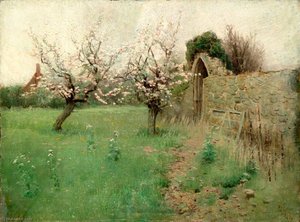
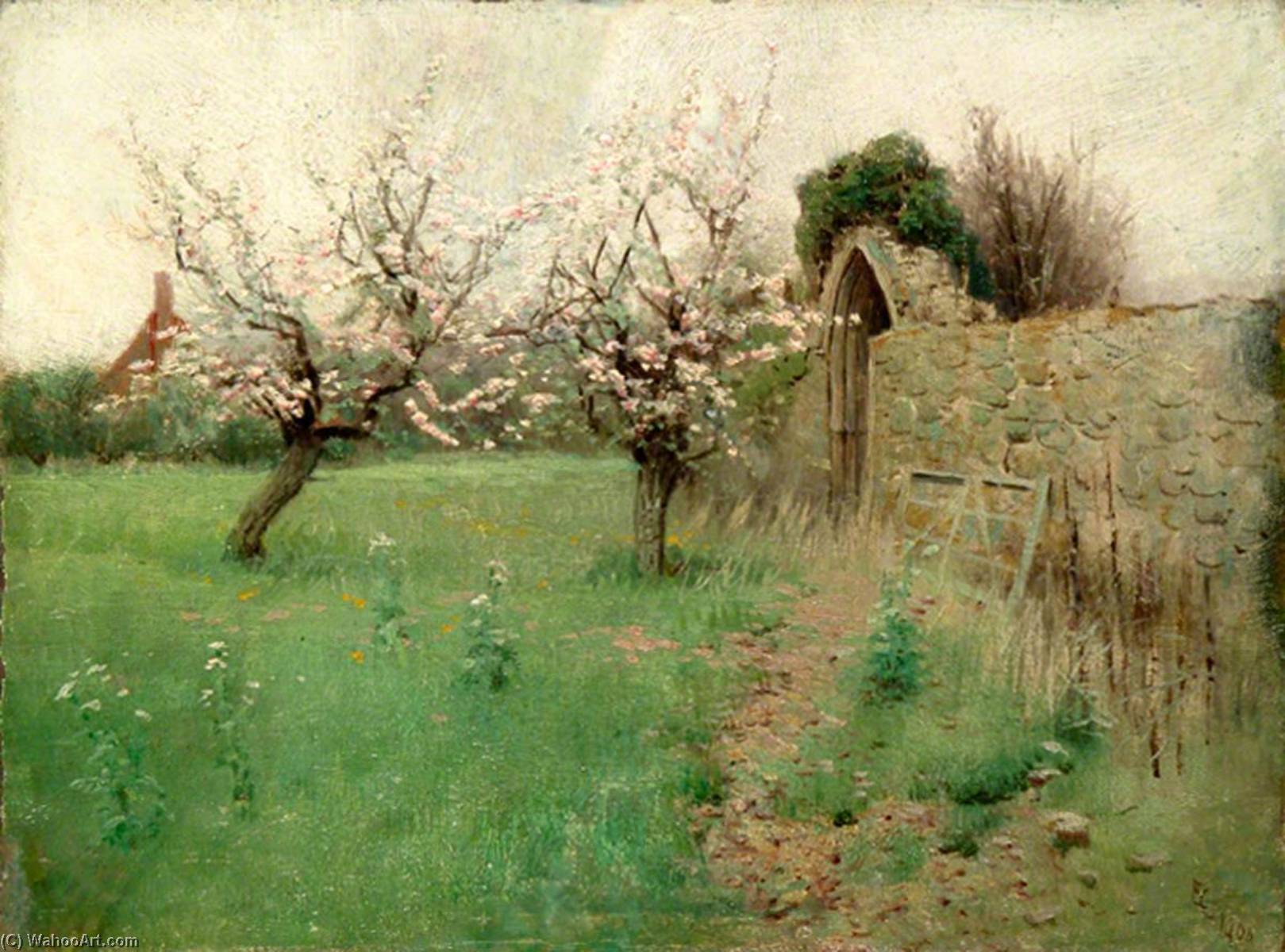
Wall with Arched Gateway Opening on to a Field with Trees, Identified as the Entrance to Oxted Church, Surrey
 Contemporary Realism
 1906
1906- 19th Century
 31.0 x 41.0 cm
 Surrey Archaeological Society
 Read More
Hand Made Oil Reproduction
Hand-painted oil on canvas in your size and frame, made to order by our artists. ( Buy Print Buy Image)




P118B $10

P118H $10

P118W $10

P438Z $10

P508JH $12

P508YH $12

P805H $10

P805Z $10

P919BZ $10

P919G $10

P919XJ $10

P959ZH $10

P968JZ $12

W106C $8

W218G $10

W218JH $8

W218Y $10

W307PJ $10

W316G $10

W316PJ $8

W316Y $10

W398PJ $8

W4111J $10

W500HY $15

W500JH $15

W692G $12

W849H $8

W940BG $15

W953PJ $8




Pick from our preset sizes that match the artwork's original proportions.

You may enter your own dimensions to fit a specific frame or space. If your selected size does not match the original image's proportions, we will either crop the artwork or extend the painting with additional hand-painted elements. A digital mockup will be sent for your approval before production begins.
Please note that the on-screen preview does not reflect the actual cropping or extension. Only the mockup will accurately show the final composition.
While custom sizes are available, we recommend selecting a dimension from the predefined list to preserve the original proportions.
After order, ArtsDot.com team will email client for instructions and provide a mockup preview
Worldwide Delivery () in 3/4 weeks instead of standard 5 weeks. (21 August). No compromise on quality.

Free Worldwide Express Shipping

High-Quality Linen Canvas

Full Shipping Insurance

Customs Tax Refund Guarantee

True Color Matching Guarantee

60-Day Return Policy (Defects Only)

100% Money-Back Guarantee

Bulk Discount Offer
 Glass option is only available in size under 110 CM

Wall with Arched Gateway Opening on to a Field with Trees, Identified as the Entrance to Oxted Church, Surrey
Reproduction Medium
Reproduction Size
-


Total Price
$ 263
Artwork Description
A Portal to Serenity: The Quiet Mastery of Ernest C. Christie
In the gentle landscape of early twentieth-century British art, few artists captured the profound stillness of the English countryside with as much intimacy as Ernest C. Christie. His 1906 masterpiece, Wall with Arched Gateway Opening on to a Field with Trees, Identified as the Entrance to Oxted Church, Surrey, serves as more than just a depiction of a rural boundary; it is an invitation to pause and breathe. Through this work, Christie invites the viewer to step through a stone threshold and into a world where time seems to have slowed to the rhythmic pace of nature itself. The painting captures a specific, localized charm—the entrance to Oxted Church—transforming a familiar Surrey landmark into a universal symbol of peace and pastoral grace.
The composition is masterfully structured around the architectural element of the arched gateway, which acts as a visual bridge between the viewer’s space and the verdant expanse beyond. This threshold creates a sense of depth and discovery, drawing the eye past the weathered textures of the wall toward the sun-dappled field. Within this meadow, scattered trees stand like silent sentinels, their forms softened by the light, while two humble benches sit nestled in the grass. These small, human touches suggest a landscape that is not merely observed, but lived in—a place designed for contemplation, rest, and the quiet enjoyment of the natural world.
Technically, Christie demonstrates his characteristic ability to manipulate light and texture to evoke atmosphere. The brushwork, while precise enough to define the ruggedness of the stone and the delicate leaves of the trees, retains a painterly softness that mimics the hazy, golden quality of an afternoon in the Surrey hills. His palette is a sophisticated harmony of earthy greens, warm ochres, and soft shadows, creating a tonal unity that feels both grounded and ethereal. This mastery of light allows the painting to radiate a gentle warmth, making the scene feel as though it is bathed in the fleeting, precious glow of a summer twilight.
For the discerning collector or interior designer, this piece offers an unparalleled emotional resonance. It possesses a restorative quality, making it an ideal centerpiece for spaces dedicated to relaxation, such as a library, a study, or a tranquil sitting room. As a high-quality reproduction, the artwork brings the timeless elegance of the Edwardian era into the modern home, providing a window into a lost era of pastoral tranquility. To hang this painting is to invite a sense of enduring calm and a deep appreciation for the subtle, often overlooked beauties of the natural landscape into one's personal sanctuary.
Related Artworks

Artist Biography
The Quiet Observer: The Life and Art of Ernest C. Christie
In the tapestry of British landscape painting, certain threads do not scream for attention with bold, avant-garde strokes, but instead weave a sense of profound, enduring peace. Ernest C. Christie (1863–1937) was such an artist. A painter of quiet moments, his work serves as a window into a vanished era of English rural life, specifically the rolling, verdant landscapes of Surrey. He did not seek the frantic spotlight of the London art scene; rather, he found his purpose in the meticulous observation of the everyday—the way light falls across a weathered cart shed, or the soft, atmospheric haze settling over a village church. His legacy is one of intimacy, capturing the gentle rhythms of a countryside that felt both permanent and precious.
Christie’s personal history provided a foundation of discipline and a unique perspective on the visual world. Born in 1863, his lineage was marked by intellectual and military distinction. His father, Samuel Hunter Christie, was a respected physicist and mathematician, while his uncle, Archibald Christie, held a prominent position in the British Army and would later become famously linked to the novelist Agatha Christie through marriage. This background of precision and order likely informed the artist's disciplined eye. Though he initially pursued a career in accountancy—a profession requiring rigorous attention to detail—the pull of the visual arts proved irresistible. In his later years, he transitioned fully into painting, bringing with him a structured approach to composition that would define his mature style.
A Mastery of Light and Rural Nostalgia
The essence of Christie’s technique lies in his profound debt to the masters of the Dutch Golden Age. He was deeply moved by their ability to render light not merely as a source of illumination, but as a tangible substance that defines form and mood. This influence is evident in his use of a luminous palette and carefully considered brushwork, which creates an illusion of depth and a palpable sense of tranquility. Whether working in oils or watercolors, Christie possessed the ability to capture the subtle nuances of color—the golden warmth of an afternoon sun hitting a farmyard or the cool, muted tones of a misty morning in the Surrey hills.
His subject matter often focused on the humble and the overlooked, elevating simple structures to subjects of high art. His repertoire includes:
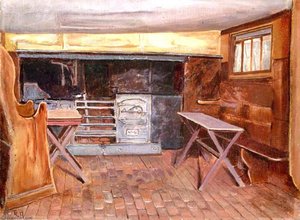
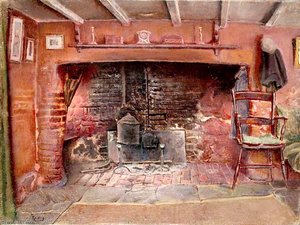
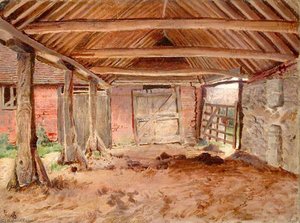
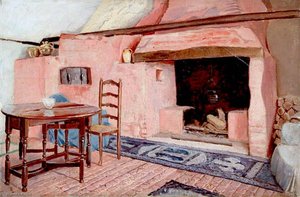
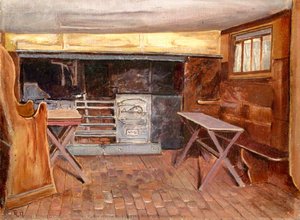
- Architectural Intimacy: Detailed depictions of interior views of cart sheds and rustic kitchen ranges, such as his evocative 1917 scene at 'The Hare and Hons' in Godstone.
- Ecclesiastical Serenity: Soft, Impressionistic watercolors of local landmarks, including the St John the Baptist Church in Okewood.
- Pastoral Charm: Nostalgic landscapes featuring thatched cottages near Bletchingley and the tranquil expanses of Volvens Farm in Forest Green.
Through these subjects, Christie achieved a form of visual storytelling that celebrated the dignity of labor and the enduring beauty of the English landscape. His compositions are typically balanced and restrained, avoiding dramatic or jarring transitions in favor of a harmonious flow that invites the viewer to linger within the scene.
Historical Significance and Lasting Impression
While Christie may not have been a revolutionary figure who sought to overturn the traditions of his time, his historical significance lies in his role as a chronicler of a specific, pastoral English identity. His work captures a period of transition, documenting the rural landscapes of Surrey before the rapid industrial and social shifts of the 20th century could fully erode them. There is a profound sense of nostalgia embedded in his canvases—a feeling of looking back at a world of steady, predictable beauty.
Today, Christie’s paintings are cherished not only for their technical proficiency but for the emotional resonance they provide. They offer a retreat into a world of peace, order, and light. For collectors and art enthusiasts, his work remains an invitation to slow down and appreciate the subtle magic found in the most ordinary corners of the earth. He remains a master of the understated, proving that the most powerful artistic statements are often those whispered rather than shouted.
ernest c christie
1863 - 1937
Quick Facts
- Artistic Movement Or Style: Realist Painting
- Artists Or Movements Influenced By This Artist: ['Dutch Golden Age']
- Artists Who Influenced This Artist: ['Samuel Hunter Christie']
- Date Of Birth: 1863
- Date Of Death: 1937
- Full Name: Ernest C Christie
- Nationality: British
- Notable Artworks:
- Thatchers, Surrey
- Interior Cart Shed
- Pollingfold, Surrey
- Place Of Birth: WahooArt, USA
Related Articles
Verdant Visions: Exploring the Symbolism & Aesthetic Impact of Green in Art History
Explore the rich history & symbolism of green in art! Discover iconic paintings, techniques, and how to bring verdant harmony into your home with ArtsDot's expert guide.

Hokusai's Masterpieces: 25 Iconic Prints & Paintings for Art Lovers | ArtsDot
Journey through Katsushika Hokusai’s 25 most iconic artworks, including *The Great Wave*. Explore the ukiyo-e master's history, style & timeless Japanese woodblock prints. Find museum-quality reproductions for your home at ArtsDot.com.

Romantic Landscapes: 10 Masterpieces for Your Home | ArtsDot
Journey through 10 Romantic landscape masterpieces by Friedrich, Turner & Cole. Explore emotional art, sublime nature scenes & iconic 19th-century paintings. Find museum-quality reproductions for your home at ArtsDot.com – discover the full collection online!
Anthony Vandyke Copley Fielding: Rediscovering a Master of Romantic Landscape
Discover the captivating landscapes of Anthony Vandyke Copley Fielding, a master of Romantic watercolour painting. Explore his life, technique, and legacy with ArtsDot – your source for museum-quality art reproductions & expert appraisal.

Evocations of Place: A Historical Journey Through Landscape Art
Explore the rich history of landscape art with ArtsDot. Discover renowned artists, movements like Impressionism & Romanticism, and expert guidance for collecting timeless pieces. Find your perfect serene escape today!