 Preview
 Send
Send Share
Share
 Details

 Download
 Similars
 X-Ray
X-Ray Diaporama
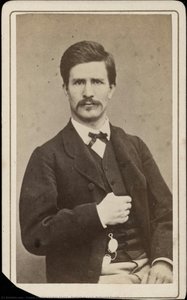
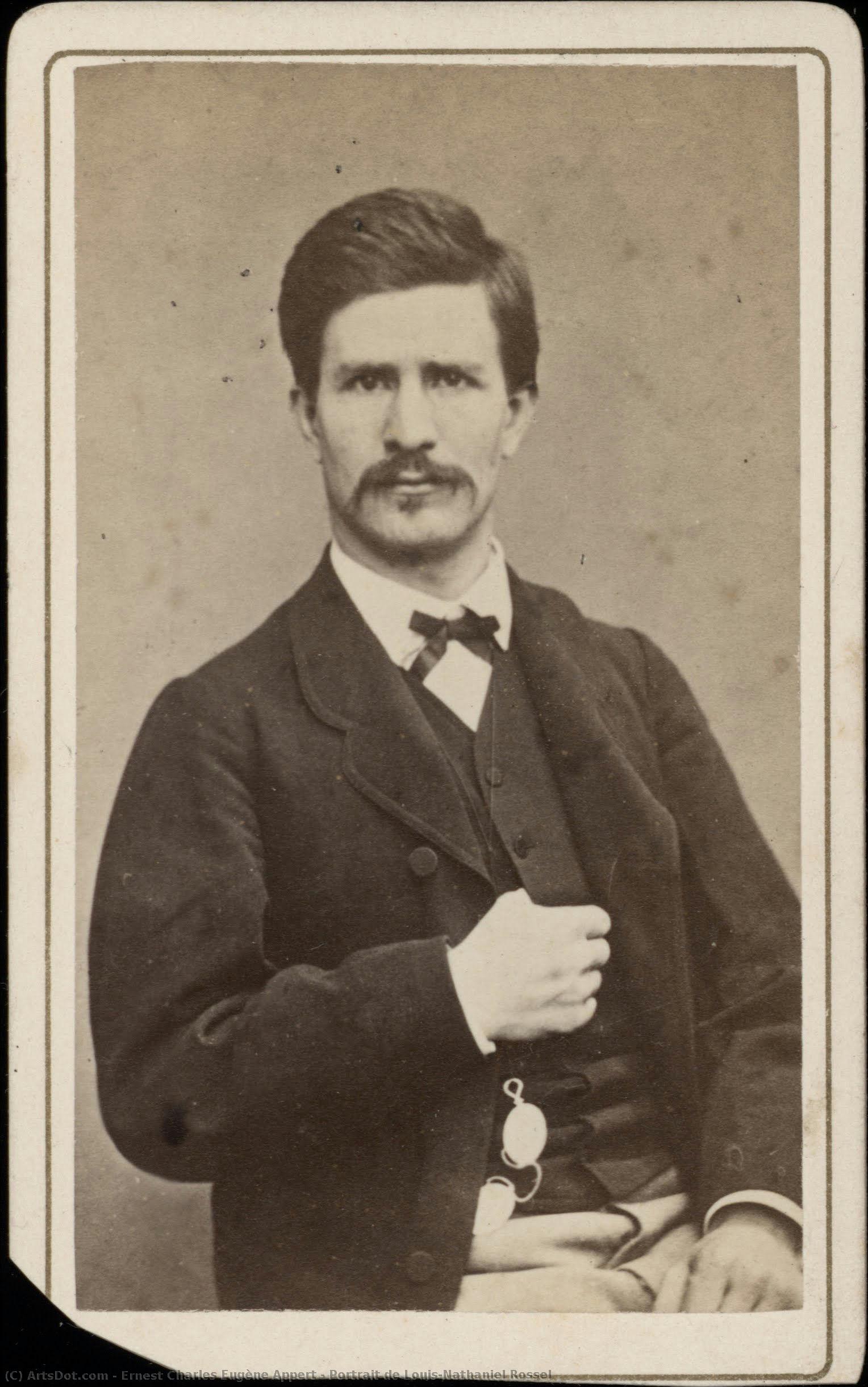
Portrait de Louis-Nathaniel Rossel


 Read More
Hand Made Oil Reproduction
Hand-painted oil on canvas in your size and frame, made to order by our artists. ( Buy Print Buy Image)




































Pick from our preset sizes that match the artwork's original proportions.

You may enter your own dimensions to fit a specific frame or space. If your selected size does not match the original image's proportions, we will either crop the artwork or extend the painting with additional hand-painted elements. A digital mockup will be sent for your approval before production begins.
Please note that the on-screen preview does not reflect the actual cropping or extension. Only the mockup will accurately show the final composition.
While custom sizes are available, we recommend selecting a dimension from the predefined list to preserve the original proportions.
After order, ArtsDot.com team will email client for instructions and provide a mockup preview
Worldwide Delivery () in 3/4 weeks instead of standard 5 weeks. (16 August). No compromise on quality.

Free Worldwide Express Shipping

High-Quality Linen Canvas

Full Shipping Insurance

Customs Tax Refund Guarantee

True Color Matching Guarantee

60-Day Return Policy (Defects Only)

100% Money-Back Guarantee

Bulk Discount Offer
 Glass option is only available in size under 110 CM

Portrait de Louis-Nathaniel Rossel
Reproduction Medium
Reproduction Size
-


Total Price
$ 263
Related Artworks
Artist Biography
The Shadow Photographer of Paris
In the flickering light of nineteenth-century France, few figures captured the tension between reality and artifice as provocatively as Ernest Charles Eugène Appert. Born in 1831 in Châteauroux, Appert emerged from a background that demanded meticulous precision, a trait that would later define his revolutionary, if controversial, approach to the photographic medium. Alongside his brother, Eugène-Léon Appert, he forged a professional identity that blurred the lines between individual artistry and a shared commercial vision. His early training under Émile Defonds, a cornerstone of the Société Française de Photographie, provided him with a foundation in both the delicate art of miniature painting and the emerging science of light-sensitive chemistry. This dual heritage allowed him to view the camera not merely as a tool for documentation, but as a canvas for complex, layered storytelling.
Appert’s ascent within the Parisian art scene was marked by his ability to capture the essence of the era's social hierarchy. As a portrait photographer of significant renown, he became a sought-after chronicler of the political elite, lending his lens to the faces that shaped French governance. His participation in the prestigious Universal Exhibitions of 1862 and 1867 signaled his arrival as a master of the craft, demonstrating an eagerness to push the boundaries of what a photographic print could convey. Yet, beneath the polished surface of his formal portraits lay a restless experimentalist, one who was beginning to grasp the transformative potential of photomontage—a technique that would eventually lead him into the heart of historical controversy.
The Architecture of Deception
The true legacy of Appert is inextricably linked to the blood and fire of the 1871 Paris Commune. During this period of intense civil insurrection, Appert moved beyond simple documentation to become a pioneer of what could be described as early political propaganda. He developed a series of works known as Crimes de la Commune, which utilized a sophisticated, albeit deceptive, method of composite imagery. Rather than capturing the raw chaos of the streets, Appert retreated to his studio to reconstruct the violence through a meticulous process of cutting and pasting. By taking headshots of incarcerated Communards and grafting them onto staged tableaux featuring actors, he created a visceral, albeit fabricated, narrative of brutality.
This technique—a precursor to modern digital manipulation—was as much about psychological impact as it was about technical skill. His work functioned as a powerful tool for the Versailles government, reinforcing anti-Communist sentiments by presenting staged atrocities as undeniable photographic truth. The sheer effectiveness of these images led the French government to ban the series, citing its potential to disturb the public peace. Through this lens, we see Appert not just as an artist, but as a master of the constructed reality, someone who understood that the power of an image lies not always in its accuracy, but in its ability to manipulate the viewer's perception of truth and justice.
A Legacy of Light and Illusion
The historical significance of Ernest Appert extends far beyond the political turmoil of his time. He stands as a pivotal figure in the evolution of photographic technique, bridging the gap between the static portraiture of the mid-century and the dynamic, multi-layered compositions of the modern era. His work invites profound ethical inquiries into the role of the artist in documenting conflict: Can a photograph be truthful if it is composed of lies? While his methods were often criticized as tendentious, his ability to harness the nascent power of montage paved the way for future generations of avant-garde artists who would use collage and assembly to challenge the very nature of the image.
Today, Appert’s contributions are studied through both an aesthetic and a sociological lens. His life remains a testament to the dual nature of the camera—as both a mirror reflecting society and a tool capable of reshaping it. To look upon his work is to encounter the shadows of 19th-century Paris, where the boundaries between the documented event and the imagined crime were as thin as the albumen paper upon which they were printed.
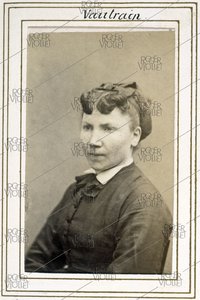
ernest charles eugène appert
1831 - 1890 , France
Quick Facts
- Artistic Movement Or Style: Photography
- Artists Or Movements Influenced By This Artist: ['Photomontage']
- Artists Who Influenced This Artist: ['Émile Defonds']
- Date Of Birth: 1831
- Date Of Death: 1890
- Full Name: Ernest Charles Eugène Appert
- Nationality: French
- Notable Artworks:
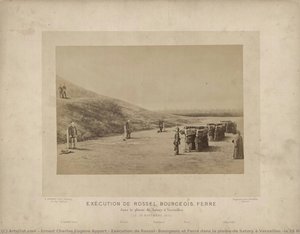
- Exécution de Rossel, Bourgeois et Ferré dans la plaine de Satory à Versailles (le 28 novembre 1871)
- Portrait de Louis-Nathaniel Rossel
- Place Of Birth: Chartroux, France