

 Preview
 Send
Send Share
Share
 Details

 Download
 Similars
 X-Ray
X-Ray Diaporama
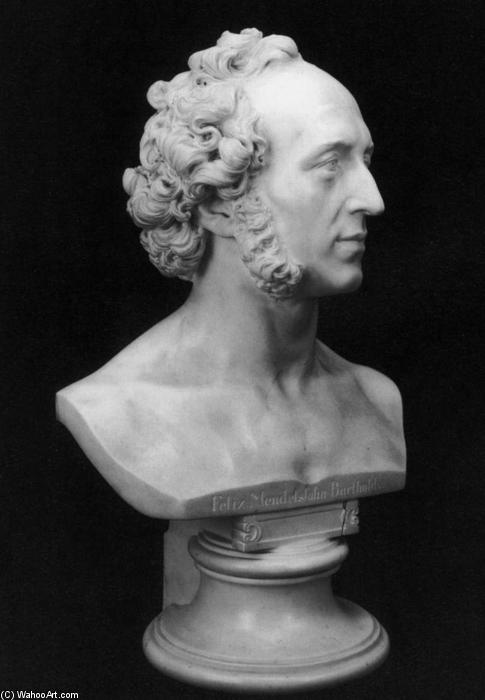
Bust of Felix Mendelssohn-Bartholdy


 Read More
Purchase a high-resolution, enhanced digital image, far superior to the online preview.
Each file is meticulously prepared by our in-house specialists using advanced tools and expert manual retouching. We ensure every image has exceptional clarity, precise color accuracy, and fine detail.
The final file is delivered via email within 72 hours, optimized for immediate use in professional, editorial, and print environments. This is the same quality trusted by top-tier design studios, publishers, and galleries.
Digital Image
Download a high-resolution file for personal display, printing, and creative projects. ( Buy Print Buy Hand Made Painting)
Included in Every Digital Image Order
Expert Digital Delivery, Guaranteed
When you choose ArtsDot.com, you're not just getting an image - you're receiving a professionally enhanced digital artwork, crafted with precision and backed by a satisfaction guarantee. Here's everything that comes with your order, automatically:

Fast Email Delivery
Your high-resolution digital image file will be emailed to you within 72 hours of ordering - ready for immediate use.

AI-Enhanced Digital File
Your artwork is professionally optimized using advanced AI tools and manual editing, ensuring maximum detail, clarity, and color accuracy.

Free Lifetime Re-Delivery
Accidentally deleted or lost your file? No worries - we'll resend it to you anytime, free of charge.

No Import Fees - Ever
Enjoy your artwork instantly with zero customs, duties, or delivery fees - digital downloads are always tax-free.

Color Accuracy Guarantee
We ensure your digital image reflects the original colors as closely as possible using professional tools and color management.

60-Day Satisfaction Guarantee
If you're not satisfied with your digital image, we'll revise it or refund 100% within 60 days - no questions asked.

100% Money-Back Guarantee
Not satisfied? Get a full refund within 60 days of receiving your digital file - no questions asked.

Bulk Order Discounts
Buy 3 images, save 10% - Buy 5, save 15% - Buy 10+, save 20%. Great for creative projects, galleries, and agencies.
Related Artworks
Artist Biography
Early Life and Artistic Foundations
Ernst Friedrich August Rietschel, born on December 15th, 1804, in the modest town of Pulsnitz, Saxony, emerged from humble beginnings that belied his future prominence as one of Germany’s most celebrated sculptors. His father, Friedrich Ehregott Rietschel, was a leather purse and glove maker, and the family faced considerable financial hardship during Ernst's formative years. Despite these challenges, an early inclination towards art manifested itself; by age ten, young Ernst received his first drawing lessons from Gottlieb Leberecht Kühler in Pulsnitz, supplementing the family income through artistic endeavors like decorating targets and grave crosses. This initial exposure ignited a passion that would define his life’s trajectory.
In 1820, Rietschel secured a coveted scholarship to the Royal Saxonian Academy of Arts in Dresden, marking a pivotal moment in his development. He studied under esteemed professors like Johann Gotthold Seyfert and Friedrich Mattäi, immersing himself in classical forms and techniques. A formative journey to Rome between 1827 and 1828 further refined his skills and broadened his artistic horizons, exposing him to the masterpieces of antiquity and the Renaissance.
The Rise to Prominence: Dresden and Beyond
Upon returning to Saxony, Rietschel quickly established himself as a significant figure in the art world. His monumental statue of Frederick Augustus, King of Saxony, garnered immediate attention, showcasing his burgeoning talent for capturing both physical likeness and regal presence. In 1832, he was elected professor of sculpture at the Dresden Academy, solidifying his position as a leading educator and artist. This appointment allowed him to nurture a new generation of sculptors while continuing to pursue ambitious commissions.
Rietschel’s style during this period was remarkably versatile, encompassing works imbued with deep religious feeling alongside classically inspired pieces. He received accolades and orders from various governments, demonstrating his growing international reputation. His ability to blend idealism with dramatic vigor set him apart, attracting a diverse clientele eager for portraits that transcended mere representation.
Masterworks and Artistic Legacy
Rietschel’s prolific career yielded an impressive body of work characterized by its emotional depth and technical mastery. Among his most celebrated achievements are the colossal statues of Goethe and Schiller commissioned for Weimar, embodying the spirit of Germany's literary giants. His statue of Weber in Dresden similarly honored a musical icon, while his depiction of Lessing for Brunswick captured the philosopher’s intellectual intensity.
However, it was perhaps his religious sculptures that resonated most profoundly with audiences. The *Christ-Angel* and the life-sized *Pietà*, commissioned by the King of Prussia, exemplified his ability to convey profound spiritual themes through sculpted form. His series of bas-reliefs representing Night and Morning, Noon and Twilight showcased a poetic sensibility and imaginative flair.
Influences and Artistic Development
Rietschel’s artistic journey was shaped by a confluence of influences. The classical sculptures he encountered during his Roman sojourn profoundly impacted his understanding of form and proportion. He admired the work of Antonio Canova, whose Neoclassical elegance informed his own style. Simultaneously, he drew inspiration from Overbeck's religious paintings, seeking to imbue his sculpture with similar emotional depth.
His contemporaries also played a role in his development; friendships with artists like Friedrich Preller and Carl Julius Milde fostered intellectual exchange and artistic innovation. Rietschel’s willingness to experiment with different styles—from Neoclassical precision to Romantic expressiveness—demonstrates a remarkable adaptability and commitment to pushing the boundaries of sculptural representation.
Historical Significance and Enduring Impact
Ernst Friedrich August Rietschel died in Dresden on January 21st, 1861, leaving behind a legacy that continues to inspire. His sculptures stand as testaments to his technical skill, emotional sensitivity, and profound understanding of the human condition. He bridged the gap between Neoclassical formality and Romantic expressiveness, creating works that resonated with both intellectual and spiritual audiences.
His influence extended beyond his immediate circle of students; he helped shape the course of 19th-century German sculpture, paving the way for future generations of artists. Today, Rietschel’s work can be found in prominent museums and public spaces, including Berlin's Kaiser-Friedrich Museum, ensuring that his evocative realism continues to captivate and inspire.
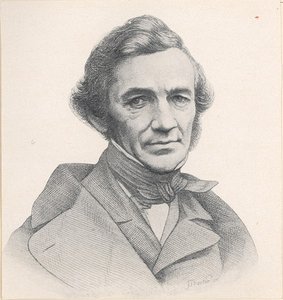
ernest friedrich august rietschel
1804 - 1861 , Germany
Quick Facts
- Artistic Movement Or Style: Neoclassical
- Artists Or Movements Influenced By This Artist: ['Classical Sculpture']
- Artists Who Influenced This Artist: ['Antonio Canova']
- Date Of Birth: 1804
- Full Name: Ernest Friedrich August Rietschel
- Nationality: German
- Notable Artworks: ['Bust of Felix Mendelssohn-Bartholdy']
- Place Of Birth: Saxony, Germany

