 Preview
 Send
Send Share
Share
 Details

 Download
 Similars
 X-Ray
X-Ray Diaporama
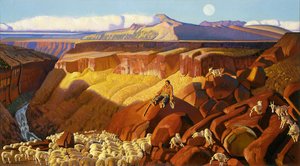
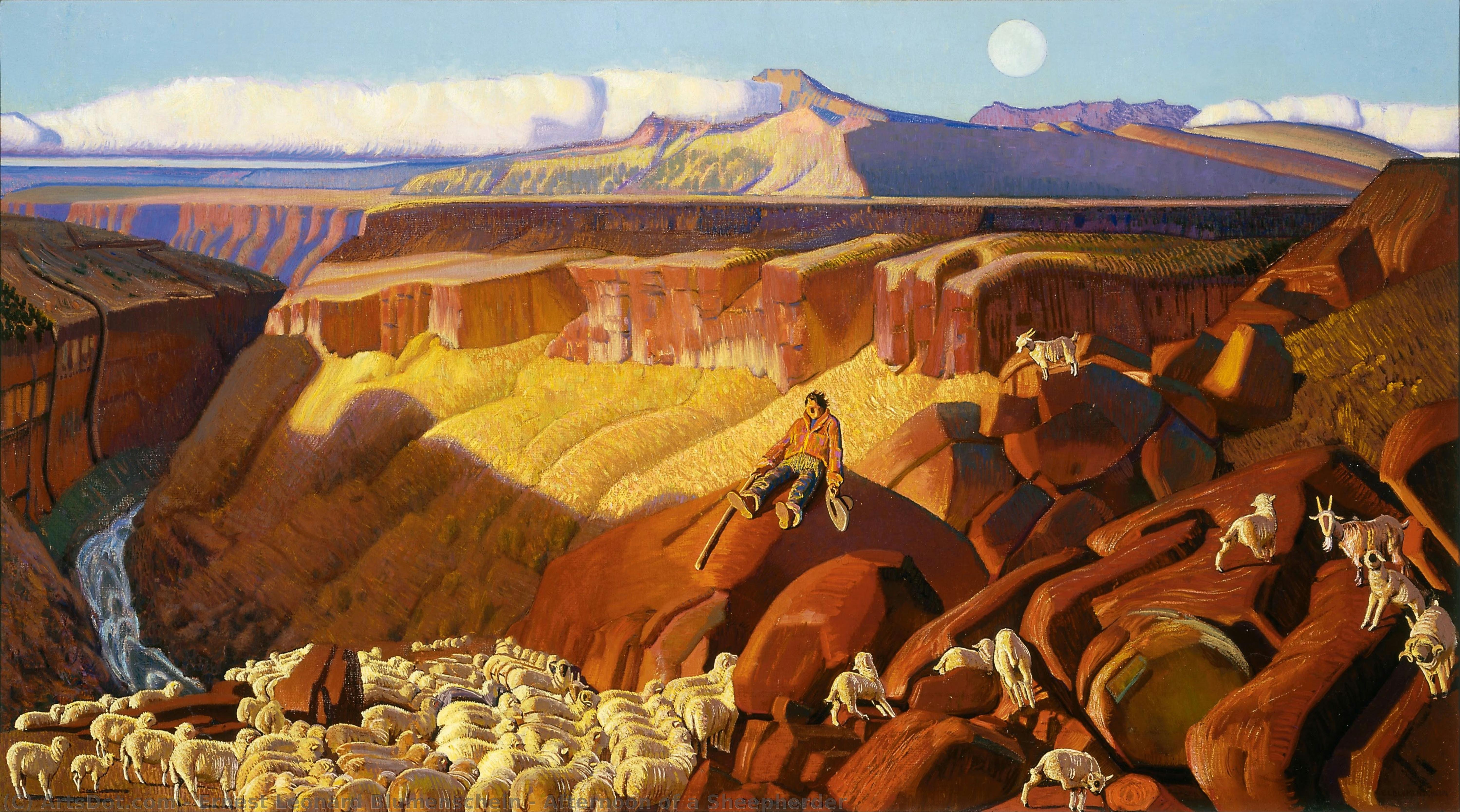
Afternoon of a Sheepherder


 Read More
Hand Made Oil Reproduction
Hand-painted oil on canvas in your size and frame, made to order by our artists. ( Buy Print Buy Image)




P118B $10

P118H $10

P118W $10

P438Z $10

P508JH $12

P508YH $12

P805H $10

P805Z $10

P919BZ $10

P919G $10

P919XJ $10

P959ZH $10

P968JZ $12

W106C $8

W218G $10

W218JH $8

W218Y $10

W307PJ $10

W316G $10

W316PJ $8

W316Y $10

W398PJ $8

W4111J $10

W500HY $15

W500JH $15

W692G $12

W849H $8

W940BG $15

W953PJ $8




Pick from our preset sizes that match the artwork's original proportions.

You may enter your own dimensions to fit a specific frame or space. If your selected size does not match the original image's proportions, we will either crop the artwork or extend the painting with additional hand-painted elements. A digital mockup will be sent for your approval before production begins.
Please note that the on-screen preview does not reflect the actual cropping or extension. Only the mockup will accurately show the final composition.
While custom sizes are available, we recommend selecting a dimension from the predefined list to preserve the original proportions.
After order, ArtsDot.com team will email client for instructions and provide a mockup preview
Worldwide Delivery () in 3/4 weeks instead of standard 5 weeks. (22 August). No compromise on quality.

Free Worldwide Express Shipping

High-Quality Linen Canvas

Full Shipping Insurance

Customs Tax Refund Guarantee

True Color Matching Guarantee

60-Day Return Policy (Defects Only)

100% Money-Back Guarantee

Bulk Discount Offer
 Glass option is only available in size under 110 CM

Afternoon of a Sheepherder
Reproduction Medium
Reproduction Size
-


Total Price
$ 263
Related Artworks
Artist Biography
A Harmonious Convergence: The Life and Art of Ernest L. Blumenschein
Born in Pittsburgh, Pennsylvania, in 1874, Ernest Leonard Blumenschein’s artistic journey was one of fascinating transition and unwavering dedication. Initially steeped in the world of music – his father a respected musician and composer – young Ernest displayed exceptional talent on the violin, even earning a scholarship to the Cincinnati College of Music. However, an illustration course at the Cincinnati Art Academy ignited a different passion within him, a visual calling that would ultimately define his life’s work. This shift wasn't merely a change in medium; it was a redirection of sensitivity, a move from interpreting sound into capturing the silent poetry of light and form. He continued to hone his skills at the Art Students League of New York, supporting himself through his musical abilities – a testament to his discipline and multifaceted talent – before venturing across the Atlantic to Paris in 1894. It was within the walls of the Académie Julian that he encountered kindred spirits: Bert Phillips and Joseph Henry Sharp, artists who would profoundly influence his trajectory and introduce him to the captivating allure of the American Southwest.The Allure of Taos and a Blossoming Artistic Identity
The year 1898 marked a pivotal moment in Blumenschein’s life. Alongside Bert Phillips, he embarked on a journey to Taos, New Mexico, a landscape that would forever hold a central place in his artistic imagination. The raw beauty of the terrain, the vibrant culture of the Pueblo and Navajo peoples, and the quality of light unlike anything he had previously experienced captivated him deeply. Though he returned to New York and established himself as a successful illustrator – contributing to prominent magazines like *Century*, *Harper’s*, and *Scribner's*, even illustrating works by Jack London – the pull of Taos remained strong. Summers were increasingly spent in New Mexico, allowing him to immerse himself in the environment that had so profoundly moved him. This period saw a gradual but significant shift in his focus, from commercial illustration towards fine art painting. In 1915, Blumenschein joined forces with Phillips, Sharp, Oscar E. Berninghaus, E. Irving Couse, and W. Herbert Dunton to co-found the Taos Society of Artists, an organization that would become instrumental in establishing Taos as a thriving art colony and promoting the unique artistic vision emerging from the region. He served as president of the society from 1920 to 1921, solidifying his role as a leader within this burgeoning artistic community. By 1919, Blumenschein had made the permanent move to Taos, fully embracing the life and landscape that would inspire him for decades to come.Capturing Essence: Style, Themes, and Notable Works
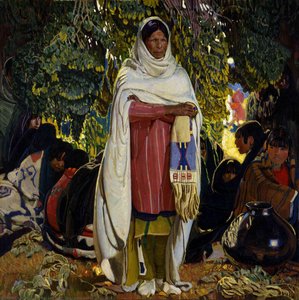
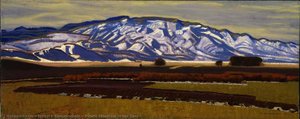
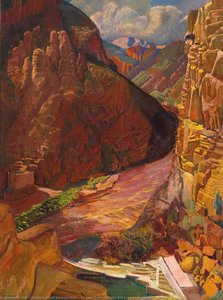
Blumenschein’s artistic style evolved over time, initially showing influences of post-impressionism but ultimately developing towards a more modernist approach characterized by meticulous detail and an acute sensitivity to light and atmosphere. He wasn't simply interested in *depicting* the Southwest; he sought to capture its very essence – the spirit of the land and the dignity of its people. Native American subjects were frequent motifs in his work, rendered with respect and a desire to portray their cultural richness authentically. His paintings of Pueblo and Navajo individuals are not ethnographic studies but rather intimate portraits that reveal character and humanity. Alongside these figures, New Mexico landscapes dominated his canvases – majestic mountains, expansive valleys, and the subtle hues of the desert all found expression in his work. Notable pieces like “Picuris Mountain (Near Taos)” exemplify his ability to convey the grandeur of the Southwestern landscape, while "Afternoon of a Sheepherder" offers a glimpse into the daily life of the region’s inhabitants. Other significant works include “The Burro,” “White Blanket and Blue Spruce,” and “Arizona Dam (Arizona Red Symphony Arizona Canyon),” each demonstrating his mastery of composition and color. His background in illustration undoubtedly informed his meticulous attention to detail, lending a narrative quality to many of his paintings. "The Gift" is an excellent example of this storytelling ability.Legacy and Enduring Influence
Ernest L. Blumenschein’s contribution to American art extends far beyond the beauty of his individual canvases. He played a crucial role in shaping perceptions of the American Southwest, challenging preconceived notions and fostering a deeper appreciation for its unique cultures and landscapes. As a founding member of the Taos Society of Artists, he was instrumental in establishing Taos as a significant art colony, attracting artists from across the country and creating a vibrant artistic community. Throughout his career, Blumenschein received numerous accolades, including election into the National Academy of Design (as an Associate in 1910 and a Full Member in 1927), and honorary degrees from the University of New Mexico and the School of American Research. Even during World War I, he contributed to the national effort by leading a project to create range-finder paintings for military training – demonstrating his commitment to service alongside his artistic pursuits. Despite declining health in his later years, Blumenschein continued to paint until his death in Taos on June 6, 1960, his ashes interred at the Taos Pueblo Reservation—a final testament to his deep connection with the land and its people. Today, his works are held by prestigious institutions such as the Smithsonian American Art Museum, the Harwood Museum of Art, and the New Mexico Museum of Art, ensuring that his artistic legacy will continue to inspire generations to come.A Lasting Impression
- Early Influences: Music initially shaped Blumenschein’s discipline and sensitivity before he transitioned to visual art.
- Key Relationships: His friendships with Joseph Henry Sharp and Bert Phillips were pivotal in introducing him to the Southwest and fostering his artistic development.
- Artistic Evolution: Blumenschein’s style evolved from post-impressionism towards a more modernist approach, characterized by meticulous detail and atmospheric sensitivity.
- Cultural Impact: His paintings of Native Americans contributed to a greater understanding and appreciation of Southwestern cultures.
- Lasting Legacy: Blumenschein’s work continues to be celebrated for its beauty, authenticity, and enduring representation of the American Southwest.
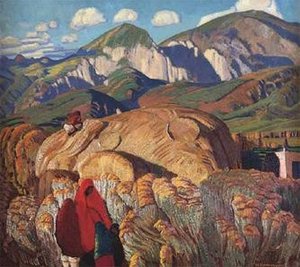
Ernest Leonard Blumenschein
1874 - 1960 , United States of America
Quick Facts
- Artistic Movement Or Style: Modernism, Post-Impressionism
- Artists Or Movements Influenced By This Artist: ['Taos Society of Artists']
- Artists Who Influenced This Artist:
- Joseph Henry Sharp
- Bert Phillips
- Date Of Birth: May 26, 1874
- Date Of Death: June 6, 1960
- Full Name: Ernest Leonard Blumenschein
- Nationality: American
- Notable Artworks:
- The Burro
- White Blanket...
- Arizona Dam
- The Gift
- Picuris Mountain
- Place Of Birth: Pittsburgh, USA
Related Articles

Romantic Landscapes: 10 Masterpieces for Your Home | ArtsDot
Journey through 10 Romantic landscape masterpieces by Friedrich, Turner & Cole. Explore emotional art, sublime nature scenes & iconic 19th-century paintings. Find museum-quality reproductions for your home at ArtsDot.com – discover the full collection online!

Hokusai's Masterpieces: 25 Iconic Prints & Paintings for Art Lovers | ArtsDot
Journey through Katsushika Hokusai’s 25 most iconic artworks, including *The Great Wave*. Explore the ukiyo-e master's history, style & timeless Japanese woodblock prints. Find museum-quality reproductions for your home at ArtsDot.com.

Evocations of Place: A Historical Journey Through Landscape Art
Explore the rich history of landscape art with ArtsDot. Discover renowned artists, movements like Impressionism & Romanticism, and expert guidance for collecting timeless pieces. Find your perfect serene escape today!

John Constable's Masterpieces: Explore 25 Iconic Landscapes for Your Home
Journey through John Constable's 25 most celebrated landscapes. Explore Romanticism, Dedham Vale & his masterful use of light in iconic paintings like 'Hay Wain'. Find museum-quality art reproductions and elevate your home decor on ArtsDot.com.
Evocations of Place: A Historical Journey Through Landscape Art
Explore the rich history of landscape art with ArtsDot. Discover renowned artists, movements like Impressionism & tonalism, and expert guidance for collecting timeless pieces. Find your perfect serene escape today!