 Preview
 Send
Send Share
Share
 Details

 Download
 Similars
 X-Ray
X-Ray Diaporama
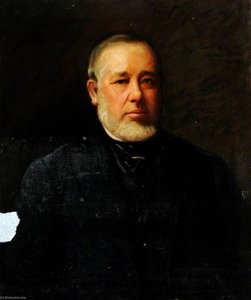
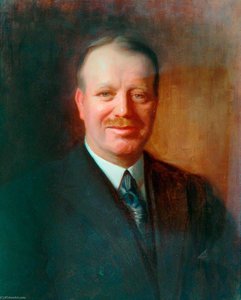
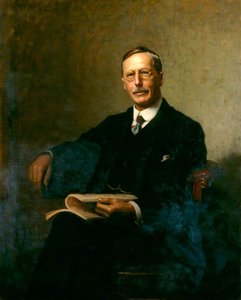
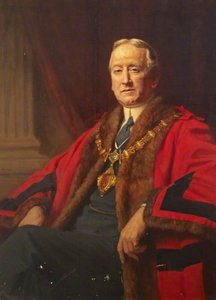
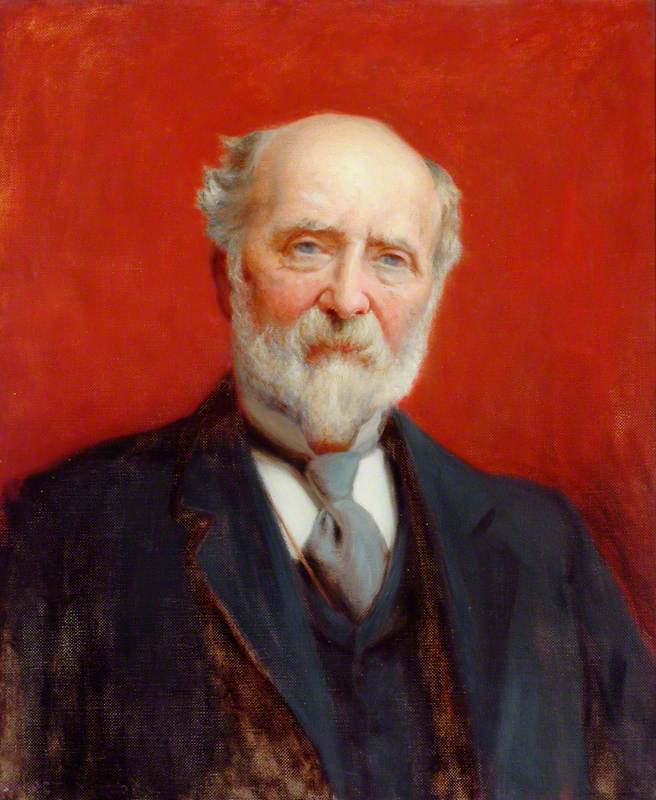
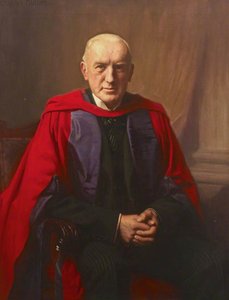
County Alderman R. E. Pannett, JP, Donor to Pannett Park Art Gallery and Park (after Arthur Stockdale Cope)
 1910
1910 59.0 x 50.0 cm
 Read More
Giclée / Art Print
Museum-quality giclée or canvas print with fast production and flexible finish options. ( Buy Hand Made Painting Buy Image)




































Pick from our preset sizes that match the artwork's original proportions.

You may enter your own dimensions to fit a specific frame or space. If your selected size does not match the original image's proportions, we will either crop the artwork or extend the image with a mirrored or solid-fill edge. A digital mockup will be sent for your approval before production begins.
Please note that the on-screen preview does not reflect the actual cropping or extension. Only the mockup will accurately show the final composition.
While custom sizes are available, we recommend selecting a dimension from the predefined list to preserve the original proportions.
Worldwide Delivery () in 2 weeks instead of standard 4/5 weeks. (23 August)

Free Worldwide Express Shipping

High-Quality Linen Canvas

Full Shipping Insurance

Customs Tax Refund Guarantee

True Color Matching Guarantee

60-Day Return Policy (Defects Only)

100% Money-Back Guarantee

Bulk Discount Offer
 Glass option is only available in size under 110 CM

County Alderman R. E. Pannett, JP, Donor to Pannett Park Art Gallery and Park (after Arthur Stockdale Cope)
Giclée / Art Print
Reproduction Size
-


Total Price
$ 63
Related Artworks

Artist Biography
The Refined Vision of Ernest Moore: A Victorian Legacy
In the grand tapestry of British art history, certain names shimmer with a brilliance that transcends their era, while others provide the essential, nuanced threads that give the fabric its depth and texture. Ernest Moore (1865–1940) belongs to that profound second category—a master portraitist whose work served as a vital bridge between the rigid traditions of Victorian academic realism and the burgeoning expressive freedoms of the modern age. Born in the industrious landscape of Barnsley, South Yorkshire, Moore’s journey from the northern heartlands to the prestigious art circles of London and Paris is a testament to a life dedicated to the pursuit of aesthetic excellence and the meticulous study of the human spirit.
Moore’s artistic foundation was laid at the Barnsley School of Art, where he mastered the classical principles of composition, light, and anatomy. However, his ambitions far exceeded the boundaries of his provincial beginnings. Seeking to engage with the pulse of the contemporary art world, he migrated to London and later to Paris, a move that would irrevocably alter his stylistic trajectory. In the vibrant atmosphere of late 19th-century France, Moore encountered the transformative currents of Impressionism and Symbolism. These movements offered him a new vocabulary of light and color, encouraging him to look beyond mere photographic accuracy toward a more evocative and atmospheric way of capturing his subjects.
A Synthesis of Tradition and Modernity
The true brilliance of Moore’s technique lies in his ability to synthesize these disparate influences into a singular, cohesive visual language. While his early sensibilities were deeply rooted in the Pre-Raphaelite tradition—drawing inspiration from the meticulous detail and narrative richness of John Everett Millais and Dante Gabriel Rossetti—his later works reveal a sophisticated understanding of more modern, fluid elements. He possessed a rare ability to maintain the dignity and formal gravity required for high-society portraiture while infusing his canvases with a subtle, emotive depth derived from his Parisian experiences.
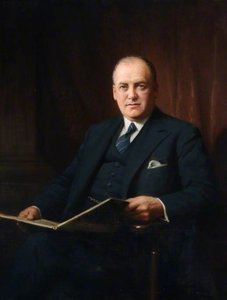
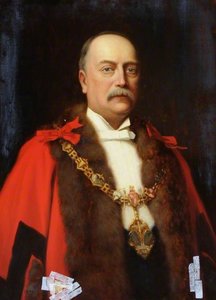
This duality is perhaps most evident in his approach to color and texture. In his celebrated portraits, such as the 1916 depiction of Alderman H. V. Kenyon, one observes a masterful use of vibrant pigments and a keen eye for the interplay of light upon fabric. The way he rendered the rich red robes and deep blue sashes of his subjects speaks to a painter who understood that color is not merely descriptive, but psychological. His work often balanced the following elements:
- Academic Precision: A steadfast commitment to anatomical accuracy and the structural integrity of the human form.
- Symbolist Nuance: The use of muted palettes and evocative imagery to suggest underlying emotional states or social status.
- Textural Richness: An expert application of oil paint that captured the tactile reality of silk, velvet, and skin.
Legacy and Historical Significance
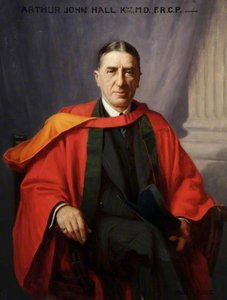
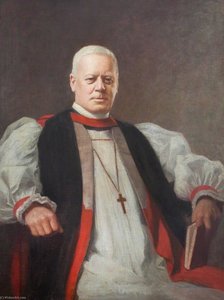
Throughout his career, Moore became a painter of distinction, sought after by the very figures who defined the social and intellectual landscape of his time. His notable commissions included portraits of prominent scholars and statesmen, such as Sir Arthur Hall and James Bryce, works that served to immortalize the prestige of the era. Even as the art world moved toward more radical abstractions, Moore’s commitment to the portrait remained a steadfast anchor for those seeking to preserve the dignity of the individual through the medium of oil on canvas.
Though he may occasionally be overshadowed by the monumental fame of contemporaries like Henry Moore or William Holman Hunt, the historical significance of Ernest Moore cannot be understated. He was a custodian of tradition who refused to remain stagnant, an artist who looked backward to the masters of the past to find the strength to move forward into the light of the new century. Today, his works—housed in esteemed collections such as the Leighton House Museum—stand as enduring windows into the soul of Victorian and Edwardian society, reminding us of a time when portraiture was an exquisite dance between reality and romanticism.
ernest moore
1865 - 1940
Quick Facts
- Artistic Movement Or Style: Academic Realism
- Artists Or Movements Influenced By This Artist: ['Henry Moore']
- Artists Who Influenced This Artist: ['Sir Arthur Hall']
- Date Of Birth: 6 July 1865
- Full Name: Ernest Moore
- Nationality: English
- Notable Artworks:
- La Païva
- Henry Julian White
- Place Of Birth: Barnsley, England