 Preview
 Send
Send Share
Share
 Details

 Download
 Similars
 X-Ray
X-Ray Diaporama
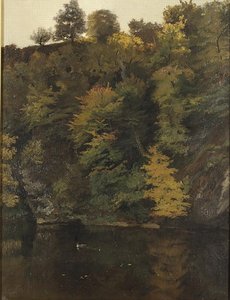
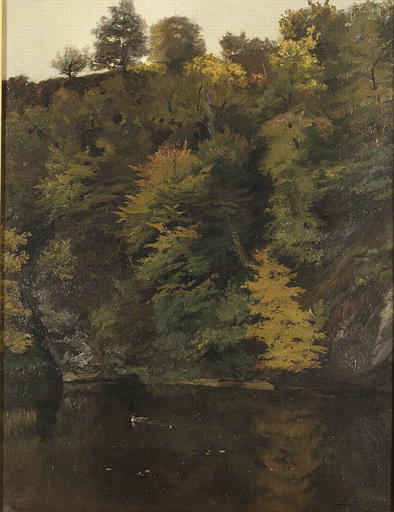
Une mare à Fresselines (Creuse)
 Read More
Hand Made Oil Reproduction
Hand-painted oil on canvas in your size and frame, made to order by our artists. ( Buy Print Buy Image)




































Pick from our preset sizes that match the artwork's original proportions.

You may enter your own dimensions to fit a specific frame or space. If your selected size does not match the original image's proportions, we will either crop the artwork or extend the painting with additional hand-painted elements. A digital mockup will be sent for your approval before production begins.
Please note that the on-screen preview does not reflect the actual cropping or extension. Only the mockup will accurately show the final composition.
While custom sizes are available, we recommend selecting a dimension from the predefined list to preserve the original proportions.
After order, ArtsDot.com team will email client for instructions and provide a mockup preview
Worldwide Delivery () in 3/4 weeks instead of standard 5 weeks. (22 August). No compromise on quality.

Free Worldwide Express Shipping

High-Quality Linen Canvas

Full Shipping Insurance

Customs Tax Refund Guarantee

True Color Matching Guarantee

60-Day Return Policy (Defects Only)

100% Money-Back Guarantee

Bulk Discount Offer
 Glass option is only available in size under 110 CM

Une mare à Fresselines (Creuse)
Reproduction Medium
Reproduction Size
-


Total Price
$ 263
Related Artworks


Artist Biography
Ernest Victor Hareux (1847 – 1909): A Painter of Light and Mountain Landscapes
Ernest Victor Hareux (18 February 1847, Paris – 16 February 1909, Grenoble) was a French painter renowned for his evocative landscapes and genre scenes depicting the beauty of Normandy, La Creuse, and particularly the Dauphiné mountains. His artistic journey spanned from formative training under esteemed masters to establishing himself as a pivotal figure in the École Dauphinoise and fostering a vibrant artistic community. This exploration delves into Hareux’s life, oeuvre, and enduring legacy within the context of late 19th-century French art.Early Life and Artistic Formation: From Sheffield to Parisian Ateliers
Ernest Victor Hareux was born in Paris, France, on February 18, 1847, not Sheffield, England, as some earlier accounts mistakenly suggested. This Parisian origin immediately placed him at the epicenter of the burgeoning art world during a period marked by significant intellectual and artistic upheaval. His innate talent for drawing manifested early in his childhood, prompting his parents to enroll him in formal instruction—a path that would immerse him in the rigorous traditions of academic painting while simultaneously exposing him to the revolutionary ideas challenging those very conventions. A formative influence was his tutelage under Léon Germain Pelouse, a landscape painter celebrated for his sensitive portrayals of the French countryside, notably the environs of Cernay-la-Ville and Brittany. Pelouse’s meticulous observation of nature and masterful handling of color instilled in Hareux a foundational understanding of landscape composition and the importance of capturing atmospheric conditions—skills that would serve as bedrock for his subsequent artistic endeavors. Furthermore, he honed his technique under Pascal Dagnan-Bouveret, a leading proponent of Naturalism who championed realism and psychological depth within his canvases. Dagnan-Bouveret’s influence encouraged Hareux to prioritize accurate drawing and to convey nuanced emotional states—a stylistic approach that would characterize much of his work. Other artists whose impact may have been felt include Jean Baptiste Camille Corot, whose poetic landscapes redefined French painting, and Charles François Daubigny, a pioneer of plein air painting who championed direct observation from nature.The Allure of the Landscape: Plein Air and the Spirit of Place
Central to Ernest Victor Hareux’s artistic identity was his unwavering devotion to landscape painting—specifically the practice of en plein air (outdoor painting). This revolutionary technique, popularized by the Barbizon School and embraced wholeheartedly by Impressionism, prioritized capturing fleeting atmospheric effects by working directly amidst the natural world. Hareux not only adopted this method extensively but also became a vocal advocate for its merits through his influential 1898 publication, “La peinture à l’huile, en plein air.” This treatise meticulously documented the historical evolution of outdoor painting, detailing advancements in materials—such as newly portable paint tubes and easels—that fundamentally transformed artistic practice. Hareux's commitment to plein air extended beyond mere technique; it represented a profound philosophical stance—a belief that true artistic expression resided in confronting nature head-on and conveying its ephemeral beauty with uncompromising honesty.A Grenoble Artist: The École Dauphinoise and Artistic Collaboration
Hareux’s relocation to Grenoble in 1887 marked a pivotal moment in his artistic life, fostering connections with fellow artists—including Laurent Guétal—who established the École Dauphinoise. This collective championed a distinctive aesthetic characterized by luminous color palettes and an emphasis on capturing the grandeur of the Dauphiné mountains. Hareux’s participation in this influential movement solidified his reputation as a visionary artist who sought to elevate landscape painting beyond mere representation, aiming instead to evoke emotion and convey a sense of spiritual communion with the natural world. Collaborations with artists like Jean Alexis Achard further enriched his artistic milieu, fostering dialogue and inspiring innovation—a testament to Hareux’s enduring influence on the broader artistic landscape of France.Legacy and Recognition: Musée Hébert and Artistic Influence
Ernest Victor Hareux's contribution to French art extended beyond individual paintings; he served as a founding member of the “Société des peintres de la montagne,” establishing Grenoble as a hub for plein air painting and fostering a vibrant artistic community. His dedication to preserving and celebrating the beauty of Dauphiné landscapes earned him considerable acclaim, culminating in his appointment as chair #48 at the Académie Delphinale—a prestigious honor recognizing his scholarly pursuits alongside his artistic accomplishments. In 1906, he was bestowed with Knighthood in the Légion d’honneur—a testament to his distinguished service and unwavering commitment to French culture. His enduring influence can be seen in the works of subsequent generations of artists who embraced his stylistic principles and championed the expressive power of landscape painting—solidifying Ernest Victor Hareux's place as a cornerstone of late 19th-century French art.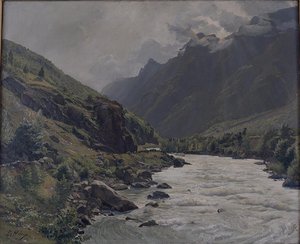
ernest victor hareux
1847 - 1909
Quick Facts
- Artistic Movement Or Style: Impressionism
- Artists Or Movements Influenced By This Artist: ['Jean Alexis Achard']
- Artists Who Influenced This Artist:
- Léon Germain Pelouse
- Charles Busson
- Date Of Birth: February 18, 1847
- Date Of Death: February 16, 1909
- Full Name: Ernest Victor Hareux
- Nationality: French
- Notable Artworks:
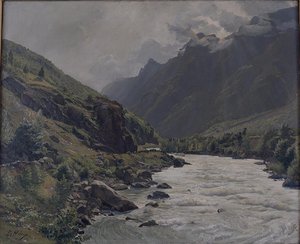
- La Romanche à Livet
- Le chemin du petit séminaire
- Place Of Birth: Paris, France