

 Preview
 Send
Send Share
Share
 Details

 Download
 Similars
 X-Ray
X-Ray Diaporama
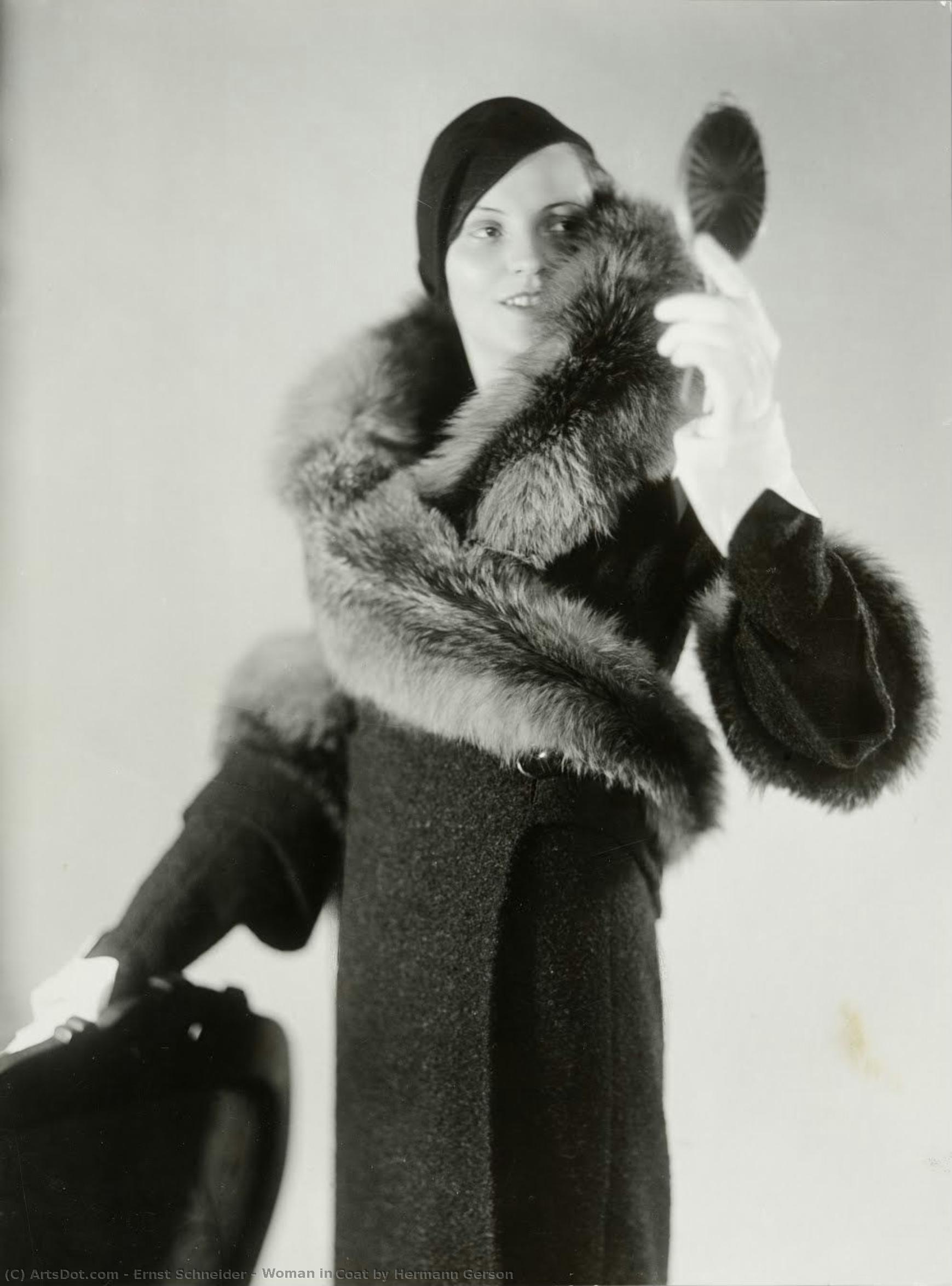
Woman in Coat by Hermann Gerson
 1932
1932 22.0 x 17.0 cm
 Read More
Purchase a high-resolution, enhanced digital image, far superior to the online preview.
Each file is meticulously prepared by our in-house specialists using advanced tools and expert manual retouching. We ensure every image has exceptional clarity, precise color accuracy, and fine detail.
The final file is delivered via email within 72 hours, optimized for immediate use in professional, editorial, and print environments. This is the same quality trusted by top-tier design studios, publishers, and galleries.
Digital Image
Download a high-resolution file for personal display, printing, and creative projects. ( Buy Print Buy Hand Made Painting)
Included in Every Digital Image Order
Expert Digital Delivery, Guaranteed
When you choose ArtsDot.com, you're not just getting an image - you're receiving a professionally enhanced digital artwork, crafted with precision and backed by a satisfaction guarantee. Here's everything that comes with your order, automatically:

Fast Email Delivery
Your high-resolution digital image file will be emailed to you within 72 hours of ordering - ready for immediate use.

AI-Enhanced Digital File
Your artwork is professionally optimized using advanced AI tools and manual editing, ensuring maximum detail, clarity, and color accuracy.

Free Lifetime Re-Delivery
Accidentally deleted or lost your file? No worries - we'll resend it to you anytime, free of charge.

No Import Fees - Ever
Enjoy your artwork instantly with zero customs, duties, or delivery fees - digital downloads are always tax-free.

Color Accuracy Guarantee
We ensure your digital image reflects the original colors as closely as possible using professional tools and color management.

60-Day Satisfaction Guarantee
If you're not satisfied with your digital image, we'll revise it or refund 100% within 60 days - no questions asked.

100% Money-Back Guarantee
Not satisfied? Get a full refund within 60 days of receiving your digital file - no questions asked.

Bulk Order Discounts
Buy 3 images, save 10% - Buy 5, save 15% - Buy 10+, save 20%. Great for creative projects, galleries, and agencies.
Related Artworks







![Retrato De Lo Eterno [portrait Of The Eternal] — Manuel Álvarez Bravo](/media/artworks/images-thumb/69/1d/691d2cefecf85d79201437f1b00cac91.jpg)
Artist Biography
A Life Forged in Revolution: The Art and Activism of Ernst Schneider
Ernst Schneider, born in Königsberg (now Kaliningrad) in 1883, was far more than a painter; he was a man deeply embedded in the tumultuous currents of early 20th-century Germany. His life story is inextricably linked to the struggles of the working class, the fervor of revolutionary movements, and ultimately, a commitment to anarcho-syndicalist ideals that permeated his artistic vision. Schneider’s beginnings were humble – he worked as a harbourman, intimately familiar with the gritty realities of port life, a world far removed from the salons and academies typically associated with artistic training. This early experience would profoundly shape both his subject matter and his perspective on society. He wasn't an artist detached from the world but one born *of* it, witnessing firsthand the inequalities and hardships that fueled social unrest.From Social Democracy to Anarchist Expression
Schneider’s initial political awakening led him to the Social Democratic Party of Germany (SPD), but he soon found its bureaucratic structures stifling. A growing disillusionment with traditional party politics propelled him towards anarcho-syndicalism, a philosophy advocating worker self-management and direct action. This shift was pivotal, not only in his political life but also in his artistic development. He became involved with the Hamburg Anarchist Federation, editing their journal *Der Kampf* ("The Struggle"), using it as a platform to disseminate radical ideas and foster solidarity among workers. It’s within this context that Schneider began to explore visual art as a means of communication – not merely to depict reality but to actively challenge it. His style, emerging as a potent form of Expressionism, reflected the raw energy and emotional intensity of his convictions. While formal artistic training remained largely absent from his background, he developed a distinctive approach characterized by bold lines, stark contrasts, and often unsettling imagery.The Tumultuous Years: Revolution and Exile
The outbreak of World War I and the subsequent German Revolution of 1918-1919 thrust Schneider into the heart of political upheaval. He participated actively in the naval mutinies, becoming a key figure in the Wilhelmshaven revolt, serving on the sailors’ revolutionary committee. This involvement led to imprisonment, but he famously escaped – earning him the nickname “Ikarus” – and continued his work within the KAPD (Communist Workers' Party of Germany), advocating for more radical change than the mainstream KPD. The October Uprising in Hamburg in 1923 saw Schneider again at the forefront, organizing amongst seamen and editing *Wellenbrecher* ("Wavebreaker"), a unionist review aimed at galvanizing maritime workers. However, the rise of Nazism brought increasing danger. Arrested by the Gestapo in 1935, he managed to escape to England in 1939, where he joined the Anti-Parliamentary Communist Federation and continued his political activism, though largely removed from artistic production.A Legacy of Resistance: The Power of 'Woman in Coat'
Schneider’s artistic output, while not extensive, is powerfully resonant. His most well-known work, “Woman in Coat,” exemplifies his Expressionist style and embodies the anxieties and alienation of the interwar period. The painting depicts a solitary figure shrouded in darkness, her face obscured, conveying a sense of isolation and vulnerability. It’s a stark commentary on the social conditions of the time, reflecting the economic hardship and political instability that plagued Germany. Beyond its aesthetic qualities, “Woman in Coat” serves as a visual testament to Schneider's unwavering commitment to portraying the plight of the marginalized and oppressed. His art wasn’t about beauty for beauty’s sake; it was a weapon wielded in service of social justice.Historical Significance: An Artist of the People
Ernst Schneider occupies a unique position within the history of German Expressionism. He stands apart from many of his contemporaries, who often explored psychological themes or aesthetic concerns in relative isolation. Schneider’s art was fundamentally political – born out of direct engagement with revolutionary movements and fueled by a deep empathy for the working class. His legacy lies not only in the few surviving paintings he created but also in the example he set as an artist-activist, demonstrating that art can be a powerful force for social change. He remains a compelling figure—a testament to the enduring power of resistance and the unwavering belief in a more just world.
ernst schneider
1883 - 1963 , Germany
Quick Facts
- Artistic Movement Or Style: Expressionism
- Date Of Birth: July 23, 1883
- Date Of Death: 1963
- Full Name: Ernst Schneider
- Nationality: German
- Notable Artworks: ['Woman in Coat']
- Place Of Birth: Königsberg, Germany

