 Preview
 Send
Send Share
Share
 Details

 Download
 Similars
 X-Ray
X-Ray Diaporama
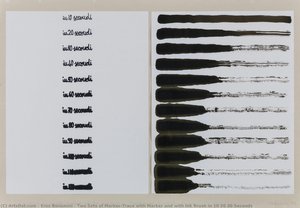
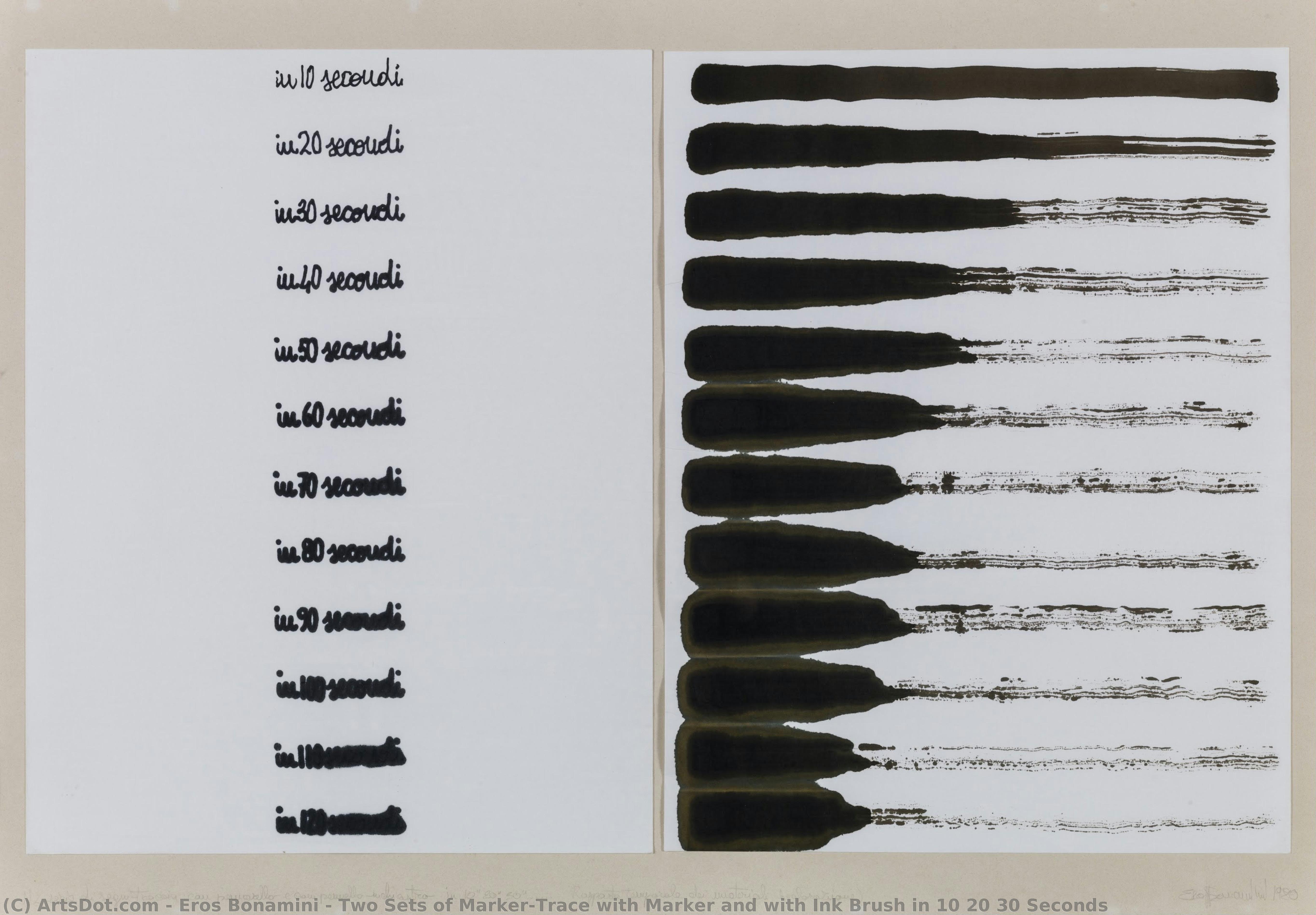
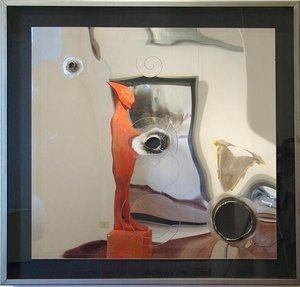
Two Sets of Marker-Trace with Marker and with Ink Brush in 10 20 30 Seconds
 Abstract Expressionism
 1980
1980 70.0 x 100.0 cm
 Galleria d'Arte Moderna Achille Forti
 Read More
Hand Made Oil Reproduction
Hand-painted oil on canvas in your size and frame, made to order by our artists. ( Buy Print Buy Image)




































Pick from our preset sizes that match the artwork's original proportions.

You may enter your own dimensions to fit a specific frame or space. If your selected size does not match the original image's proportions, we will either crop the artwork or extend the painting with additional hand-painted elements. A digital mockup will be sent for your approval before production begins.
Please note that the on-screen preview does not reflect the actual cropping or extension. Only the mockup will accurately show the final composition.
While custom sizes are available, we recommend selecting a dimension from the predefined list to preserve the original proportions.
After order, ArtsDot.com team will email client for instructions and provide a mockup preview
Worldwide Delivery () in 3/4 weeks instead of standard 5 weeks. (26 August). No compromise on quality.

Free Worldwide Express Shipping

High-Quality Linen Canvas

Full Shipping Insurance

Customs Tax Refund Guarantee

True Color Matching Guarantee

60-Day Return Policy (Defects Only)

100% Money-Back Guarantee

Bulk Discount Offer
 Glass option is only available in size under 110 CM

Two Sets of Marker-Trace with Marker and with Ink Brush in 10 20 30 Seconds
Reproduction Medium
Reproduction Size
-


Total Price
$ 263
Artwork Description
Related Artworks
![Abstract Composition [triptych] — Vaclav Vytlacil, Abstract Expressionism](/media/artworks/images-thumb/08/3c/083c0675045645fd42d4e6c6d63f1ced.jpg)
Artist Biography
Eros Bonamini: A Life Etched in Ink and Time
Born in Verona, Italy, in 1942, Eros Bonamini’s artistic journey was one of profound introspection and a unique engagement with the passage of time. His life, tragically cut short in 2012, nevertheless left an indelible mark on the Italian art scene, characterized by his distinctive “marker trace” technique – a method that transformed everyday materials into evocative explorations of space, memory, and the ephemeral nature of existence.
Bonamini’s early career unfolded against a backdrop of post-war Italy, a period marked by both reconstruction and a burgeoning desire for artistic innovation. He initially gained recognition through his “Tabelle Pittoriche” (Painting Tables) in 1975, works that abandoned traditional painting methods in favor of stark monochrome fields arranged sequentially. These pieces, exhibited at the Galleria dello Scudo in Verona, represented a pivotal shift – a deliberate rejection of representational art and an embrace of conceptual exploration. As Giorgio Cortenova noted, this early work demonstrated “an empirical working procedure, nourished by the basic scepticism that is one of the qualifying aspects of our time,” reflecting a conscious effort to move beyond mere imitation and delve into the very process of creation.
The Development of Marker Trace Technique
Bonamini’s most celebrated technique emerged in the mid-1970s, evolving from his earlier explorations with cement and tape. He began experimenting with ink and marker traces, a method that would become synonymous with his artistic identity. This involved meticulously applying layers of ink – often using both marker and brush – onto various surfaces, creating intricate patterns and textures that seemed to simultaneously emerge and dissolve. The process was deliberately slow and painstaking, reflecting a deep engagement with the materiality of the medium and a fascination with the effects of time on its surface.
The “Cementi, tapes and inks” series exemplifies this period. He utilized cement as a base, creating deliberate incisions and applying ink in successive layers. The resulting tracks weren’t intended to represent anything specific but rather to document the act of creation itself – a visual record of the artist's hand and the passage of time. This approach moved beyond traditional notions of artistic expression, transforming the artwork into a meditation on process and documentation.
Exploring Time and Space Through Mark-Making
Bonamini’s work is profoundly concerned with the concepts of time and space. His “marker traces” aren't merely decorative; they are visual representations of temporal shifts, layered experiences, and the inherent instability of perception. He famously described his primary material as "time," suggesting that each artwork was an attempt to capture a fleeting moment or to document the evolution of a process over extended periods. The deliberate use of decay – through fire in some works, or simply the natural aging of materials – further emphasized this theme, highlighting the transient nature of existence.
His 1980 piece, “Two Sets of Marker-Trace with Marker and with Ink Brush in 10 20 30 Seconds,” is a particularly compelling example. The work captures the speed and dynamism of his technique, demonstrating how he could create complex patterns within incredibly short timeframes. This piece, along with others like "Vanitas Cronotopografiche," reveals a meticulous approach to capturing the essence of movement and transformation.
Recognition and Legacy
Despite not achieving widespread commercial success during his lifetime, Eros Bonamini’s work gained increasing recognition in Italy throughout the late 20th and early 21st centuries. He exhibited at prestigious galleries such as Galleria Gagliardi in San Gimignano and the Istituto Italiano di Cultura, and his works were offered at auction, fetching prices ranging from $1,000 to $10,000. In 2012, shortly before his death, a comprehensive monograph was published by Skira, solidifying his place as a significant figure in contemporary Italian art.
Bonamini’s legacy lies not only in the unique aesthetic of his “marker trace” technique but also in his profound engagement with fundamental philosophical questions about time, space, and the nature of artistic creation. His work continues to be exhibited and studied today, offering a compelling meditation on the ephemeral beauty of the present moment.
eros bonamini
1942 - 2012 , Italy
Quick Facts
- Artistic Movement Or Style: Abstract & figurative
- Date Of Birth: 1942
- Date Of Death: 2012
- Full Name: Eros Bonamini
- Nationality: Italian
- Notable Artworks:
- Two Sets of Marker-Trace
- Vanitas Cronotopografiche
- Place Of Birth: Verona, Italy
Related Articles
Abstract Expressionism's 10 Defining Masterpieces |
Explore 10 defining Abstract Expressionism masterpieces by Pollock, Rothko & de Kooning. Discover the stories behind these iconic paintings and find museum-quality art reproductions to elevate your home decor on .

Kandinsky's Masterpieces: 25 Paintings That Define Abstract Art | ArtsDot
Journey through Wassily Kandinsky's 25 most iconic abstract paintings. Explore his revolutionary use of color, form & spiritual expressionism. Find museum-quality Kandinsky reproductions and elevate your home decor with ArtsDot.com. Discover all masterpieces on ArtsDot.com!

Geometric Abstraction's 10 Defining Masterpieces | Art for Your Home - ArtsDot
Explore 10 defining masterpieces of Geometric Abstraction! Discover Kandinsky, Mondrian & Malevich’s iconic works. Find museum-quality art reproductions and curated decor ideas to elevate your home at ArtsDot.com.
Beyond Representation: Exploring the Emotional Landscape of Abstract Expressionism
Explore the profound emotional world of Abstract Expressionism with ArtsDot. Discover key artists like Pollock & Rothko, learn about collecting, and find museum-quality reproductions to inspire your space.
Navigating Abstract Expression: A Guide to Contemporary Movements for Emotional Resonance in Art Selection
Explore the evolution of Abstract Expressionism & discover contemporary movements for emotional resonance. Expert guidance for discerning art collectors seeking lasting value. ArtsDot.