 Preview
 Send
Send Share
Share
 Details

 Download
 Similars
 X-Ray
X-Ray Diaporama
 Stats
StatsSeasons' Winter

 Read More
Hand Made Oil Reproduction
Hand-painted oil on canvas in your size and frame, made to order by our artists. ( Switch to Print Switch to Digital Image)




P118B $10

P118H $10

P118W $10

P438Z $10

P508JH $12

P508YH $12

P805H $10

P805Z $10

P919BZ $10

P919G $10

P919XJ $10

P959ZH $10

P968JZ $12

W106C $8

W218G $10

W218JH $8

W218Y $10

W307PJ $10

W316G $10

W316PJ $8

W316Y $10

W398PJ $8

W4111J $10

W500HY $15

W500JH $15

W692G $12

W849H $8

W940BG $15

W953PJ $8




Pick from our preset sizes that match the artwork's original proportions.

You may enter your own dimensions to fit a specific frame or space. If your selected size does not match the original image's proportions, we will either crop the artwork or extend the painting with additional hand-painted elements. A digital mockup will be sent for your approval before production begins.
Please note that the on-screen preview does not reflect the actual cropping or extension. Only the mockup will accurately show the final composition.
While custom sizes are available, we recommend selecting a dimension from the predefined list to preserve the original proportions.
After order, ArtsDot.com team will email client for instructions and provide a mockup preview
Worldwide Delivery () in 3/4 weeks instead of standard 5 weeks. (10 September). No compromise on quality.

Free Worldwide Express Shipping

High-Quality Linen Canvas

Full Shipping Insurance

Customs Tax Refund Guarantee

True Color Matching Guarantee

100-Day Return Policy (Defects Only)

100% Money-Back Guarantee

Bulk Discount Offer
 Glass option is only available in size under 110 CM

Seasons' Winter
Reproduction Medium
Reproduction Size
-


Total Price
$ 263
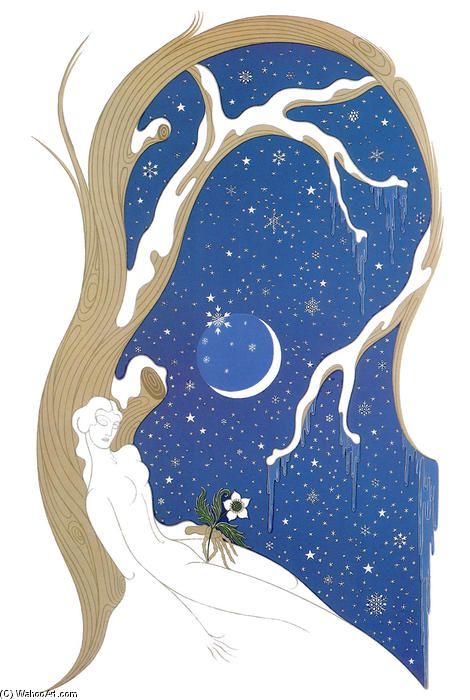
A Winter Reverie: Exploring Erté’s “Seasons’ Winter”
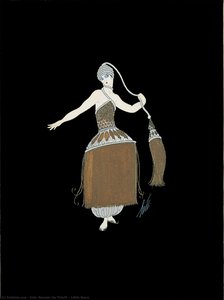
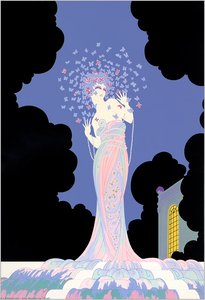
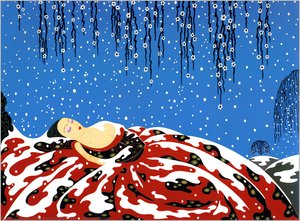
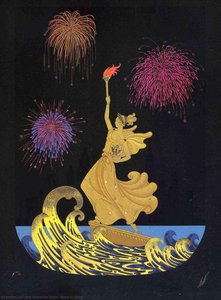
- Subject & Composition: “Seasons’ Winter” presents a captivating scene of serene beauty, dominated by an elegant woman poised atop a snow-dusted mountain. She delicately holds a single flower – a poignant symbol of life and resilience amidst the starkness of winter. The composition is classic Erté: elongated figures, dramatic posing, and a carefully balanced interplay between foreground and background elements. Smaller figures in the distance hint at a broader world, yet the focus remains firmly on the solitary woman and her contemplative state.
- Art Deco Elegance & Technique: This artwork is a quintessential example of Erté’s mastery of the Art Deco style. Characterized by bold lines, geometric shapes, and luxurious ornamentation, “Seasons’ Winter” showcases his signature aesthetic. Erté expertly employed gouache and ink on paper to achieve vibrant colors and precise detailing. His technique involved meticulous layering and an almost calligraphic approach to line work, creating a sense of both dynamism and refined elegance.
Historical Context & Artistic Legacy
- A Master of Many Disciplines: Romain de Tirtoff, known as Erté, was born into Russian aristocracy but found his artistic home in Paris. He flourished during the 1920s and 30s, a period defined by glamour, innovation, and the rise of Art Deco. While celebrated for his fashion illustrations – particularly those created for Harper’s Bazaar – Erté was a remarkably versatile artist. He designed costumes and sets for stage productions (including collaborations with the Folies Bergère), jewelry, furniture, and even architectural interiors.
- The Gazette du Bon Ton & Enduring Influence: Erté’s early work in La Gazette du bon ton, a pioneering French fashion magazine, established his reputation for sophisticated design. His illustrations weren't merely depictions of clothing; they were artistic statements that captured the spirit of the age. His influence extends far beyond the Art Deco period, continuing to inspire designers and artists today.
Symbolism & Emotional Resonance
- Winter as Metaphor: The winter setting in this piece is rich with symbolism. Winter often represents introspection, dormancy, and the passage of time. The woman’s solitary pose suggests a moment of quiet contemplation, perhaps reflecting on the year gone by or anticipating the promise of spring.
- The Flower's Significance: The flower she holds is particularly evocative – a fragile symbol of hope and beauty persisting even in the harshest conditions. It speaks to the enduring power of life and the cyclical nature of the seasons.
- A Sense of Tranquility & Grace: “Seasons’ Winter” evokes a feeling of tranquility, grace, and refined elegance. The artwork's harmonious composition and delicate color palette create a soothing visual experience, inviting viewers to pause and appreciate its subtle beauty.
Related Artworks

Artist Biography
Early Life and Artistic Awakening
Romain de Tirtoff, known to the world as Erté, was born into a life of privilege and tradition in Saint Petersburg, Russia, on November 23, 1892. His lineage traced back centuries to Tatar khans, and his father served with distinction as an admiral in the Imperial Russian Fleet. Yet, young Romain’s destiny lay not on the waves but within the realm of art—a passion that blossomed early, nurtured by a mother he deeply adored and the exotic beauty of Persian miniatures found within his father's library. These intricate designs would become a subtle yet enduring influence on his later work, imbuing it with a sense of opulent detail and stylized elegance. Even as a child, Romain demonstrated an extraordinary talent for design; legend has it that at just five years old, he sketched an evening gown for his mother, which was then brought to life by astonished seamstresses.
Despite the expectations placed upon him to follow in his father’s naval footsteps, Romain felt an irresistible pull towards artistic expression. This internal conflict led him to adopt the pseudonym “Erté”—a clever adaptation of his initials, pronounced in French—to shield his family from potential disappointment as he pursued a career they might not approve of. In 1910, at the age of eighteen, Romain made the bold decision to leave Russia for Paris, the undisputed epicenter of art and fashion, embarking on a journey that would forever alter the course of visual culture.
Parisian Flourishing and the Birth of an Art Deco Icon
Arriving in Paris with little more than his talent and ambition, Erté quickly immersed himself in the vibrant artistic milieu. He initially found work as a draughtsman, but his aspirations soared far beyond simple execution. A pivotal moment arrived when he presented his portfolio to Paul Poiret, the celebrated “King of Fashion,” who immediately recognized Romain’s exceptional gift. This collaboration proved transformative, providing Erté with invaluable experience in costume and accessory design and launching him into the heart of Parisian haute couture.
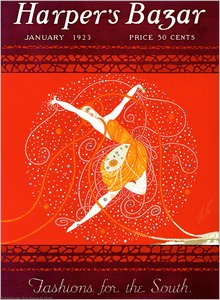
However, it was his association with Harper's Bazaar that truly cemented Erté’s reputation. From 1915 to 1936, he graced over 240 covers with his breathtaking illustrations—a remarkable feat of creativity and consistency. These weren’t merely fashion plates; they were exquisite works of art, showcasing elongated figures draped in lavish costumes against stylized backgrounds. His style, characterized by bold lines, geometric shapes, and a luxurious aesthetic, became synonymous with the burgeoning Art Deco movement. Erté didn't just depict fashion; he defined it, capturing the spirit of an era defined by glamour, sophistication, and modernity.
Beyond Fashion: Theater, Hollywood, and Artistic Evolution
Erté’s artistic talents extended far beyond the realm of fashion illustration. He was a remarkably versatile artist, designing costumes and sets for numerous theatrical productions, including lavish spectacles at the Folies-Bergère and Ziegfeld Follies. His designs weren't simply garments; they were transformative creations that brought characters to life and enhanced the dramatic impact of each performance. This foray into theater allowed him to explore his creativity on a grand scale, experimenting with color, texture, and form in ways that further refined his artistic vision.
In 1925, Erté ventured westward, accepting a contract with Metro-Goldwyn-Mayer Studios in Hollywood. While his time in the film industry was relatively brief, it exposed him to a new audience and broadened his creative horizons. He continued to exhibit his work, holding his first solo exhibition at the Madison Hotel in New York City that same year—a significant milestone that brought his art to a wider public.
Throughout this period, Erté’s style underwent a subtle yet profound evolution. While initially influenced by Art Nouveau's flowing lines and organic forms, he increasingly embraced the principles of Art Deco, reflecting the changing artistic landscape of the era. His figures became more streamlined, his compositions more geometric, and his color palettes more vibrant—all hallmarks of the distinctive visual language that would become his signature.
Legacy and Enduring Influence
Though his prominence waned somewhat during the mid-20th century, Erté experienced a remarkable resurgence in popularity during the 1960s, fueled by a renewed interest in Art Deco. He embarked on a prolific period of new artistic endeavors, creating sculptures, lithographs, and bronzes that captivated collectors and critics alike. His work continued to be celebrated for its elegance, sophistication, and enduring appeal.
Erté’s influence extends far beyond the confines of art history. He is widely regarded as a pioneer of Art Deco, shaping its visual identity and inspiring generations of artists and designers. His designs have influenced fashion trends, interior design aesthetics, and graphic arts throughout the 20th century and continue to resonate with contemporary creatives.
Throughout his long and illustrious career, Erté received numerous accolades, including the Chevalier du Mérite Artistique et Culturel from the French government. He passed away in Paris on April 21, 1990, at the age of 97, leaving behind a legacy that continues to inspire awe and admiration. His work remains a testament to the power of artistic vision, the enduring allure of elegance, and the timeless beauty of Art Deco.
Notable Works
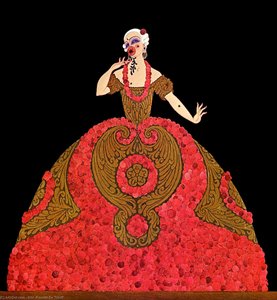
- Costume Design: A quintessential example of Erté’s Art Deco aesthetic, showcasing geometric forms and luxurious fabrics.
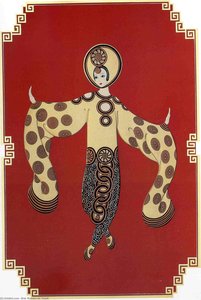
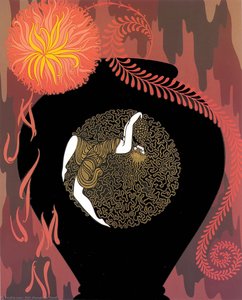
- Seasons' Winter: A captivating winter scene that exemplifies his elegant style and mastery of composition.
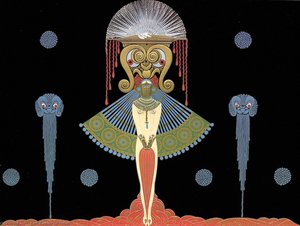
- Asian Princess: An exotic illustration brimming with intricate details and rich colors, demonstrating his signature flair.
- Alphabet Suite: Considered one of his most important achievements, showcasing his design prowess and compositional skill.

Erté
1892 - 1990 , Russia
Quick Facts
- Artistic Movement Or Style: Art Deco
- Artists Or Movements Influenced By This Artist:
- Fashion trends
- Interior design
- Artists Who Influenced This Artist: ['Art Nouveau']
- Date Of Birth: November 23, 1892
- Date Of Death: April 21, 1990
- Full Name: Romain de Tirtoff
- Nationality: Russian-French
- Notable Artworks:
- Costume Design
- Seasons' Winter
- Asian Princess
- Alphabet Suite
- Place Of Birth: Saint Petersburg, Russia
Related Articles

About Us
Discover our story! We bring world-class art into your life through expert curation, personalized creations, and free previews. Trusted by individuals and businesses since 2000.

Goya's Masterpieces: Explore 25 Iconic Paintings & Art Prints | ArtsDot
Delve into the world of Francisco Goya with ArtsDot. Explore 25 iconic paintings – from 'The Third of May' to his haunting Black Paintings. Discover the stories, techniques & emotions behind these Spanish masterpieces. Find museum-quality art reproductions for your home at ArtsDot.com!

Evocations of Place: A Historical Journey Through Landscape Art
Explore the rich history of landscape art with ArtsDot. Discover renowned artists, movements like Impressionism & Romanticism, and expert guidance for collecting timeless pieces. Find your perfect serene escape today!
Erté: The Art Deco Visionary Who Defined Modern Glamour
Explore the glamorous world of Erté, the 'Father of Art Deco'. Discover his iconic fashion illustrations, stunning sculptures & enduring legacy. Expert insights for art collectors.

Romantic Landscapes: 10 Masterpieces for Your Home | ArtsDot
Journey through 10 Romantic landscape masterpieces by Friedrich, Turner & Cole. Explore emotional art, sublime nature scenes & iconic 19th-century paintings. Find museum-quality reproductions for your home at ArtsDot.com – discover the full collection online!