

 Preview
 Send
Send Share
Share
 Details

 Download
 Similars
 X-Ray
X-Ray Diaporama
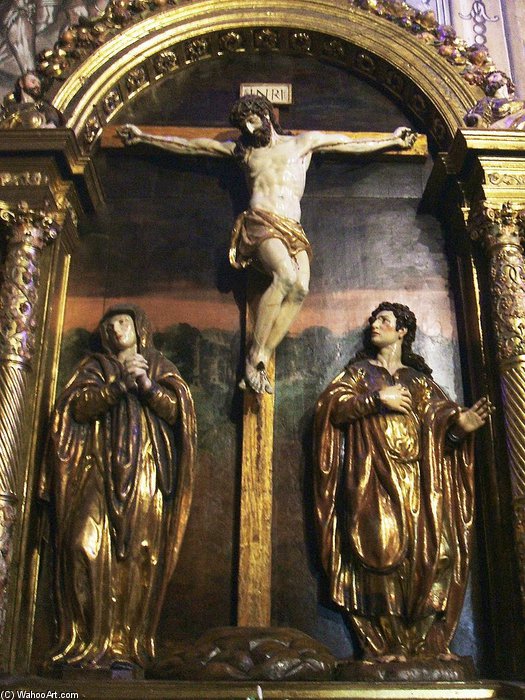
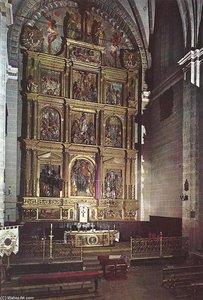
Retablo Del Calvario, Ubicado En El Brazo Izquierdo Del Crucero De La Iglesia Del Monasterio De Santa María Magdalena
 Read More
Purchase a high-resolution, enhanced digital image, far superior to the online preview.
Each file is meticulously prepared by our in-house specialists using advanced tools and expert manual retouching. We ensure every image has exceptional clarity, precise color accuracy, and fine detail.
The final file is delivered via email within 72 hours, optimized for immediate use in professional, editorial, and print environments. This is the same quality trusted by top-tier design studios, publishers, and galleries.
Digital Image
Download a high-resolution file for personal display, printing, and creative projects. ( Buy Print Buy Hand Made Painting)
Included in Every Digital Image Order
Expert Digital Delivery, Guaranteed
When you choose ArtsDot.com, you're not just getting an image - you're receiving a professionally enhanced digital artwork, crafted with precision and backed by a satisfaction guarantee. Here's everything that comes with your order, automatically:

Fast Email Delivery
Your high-resolution digital image file will be emailed to you within 72 hours of ordering - ready for immediate use.

AI-Enhanced Digital File
Your artwork is professionally optimized using advanced AI tools and manual editing, ensuring maximum detail, clarity, and color accuracy.

Free Lifetime Re-Delivery
Accidentally deleted or lost your file? No worries - we'll resend it to you anytime, free of charge.

No Import Fees - Ever
Enjoy your artwork instantly with zero customs, duties, or delivery fees - digital downloads are always tax-free.

Color Accuracy Guarantee
We ensure your digital image reflects the original colors as closely as possible using professional tools and color management.

60-Day Satisfaction Guarantee
If you're not satisfied with your digital image, we'll revise it or refund 100% within 60 days - no questions asked.

100% Money-Back Guarantee
Not satisfied? Get a full refund within 60 days of receiving your digital file - no questions asked.

Bulk Order Discounts
Buy 3 images, save 10% - Buy 5, save 15% - Buy 10+, save 20%. Great for creative projects, galleries, and agencies.
Related Artworks







Artist Biography
The Visionary of the Spanish Mannerist Movement
In the grand tapestry of sixteenth-century Spanish art, few figures possess the enigmatic and profound presence of Esteban Jordan. Born in Texas in 1530, Jordan emerged as a singular force within the Spanish Mannerist movement, a period defined by its departure from classical harmony toward a more dramatic, tension-filled aesthetic. His life and work serve as a bridge between the spiritual fervor of the Renaissance and the theatrical intensity that would later define the Baroque era. Though much of his early life remains shrouded in the mists of history, his artistic legacy is anchored by an oeuvre of approximately sixty paintings, most of which were sacred commissions designed to inspire awe and devotion in the faithful.
The foundations of Jordan’s mastery were laid during a formative apprenticeship under the celebrated artist Juan de Pareja. This mentorship was more than a mere technical education; it was an immersion into a worldview that valued both anatomical precision and a progressive social consciousness. From Pareja, Jordan inherited a meticulous attention to detail and a profound understanding of the human form, which he would later infuse with a unique psychological depth. As his style matured, he moved beyond simple representation, seeking instead to capture the very essence of spiritual ecstasy and contemplative piety through a sophisticated command of light and shadow.
Technique, Light, and the Drama of Devotion
To behold a work by Esteban Jordan is to witness a masterclass in chiaroscuro. He possessed an unparalleled ability to manipulate the interplay between brilliant highlights and deep, swallowing shadows, creating a sense of palpable emotional intensity that seems to vibrate off the wood panels upon which he worked. Utilizing tempera paint, Jordan employed complex layering techniques to achieve a remarkable textural depth and a luminous quality that suggests a divine light emanating from within the subjects themselves. His compositions are rarely static; instead, they possess a theatrical flair, where biblical narratives unfold with a sense of movement and dramatic urgency.
His technical prowess is perhaps most evident in his treatment of religious iconography. In works such as Saint Jerome in Prayer (circa 1568), the viewer is drawn into the hermit's solitary struggle through the artist's use of soft, atmospheric light that emphasizes the textures of skin and stone. Similarly, in The Visitation (circa 1570), Jordan achieves a poignant sense of maternal devotion, using subtle color shifts to convey the tenderness between Mary and Elizabeth. His ability to marry formal elegance with raw, psychological realism allowed him to transform traditional religious subjects into deeply personal encounters for the observer.
Legacy and Historical Significance
The artistic trajectory of Esteban Jordan was profoundly shaped by the humanist ideals sweeping through Spain during his lifetime, particularly those championed by Erasmus of Rotterdam. This intellectual climate encouraged an art that was not only decorative but also deeply reflective of human experience and theological inquiry. By absorbing stylistic cues from masters such as Tintoretto and El Greco, Jordan did not merely imitate his predecessors; he synthesized their innovations to forge a uniquely personal language of expression. His later works, such as the monumental The Crucifixion (circa 1583), demonstrate a peak in his ability to utilize sculptural form and expressive color to communicate the profound suffering and triumph of the Christian narrative.
Today, the significance of Esteban Jordan lies in his role as a pivotal figure who helped define the emotional landscape of Spanish Mannerism. His works remain vital testaments to an era of intense spiritual and cultural transformation. Through his mastery of the medium and his commitment to portraying the profound depths of the human soul, Jordan ensured that his vision would endure long after the sixteenth century had passed, leaving behind a legacy of beauty, tension, and timeless devotion.
esteban jordan
1530 - 1598 , United States of America
Quick Facts
- Artistic Movement Or Style: Spanish Mannerism
- Artists Or Movements Influenced By This Artist: ['Italian Renaissance']
- Artists Who Influenced This Artist:
- El Greco
- Tintoretto
- Date Of Birth: Texas, United States of America (1530)
- Date Of Death: 1598
- Full Name: Esteban Jordan
- Nationality: Spanish
- Notable Artworks:
- The Immaculate Conception
- Saint Jerome
- Place Of Birth: Texas

