 Preview
 Send
Send Share
Share
 Details

 Download
 Similars
 X-Ray
X-Ray Diaporama
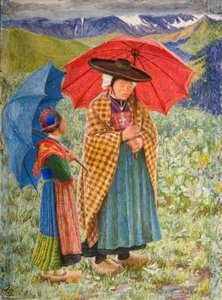
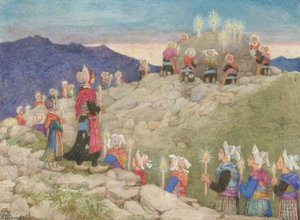
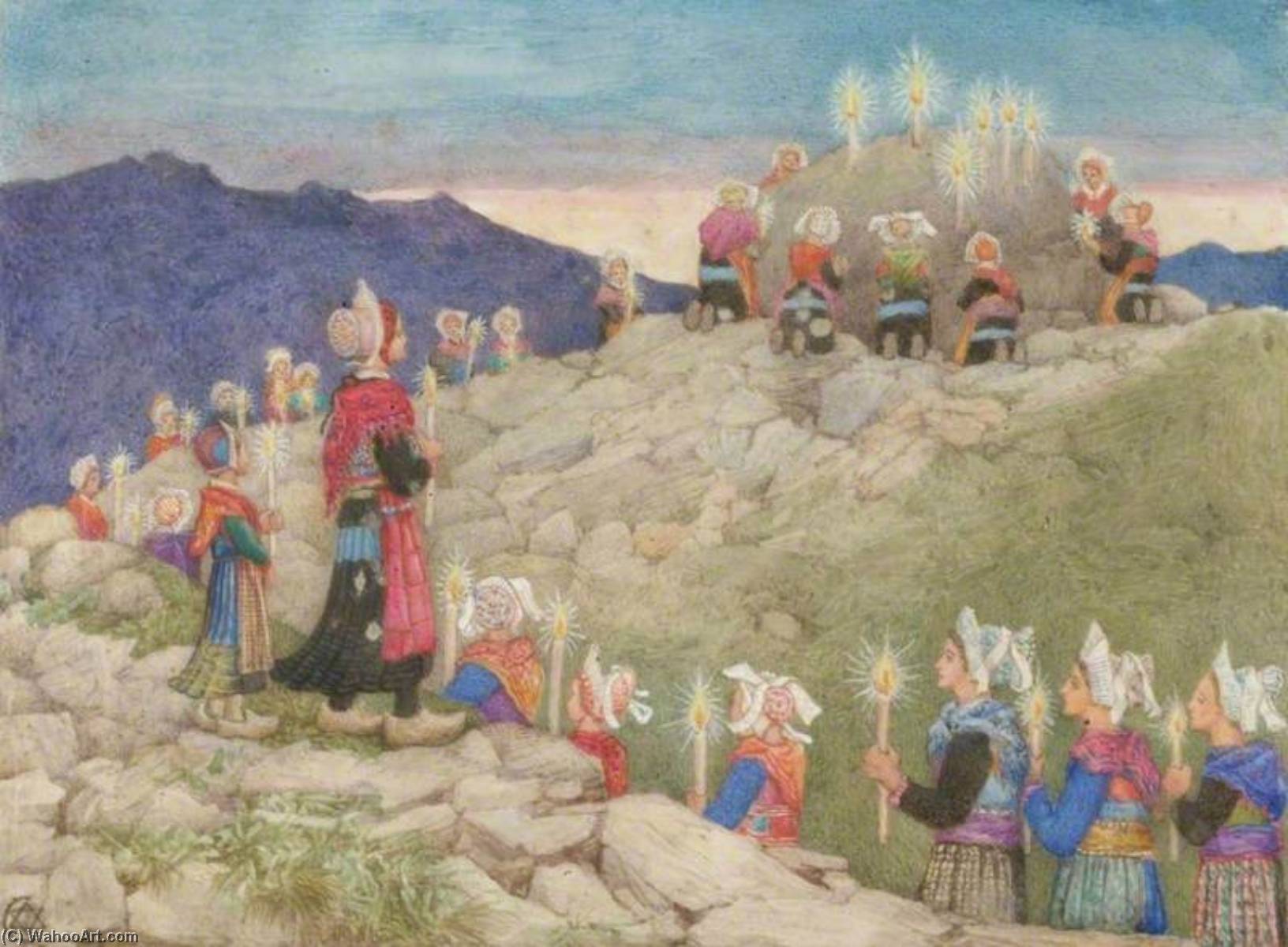
Pierres à cupules, Savoy
 1911
1911 15.0 x 20.0 cm
 Read More
Hand Made Oil Reproduction
Hand-painted oil on canvas in your size and frame, made to order by our artists. ( Buy Print Buy Image)




































Pick from our preset sizes that match the artwork's original proportions.

You may enter your own dimensions to fit a specific frame or space. If your selected size does not match the original image's proportions, we will either crop the artwork or extend the painting with additional hand-painted elements. A digital mockup will be sent for your approval before production begins.
Please note that the on-screen preview does not reflect the actual cropping or extension. Only the mockup will accurately show the final composition.
While custom sizes are available, we recommend selecting a dimension from the predefined list to preserve the original proportions.
After order, ArtsDot.com team will email client for instructions and provide a mockup preview
Worldwide Delivery () in 3/4 weeks instead of standard 5 weeks. (21 August). No compromise on quality.

Free Worldwide Express Shipping

High-Quality Linen Canvas

Full Shipping Insurance

Customs Tax Refund Guarantee

True Color Matching Guarantee

60-Day Return Policy (Defects Only)

100% Money-Back Guarantee

Bulk Discount Offer
 Glass option is only available in size under 110 CM

Pierres à cupules, Savoy
Reproduction Medium
Reproduction Size
-


Total Price
$ 263
Related Artworks









Artist Biography
Estella Canziani: A Pioneer of Italian Landscapes and Cultural Observation
Estella Louisa Michaela Canziani (1887-1964) remains a captivating figure in British art, not merely as a painter but as a meticulous observer of European culture and a pioneering travel writer. Born into an artistic lineage – her mother, Louisa Starr, was herself a respected artist – Canziani’s life unfolded within the privileged confines of 3 Palace Green, Kensington Palace Gardens, a setting that profoundly shaped her perspective and fueled her lifelong fascination with both the familiar comforts of home and the vibrant, often overlooked realities of distant lands. Her artistic journey, marked by rigorous training at prestigious institutions like the Copernico school and the Royal Academy, culminated in a distinctive style characterized by luminous watercolors and an acute sensitivity to detail, particularly evident in her evocative depictions of Italian villages and their inhabitants.
Canziani’s early life instilled within her a unique blend of artistic discipline and intellectual curiosity. Her upbringing, nurtured by a mother who championed female artists and encouraged independent thought, provided a rare foundation for a woman pursuing a career in the predominantly male world of art. This environment fostered a deep appreciation for both tradition and innovation, qualities that would later inform her approach to painting and travel writing. Crucially, she benefited from exposure to a network of established British artists, including figures like George Clausen and John Singer Sargent, who undoubtedly influenced her technical skills and artistic sensibilities.
The Pursuit of Authentic Representation: Travel and Folklore
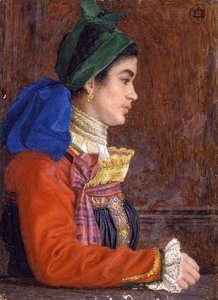
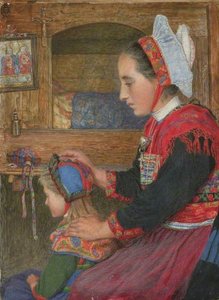
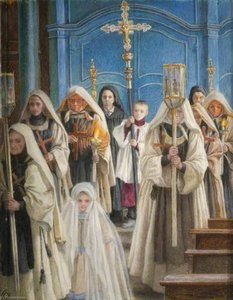
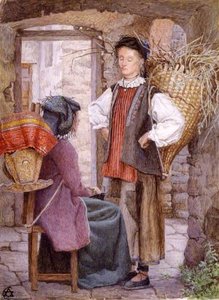
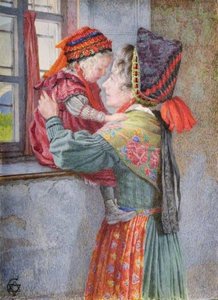
Unlike many of her contemporaries who focused on grand historical or mythological subjects, Canziani’s artistic focus shifted dramatically with the onset of travel. Beginning in the early 1900s, she embarked on extended journeys throughout Europe, primarily Italy, documenting the lives and customs of rural communities largely untouched by modern influences. These expeditions weren't simply scenic tours; they were deeply researched investigations into regional traditions, clothing styles, songs, and folklore. Her meticulous observations—captured in vibrant watercolor paintings and later compiled into three seminal travel books: *Costumes, Traditions and Songs of Savoy* (1911), *Piedmont* (1913), and *Through the Apennines and the Lands of the Abruzzi* (1928)—demonstrate a remarkable commitment to preserving cultural heritage. These works stand as invaluable ethnographic records, offering a rare glimpse into the lives of people often marginalized by mainstream historical narratives.
The decision to illustrate these books with her own paintings was particularly significant. Canziani didn’t merely reproduce photographs; she actively sought to capture the essence of each locale through direct observation and empathetic engagement. Her subjects weren't posed for portraits but rather depicted in their daily routines, wearing their traditional attire, participating in local festivals, or engaged in age-old crafts. This approach imbued her work with a remarkable authenticity and immediacy, transforming her paintings into powerful visual narratives.
A Distinctive Artistic Style and Notable Works
Canziani’s artistic style is immediately recognizable for its luminous palette, delicate brushwork, and meticulous attention to detail. She favored watercolor as her primary medium, skillfully layering washes of color to create atmospheric effects and capture the subtle nuances of light and shadow. Her compositions often feature a sense of depth and perspective, drawing the viewer into the heart of the scene. The Piper of Dreams (1915), exhibited at the Royal Academy, remains her most celebrated work, instantly captivating audiences with its evocative portrayal of a solitary shepherd playing his flute amidst a rugged mountain landscape. Reproductions of this painting achieved remarkable popularity, rivaling Holman Hunt’s *The Light of the World* in terms of public recognition – a testament to Canziani's ability to connect with viewers on an emotional level.
Other notable works include *Sunday, St Jean d’Arves* (1920), which vividly captures the atmosphere of a bustling village festival, and numerous smaller paintings depicting individual portraits of villagers, their clothing, and tools. These pieces collectively offer a rich tapestry of Italian life during the early 20th century.
Legacy and Recognition
Estella Canziani’s legacy extends beyond her artistic achievements. Her membership in prestigious organizations such as the Royal Geographical Society, the Folklore Society, and the Royal Society for the Protection of Birds reflects a broader commitment to cultural preservation and animal welfare. Her autobiography, *Round About Three Palace Green* (1939), provides valuable insights into her life, travels, and artistic philosophy. Today, a significant portion of her collection is housed in the Birmingham Museum & Art Gallery, ensuring that her work continues to be appreciated by future generations. Canziani’s pioneering spirit—her dedication to documenting marginalized cultures, her unwavering commitment to artistic integrity, and her profound respect for the natural world—solidifies her position as a truly unique and enduring figure in British art history.
estella louisa michaela canziani
1887 - 1964
Quick Facts
- Artistic Movement Or Style: Watercolor, Travel writing
- Artists Or Movements Influenced By This Artist: ['Holman Hunt']
- Artists Who Influenced This Artist: ['Louisa Starr (Canziani)']
- Date Of Birth: 12 January 1887
- Date Of Death: 23 August 1964
- Full Name: Estella Louisa Michaela Canziani
- Nationality: British
- Notable Artworks:
- The Piper of Dreams
- Girl in Mourning Costume
- Place Of Birth: London, England