 Preview
 Send
Send Share
Share
 Details

 Download
 Similars
 X-Ray
X-Ray Diaporama
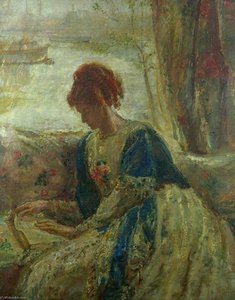
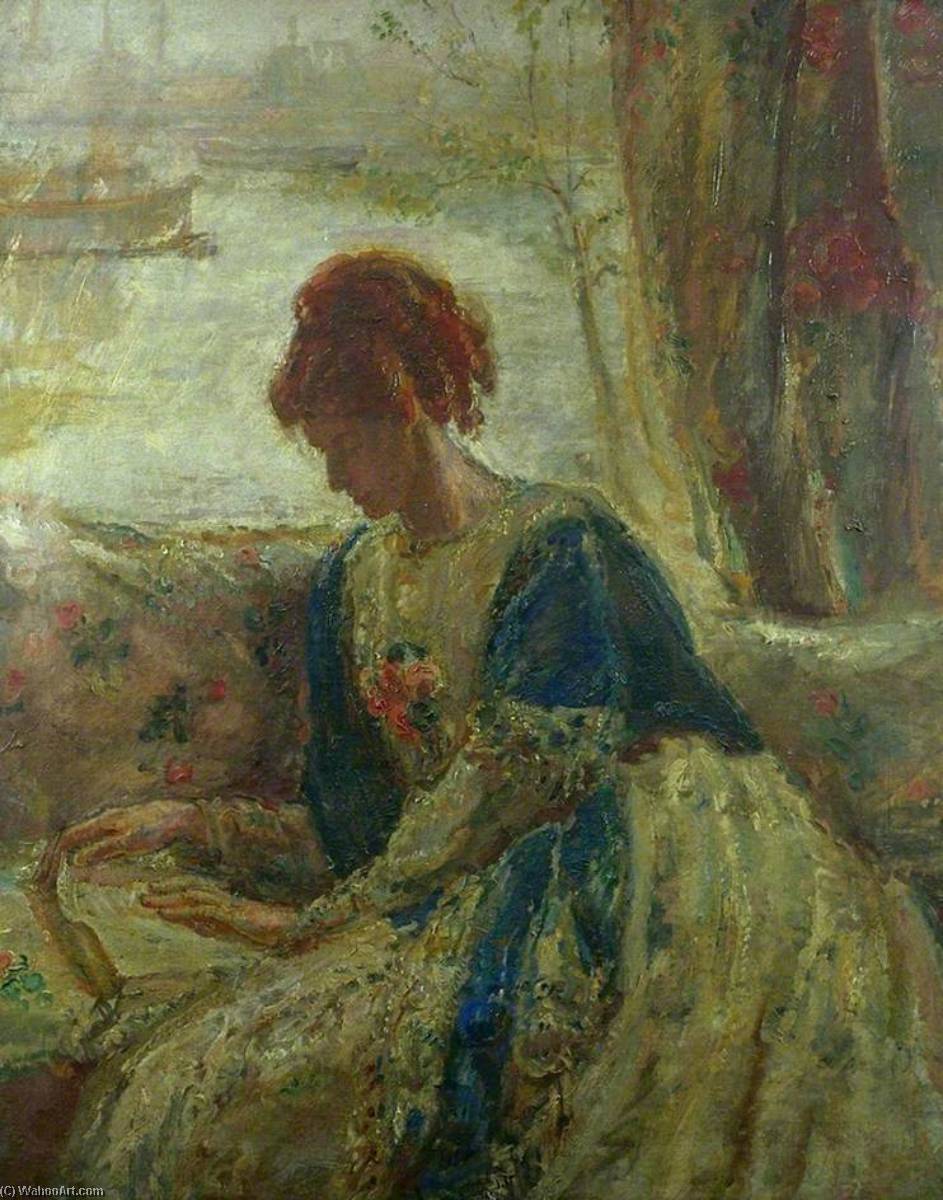
Contrejour – Woman Seated at a Window (recto)
 Oil On Canvas
- WallArt
- Impressionism
 1938
1938- Modern
 127.0 x 102.0 cm
 Courtauld Gallery
 Read More
Giclée / Art Print
Museum-quality giclée or canvas print with fast production and flexible finish options. ( Buy Hand Made Painting Buy Image)




P118B $10

P118H $10

P118W $10

P438Z $10

P508JH $12

P508YH $12

P805H $10

P805Z $10

P919BZ $10

P919G $10

P919XJ $10

P959ZH $10

P968JZ $12

W106C $8

W218G $10

W218JH $8

W218Y $10

W307PJ $10

W316G $10

W316PJ $8

W316Y $10

W398PJ $8

W4111J $10

W500HY $15

W500JH $15

W692G $12

W849H $8

W940BG $15

W953PJ $8




Pick from our preset sizes that match the artwork's original proportions.

You may enter your own dimensions to fit a specific frame or space. If your selected size does not match the original image's proportions, we will either crop the artwork or extend the image with a mirrored or solid-fill edge. A digital mockup will be sent for your approval before production begins.
Please note that the on-screen preview does not reflect the actual cropping or extension. Only the mockup will accurately show the final composition.
While custom sizes are available, we recommend selecting a dimension from the predefined list to preserve the original proportions.
Worldwide Delivery () in 2 weeks instead of standard 4/5 weeks. (26 August)

Free Worldwide Express Shipping

High-Quality Linen Canvas

Full Shipping Insurance

Customs Tax Refund Guarantee

True Color Matching Guarantee

60-Day Return Policy (Defects Only)

100% Money-Back Guarantee

Bulk Discount Offer
 Glass option is only available in size under 110 CM

Contrejour – Woman Seated at a Window (recto)
Giclée / Art Print
Reproduction Size
-


Total Price
$ 63
Collectible Description
A Moment Suspended in Light: Contrejour – Woman Seated at a Window
To gaze upon Ethel Walker’s Contrejour – Woman Seated at a Window is to step directly into a pocket of suspended time. This painting, executed in 1938, transcends the mere depiction of a woman reading; it captures an exquisite meditation on solitude, contemplation, and the delicate interplay between inner life and the external world. The composition centers around a figure bathed in the soft, directional glow emanating from the window before her. She is enveloped in a moment of quiet absorption, seemingly lost within the pages of a book while simultaneously being connected to the vibrant life unfolding just beyond the glass.
The Allure of Light and Shadow
Technically, Walker demonstrates a masterful handling of light, which serves not merely as illumination but as a primary emotional agent. The title itself, Contrejour—meaning 'against the light'—hints at this dramatic interplay. The backlighting creates luminous edges around the subject, lending an ethereal quality to her blue dress and the delicate folds of her scarf. This technique allows Walker to sculpt form with pure luminescence, making the viewer acutely aware of the passage of time as suggested by the shifting quality of that natural light. The arrangement of the furniture—the couch upon which she rests, flanked by two chairs—grounds the scene in domestic intimacy, yet the focus remains entirely on the luminous stillness surrounding her.
Symbolism of Interiority and Observation
The symbolism woven into this portrait is rich for the discerning collector. The act of reading itself speaks to intellectual pursuit and self-nourishment. Yet, the window acts as a powerful symbolic threshold. It separates the private sanctuary of the sitter from the public realm outside. She is simultaneously withdrawn in her study—a cocoon of blue fabric and quiet focus—and connected to the world through that very pane of glass. This duality invites reflection on our own lives: those moments when we seek refuge in books or contemplation, while remaining perpetually aware of the vibrant life continuing just beyond our immediate view.
A Touch of Modern Elegance for Your Space
For the interior designer or art enthusiast curating a space that speaks of cultured repose, this reproduction offers unparalleled depth. The palette—dominated by serene blues contrasted with warm, natural light tones—is inherently soothing, making it a perfect focal point for a drawing-room, library, or elegant sitting area. Walker’s style bridges the late academic tradition with a burgeoning modern sensibility; it is art that feels both historically resonant and immediately contemporary. Owning this piece is not just acquiring a painting, but curating an atmosphere of sophisticated calm.
Related Artworks
Artist Biography
A Pioneering Spirit: The Life and Art of Dame Ethel Walker
Dame Ethel Walker (1861-1951) stands as a compelling figure in the transition from Victorian tradition to Modernist expression, a Scottish painter whose vibrant canvases captured not only the beauty of her subjects but also a spirit of independence that resonated throughout her life. Born in Edinburgh, Walker’s artistic journey began with formal training at Putney School of Art and Westminster School of Art before culminating in studies at the prestigious Slade School of Fine Art between 1892 and 1894. This education provided a solid foundation, but it was her travels to Spain and Paris – encounters with masters like Velázquez and the Impressionists – that truly ignited her artistic vision. She established a studio in Chelsea, which would remain her creative base for the rest of her life, becoming a hub for her distinctive style and bold explorations.Breaking Boundaries: Early Career and Artistic Development
Walker’s early work demonstrated a keen eye for portraiture, flower pieces, and seascapes, but it was her embrace of Impressionistic techniques that set her apart. Her brushwork became looser, more expressive, prioritizing the capture of light and atmosphere over meticulous detail. This stylistic shift wasn't merely aesthetic; it reflected a broader desire to move beyond conventional artistic norms. In 1900, she achieved a landmark accomplishment: becoming the first woman elected as a member of the New English Art Club (NEAC). This was a significant breakthrough in a male-dominated art world and signaled her growing recognition among progressive artists. Her work during this period reveals influences from Puvis de Chavannes and Asian art, blending classical forms with a modern sensibility. Walker’s paintings were exhibited widely at the Royal Academy, the Royal Society of Arts, and the Lefevre Gallery, establishing her reputation as one of Britain's leading female artists.International Recognition and Challenging Conventions
Walker’s success extended beyond British shores. She represented Britain at the Venice Biennale four times – in 1922, 1924, 1928, and 1930 – a testament to her international acclaim. Despite achieving considerable recognition, Walker maintained an independent spirit, famously declaring that “there is no such thing as a woman artist; there are only two kinds of artist – bad and good.” This statement, while seemingly dismissive of gendered artistic categories, can be interpreted as a rejection of the limitations placed upon female artists during her time. In 1932, she was elected Honorary President of the Women's International Art Club, demonstrating her commitment to supporting fellow female creatives. Her large-scale decorative compositions, such as *Zone of Hate* (1914-15) and *Zone of Love* (1930-32), now housed in the Tate Collection, explored complex themes with a unique visual language.A Legacy Rediscovered: Modernism, Sexuality, and Artistic Independence
Following her death in 1951, Walker’s work fell into relative obscurity for several decades. However, recent scholarship has brought renewed attention to her life and art, recognizing her as a pioneering figure whose contributions were previously overlooked. Her paintings are now celebrated for their vibrant colors, expressive brushwork, and bold depictions of the female form. Critically, it is increasingly acknowledged that Walker was a lesbian artist, a fact evident in her preference for women sitters and nude studies. She fearlessly explored themes of sensuality and desire at a time when such representations were rarely seen in mainstream art. Her work challenges traditional notions of beauty and sexuality, offering a glimpse into the lives and experiences of women during the early 20th century. Walker’s retrospective at the Tate in 1951 alongside Gwen John and Frances Hodgkins was an important step towards recognizing her significance, but it is only recently that her full artistic legacy has begun to be appreciated. She remains a powerful symbol of artistic independence, challenging conventions and paving the way for future generations of female artists.- Born: 9 June 1861, Edinburgh, Scotland
- Died: 2 March 1951, London, England
- Key Influences: Impressionism, Puvis de Chavannes, Gauguin, Asian Art
- Notable Achievements: First female member of the New English Art Club (1900), Represented Britain at the Venice Biennale four times.
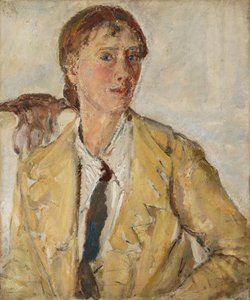
ethel walker
1861 - 1951
Quick Facts
- Artistic Movement Or Style: Impressionism
- Artists Who Influenced This Artist:
- Velazquez
- Manet
- Puvis de Chavannes
- Gauguin
- Date Of Birth: 9 June 1861
- Date Of Death: 2 March 1951
- Full Name: Dame Ethel Walker
- Nationality: Scottish
- Notable Artworks:
- A September Morning
- The Cathedral, Honfleur
- Zone of Love
- Place Of Birth: Edinburgh, Scotland
Related Articles
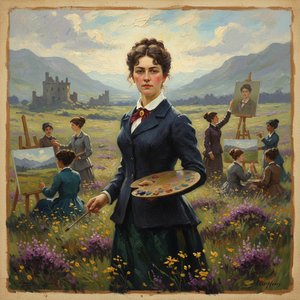
Ethel Walker: A Scottish Impressionist Championing Female Artistic Independence
Discover the life and art of Ethel Walker (1861-1951), a pioneering Scottish Impressionist painter. Explore her captivating portraits, challenge to artistic norms, and lasting legacy with ArtsDot.
Marianne North's Masterpieces: 25 Botanical Paintings That Bloom With Adventure | ArtsDot
Journey through the vibrant world of Marianne North’s botanical paintings! Explore 25 iconic artworks from this Victorian artist, celebrating exotic flora & travel. Find museum-quality reproductions and curated decor ideas at ArtsDot.com.
1930s Art: 10 Masterpieces Reflecting a Decade of Change | ArtsDot
Journey back to the 1930s with ArtsDot. Explore 10 iconic artworks from Hopper, Kahlo & Magritte reflecting a decade of change. Find museum-quality reproductions and curated decor ideas inspired by Art Deco, Surrealism & more! Discover all masterpieces on ArtsDot.com

The Enduring Legacy of Oil on Canvas: Technique, History & Aesthetic Impact
Explore the rich history & techniques of oil painting – from Renaissance masters to Impressionism. Discover pigments, layering methods, and why this timeless medium endures. Expert insights for artists & art enthusiasts.

Oil on Canvas: A Historical & Technical Exploration of a Timeless Artistic Medium
Explore the rich history & enduring techniques of oil painting on canvas. Discover the science behind its longevity, conservation practices, and contemporary relevance. Expert insights for art enthusiasts.