 Send
Send Share
Share
 Details

 Download
 Similars
 Diaporama
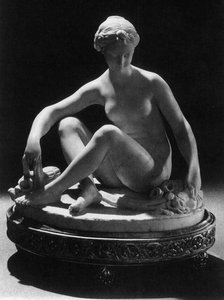
Seated Cupid (detail)


 Read More
Giclée / Art Print
Museum-quality giclée or canvas print with fast production and flexible finish options. ( Buy Hand Made Painting Buy Image)




































Pick from our preset sizes that match the artwork's original proportions.

You may enter your own dimensions to fit a specific frame or space. If your selected size does not match the original image's proportions, we will either crop the artwork or extend the image with a mirrored or solid-fill edge. A digital mockup will be sent for your approval before production begins.
Please note that the on-screen preview does not reflect the actual cropping or extension. Only the mockup will accurately show the final composition.
While custom sizes are available, we recommend selecting a dimension from the predefined list to preserve the original proportions.
Worldwide Delivery () in 2 weeks instead of standard 4/5 weeks. (22 August)

Free Worldwide Express Shipping

High-Quality Linen Canvas

Full Shipping Insurance

Customs Tax Refund Guarantee

True Color Matching Guarantee

60-Day Return Policy (Defects Only)

100% Money-Back Guarantee

Bulk Discount Offer
 Glass option is only available in size under 110 CM

Seated Cupid (detail)
Giclée / Art Print
Reproduction Size
-


Total Price
$ 63
Collectible Description
A Portrait of Eros: Falconet’s Seated Cupid – A Masterpiece of Rococo Elegance
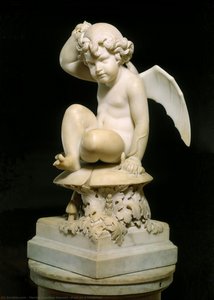
Étienne Maurice Falconet's "Seated Cupid," crafted in 1757 for Madame de Pompadour, transcends mere sculpture; it embodies the very spirit of the Rococo era—a celebration of beauty, delicacy, and playful emotion. This exquisite marble statue captures a moment of profound contemplation within the idealized form of Aphrodite’s son, embodying both youthful innocence and intellectual curiosity. The artist's meticulous attention to detail elevates this piece beyond ornamentation, establishing it as a cornerstone of neoclassical sculpture.The Sculpture's Form and Technique
Falconet skillfully employed Carrara marble—renowned for its purity and translucency—to achieve an astonishing level of realism despite the stylistic conventions of his time. The sculptor’s technique is characterized by subtle modeling and polishing, resulting in a surface that appears to glow with inner light. Note the graceful curve of Cupid's torso, mirroring the flowing lines prevalent throughout Rococo art. Each curl of hair is painstakingly rendered, conveying an impression of movement and vitality—a deliberate contrast to the serene expression on his face. The delicate wings, positioned symmetrically on either side of his head, are sculpted with remarkable precision, demonstrating Falconet’s mastery of anatomical accuracy within a decorative framework.Historical Context: Pompadour's Patronage and Rococo Ideals
The statue’s commission by Madame de Pompadour reflects the influential role of aristocratic patronage in shaping artistic trends during Louis XV’s reign. Pompadour, a shrewd diplomat and ardent supporter of the arts, championed Falconet’s vision for Sèvres porcelain—a bold experiment that sought to infuse fine art into everyday objects. The sculpture embodies Rococo ideals – an aesthetic rooted in sensual pleasure and aristocratic refinement – prioritizing beauty over didacticism. Cupid's gaze is not one of triumphant conquest but rather of quiet introspection, suggesting a deeper contemplation of love’s complexities. This deliberate choice underscores the Rococo preoccupation with psychological nuance and emotional resonance.Symbolism: Eros Embodied
Cupid—the Roman god of love—represents more than just romantic affection; he symbolizes desire, passion, and the transformative power of beauty. His closed eyes convey a sense of serenity and contemplation, hinting at an awareness of the divine order underlying earthly impulses. The parted lips suggest a moment of unspoken thought – perhaps pondering the nature of love itself or considering its consequences. Falconet’s depiction aligns perfectly with the Rococo fascination for portraying idealized figures engaged in contemplative poses, reflecting a broader humanist concern for exploring human emotions and experiences.Emotional Impact: A Timeless Expression of Grace
“Seated Cupid” continues to captivate viewers centuries after its creation due to its ability to evoke feelings of tenderness, serenity, and intellectual curiosity. The sculpture’s luminous marble surface and graceful lines convey an aura of elegance and sophistication—qualities that resonate deeply with audiences today. It serves as a poignant reminder of the Rococo era's commitment to capturing beauty in its purest form while simultaneously prompting reflection on the profound mysteries of human emotion. Falconet’s masterpiece remains an enduring testament to artistic genius and the transformative power of visual art.Related Artworks
Artist Biography
The Sculptor of Grandeur and Delicate Beauty
Étienne Maurice Falconet stands as a pivotal figure in the late Baroque, Rococo, and early Neoclassical periods of French sculpture. Born in Paris in 1716, his journey from a humble apprenticeship to becoming one of the most celebrated artists of his time is a testament to talent, ambition, and an extraordinary ability to capture both power and grace. Falconet’s early life was marked by practical labor; he began as a marble cutter’s assistant, a far cry from the prestigious artistic circles he would eventually command. However, his innate talent for sculpting quickly shone through, producing clay and wood figures during his leisure hours that attracted the attention of Jean-Baptiste Lemoyne the Younger. This mentorship proved crucial, providing the formal training and guidance necessary to transform a skilled craftsman into a master of fine art.
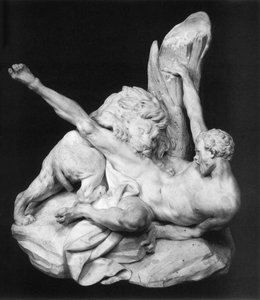
As Falconet’s reputation grew, so did his ability to navigate the shifting aesthetic tides of the 18th century. His work seamlessly bridged the gap between the ornate, playful energy of the Rococo and the disciplined, heroic ideals of Neoclassicism. Early masterpieces like Milo of Croton (1754) secured his admission to the Académie des Beaux-Arts, marking a significant milestone in his career. In this work, Falconet demonstrated a remarkable capacity for realism and emotional depth, imbuing cold stone with the visceral struggle and legendary strength of the Greek athlete. His talent for capturing human feeling through anatomical precision established him as a rising star within the Parisian art world.
A Legacy in Bronze and Porcelain
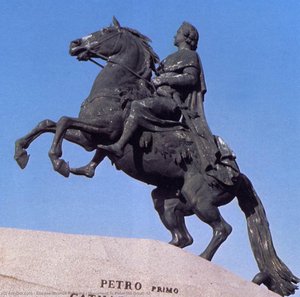
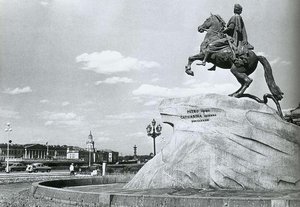
While many sculptors are remembered for a single medium, Falconet’s versatility allowed him to leave an indelible mark on both monumental bronze and delicate porcelain. Perhaps his most enduring achievement is the colossal bronze statue of Peter the Great, known as "The Bronze Horseman," located in St. Petersburg, Russia. This monumental work serves as a triumph of scale and symbolism, capturing the imperial spirit of the Russian Tsar through dynamic movement and commanding presence. It remains one of the most iconic sculptural landmarks in Europe, representing the pinnacle of his ability to execute large-scale, historical narratives.
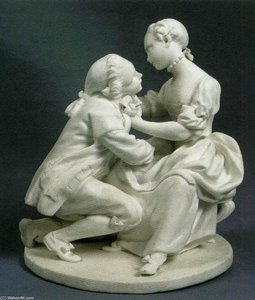
Parallel to his monumental bronze works, Falconet played a transformative role in the Royal Sèvres porcelain manufactory. Here, he elevated small-scale sculpture to an art form in its own right, infusing delicate porcelain figures with the same grace and sophistication found in his marble works. His contributions to Sèvres helped define the aesthetic of the era, blending elegance with intricate detail. His ability to master both the massive and the miniature is reflected in a diverse body of work that includes:
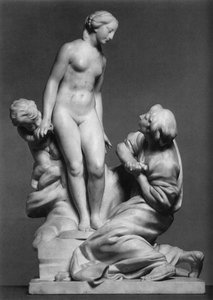
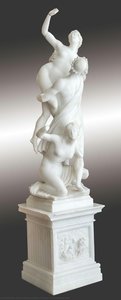
- Pygmalion and Galatea: A stunning marble sculpture capturing the mythical moment Aphrodite breathes life into stone, embodying the essence of artistic creation.
- Flora: A 1751 marble masterpiece that showcases his Neoclassical mastery through serene beauty and elegant form.
- Milo of Croton: A dynamic depiction of strength and struggle that highlights his skill in capturing intense physical emotion.
Through his mastery of various scales and styles, Étienne Maurice Falconet shaped the visual language of his century. Whether through the sweeping drama of a public monument or the intimate charm of a porcelain figurine, his work continues to resonate as a profound exploration of human emotion, myth, and the enduring beauty of form.
étienne maurice falconet
1716 - 1791 , France
Quick Facts
- Artistic Movement Or Style: Baroque, Rococo, Neoclassical
- Artists Or Movements Influenced By This Artist: ['Boucher']
- Artists Who Influenced This Artist: ['Jean-Baptiste Lemoyne']
- Date Of Birth: December 1, 1716
- Date Of Death: January 24, 1791
- Full Name: Étienne Maurice Falconet
- Nationality: French
- Notable Artworks:
- Bronze Horseman Statue
- Flora
- Milo of Croton
- Place Of Birth: Paris, France
Related Articles

Bronze Sculptures That Defined Art History | ArtsDot
Journey through art history with our Top 10 bronze sculptures! Explore masterpieces by Rodin, Michelangelo & more. Discover stories behind iconic statues and find museum-quality reproductions for your home decor at ArtsDot.com.
The Enduring Allure of Marble in Art History: From Classical Sculpture to Modern Abstraction
Explore the captivating history of marble sculpture from ancient Greece to modern art. Discover renowned artists like Canova & Michelangelo, carving techniques, and investment insights at ArtsDot.

The Enduring Form: Exploring Themes & Techniques in Sculpture Across Historical Periods
Explore the rich history of sculpture from ancient masterpieces to contemporary innovations. Discover key techniques, influential artists & investment potential for discerning art collectors.
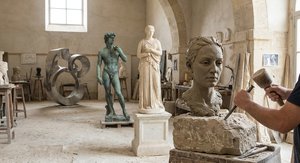
The Enduring Form: Sculpture Across History, Technique & Emotional Resonance
Explore the rich history of sculpture with ArtsDot. Discover key techniques, influential artists & investment potential for discerning collectors. Expert insights into valuing and collecting timeless masterpieces.

Bronze Age to Modern Masters: 10 Sculptures That Redefined Art | ArtsDot
Journey through art history with 10 legendary bronze sculptures – from Michelangelo's David to Rodin’s Thinker. Explore the stories, techniques & timeless beauty of these masterpieces. Find museum-quality reproductions & elevate your home decor on ArtsDot.com.