 Preview
 Send
Send Share
Share
 Details

 Download
 Similars
 X-Ray
X-Ray Diaporama
No title, from the series
 Print
Print- WallArt
- Contemporary Realism
 2000
2000- Modern
 50.0 x 50.0 cm
 Museum of Modern Art Aloisio Magalhães
 Read More
Giclée / Art Print
Museum-quality giclée or canvas print with fast production and flexible finish options. ( Buy Hand Made Painting Buy Image)




P118B $10

P118H $10

P118W $10

P438Z $10

P508JH $12

P508YH $12

P805H $10

P805Z $10

P919BZ $10

P919G $10

P919XJ $10

P959ZH $10

P968JZ $12

W106C $8

W218G $10

W218JH $8

W218Y $10

W307PJ $10

W316G $10

W316PJ $8

W316Y $10

W398PJ $8

W4111J $10

W500HY $15

W500JH $15

W692G $12

W849H $8

W940BG $15

W953PJ $8




Pick from our preset sizes that match the artwork's original proportions.

You may enter your own dimensions to fit a specific frame or space. If your selected size does not match the original image's proportions, we will either crop the artwork or extend the image with a mirrored or solid-fill edge. A digital mockup will be sent for your approval before production begins.
Please note that the on-screen preview does not reflect the actual cropping or extension. Only the mockup will accurately show the final composition.
While custom sizes are available, we recommend selecting a dimension from the predefined list to preserve the original proportions.
Worldwide Delivery () in 2 weeks instead of standard 4/5 weeks. (21 August)

Free Worldwide Express Shipping

High-Quality Linen Canvas

Full Shipping Insurance

Customs Tax Refund Guarantee

True Color Matching Guarantee

60-Day Return Policy (Defects Only)

100% Money-Back Guarantee

Bulk Discount Offer
 Glass option is only available in size under 110 CM

No title, from the series
Giclée / Art Print
Reproduction Size
-


Total Price
$ 63
Collectible Description
Eudes Mota de Oliveira’s Intricate Labyrinth: A Crossword Puzzle in Black and White
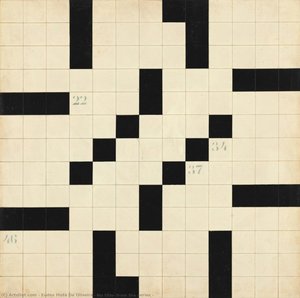
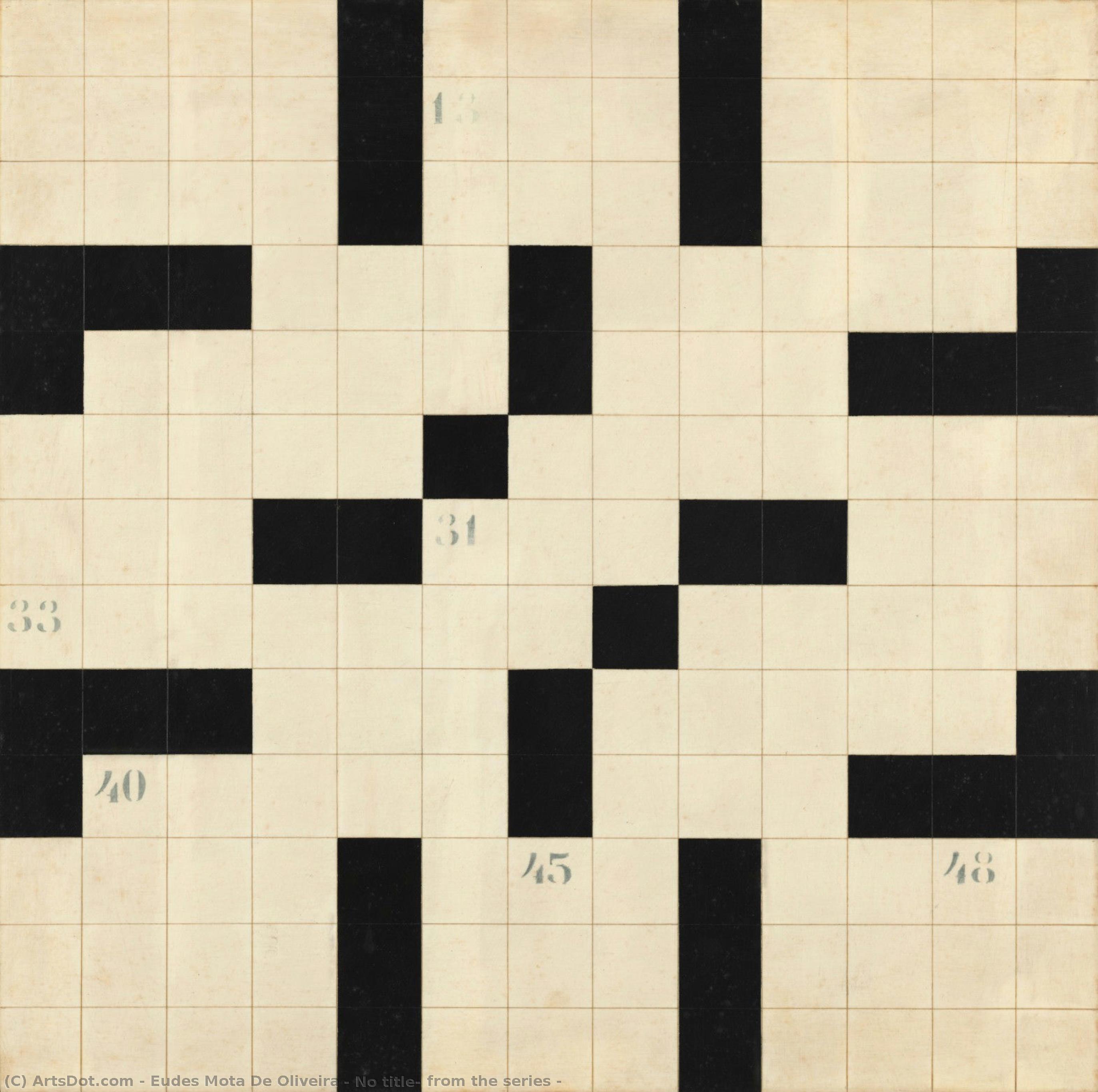
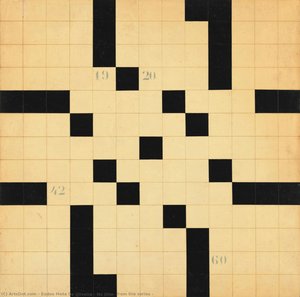
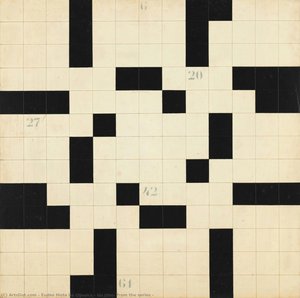
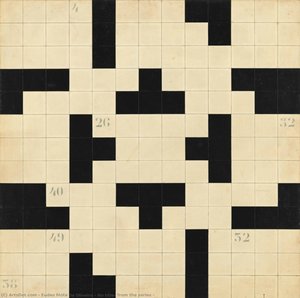
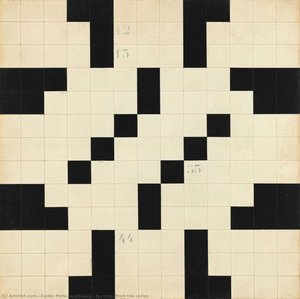
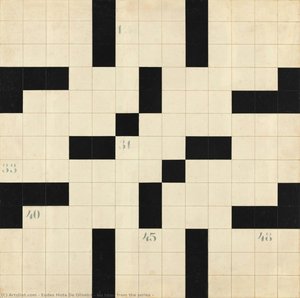
This captivating artwork, presented as a meticulously rendered black and white photograph of an Eudes Mota de Oliveira crossword puzzle, offers a profound meditation on the nature of problem-solving, perception, and the beauty found within the seemingly ordinary. Measuring 50 x 50 cm and created in 2000, this piece is part of a series showcased at the Museum of Modern Art Aloisio Magalhães in Recife, Brazil – a testament to Oliveira’s significant contribution to contemporary Brazilian art.
Oliveira's work, born from a childhood marked by hearing loss, reflects a deeply considered approach to artistic creation. He doesn’t seek grand pronouncements; instead, he isolates and elevates the details of everyday existence, transforming them into complex geometric puzzles that demand focused attention. The crossword puzzle itself becomes a metaphor for intellectual engagement, a visual representation of the cognitive processes involved in deciphering meaning and constructing solutions. The sheer density of lines and numbers – a deliberate choice by the artist – forces the viewer to slow down, to engage with the image on a deeper level than mere observation.
Decoding the Artist’s Vision: Technique and Materiality
Created using photographic techniques, this reproduction captures the stark beauty of Oliveira's original work. The black and white palette intensifies the puzzle’s inherent geometry, emphasizing the intricate network of lines and squares. Oliveira frequently employed vinyl as a medium, lending a subtle textural quality to his pieces – a tactile element that invites closer inspection. This particular reproduction faithfully replicates this effect, offering a tangible connection to the artist's unique approach. The precision with which the puzzle is depicted speaks to Oliveira’s meticulous eye and dedication to detail, hallmarks of his artistic practice.
Historical Context and Symbolic Resonance
Eudes Mota de Oliveira emerged as a key figure in Brazil’s contemporary art scene during the early 21st century. His work aligns with a broader trend within Brazilian art – a move away from representational painting towards abstraction and conceptual engagement. The crossword puzzle, an enduring symbol of intellectual challenge and methodical thinking, resonates powerfully within this context. It can be interpreted as a commentary on the structure of knowledge itself, suggesting that even seemingly complex systems can be broken down into manageable components. Furthermore, Oliveira’s personal experience with hearing loss subtly informs the artwork's themes – perhaps reflecting a desire to impose order onto a world perceived differently.
Emotional Impact and Artistic Value
More than just a photographic reproduction, this piece evokes a sense of quiet contemplation and intellectual curiosity. The puzzle’s inherent ambiguity invites viewers to engage in their own mental exercises, mirroring the artist's intention. Its stark aesthetic – the monochrome palette and geometric precision – creates a visually arresting effect that is both calming and stimulating. This artwork would be an exceptional addition to any collection, offering a unique perspective on art, architecture, and the human condition. It’s a piece designed not just to be looked at, but to be *experienced*.
Related Artworks
Artist Biography
Eudes Mota de Oliveira: Architect of the Everyday
Born in Recife, Brazil, in 1951, Eudes Mota de Oliveira is a profoundly singular artist whose work has captivated audiences and critics alike. His journey from a childhood shaped by sensory limitations – he experienced hearing loss early on – to becoming a leading figure in contemporary Brazilian art is one of remarkable resilience and creative transformation. Mota’s artistic vision isn't about grand narratives or sweeping landscapes; instead, he meticulously dissects the seemingly mundane aspects of daily life, transforming them into intricate geometric puzzles that invite deep contemplation. His unique approach, often utilizing vinyl as a medium, adds an unexpected textural dimension to his work, creating surfaces that are both visually arresting and subtly tactile.
Early Years and Artistic Foundations
Mota’s artistic education began at the Children's Art School in Recife from 1962 to 1963. This formative period provided him with a foundational understanding of artistic principles, nurturing his nascent talent and setting the stage for his future explorations. Crucially, this early training coincided with a period of significant social and political change in Brazil, an environment that undoubtedly influenced his developing aesthetic sensibilities. Following his studies, Mota’s career gained momentum, culminating in a prestigious award – the IV Salon of Global Arts of Northeast in 1976 – a recognition that firmly established him within the Brazilian art scene. This early success demonstrated a keen eye for detail and an ability to capture the essence of his subject matter.
A Distinctive Artistic Style: Geometry, Vinyl, and the Everyday
Mota’s artistic style is immediately recognizable through its geometric precision and deliberate use of unconventional materials. He frequently employs vinyl – a material often associated with commercialism and repetition – to create works that are both visually complex and conceptually rich. His paintings, such as “No Title” from the series, present viewers with intricate grids, reminiscent of crossword puzzles or circuit boards. These compositions aren’t merely decorative; they represent a deliberate attempt to impose order on chaos, to find beauty in the repetition and structure inherent in everyday objects. The use of vinyl introduces an element of texture and surface variation, adding depth and intrigue to his work. His subjects – often seemingly banal items like barcodes, sewing patterns, or newspaper clippings – are elevated through careful arrangement and a keen understanding of their symbolic potential.
Exhibitions, Collections, and Legacy
Mota’s artwork has garnered significant international recognition, with exhibitions held in France, Germany, and the United States. His pieces are now integral to the collections of esteemed museums including the Museum of Modern Art in Rio de Janeiro, the Museum of Contemporary Art in São Paulo, and the Museu Antonio Parreiras in Niterói, Brazil. The Museu de Arte Sao Paulo also houses a notable collection showcasing his evolution as an artist. These inclusions underscore Mota’s enduring influence on the Brazilian art world and his ability to transcend national boundaries through his compelling visual language. His work continues to be exhibited and studied, solidifying his position as a pivotal figure in contemporary Brazilian art.
The Poetics of Limitation
Eudes Mota de Oliveira’s artistic journey is inextricably linked to his experience with hearing loss. Rather than viewing this disability as a barrier, he embraced it as a catalyst for creative exploration. As he himself stated, “My deafness isolated me socially and ended up leading me to the world of art, this more silent space.” This profound shift in perspective allowed him to perceive the world through a different lens – one that emphasized visual patterns, spatial relationships, and the inherent beauty of repetition. His work can be interpreted as a meditation on perception, representation, and the ways in which our senses shape our understanding of reality. Mota’s legacy extends beyond his individual artworks; he represents a powerful example of artistic resilience and the transformative potential of embracing one's limitations.
For more information about Eudes Mota de Oliveira and his artwork, visit ArtsDot.com.
eudes mota de oliveira
1951 - , Brazil
Quick Facts
- Artistic Movement Or Style: Geometric abstraction
- Artists Or Movements Influenced By This Artist:
- Constructivism
- Pop Art
- Artists Who Influenced This Artist:
- Vicente do Rego Monteiro
- Antonio Dias
- Date Of Birth: 1951
- Full Name: Eudes Mota de Oliveira
- Nationality: Brazilian
- Notable Artworks: ['No title, from the series']
- Place Of Birth: Recife, Brazil
Related Articles
Fernand Léger's Masterpieces: 25 Iconic Paintings & The Machine Age Aesthetic | ArtsDot
Explore 25 iconic Fernand Léger paintings that defined the Machine Age & Cubism. Discover the stories behind his bold colors, geometric forms & avant-garde style. Find museum-quality art reproductions on ArtsDot.com.

Giclée Prints: Archival Quality & Aesthetic Nuances for the Discerning Collector
Explore the world of giclée prints with ArtsDot. Learn about archival quality, aesthetic nuances & investment potential. Expert guidance for discerning art collectors seeking museum-quality reproductions and lasting value.

Echoes of Time: Exploring the Enduring Appeal & Historical Context of Vintage Art Prints
Explore the captivating world of vintage art prints! Discover their history, collecting tips & enduring appeal. Expert insights on chromolithography and building a legacy collection with ArtsDot.
Transforming Spaces: A Comprehensive Exploration of Wall Decor Through Art History & Contemporary Practice
Explore the art of transforming spaces with our comprehensive guide to wall decor. From historical movements to contemporary trends, discover how to curate impactful interiors and commission bespoke artwork for a truly personalized aesthetic.
The Return of the Fresco: Why Wall Murals Are the New Luxury Statement
Elevate your space with bespoke wall murals & frescoes. Explore the resurgence of this luxury art form. Expert design guidance & seamless installation – .