 Preview
 Send
Send Share
Share
 Details

 Download
 Similars
 X-Ray
X-Ray Diaporama
No title, from the series
 Acrylic
- WallArt
- Other
 2000
2000 50.0 x 50.0 cm
 Museum of Modern Art Aloisio Magalhães
 Read More
Giclée / Art Print
Museum-quality giclée or canvas print with fast production and flexible finish options. ( Buy Hand Made Painting Buy Image)




P118B $10

P118H $10

P118W $10

P438Z $10

P508JH $12

P508YH $12

P805H $10

P805Z $10

P919BZ $10

P919G $10

P919XJ $10

P959ZH $10

P968JZ $12

W106C $8

W218G $10

W218JH $8

W218Y $10

W307PJ $10

W316G $10

W316PJ $8

W316Y $10

W398PJ $8

W4111J $10

W500HY $15

W500JH $15

W692G $12

W849H $8

W940BG $15

W953PJ $8




Pick from our preset sizes that match the artwork's original proportions.

You may enter your own dimensions to fit a specific frame or space. If your selected size does not match the original image's proportions, we will either crop the artwork or extend the image with a mirrored or solid-fill edge. A digital mockup will be sent for your approval before production begins.
Please note that the on-screen preview does not reflect the actual cropping or extension. Only the mockup will accurately show the final composition.
While custom sizes are available, we recommend selecting a dimension from the predefined list to preserve the original proportions.
Worldwide Delivery () in 2 weeks instead of standard 4/5 weeks. (22 August)

Free Worldwide Express Shipping

High-Quality Linen Canvas

Full Shipping Insurance

Customs Tax Refund Guarantee

True Color Matching Guarantee

60-Day Return Policy (Defects Only)

100% Money-Back Guarantee

Bulk Discount Offer
 Glass option is only available in size under 110 CM

No title, from the series
Giclée / Art Print
Reproduction Size
-


Total Price
$ 63
Collectible Description
A Geometric Meditation on Perception
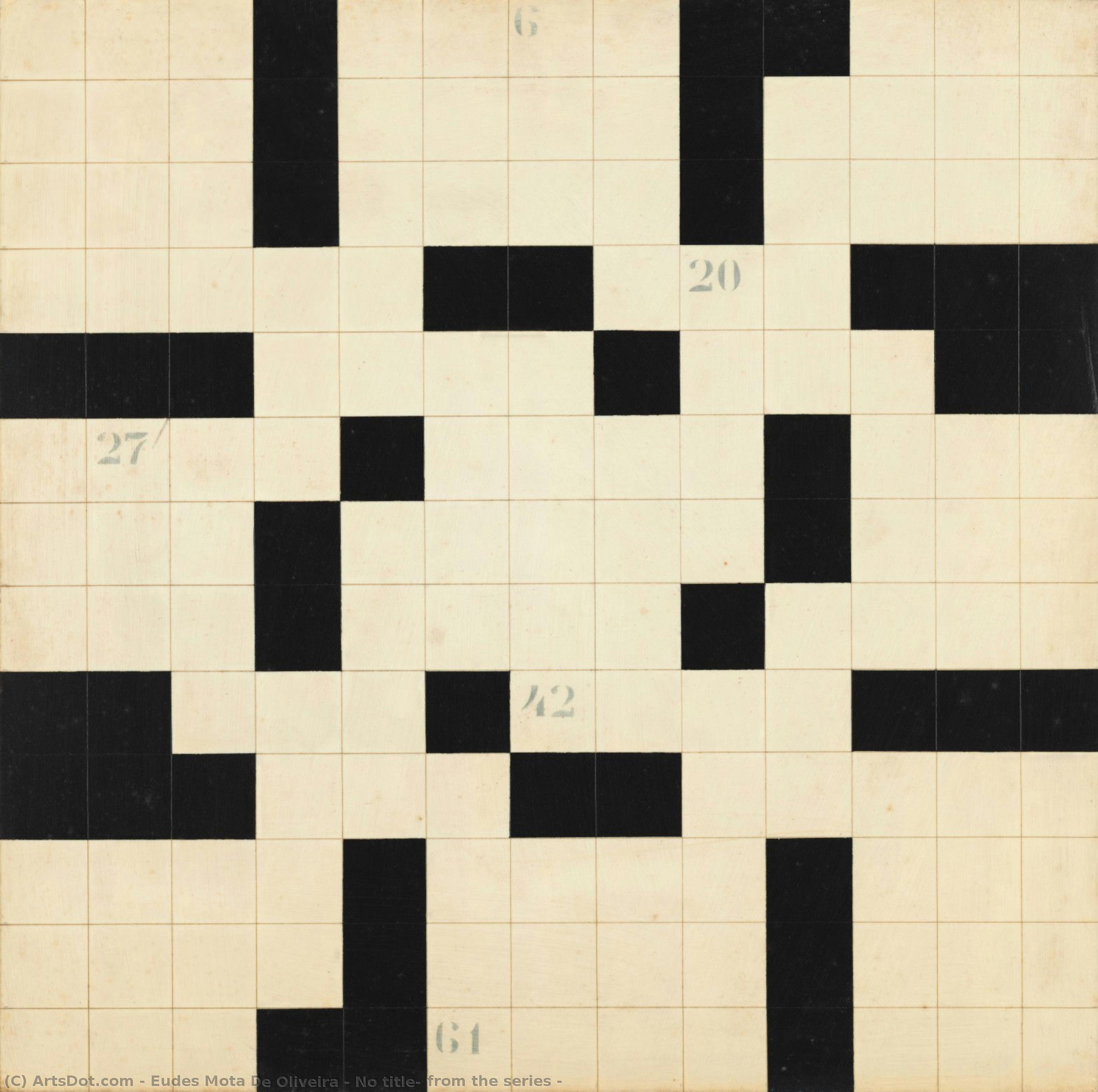
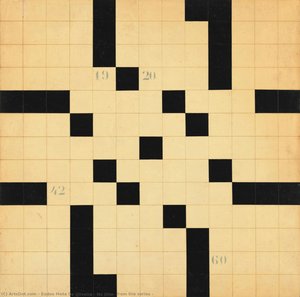
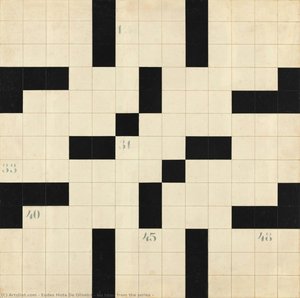
- Subject Matter: The artwork presents a deceptively simple visual puzzle—a black and white jigsaw image featuring numbers prominently displayed across its surface. Rather than depicting recognizable scenes or figures, Oliveira focuses on the fundamental building blocks of visual experience itself.
- Style: Oliveira’s style defies easy categorization, aligning more closely with geometric abstraction than representational art. However, it transcends stylistic labels by prioritizing conceptual exploration over aesthetic ornamentation. The puzzle format serves as a deliberate device to challenge viewers' assumptions about how they perceive and interpret visual information.
- Technique: Executed in vinyl, Oliveira employs a technique that lends an unusual textural quality to the reproduction. This material choice isn’t merely practical; it contributes to the artwork’s symbolic resonance—vinyl represents adaptability and transformation, mirroring Oliveira's own personal journey from sensory impairment to artistic success.
- Historical Context: Emerging in Brazil during the early 2000s, Oliveira’s work reflects a broader trend within contemporary Brazilian art toward introspection and experimentation. Artists like him actively engage with questions of perception and representation, pushing boundaries while maintaining an unwavering commitment to formal precision.
- Symbolism & Emotional Impact: The jigsaw puzzle itself symbolizes the process of reconstructing understanding—the artist’s deliberate fragmentation of visual input invites viewers to actively participate in the creation of meaning. Oliveira's work evokes a sense of quiet contemplation and intellectual curiosity, prompting reflection on how we perceive the world around us and how art can illuminate hidden dimensions of experience.
This reproduction captures the essence of Oliveira’s artistic vision—a masterful blend of geometric abstraction and conceptual depth. Its tactile vinyl surface adds an element of surprise and invites viewers to engage with the artwork on a sensory level, furthering its profound impact.
Related Artworks


Artist Biography
Eudes Mota de Oliveira: Architect of the Everyday
Born in Recife, Brazil, in 1951, Eudes Mota de Oliveira is a profoundly singular artist whose work has captivated audiences and critics alike. His journey from a childhood shaped by sensory limitations – he experienced hearing loss early on – to becoming a leading figure in contemporary Brazilian art is one of remarkable resilience and creative transformation. Mota’s artistic vision isn't about grand narratives or sweeping landscapes; instead, he meticulously dissects the seemingly mundane aspects of daily life, transforming them into intricate geometric puzzles that invite deep contemplation. His unique approach, often utilizing vinyl as a medium, adds an unexpected textural dimension to his work, creating surfaces that are both visually arresting and subtly tactile.
Early Years and Artistic Foundations
Mota’s artistic education began at the Children's Art School in Recife from 1962 to 1963. This formative period provided him with a foundational understanding of artistic principles, nurturing his nascent talent and setting the stage for his future explorations. Crucially, this early training coincided with a period of significant social and political change in Brazil, an environment that undoubtedly influenced his developing aesthetic sensibilities. Following his studies, Mota’s career gained momentum, culminating in a prestigious award – the IV Salon of Global Arts of Northeast in 1976 – a recognition that firmly established him within the Brazilian art scene. This early success demonstrated a keen eye for detail and an ability to capture the essence of his subject matter.
A Distinctive Artistic Style: Geometry, Vinyl, and the Everyday
Mota’s artistic style is immediately recognizable through its geometric precision and deliberate use of unconventional materials. He frequently employs vinyl – a material often associated with commercialism and repetition – to create works that are both visually complex and conceptually rich. His paintings, such as “No Title” from the series, present viewers with intricate grids, reminiscent of crossword puzzles or circuit boards. These compositions aren’t merely decorative; they represent a deliberate attempt to impose order on chaos, to find beauty in the repetition and structure inherent in everyday objects. The use of vinyl introduces an element of texture and surface variation, adding depth and intrigue to his work. His subjects – often seemingly banal items like barcodes, sewing patterns, or newspaper clippings – are elevated through careful arrangement and a keen understanding of their symbolic potential.
Exhibitions, Collections, and Legacy
Mota’s artwork has garnered significant international recognition, with exhibitions held in France, Germany, and the United States. His pieces are now integral to the collections of esteemed museums including the Museum of Modern Art in Rio de Janeiro, the Museum of Contemporary Art in São Paulo, and the Museu Antonio Parreiras in Niterói, Brazil. The Museu de Arte Sao Paulo also houses a notable collection showcasing his evolution as an artist. These inclusions underscore Mota’s enduring influence on the Brazilian art world and his ability to transcend national boundaries through his compelling visual language. His work continues to be exhibited and studied, solidifying his position as a pivotal figure in contemporary Brazilian art.
The Poetics of Limitation
Eudes Mota de Oliveira’s artistic journey is inextricably linked to his experience with hearing loss. Rather than viewing this disability as a barrier, he embraced it as a catalyst for creative exploration. As he himself stated, “My deafness isolated me socially and ended up leading me to the world of art, this more silent space.” This profound shift in perspective allowed him to perceive the world through a different lens – one that emphasized visual patterns, spatial relationships, and the inherent beauty of repetition. His work can be interpreted as a meditation on perception, representation, and the ways in which our senses shape our understanding of reality. Mota’s legacy extends beyond his individual artworks; he represents a powerful example of artistic resilience and the transformative potential of embracing one's limitations.
For more information about Eudes Mota de Oliveira and his artwork, visit ArtsDot.com.
eudes mota de oliveira
1951 - , Brazil
Quick Facts
- Artistic Movement Or Style: Geometric abstraction
- Artists Or Movements Influenced By This Artist:
- Constructivism
- Pop Art
- Artists Who Influenced This Artist:
- Vicente do Rego Monteiro
- Antonio Dias
- Date Of Birth: 1951
- Full Name: Eudes Mota de Oliveira
- Nationality: Brazilian
- Notable Artworks: ['No title, from the series']
- Place Of Birth: Recife, Brazil
Related Articles

White on Canvas: 10 Masterpieces & Timeless Elegance for Your Home Decor
Explore 10 iconic white paintings by Monet, Whistler & Rothko! Discover the stories behind these serene masterpieces and their impact on art history. Find museum-quality reproductions for your home decor at .

Abstract Expressionism's 10 Defining Masterpieces |
Explore 10 defining Abstract Expressionism masterpieces by Pollock, Rothko & de Kooning. Discover the stories behind these iconic paintings and find museum-quality art reproductions to elevate your home decor on .

Kandinsky's Masterpieces: 25 Paintings That Define Abstract Art | ArtsDot
Journey through Wassily Kandinsky's 25 most iconic abstract paintings. Explore his revolutionary use of color, form & spiritual expressionism. Find museum-quality Kandinsky reproductions and elevate your home decor with ArtsDot.com. Discover all masterpieces on ArtsDot.com!

Dark Masterpieces: 10 Iconic Paintings Dominated by Black Tones |
Explore 10 iconic paintings dominated by black tones, from Rembrandt’s chiaroscuro to Goya's dark expressions. Discover the stories behind these masterpieces & find museum-quality art reproductions for your home at .
Kazimir Malevich: 25 Masterpieces of Suprematism & Abstract Art | ArtsDot
Explore 25 iconic artworks by Kazimir Malevich, pioneer of Suprematism & abstract art. Discover the stories behind 'Black Square' and more! Find museum-quality prints & elevate your home decor with ArtsDot.com.