 Preview
 Send
Send Share
Share
 Details

 Download
 Similars
 X-Ray
X-Ray Diaporama
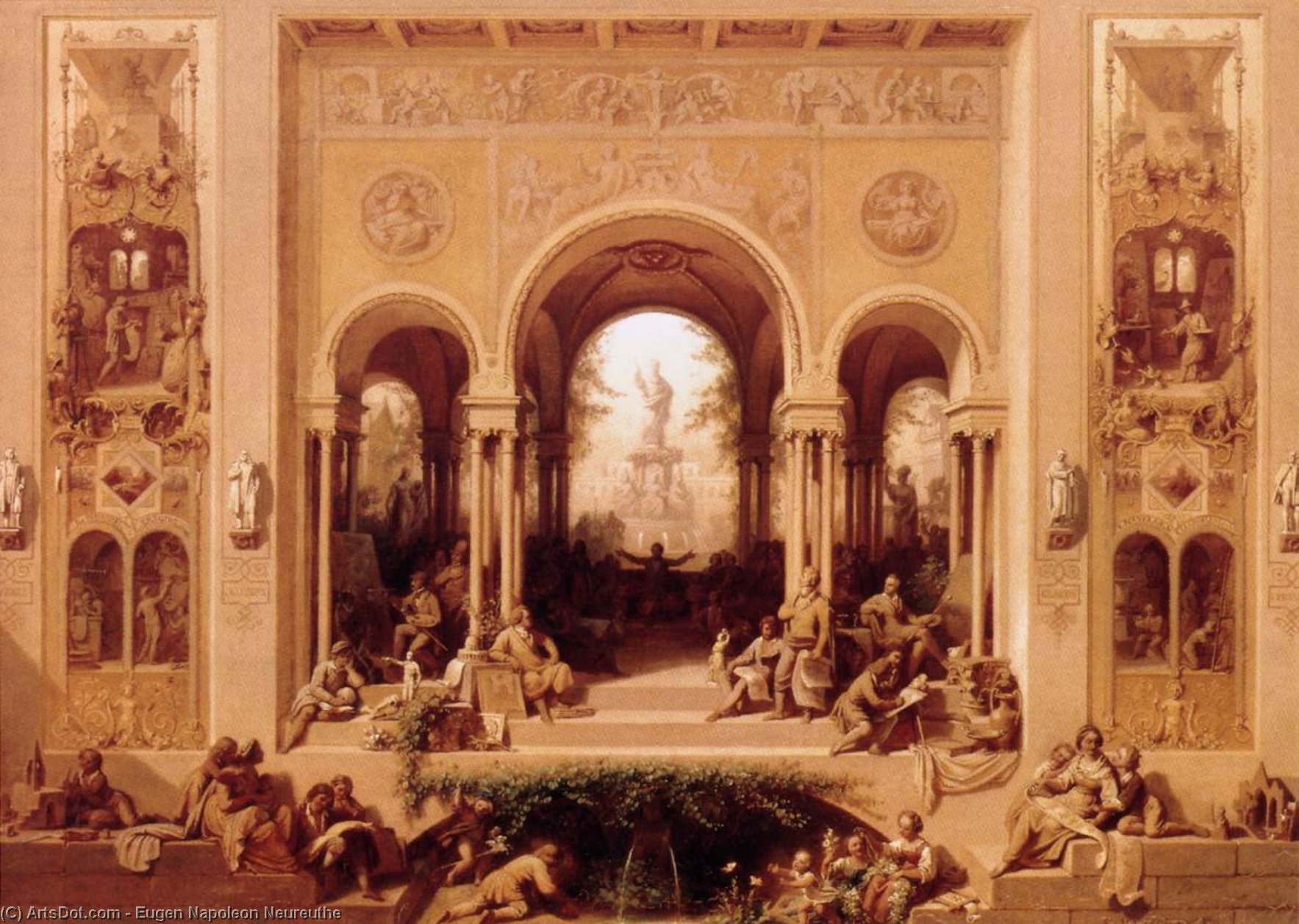
The Arts Flourishing in Munich
 1861
1861 73.0 x 101.0 cm
 Sammlung Schack
 Read More
Hand Made Oil Reproduction
Hand-painted oil on canvas in your size and frame, made to order by our artists. ( Buy Print Buy Image)




































Pick from our preset sizes that match the artwork's original proportions.

You may enter your own dimensions to fit a specific frame or space. If your selected size does not match the original image's proportions, we will either crop the artwork or extend the painting with additional hand-painted elements. A digital mockup will be sent for your approval before production begins.
Please note that the on-screen preview does not reflect the actual cropping or extension. Only the mockup will accurately show the final composition.
While custom sizes are available, we recommend selecting a dimension from the predefined list to preserve the original proportions.
After order, ArtsDot.com team will email client for instructions and provide a mockup preview
Worldwide Delivery () in 3/4 weeks instead of standard 5 weeks. (16 August). No compromise on quality.

Free Worldwide Express Shipping

High-Quality Linen Canvas

Full Shipping Insurance

Customs Tax Refund Guarantee

True Color Matching Guarantee

60-Day Return Policy (Defects Only)

100% Money-Back Guarantee

Bulk Discount Offer
 Glass option is only available in size under 110 CM

The Arts Flourishing in Munich
Reproduction Medium
Reproduction Size
-


Total Price
$ 263
Related Artworks
Artist Biography
The Soul of Bavarian Romanticism: The Life and Legacy of Eugen Napoleon Neureuther
In the heart of nineteenth-century Munich, a period defined by a profound yearning for emotional depth and natural grandeur, emerged a voice that would become synonymous with the spirit of German Romanticism. Eugen Napoleon Neutreuther (1806–1882) was not merely a painter or an illustrator; he was a visual poet whose work bridged the gap between meticulous academic precision and the untamed passion of the Romantic movement. Born into a lineage of artistic excellence as the son of the respected painter Ludwig Neureuther, Eugen inherited more than just technical skill; he possessed a profound sensitivity to the narrative power of the image. His early years in Munich provided a fertile ground for this talent, as he absorbed the foundational principles of classical beauty while simultaneously nurturing an individual aesthetic that sought to capture the sublime.
Neureuther’s formal education at the Munich Academy under the tutelage of Wilhelm von Kobell instilled in him a rigorous discipline. However, it was his encounter with the monumental influence of Peter von Cornelius that truly catalyzed his artistic evolution. Working alongside Cornelius on the magnificent frescoes of the Glyptothek and the Königsbau, Neureuther moved beyond the constraints of mere representation. These grand commissions demanded an imaginative vision capable of decorating vast architectural spaces with grace and narrative clarity. This period of his life solidified his reputation as a master of line and decoration, a skill that would later manifest in both his delicate etchings and his expansive landscape paintings.
A Master of the Marginal: Literary Collaborations and National Acclaim
While his monumental works earned him respect within the halls of Munich’s cultural institutions, it was Neureuther’s intimate collaborations with literature that catapulted him to national stardom. His most celebrated achievement lies in his breathtaking illustrations for the works of Johann Wolfgang von Goethe. In the publication of “Romances and Ballads,” Neureuther utilized marginal drawings to breathe life into poetic verses, creating a symbiotic relationship between text and image. These drawings were far more than mere embellishments; they were psychological extensions of the poetry itself, capturing the tension, mystery, and emotional resonance of Goethe’s narratives through a remarkable attention to detail.
This mastery of the small-scale, intimate medium allowed Neureuther to explore themes of folklore, legend, and the supernatural. His ability to weave complex stories within the borders of a page demonstrated a unique talent for visual storytelling. This period of intense creativity was not limited to German classics; his travels through Paris and Rome expanded his horizons, allowing him to document contemporary historical upheavals—such as the July Revolution in France—with the same delicate touch he applied to ancient myths. Whether depicting the legendary “Dornröschen” or the historical weight of Bavarian poets, Neureuther’s work remained characterized by a purity of line and an undeniable decorative charm.
The Decorative Visionary: From Landscapes to Porcelain
As his career progressed, Neureuther’s artistic reach extended into the very fabric of Bavarian daily life. His fascination with Historicism—a movement that looked back to Gothic and classical motifs—found a unique outlet during his tenure as the artistic director of the Porzellan Manufaktur Nymphenburg from 1848 to 1856. During these years, he applied his sophisticated understanding of the arabesque and ornamental design to the creation of hundreds of dinnerware items. This period of immense productivity showcased his ability to translate high art into functional beauty, ensuring that the elegance of the Romantic era was present in the most intimate settings of the Bavarian elite.
Ultimately, the significance of Eugen Napoleon Neureuther lies in his versatility and his ability to harmonize disparate artistic disciplines. His oeuvre represents a complete spectrum of nineteenth-century German art:
- Landscape Painting: Capturing the atmospheric beauty and pastoral serenity of the Bavarian countryside.
- Etching and Illustration: Revolutionizing the relationship between literature and visual art through emotive marginalia.
- Decorative Arts: Elevating porcelain design through the use of Gothic-inspired motifs and intricate ornamentation.
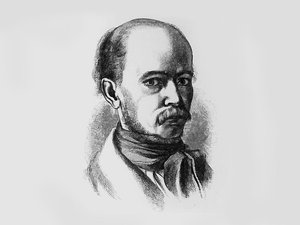
eugen napoleon neureuthe
1806 - 1882 , Germany
Quick Facts
- Artistic Movement Or Style: Romantic Art
- Artists Or Movements Influenced By This Artist: ['Eugène Delacroix']
- Artists Who Influenced This Artist:
- Ludwig Neureuther
- Cornelius Kobell
- Date Of Birth: 1806 Munich Germany
- Date Of Death: 1882 Munich Germany
- Full Name: Eugen Napoleon Neureuther
- Nationality: German
- Notable Artworks:
- The Pastor's Daughter of Taubenhain
- Dornröschen
- Place Of Birth: Munich Germany