 Preview
 Send
Send Share
Share
 Details

 Download
 Similars
 X-Ray
X-Ray Diaporama
Il grande budda

 Read More
Hand Made Oil Reproduction
Hand-painted oil on canvas in your size and frame, made to order by our artists. ( Buy Print Buy Image)




P118B $10

P118H $10

P118W $10

P438Z $10

P508JH $12

P508YH $12

P805H $10

P805Z $10

P919BZ $10

P919G $10

P919XJ $10

P959ZH $10

P968JZ $12

W106C $8

W218G $10

W218JH $8

W218Y $10

W307PJ $10

W316G $10

W316PJ $8

W316Y $10

W398PJ $8

W4111J $10

W500HY $15

W500JH $15

W692G $12

W849H $8

W940BG $15

W953PJ $8




Pick from our preset sizes that match the artwork's original proportions.

You may enter your own dimensions to fit a specific frame or space. If your selected size does not match the original image's proportions, we will either crop the artwork or extend the painting with additional hand-painted elements. A digital mockup will be sent for your approval before production begins.
Please note that the on-screen preview does not reflect the actual cropping or extension. Only the mockup will accurately show the final composition.
While custom sizes are available, we recommend selecting a dimension from the predefined list to preserve the original proportions.
After order, ArtsDot.com team will email client for instructions and provide a mockup preview
Worldwide Delivery () in 3/4 weeks instead of standard 5 weeks. (16 August). No compromise on quality.

Free Worldwide Express Shipping

High-Quality Linen Canvas

Full Shipping Insurance

Customs Tax Refund Guarantee

True Color Matching Guarantee

60-Day Return Policy (Defects Only)

100% Money-Back Guarantee

Bulk Discount Offer
 Glass option is only available in size under 110 CM

Il grande budda
Reproduction Medium
Reproduction Size
-


Total Price
$ 338
Artwork Description
A Polynesian Reverie: Decoding Gauguin’s ‘Il grande budda’
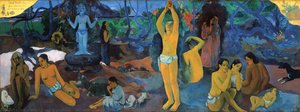
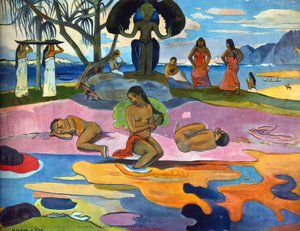
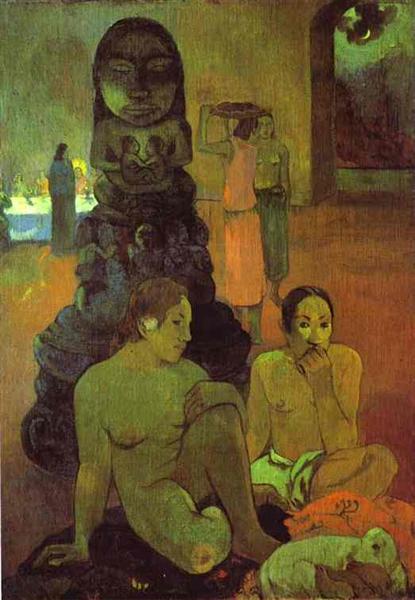
This captivating painting, *Il grande budda*, transports viewers to a dreamlike Polynesian landscape steeped in symbolism and evocative color. Executed in the distinctive style of Paul Gauguin, this work is more than just a depiction of island life; it's a profound exploration of spirituality, power dynamics, and the artist’s own complex relationship with the cultures he encountered.Subject & Composition: A Sacred Gathering
The composition centers around a monumental stone statue – a Polynesian deity cradling a child – serving as the focal point for a group of seated nude women. This arrangement immediately establishes a sense of reverence and perhaps, vulnerability. The background dissolves into an indistinct village scene, hinting at daily life unfolding beyond this sacred space. Gauguin masterfully layers figures and objects, creating depth despite his deliberate rejection of traditional linear perspective. The curvilinear lines and organic shapes contribute to the painting’s flowing, dreamlike quality.Style & Technique: Post-Impressionist Innovation
*Il grande budda* is a prime example of Gauguin's Synthetism, a key movement within Post-Impressionism. He moved away from the Impressionists’ focus on capturing fleeting moments of light, instead prioritizing simplified forms and bold, non-naturalistic colors to convey emotion and meaning. The technique involves loose, expressive brushwork applied in thick impasto layers, adding texture and materiality. Gauguin's flattened perspective and rejection of academic realism were revolutionary for his time, paving the way for future artistic movements like Fauvism and Cubism.Historical Context & Symbolism: Colonial Encounters
Born in 1848, Paul Gauguin initially pursued a career in finance before dedicating himself to art. Dissatisfied with European society, he sought inspiration in more “primitive” cultures, ultimately settling in Tahiti in 1891. *Il grande budda* reflects this fascination and raises questions about the complexities of colonial encounters. The imposing statue represents indigenous spirituality, while the presence of nude women invites contemplation on themes of power, vulnerability, and the gaze of the outsider. Is Gauguin celebrating Polynesian culture or appropriating it? This ambiguity is central to understanding his work.Emotional Impact & Interpretation
The painting evokes a palpable tension between beauty and unease. The vibrant colors are alluring, yet the distorted perspective and unsettling stillness create a sense of mystery. The women’s expressions are ambiguous – are they worshippers, subjects, or something else entirely? This ambiguity invites viewers to project their own interpretations onto the scene, making *Il grande budda* a deeply personal and thought-provoking work of art. The painting's enduring appeal lies in its ability to tap into universal themes of spirituality, power, and the human condition.For Collectors & Designers
- A Statement Piece: *Il grande budda* is a bold and captivating artwork that will undoubtedly become a focal point in any collection.
- Versatile Aesthetic: Its rich colors and dynamic composition complement a wide range of interior design styles, from bohemian to modern eclectic.
- Historical Significance: Owning a reproduction of this painting is owning a piece of art history – a testament to Gauguin’s groundbreaking vision.
- Conversation Starter: The painting's complex symbolism and historical context are sure to spark engaging conversations among guests.
Related Artworks
Artist Biography
A Life Painted in Bold Strokes: The World of Paul Gauguin
Eugène Henri Paul Gauguin, a name that resonates with vibrant color and rebellious spirit, stands as a pivotal figure in the transition from Impressionism to modern art. Born in Paris in 1848, his life was anything but conventional. His early years were shaped by an unusual upbringing; his father a journalist, and his mother descended from Peruvian aristocracy—her grandmother, Flora Tristan, a pioneering feminist and socialist writer whose ideals undoubtedly resonated within the family. This heritage would profoundly shape Gauguin’s artistic vision, instilling in him a fascination with cultures beyond Europe. A formative period spent in Peru as a child, following his family's relocation in 1850, immersed him in a world vastly different from Parisian society, an experience that lingered and ultimately fueled his quest for authenticity in art. Returning to France after his father’s death, Gauguin received a formal education but found himself drawn not to academia, but to the burgeoning financial world, embarking on a career as a stockbroker—a path seemingly at odds with the artistic destiny that awaited him.From Finance to Artistic Calling
For years, Gauguin led a double life, diligently pursuing his business ventures while secretly nurturing a passion for painting. Initially influenced by the Impressionists, he began experimenting with color and light in his spare time, but soon felt constrained by their dedication to capturing fleeting moments of reality. The financial crisis of 1882 proved a turning point, forcing him to abandon his lucrative career and wholeheartedly embrace his artistic calling. This wasn’t merely a change in profession; it was a fundamental shift in worldview. He sought guidance from Camille Pissarro, who encouraged his development and introduced him to the avant-garde circles of Paris. However, Gauguin quickly began to diverge from Impressionistic principles, yearning for something more expressive, more symbolic—a means of conveying not just what he *saw*, but what he *felt*. This desire led him on a journey of artistic exploration that would take him far beyond the Parisian salons and into the heart of “primitive” cultures. He wasn’t simply interested in depicting these cultures; he sought to absorb their essence, believing they held a purity lost in Western civilization.The Call of Brittany and Tahiti
Gauguin’s artistic evolution was inextricably linked to his travels. He spent time in Brittany, captivated by the rugged landscapes and deeply rooted traditions of its people. This period saw him experimenting with flattened forms, bold outlines, and a simplification of composition—techniques that moved him further away from naturalism and closer to a more symbolic language. But it was his journey to Tahiti in 1891 that truly unleashed his creative potential. Seeking refuge from what he perceived as the stifling constraints of European civilization, Gauguin hoped to find inspiration in Polynesian culture, believing it offered a purer, more authentic way of life. This wasn’t simply an artistic pursuit; it was a spiritual quest. He immersed himself in local customs and beliefs, depicting Polynesian women, landscapes, and religious practices through his unique lens. Influenced by Japanese prints—Japonisme—and medieval art, he developed a distinctive aesthetic characterized by vibrant colors, exotic subject matter, and an air of mystery. Iconic paintings like “Vahine no te miti” (Woman with Mango), “Manao Tupapau” (Watched by the Spirit of the Dead), and “The Day of Gods emerged from this period, solidifying his reputation as a visionary artist. His use of color became increasingly bold and non-naturalistic, serving not to replicate reality but to express emotion and spiritual meaning.Legacy and Controversy
Despite his artistic breakthroughs, Gauguin’s life was often marked by hardship. He struggled with financial difficulties and declining health during his time in Tahiti and later on the Marquesas Islands, where he eventually settled. Yet, he continued to paint prolifically, relentlessly exploring themes of life, death, and spirituality. He died in 1903 on Hiva Oa, a remote island in the Marquesas archipelago, largely unrecognized for his genius. It was only after his death that Gauguin’s work began to receive the acclaim it deserved. Today, he is celebrated as a pivotal figure in the development of modern art, bridging the gap between Impressionism and Symbolism, and paving the way for movements like Fauvism. His use of color, simplified forms, and symbolic imagery profoundly influenced artists such as Pablo Picasso, Henri Matisse, and countless others. However, Gauguin remains a controversial figure due to aspects of his personal life—particularly his relationships with young Polynesian women—which continue to be debated and reinterpreted in light of contemporary ethical considerations. Nevertheless, his artistic contributions are undeniable, and his legacy continues to inspire artists and art lovers around the world. He was a true innovator, a rebel who dared to challenge conventions and forge his own path, leaving behind a body of work that is as captivating and enigmatic as the man himself.Key Influences & Artistic Characteristics
- Impressionism: Early influence on color and light, later rejected for its focus on fleeting reality.
- Japonisme: Inspired flattened perspectives, bold outlines, and decorative patterns.
- Medieval Art: Influenced symbolic imagery and a rejection of strict realism.
- Synthetism: A style developed by Gauguin emphasizing the creation of art based on subjective experience rather than objective observation.
- Primitivism: Fascination with non-Western cultures, believing they offered a more authentic and spiritual way of life. This is reflected in his subject matter and stylistic choices.
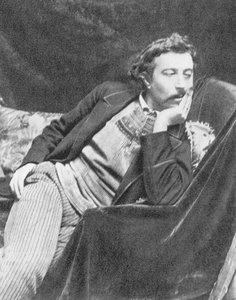
Eugène Henri Paul Gauguin
1848 - 1903 , France
Quick Facts
- Artistic Movement Or Style: Post-Impressionism, Symbolism
- Artists Or Movements Influenced By This Artist:
- Pablo Picasso
- Henri Matisse
- Fauvism
- Artists Who Influenced This Artist: ['Camille Pissarro']
- Date Of Birth: 1848
- Date Of Death: 1903
- Full Name: Eugène Henri Paul Gauguin
- Nationality: French
- Notable Artworks:
- Clearing
- Vahine no te miti
- Manao Tupapau
- Little Breton Shepherd
- Place Of Birth: Paris, France
Related Articles

Cézanne's Masterpieces: 25 Iconic Artworks to Transform Your Space
Journey through 25 iconic artworks by Paul Cézanne – a master of Impressionism and Post-Impressionism. Explore his landscapes, still lifes, and the stories behind these timeless masterpieces. Discover museum-quality reproductions & curated decor at ArtsDot.com.
Paul Klee's Masterpieces: Explore 25 Iconic Paintings & Prints | ArtsDot
Journey through Paul Klee's 25 most iconic paintings & prints. Explore his abstract style, Bauhaus influence, and vibrant color palettes. Find museum-quality art reproductions & decor ideas at ArtsDot.com. Discover all masterpieces online.

Post-Impressionism's 10 Defining Masterpieces: Art for Your Home |
Journey through Post-Impressionism's 10 defining masterpieces – Van Gogh, Monet & more. Explore iconic paintings, art history & find museum-quality reproductions for your home at . Discover all masterpieces online!

Beyond Impressionism: Exploring the Emotional Depth of Post-Impressionist Painting
Explore the profound emotional depth & innovative techniques of Post-Impressionism with ArtsDot. Discover Cézanne, Van Gogh, Gauguin & more – and their lasting impact on modern art.
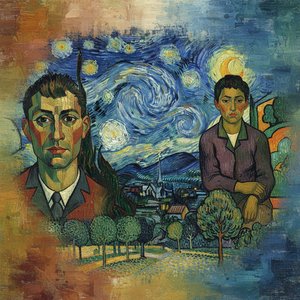
Beyond Impressionism: Exploring Emotional Depth & Formal Innovation in Post-Impressionist Art
Explore the profound emotional depth & formal innovations of Post-Impressionism with our expert guide. Discover Cézanne, Van Gogh, Gauguin & more. Learn about art history, collecting, and investing in this pivotal movement.