

 Preview
 Send
Send Share
Share
 Details

 Download
 Similars
 X-Ray
X-Ray Diaporama
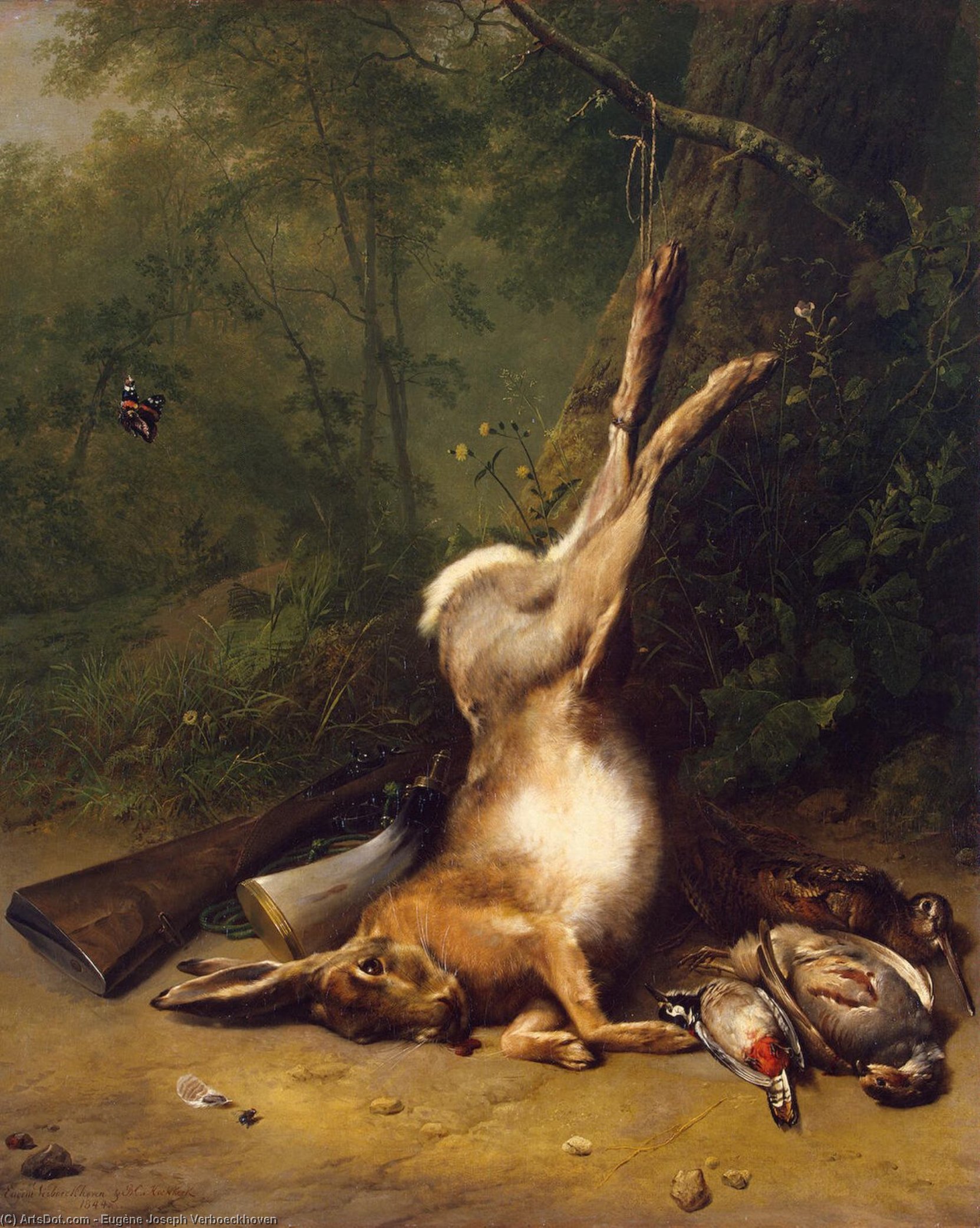
Still-Life with a Hare


 Read More
Purchase a high-resolution, enhanced digital image, far superior to the online preview.
Each file is meticulously prepared by our in-house specialists using advanced tools and expert manual retouching. We ensure every image has exceptional clarity, precise color accuracy, and fine detail.
The final file is delivered via email within 72 hours, optimized for immediate use in professional, editorial, and print environments. This is the same quality trusted by top-tier design studios, publishers, and galleries.
Digital Image
Download a high-resolution file for personal display, printing, and creative projects. ( Buy Print Buy Hand Made Painting)
Included in Every Digital Image Order
Expert Digital Delivery, Guaranteed
When you choose ArtsDot.com, you're not just getting an image - you're receiving a professionally enhanced digital artwork, crafted with precision and backed by a satisfaction guarantee. Here's everything that comes with your order, automatically:

Fast Email Delivery
Your high-resolution digital image file will be emailed to you within 72 hours of ordering - ready for immediate use.

AI-Enhanced Digital File
Your artwork is professionally optimized using advanced AI tools and manual editing, ensuring maximum detail, clarity, and color accuracy.

Free Lifetime Re-Delivery
Accidentally deleted or lost your file? No worries - we'll resend it to you anytime, free of charge.

No Import Fees - Ever
Enjoy your artwork instantly with zero customs, duties, or delivery fees - digital downloads are always tax-free.

Color Accuracy Guarantee
We ensure your digital image reflects the original colors as closely as possible using professional tools and color management.

60-Day Satisfaction Guarantee
If you're not satisfied with your digital image, we'll revise it or refund 100% within 60 days - no questions asked.

100% Money-Back Guarantee
Not satisfied? Get a full refund within 60 days of receiving your digital file - no questions asked.

Bulk Order Discounts
Buy 3 images, save 10% - Buy 5, save 15% - Buy 10+, save 20%. Great for creative projects, galleries, and agencies.
Collectible Description
A Moment Frozen in Time: Eugène Verboeckhoven’s “Still-Life with a Hare”
Eugène Joseph Verboeckhoven's "Still-Life with a Hare," painted in 1844, is more than just a depiction of animals and hunting paraphernalia; it’s a poignant meditation on mortality, the fleeting beauty of nature, and the inherent sadness within the pursuit of life. This remarkable work, now housed at the Hermitage Museum in St. Petersburg, offers a glimpse into the final flowering of a particular artistic tradition – the idyllic landscapes and meticulous animal studies that defined much of 18th-century painting, subtly interwoven with the burgeoning realism of the 19th century.
Verboeckhoven, born in Warneton, Belgium, was deeply influenced by the artistic legacy of Ghent and Antwerp. He wasn’t merely an observer of nature; he sought to capture its essence with a remarkable level of detail, employing a technique that blended classical precision with a sensitivity to light and texture. The painting's composition is carefully orchestrated: a hare lies sprawled on the ground, its head raised in a gesture both vulnerable and defiant. Scattered around it are various birds – some frozen mid-flight, others seemingly startled – alongside a hunting rifle and a discarded cartridge. These elements aren’t randomly arranged; they collectively build a narrative of sudden capture and the brutal realities of sport.
The Language of Loss and Observation
The color palette is deliberately muted, dominated by earthy browns, grays, and greens – colors that evoke the dampness of the forest floor and the somber mood of the scene. Verboeckhoven masterfully utilizes chiaroscuro, employing strong contrasts between light and shadow to emphasize the hare’s lifeless form and heighten the sense of drama. The details are astonishing: you can almost feel the texture of the fur, the sharpness of the rifle barrel, and the delicate feathers of the birds. This meticulous attention to detail wasn't simply a technical exercise; it was a way for Verboeckhoven to convey his deep respect for the natural world – even as he depicted its darker aspects.
Interestingly, the painting’s genesis involved collaboration with Barend Cornelis Koekkoek, another prominent Belgian landscape painter. While the precise division of labor remains somewhat unclear, it's believed that Verboeckhoven focused on the animal subjects and the still-life elements, while Koekkoek contributed the background landscape. This partnership highlights the interconnectedness of artistic practice during this period, where artists often worked together to achieve a shared vision.
Symbolism and Emotional Resonance
The symbolism within “Still-Life with a Hare” is layered and complex. The hare itself has long been associated with themes of fertility, luck, and even death in European folklore. Its vulnerable position, coupled with the presence of the hunting rifle, immediately suggests a tragic outcome. The birds, representing freedom and flight, serve as a poignant counterpoint to the hare’s stillness. The painting isn't simply a record of a hunt; it’s an exploration of the cycle of life and death, the relationship between humans and nature, and perhaps even a subtle critique of human dominion over the animal kingdom.
Beyond its symbolic weight, “Still-Life with a Hare” possesses a profound emotional impact. The scene evokes a sense of melancholy and quiet sorrow – a recognition of beauty’s fragility and the inevitability of loss. It's a work that invites contemplation, prompting viewers to consider their own relationship with the natural world and the ethical implications of our actions.
A Legacy of Detail and Emotion
Eugène Joseph Verboeckhoven’s “Still-Life with a Hare” stands as a testament to his artistic skill and his profound understanding of both nature and human emotion. It's a painting that transcends its subject matter, offering a timeless meditation on life, death, and the enduring power of art to capture the complexities of the human experience. Reproductions of this evocative work continue to resonate with audiences today, serving as a reminder of the beauty and sadness inherent in the natural world.
Related Artworks
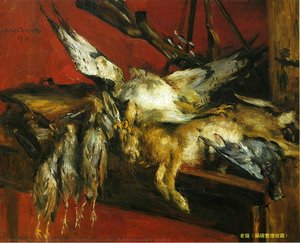
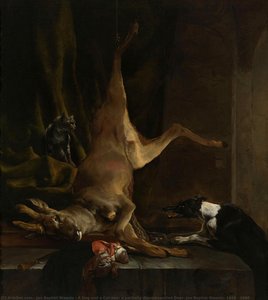
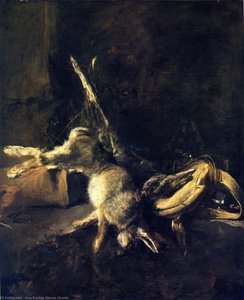
Artist Biography
The Master of Pastoral Tranquility
In the grand tapestry of nineteenth-century European art, few threads are as delicately woven as those spun by Eugène Joseph Verboeckhoven. Born in 1798 in the Belgian town of Warneton, Verbockhoven emerged as a painter who could bridge the gap between the fading echoes of the seventeenth-century pastoral tradition and the burgeoning, sharp-eyed realism of his own era. His life was set against a period of profound transformation; he witnessed the Belgian Revolution of 1830 and saw his nation find its identity, much as he helped define a specific aesthetic identity for Belgian landscape and animal painting. To look upon a Verboeckhoven canvas is to step into a world where time slows down, where the rhythmic grazing of sheep and the quiet dignity of cattle serve as anchors in an ever-changing world.
His artistic foundation was built upon a legacy of meticulous craftsmanship. Initially studying under his father, Barthélemy Verboeckhoven—a sculptor—he gained an early appreciation for form and anatomical precision. This training was further refined in the vibrant artistic hubs of Ghent and Antwerp, where he worked under masters such as Louis-Pierre Verwee and Voituron. These formative years instilled in him a reverence for the Old Masters, particularly the Dutch and Flemish traditions of Paulus Potter and Rembrandt. He did not merely seek to imitate them; rather, he sought to breathe new life into their techniques, using their mastery of light and texture to elevate the humble subjects of farm life to the level of high art.
A Journey Through Light and Landscape
Verboeckhoven’s artistry was profoundly shaped by his restless spirit and his desire to capture the atmospheric nuances of the natural world. Between 1826 and 1841, he embarked on extensive travels that would become the lifeblood of his compositions. From the rugged beauty of the Ardennes to the sun-drenched landscapes of Italy, and through the forests of Germany and France, each region left an indelible mark on his palette. These expeditions allowed him to observe how light interacts with different terrains—how it softens a misty morning in a Belgian meadow or casts dramatic shadows across a mountain pass. This sensitivity to atmosphere is what elevates his work from mere documentation to evocative storytelling.
His technical prowess was most evident in his ability to render the textures of the animal kingdom. Whether it was the coarse wool of a sheep, the sleek coat of a horse, or the delicate features of a hare, Verboeckhoven approached every subject with an almost scientific accuracy paired with a romantic soul. His skill was so highly regarded that he became a sought-after collaborator; many contemporary landscape painters would specifically commission him to provide the staffage—the lively animals and figures—that breathed life into their scenery. This collaborative spirit highlights his central role in the nineteenth-century art market, where his ability to populate a scene with realistic, emotive creatures was unparalleled.
Legacy of the Belgian Realist
As his career progressed, Verboeckhoven became a pillar of the European art establishment. His frequent presence at the prestigious Salons of Brussels and Ghent, as well as his membership in the academies of Antwerp, St. Petersburg, and Amsterdam, speaks to a reputation that transcended national borders. He was not merely a local talent but an international figure whose works were collected by royalty and connoisseurs alike. Even as art movements shifted toward more radical forms of expression, Verboeckhoven remained a steadfast guardian of the idyllic, providing a sense of continuity and comfort through his beautifully rendered scenes of rural peace.
The historical significance of Eugène Joseph Verboeckhoven lies in his role as a stylistic bridge. He successfully synthesized the classical ideals of composition and idealized beauty with a modern commitment to observational realism. His paintings, which continue to grace museums worldwide, serve as a poignant reminder of a lost era of pastoral harmony. Through his brush, the simple act of sheep grazing or a quiet moment in a barn becomes a profound meditation on the enduring beauty of the natural world, ensuring that his name remains etched in the annals of art history as one of the most accomplished animal painters to ever live.
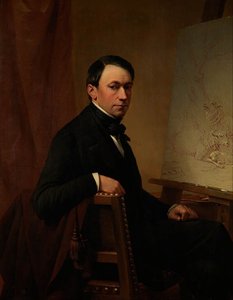
eugène joseph verboeckhoven
1798 - 1881 , Belgium
Quick Facts
- Artistic Movement Or Style: Romanticism
- Artists Or Movements Influenced By This Artist: ['']
- Artists Who Influenced This Artist:
- Balthasar Paul Ommeganck
- Thomas Sidney Cooper
- Date Of Birth: 1798
- Date Of Death: 1881
- Full Name: Eugène Joseph Verboeckhoven
- Nationality: Belgian
- Notable Artworks:
- Good Friends
- Landscape with Sheep
- Group of Sheep
- Place Of Birth: Warneton, Belgium

