 Preview
 Send
Send Share
Share
 Details

 Download
 Similars
 X-Ray
X-Ray Diaporama
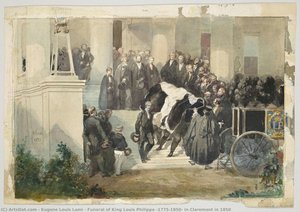
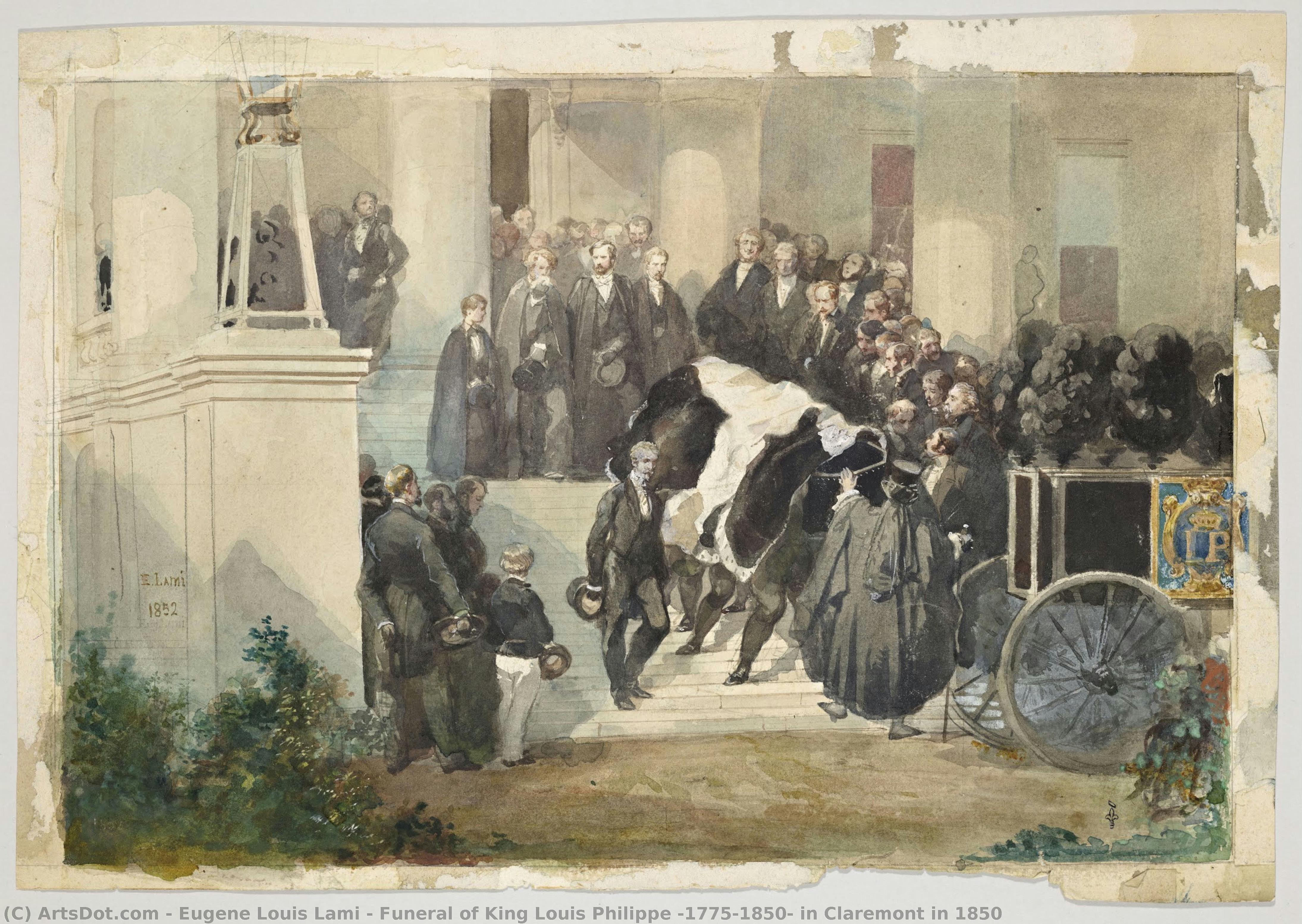
Funeral of King Louis Philippe (1775-1850) in Claremont in 1850


 Read More
Hand Made Oil Reproduction
Hand-painted oil on canvas in your size and frame, made to order by our artists. ( Buy Print Buy Image)




P118B $10

P118H $10

P118W $10

P438Z $10

P508JH $12

P508YH $12

P805H $10

P805Z $10

P919BZ $10

P919G $10

P919XJ $10

P959ZH $10

P968JZ $12

W106C $8

W218G $10

W218JH $8

W218Y $10

W307PJ $10

W316G $10

W316PJ $8

W316Y $10

W398PJ $8

W4111J $10

W500HY $15

W500JH $15

W692G $12

W849H $8

W940BG $15

W953PJ $8




Pick from our preset sizes that match the artwork's original proportions.

You may enter your own dimensions to fit a specific frame or space. If your selected size does not match the original image's proportions, we will either crop the artwork or extend the painting with additional hand-painted elements. A digital mockup will be sent for your approval before production begins.
Please note that the on-screen preview does not reflect the actual cropping or extension. Only the mockup will accurately show the final composition.
While custom sizes are available, we recommend selecting a dimension from the predefined list to preserve the original proportions.
After order, ArtsDot.com team will email client for instructions and provide a mockup preview
Worldwide Delivery () in 3/4 weeks instead of standard 5 weeks. (31 August). No compromise on quality.

Free Worldwide Express Shipping

High-Quality Linen Canvas

Full Shipping Insurance

Customs Tax Refund Guarantee

True Color Matching Guarantee

60-Day Return Policy (Defects Only)

100% Money-Back Guarantee

Bulk Discount Offer
 Glass option is only available in size under 110 CM

Funeral of King Louis Philippe (1775-1850) in Claremont in 1850
Reproduction Medium
Reproduction Size
-


Total Price
$ 263
A Solemn Procession Through Time
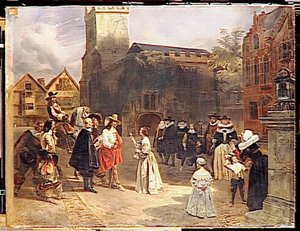
In the evocative masterpiece Funeral of King Louis Philippe (1775-1850) in Claremont in 1850, the renowned French painter Eugène Louis Lami invites us into a moment of profound historical gravity. The canvas captures the somber atmosphere of a funeral procession, a scene where the weight of mortality meets the grandeur of royal legacy. As we gaze upon the gathering, we are not merely observers of a ceremony, but witnesses to a nation in mourning. Lami masterfully orchestrates a large assembly of figures, ranging from those standing in intimate proximity to the casket to the distant mourners who frame the periphery of the event. Each individual, draped in the formal attire of the mid-19th century, contributes to a collective expression of grief and reverence that transcends the boundaries of the painted frame.
The composition is anchored by a powerful sense of movement and symbolism. At the heart of this melancholic tableau, a horse stands prominently, its head slightly lowered in a gesture of instinctive mourning. This creature serves as more than just a component of the royal carriage; it acts as a silent sentinel, embodying the heavy stillness that accompanies the passing of a monarch. The interplay between the living and the symbolic—the breathing, grieving crowd and the stoic animal—creates a tension that is both beautiful and heartbreaking. For collectors and enthusiasts of historical narratives, this piece offers a window into the social hierarchies and the shared emotional landscape of 1850s Europe.
The Romantic Mastery of Eugène Louis Lami
Eugène Louis Lami, a virtuoso of the Romantic era, utilizes his refined training to imbue this scene with unparalleled texture and depth. Having studied under masters such as Horace Vernet, Lami brings a sophisticated command of light and shadow to this work. His technique allows for a delicate rendering of fabrics—the heavy blacks of mourning crepe and the subtle sheen of formal coats—which adds a tactile dimension to the visual experience. The brushwork, while precise enough to capture the dignity of the subjects, possesses a fluid grace that captures the ephemeral nature of life itself.
For interior designers and curators of fine art reproductions, this painting offers an extraordinary opportunity to introduce a sense of historical prestige and emotional depth into a space. The muted palette and the dignified subject matter make it an ideal centerpiece for a library, a formal study, or a gallery wall dedicated to European history. It is a work that does not merely decorate a room but commands it, providing a conversation piece that speaks of legacy, the passage of time, and the enduring power of memory. To possess a reproduction of this caliber is to hold a fragment of the Second Empire’s soul, bringing the elegance and the solemnity of Lami's Paris into the modern home.
Related Artworks
Artist Biography
The Elegance of a Bygone Era: The Life and Art of Eugène Louis Lami
In the vibrant tapestry of nineteenth-century French art, few threads shimmer with as much grace and historical precision as those woven by Eugène Louis Lami. Born in Paris in 1800, Lami emerged during a transformative epoch, a time when the Romantic movement began to intertwine with the burgeoning grandeur of the Second Empire. His life’s work serves as a luminous window into a lost world, capturing the delicate nuances of Parisian high society and the thundering majesty of military triumph. Through his mastery of watercolor, lithography, and illustration, Lami did more than merely record events; he breathed life into the very atmosphere of his age, preserving the ephemeral beauty of fashion, architecture, and ceremony for eternity.
Lami’s artistic journey was shaped by the prestigious halls of the École des Beaux-Arts, where he underwent a rigorous classical education. His development was profoundly influenced by the giants of French Romanticism. Under the guidance of masters such as Horace Vernet and Camille Roqueplan, Lami refined his ability to blend meticulous detail with emotional resonance. Furthermore, the impact of Antoine-Jean Gros cannot be overstated; from Gros, Lami inherited a penchant for dramatic storytelling and a command over monumental historical narratives. This lineage of influence allowed him to bridge the gap between the precise draughtsmanship of classical training and the sweeping, emotive spirit of the Romantic era, making him a versatile virtuoso capable of both intimate portraiture and epic military documentation.
A Master of Light, Fashion, and Social Splendor
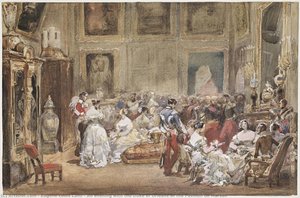
While Lami’s technical foundation was rooted in the grand traditions of history painting, he found his most enduring acclaim as a chronicler of the social fabric of France. He possessed an extraordinary eye for the elegance of Parisian life, specializing in scenes that depicted the aristocratic residences and fashionable gatherings of the era. His watercolor works are particularly celebrated for their ability to convey atmosphere and psychological depth through delicate, translucent brushstrokes. In pieces such as “Entry to a Drawing Room at Marlborough House,” one can sense the subtle social hierarchies and the quiet, refined intimacy of the period.
Beyond the drawing rooms of the elite, Lami’s artistry extended to the architectural soul of France. His precision as a draftsman is evident in his detailed sketches and drawings, such as his 1848 project for the Château de Chantilly, which showcases a remarkable command of classical design and structural accuracy. This ability to capture both the grandeur of monumental architecture and the fleeting textures of silk and lace made him a preferred artist for those seeking to document the prestige of the French state and its nobility.
Military Glory and Lithographic Innovation
The scope of Lami’s talent reached far beyond the salons of Paris, extending into the smoke and splendor of the battlefield. Recognizing the profound public interest in military history and national identity, Lami embraced the medium of lithography to document the martial prowess of his time. He became a celebrated chronicler of cavalry and uniform, producing groundbreaking sets of prints that captured the spirit of the Spanish Cavalry and commemorated the vital Franco-British alliances forged during the Napoleonic Wars. His ability to render the weight of armor, the movement of horses, and the rigid discipline of troops brought a sense of tangible reality to the printed page.
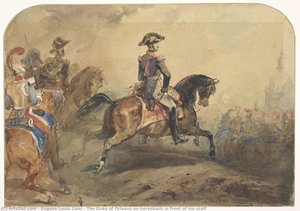
This fascination with military splendor is perhaps most poignantly captured in his depictions of significant historical figures and events. Whether portraying the Duke of Orleans on horseback or capturing the solemnity of the Funeral of King Louis Philippe in 1850, Lami utilized a Romantic lens to imbue historical moments with a sense of profound gravity. His work stands as a monumental achievement in 19th-century art, offering a dual legacy: a meticulous record of military and architectural history, and a soulful, evocative portrait of the elegance and emotion that defined the French spirit during one of its most storied centuries.
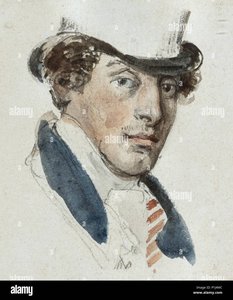
eugene louis lami
1800 - 1890 , France
Quick Facts
- Artistic Movement Or Style: Romanticism
- Artists Or Movements Influenced By This Artist: ['Romanticism']
- Artists Who Influenced This Artist:
- Horace Vernet
- Richard Parkes Bonington
- Date Of Birth: 1800
- Date Of Death: 1890
- Full Name: Eugène Louis Lami
- Nationality: French
- Notable Artworks:
- Bataille de Wattignies
- Siege d'Anvers
- Project for the big castle of Chantilly
- Place Of Birth: France (Paris)
Related Articles
Romantic Realism's Finest: 10 Masterpieces for Your Home | ArtsDot
Explore 10 defining masterpieces of Romantic Realism! Discover Courbet, Millet & Daumier's powerful paintings—capturing emotion and social realities. Find museum-quality reproductions for your home at ArtsDot.com.

Romantic Landscapes: 10 Masterpieces for Your Home | ArtsDot
Journey through 10 Romantic landscape masterpieces by Friedrich, Turner & Cole. Explore emotional art, sublime nature scenes & iconic 19th-century paintings. Find museum-quality reproductions for your home at ArtsDot.com – discover the full collection online!
Morris Louis: Pioneering Color Field Painting & Abstract Expressionism's Legacy
Explore the groundbreaking abstract expressionism of Morris Louis, a pioneer of Color Field painting. Discover his innovative techniques, influential series & lasting legacy in post-war American art. Learn more at ArtsDot.
Charles Bird King: Capturing Native American Dignity Through Portraiture & Cultural Exchange
Explore the captivating portraits of Charles Bird King, renowned for his depictions of Native American leaders. Discover the historical context, artistic techniques, and collecting value of these significant 19th-century artworks.
Romantic Masterpieces: 10 Artworks for a Timeless Home Decor Aesthetic
Fall in love with art! Explore 10 iconic romantic paintings – from Monet & Bouguereau to Fragonard. Discover the stories behind these masterpieces and find museum-quality reproductions for your home decor at .