 Preview
 Send
Send Share
Share
 Details

 Download
 Similars
 X-Ray
X-Ray Diaporama
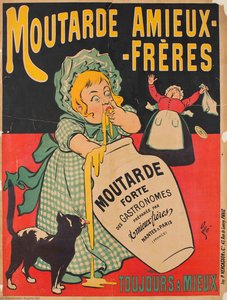
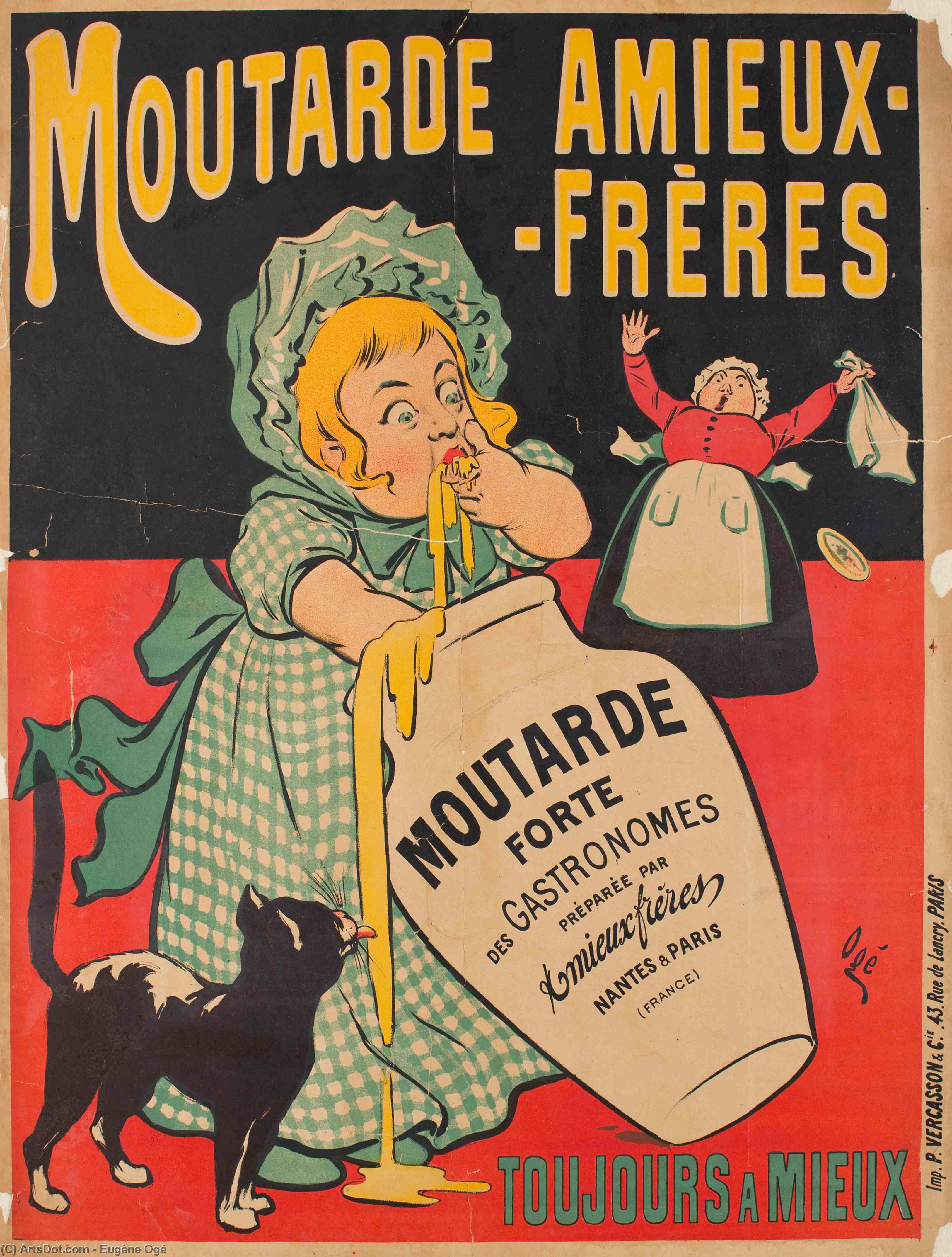
'Moutarde Amieux-Freres', (80 x 60 CM) (1896)
 Read More
Hand Made Oil Reproduction
Hand-painted oil on canvas in your size and frame, made to order by our artists. ( Buy Print Buy Image)




































Pick from our preset sizes that match the artwork's original proportions.

You may enter your own dimensions to fit a specific frame or space. If your selected size does not match the original image's proportions, we will either crop the artwork or extend the painting with additional hand-painted elements. A digital mockup will be sent for your approval before production begins.
Please note that the on-screen preview does not reflect the actual cropping or extension. Only the mockup will accurately show the final composition.
While custom sizes are available, we recommend selecting a dimension from the predefined list to preserve the original proportions.
After order, ArtsDot.com team will email client for instructions and provide a mockup preview
Worldwide Delivery () in 3/4 weeks instead of standard 5 weeks. (16 August). No compromise on quality.

Free Worldwide Express Shipping

High-Quality Linen Canvas

Full Shipping Insurance

Customs Tax Refund Guarantee

True Color Matching Guarantee

60-Day Return Policy (Defects Only)

100% Money-Back Guarantee

Bulk Discount Offer
 Glass option is only available in size under 110 CM

'Moutarde Amieux-Freres', (80 x 60 CM) (1896)
Reproduction Medium
Reproduction Size
-


Total Price
$ 263
Related Artworks
Artist Biography
Early Life and Artistic Beginnings
Eugène Ogé, born in Saint-Brieuc, France, in 1861, emerged as a significant figure in the vibrant world of French poster art during the Belle Époque. His journey began with an apprenticeship under Charles Verneau, a printer specializing in posters—a formative experience that immersed him in the techniques and aesthetics of commercial illustration. This early exposure proved pivotal, laying the groundwork for his future career. Ogé wasn’t content to simply master the craft; he actively sought artistic development, studying painting at the Académie Julian alongside contemporaries who would also leave their mark on the art world.
It was during this period that Ogé developed a deep admiration for Jules Chéret, a pioneer in poster design renowned for his opulent depictions of women and dynamic compositions. However, Ogé’s artistic path wouldn't be one of mere imitation. He began to forge his own distinct style, characterized by a sharp wit, incisive caricature, and a willingness to tackle subjects beyond the conventional boundaries of advertising.
A Rising Star in the Parisian Poster Scene
By the 1890s, Ogé had established his own workshop and was creating posters both under contract with Verneau and independently through collaborations with Pierre Vercasson. This period marked a turning point as he moved away from Chéret’s idealized aesthetic, embracing instead a more direct and often satirical approach. The year 1900 witnessed the emergence of one of his most iconic creations: the poster for “Billards Brunswick,” featuring three bald men—a bold departure that quickly garnered attention and cemented his reputation.
Ogé’s talent wasn't limited to a single style or subject matter. He demonstrated versatility in his work, creating advertisements for a diverse range of products, from biscuits and absinthe to corn flour and beer. His posters were not merely promotional tools; they were miniature works of art that captured the spirit of Parisian life and reflected the changing social landscape.
Anticlerical Satire and Collaboration with *La Lanterne*
The turn of the 20th century saw Ogé’s work take a decidedly political turn. In 1902, he began collaborating with La Lanterne, a daily journal known for its staunchly anti-clerical views. This partnership proved to be one of the most defining aspects of his career, resulting in some of the best-known anticlerical images of the period. Ogé’s posters for La Lanterne were fearless and provocative, employing biting satire to challenge religious authority and societal norms.
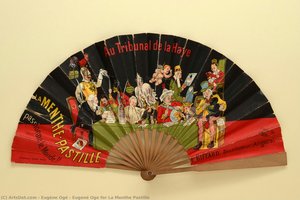
His caricatures during this time targeted prominent figures—from Queen Victoria to Paul Kruger—often in connection with advertisements for products like “Dr. Trabant’s Supreme Pills” and menthe-pastille made by Giffard. This clever integration of political commentary with commercial advertising showcased Ogé's unique ability to engage audiences on multiple levels.
Legacy and Historical Significance
While his output diminished during World War I, as he focused on rubber models and patterns for advertising balloons, Eugène Ogé left an indelible mark on the art world. He was a master of caricature, a skilled illustrator, and a fearless social commentator. His posters offer a fascinating glimpse into the cultural and political climate of turn-of-the-century France.
- Influences: Jules Chéret’s innovative poster design techniques were an early influence, though Ogé quickly developed his own distinct style.
- Key Characteristics: Sharp wit, incisive caricature, satirical themes, and a willingness to challenge societal norms.
- Notable Works: “Billards Brunswick,” posters for *La Lanterne* journal, advertisements for various products including biscuits, absinthe, and menthe-pastille.
- Historical Context: Ogé’s work reflects the political and social tensions of Belle Époque France, particularly the rise of anticlerical sentiment.
Today, Eugène Ogé is remembered as a pivotal figure in the development of French poster art. His works are celebrated for their artistic merit, historical significance, and enduring power to provoke thought and inspire discussion. He stands as a testament to the ability of art to not only entertain but also to challenge, critique, and reflect the complexities of the human experience.
eugène ogé
1861 - 1936
Quick Facts
- Artistic Movement Or Style: Academic Eclecticism
- Artists Or Movements Influenced By This Artist: ['Jules Chéret']
- Artists Who Influenced This Artist: ['Jean Baptiste Carpeaux']
- Date Of Birth: March 24, 1849
- Date Of Death: June 5, 1913
- Full Name: Pierre Marie François Ogé
- Nationality: French
- Notable Artworks:
- Le Pilleur de mer
- Le baptême gaulois
- Virginie
- Saint Brieuc cathedral
- Place Of Birth: Saint-Brieuc, France