 Preview
 Send
Send Share
Share
 Details

 Download
 Similars
 X-Ray
X-Ray Diaporama
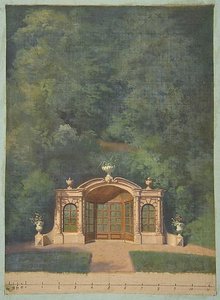
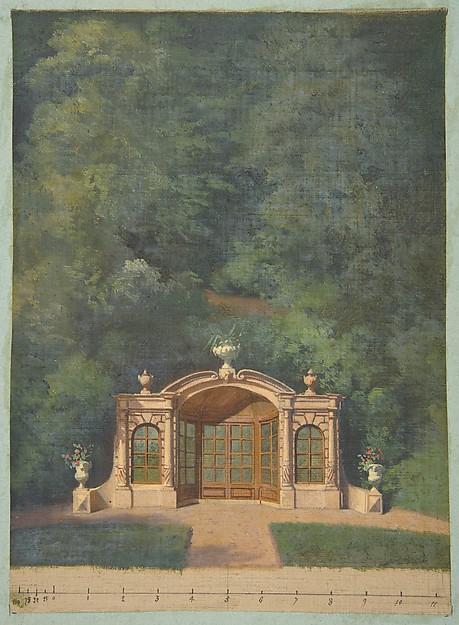
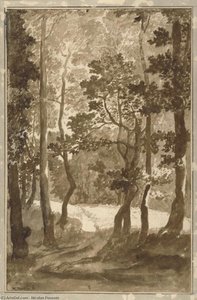
A garden pavilion in a forested landscape
 1830
1830 26.0 x 19.0 cm
 Read More
Giclée / Art Print
Museum-quality giclée or canvas print with fast production and flexible finish options. ( Buy Hand Made Painting Buy Image)




































Pick from our preset sizes that match the artwork's original proportions.

You may enter your own dimensions to fit a specific frame or space. If your selected size does not match the original image's proportions, we will either crop the artwork or extend the image with a mirrored or solid-fill edge. A digital mockup will be sent for your approval before production begins.
Please note that the on-screen preview does not reflect the actual cropping or extension. Only the mockup will accurately show the final composition.
While custom sizes are available, we recommend selecting a dimension from the predefined list to preserve the original proportions.
Worldwide Delivery () in 2 weeks instead of standard 4/5 weeks. (26 August)

Free Worldwide Express Shipping

High-Quality Linen Canvas

Full Shipping Insurance

Customs Tax Refund Guarantee

True Color Matching Guarantee

60-Day Return Policy (Defects Only)

100% Money-Back Guarantee

Bulk Discount Offer
 Glass option is only available in size under 110 CM

A garden pavilion in a forested landscape
Giclée / Art Print
Reproduction Size
-


Total Price
$ 63
Related Artworks








Artist Biography
Eugène Pierre Gourdet: Master of Illusion and the Grandeur of Chateau de Lude
Eugène Pierre Gourdet, a name perhaps less familiar than some of his contemporaries, stands as a remarkable figure in 19th-century French art – a master of trompe l'oeil, an illusionist painter whose skill redefined decorative arts and left an indelible mark on the opulent interiors of Chateau de Lude. Born in Paris in 1820, Gourdet’s career unfolded against the backdrop of burgeoning industrialization and evolving artistic tastes, yet he steadfastly championed a return to classical techniques and a profound appreciation for theatricality and visual deception.
Gourdet's early life reveals a meticulous nature and an innate fascination with perspective and spatial illusion. He apprenticed under various masters, absorbing the principles of Renaissance painting while simultaneously developing his own unique approach – one that prioritized dramatic effect over strict realism. This training laid the foundation for his later triumphs, particularly his ambitious projects within the Chateau de Lude, a sprawling estate commissioned by the Duc de Lodeveix. It was here, beginning in 1863, that Gourdet truly blossomed, undertaking a series of breathtaking murals and ceiling paintings that transformed the castle’s spaces into immersive theatrical experiences.
The Art of Trompe-l'Oeil at Chateau de Lude
Gourdet’s work at Chateau de Lude is not merely decorative; it’s an exercise in artistic virtuosity. He didn’t simply paint a flat surface; he created the *illusion* of depth, volume, and movement. His most celebrated pieces include the “Gallery of Birds,” a sprawling mural depicting a fantastical aviary teeming with life-sized, meticulously rendered birds – many of which appear to take flight across the ceiling. Similarly, his “Hall of Flowers” is an explosion of botanical detail, showcasing an impossible profusion of blossoms and foliage that seems to spill out from the walls themselves.
The technique employed was extraordinarily complex. Gourdet utilized a combination of meticulous planning, precise brushwork, and a deep understanding of atmospheric perspective. He often began with charcoal sketches to establish the composition, then built up layers of paint – starting with lighter tones to create the illusion of distance and gradually adding darker shades to suggest depth. Crucially, he employed a technique known as ‘wet-on-wet,’ applying fresh paint onto still-damp surfaces to achieve seamless transitions and soften edges, further enhancing the sense of realism. The scale of these murals was also monumental, demanding years of painstaking labor and showcasing Gourdet’s extraordinary stamina and dedication.
Influences and Artistic Context
Gourdet's style reflects a fascinating interplay of influences. He drew inspiration from the Italian Renaissance masters – particularly Raphael and Giulio Romano – whose mastery of illusionistic painting he deeply admired. He also demonstrated an awareness of Baroque techniques, incorporating dramatic lighting effects and dynamic compositions reminiscent of artists like Andrea Pozzo. However, Gourdet’s work transcends mere imitation; he infused these influences with a distinctly French sensibility, prioritizing elegance, grandeur, and a theatrical flair.
The mid-19th century was a period of significant artistic experimentation, with Realism challenging the dominance of Romanticism. Gourdet's commitment to illusionistic painting can be seen as a reaction against this shift towards representational accuracy, offering instead a return to the decorative arts and a celebration of visual spectacle. His work aligns with the broader revival of interest in classical art and architecture that characterized the era.
Legacy and Historical Significance
Despite his considerable talent, Gourdet’s fame largely remained confined within the circles of aristocratic patronage. His work at Chateau de Lude, while admired by a select few, wasn't widely disseminated through exhibitions or publications during his lifetime. However, in recent decades, Gourdet has experienced a resurgence of interest among art historians and collectors. His murals are now recognized as masterpieces of trompe l’oeil, demonstrating an unparalleled level of technical skill and artistic vision.
Gourdet's legacy lies not only in the breathtaking beauty of his creations but also in his pioneering approach to decorative painting. He elevated the status of illusionistic art, proving its capacity to transform spaces and evoke powerful emotional responses. His work at Chateau de Lude remains a testament to the enduring power of visual deception and a captivating glimpse into the opulent world of 19th-century French aristocracy.

eugène pierre gourdet
1820 -
Quick Facts
- Artistic Movement Or Style: Trompe l'oeil, Muralist
- Date Of Birth: 1820
- Full Name: Eugène Pierre Gourdet
- Nationality: French
- Notable Artworks:
- The Connoisseur’s Studio
- Floral Still Life
- Place Of Birth: Paris, France