 Preview
 Send
Send Share
Share
 Details

 Download
 Similars
 X-Ray
X-Ray Diaporama
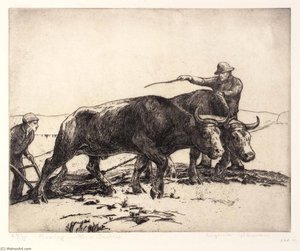
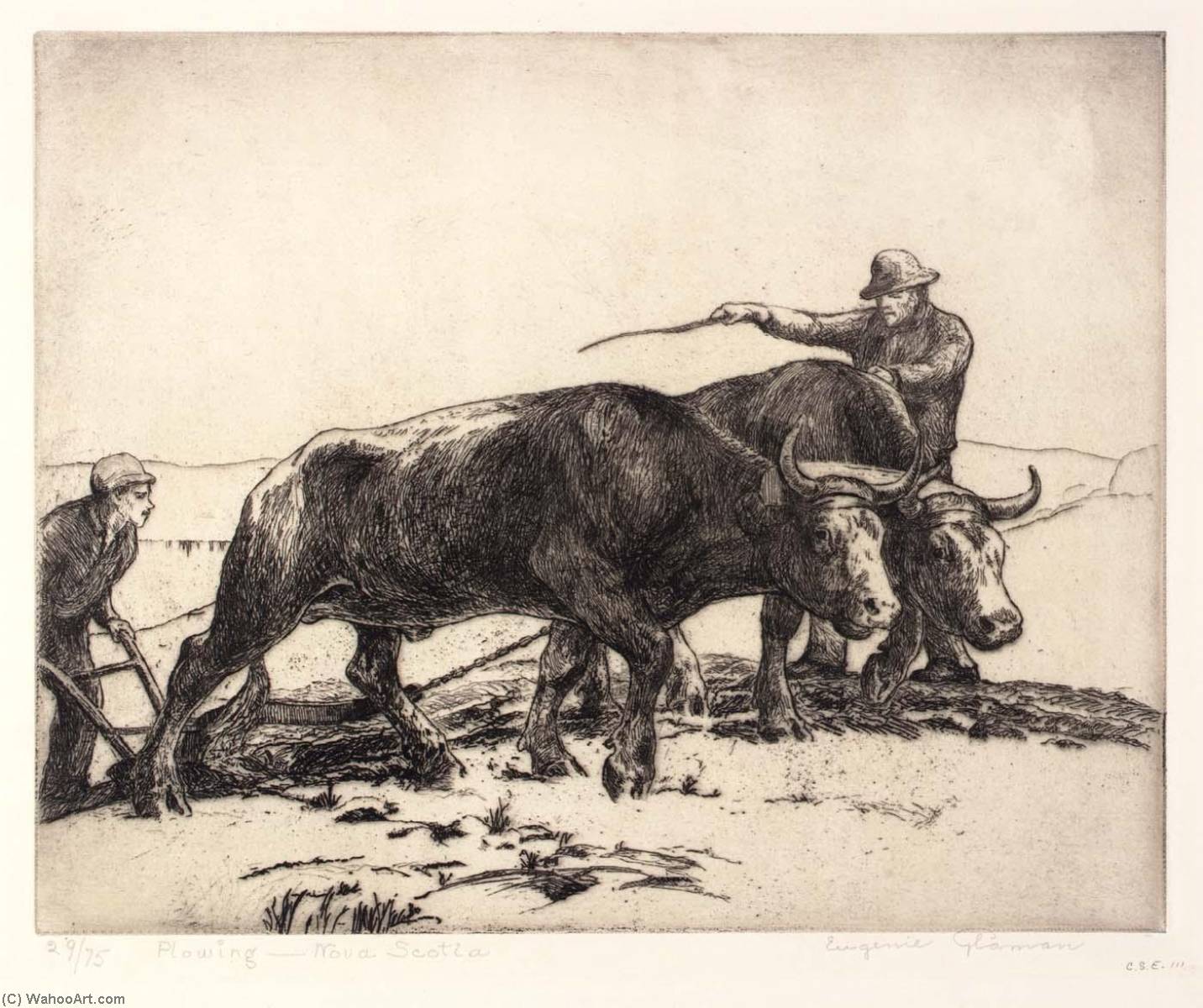
Plowing Nova Scotia
 1934
1934 20.0 x 25.0 cm
 Read More
Giclée / Art Print
Museum-quality giclée or canvas print with fast production and flexible finish options. ( Buy Hand Made Painting Buy Image)




































Pick from our preset sizes that match the artwork's original proportions.

You may enter your own dimensions to fit a specific frame or space. If your selected size does not match the original image's proportions, we will either crop the artwork or extend the image with a mirrored or solid-fill edge. A digital mockup will be sent for your approval before production begins.
Please note that the on-screen preview does not reflect the actual cropping or extension. Only the mockup will accurately show the final composition.
While custom sizes are available, we recommend selecting a dimension from the predefined list to preserve the original proportions.
Worldwide Delivery () in 2 weeks instead of standard 4/5 weeks. (17 August)

Free Worldwide Express Shipping

High-Quality Linen Canvas

Full Shipping Insurance

Customs Tax Refund Guarantee

True Color Matching Guarantee

60-Day Return Policy (Defects Only)

100% Money-Back Guarantee

Bulk Discount Offer
 Glass option is only available in size under 110 CM

Plowing Nova Scotia
Giclée / Art Print
Reproduction Size
-


Total Price
$ 63
Related Artworks

Artist Biography
A Life Immersed in Art: The World of Eugenie Fish Galaman
Eugenie Fish Galaman, born in 1873 and passing in 1956, occupies a fascinating, if somewhat elusive, space within the history of early 20th-century portraiture. While not a household name alongside her contemporaries, Galaman carved out a distinctive niche for herself as a painter of society portraits, capturing the elegance and refinement of an era on the cusp of dramatic change. Her story is one interwoven with privilege, artistic dedication, and a keen eye for psychological nuance. Though biographical details remain sparse, the work itself speaks volumes – revealing a talent nurtured within a world of aristocratic circles and refined aesthetic sensibilities. Galaman’s paintings weren't merely representations; they were carefully constructed statements about status, character, and the very essence of being. Her commitment to capturing not just likeness but also *inner life* sets her apart.Early Influences and Artistic Development
Born into a family deeply embedded within the British upper class, Eugenie Fish Galaman received an education befitting her station, which included rigorous artistic training. The precise nature of this training is largely undocumented, however it’s reasonable to assume exposure to both traditional academic techniques and the burgeoning Impressionist movement that was sweeping across Europe. While she didn't fully embrace the radical brushwork or subject matter of the avant-garde, a subtle influence can be detected in her use of light and color – particularly in her later works. Her early portraits demonstrate a strong foundation in realism, meticulously rendered details and a clear understanding of anatomy. However, as her career progressed, Galaman began to experiment with looser brushstrokes and a more atmospheric quality, suggesting an evolving artistic vision. The prevailing aesthetic of the Edwardian era—characterized by elegance, restraint, and a fascination with idealized beauty—undoubtedly shaped her early style. She moved away from strict academic formality towards a more personal interpretation of portraiture, focusing on conveying personality rather than simply recording appearance.The Portraitist of Society: A Defining Career
Eugenie Fish Galaman’s career flourished in the decades surrounding World War I. Her clientele consisted primarily of members of the British aristocracy and upper middle class – families who sought to immortalize their status and lineage through carefully commissioned portraits. She became known for her ability to capture not only physical resemblance but also the character and social standing of her sitters. Galaman’s studio, though its exact location remains unknown, was undoubtedly a hub of activity, frequented by prominent figures eager to have their likeness preserved by her skilled hand. Her paintings were often displayed in private salons and at exclusive exhibitions, cementing her reputation as a sought-after portraitist. Family Portraiture became a particular specialty; she excelled at depicting the complex dynamics within aristocratic families, capturing both their unity and underlying tensions. The portraits are not simply decorative objects but rather windows into a vanished world—offering glimpses of social customs, fashion trends, and the psychological landscape of the British elite.Technique and Style: A Delicate Balance
Galaman’s technique was characterized by a delicate balance between realism and impressionistic suggestion. She employed a refined palette, favoring muted tones and subtle gradations of color to create an atmosphere of elegance and refinement. Her brushwork, while precise in the rendering of facial features and clothing details, often became looser and more expressive in backgrounds and draperies. This technique allowed her to convey both the solidity of form and the fleeting quality of light and shadow. Her use of glazing – applying thin layers of paint over a base layer – created depth and luminosity, giving her portraits a remarkable sense of life. Galaman’s compositions were typically formal and balanced, reflecting the conventions of traditional portraiture. However, she often introduced subtle psychological elements—a knowing glance, a carefully posed hand—that added depth and complexity to her work. She wasn't interested in grand narratives or dramatic gestures; instead, she focused on capturing the quiet dignity and inner life of her sitters.Legacy and Historical Significance
While Eugenie Fish Galaman’s name may not be widely recognized today, her work offers a valuable insight into the social and artistic landscape of early 20th-century Britain. Her portraits provide a visual record of a vanished world—capturing the elegance, refinement, and underlying complexities of the British aristocracy.- Her commitment to capturing psychological nuance sets her apart from many of her contemporaries.
- She represents a bridge between traditional academic portraiture and the emerging modern styles of the early 20th century.
- Her paintings offer a unique glimpse into the lives and values of the British elite during a period of significant social change.
eugenie fish glaman
1873 - 1956
Quick Facts
- Artistic Movement Or Style: Impressionism
- Artists Or Movements Influenced By This Artist: ['British Impressionism']
- Artists Who Influenced This Artist:
- Claude Monet
- Pierre-Auguste Renoir
- Date Of Birth: 1873
- Full Name: Eugenie Fish Glaman
- Nationality: British
- Notable Artworks:
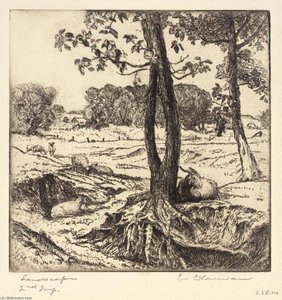
- Barney Vos' Sheep
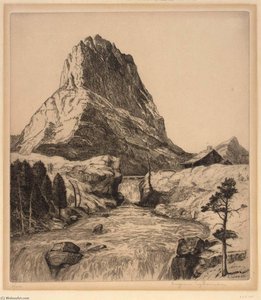
- Valley of the Swiftcurrent
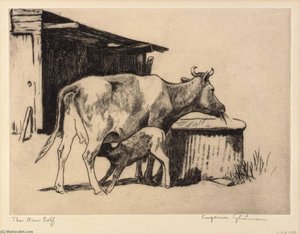
- The New Calf
- Place Of Birth: Grimsby, Lincolnshire