

 Preview
 Send
Send Share
Share
 Details

 Download
 Similars
 X-Ray
X-Ray Diaporama
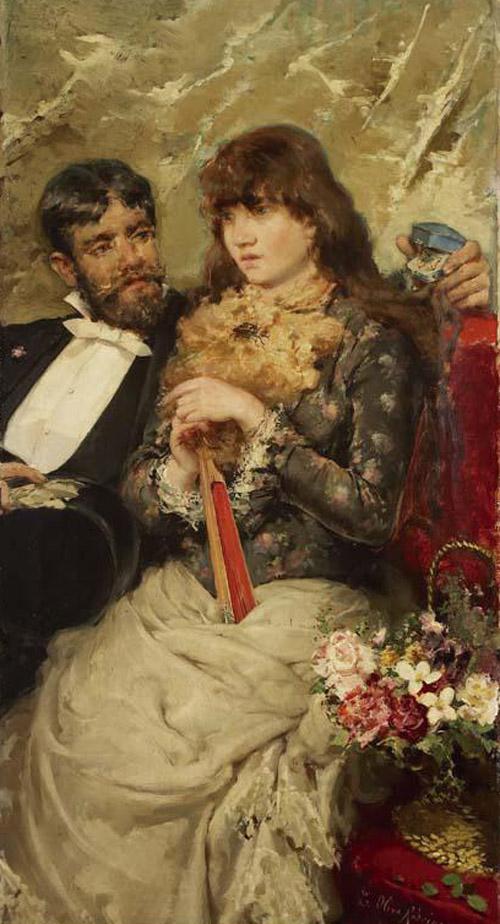
Hombre y Mujer
 Read More
Purchase a high-resolution, enhanced digital image, far superior to the online preview.
Each file is meticulously prepared by our in-house specialists using advanced tools and expert manual retouching. We ensure every image has exceptional clarity, precise color accuracy, and fine detail.
The final file is delivered via email within 72 hours, optimized for immediate use in professional, editorial, and print environments. This is the same quality trusted by top-tier design studios, publishers, and galleries.
Digital Image
Download a high-resolution file for personal display, printing, and creative projects. ( Buy Print Buy Hand Made Painting)
Included in Every Digital Image Order
Expert Digital Delivery, Guaranteed
When you choose ArtsDot.com, you're not just getting an image - you're receiving a professionally enhanced digital artwork, crafted with precision and backed by a satisfaction guarantee. Here's everything that comes with your order, automatically:

Fast Email Delivery
Your high-resolution digital image file will be emailed to you within 72 hours of ordering - ready for immediate use.

AI-Enhanced Digital File
Your artwork is professionally optimized using advanced AI tools and manual editing, ensuring maximum detail, clarity, and color accuracy.

Free Lifetime Re-Delivery
Accidentally deleted or lost your file? No worries - we'll resend it to you anytime, free of charge.

No Import Fees - Ever
Enjoy your artwork instantly with zero customs, duties, or delivery fees - digital downloads are always tax-free.

Color Accuracy Guarantee
We ensure your digital image reflects the original colors as closely as possible using professional tools and color management.

60-Day Satisfaction Guarantee
If you're not satisfied with your digital image, we'll revise it or refund 100% within 60 days - no questions asked.

100% Money-Back Guarantee
Not satisfied? Get a full refund within 60 days of receiving your digital file - no questions asked.

Bulk Order Discounts
Buy 3 images, save 10% - Buy 5, save 15% - Buy 10+, save 20%. Great for creative projects, galleries, and agencies.
Related Artworks









Artist Biography
The Master of Sacred Grandeur: The Life and Legacy of Eugenio Oliva y Rodrigo
In the heart of Spain’s storied landscapes, where the echoes of the Golden Age still linger in the stone of ancient cathedlarles, the name Eugenio Oliva y Rodrigo resonates with a profound sense of spiritual and artistic devotion. Born on February 12, 1852, in Palencia, Oliva was a painter whose brush did not merely apply pigment to surface, but rather breathed life into the divine. His journey began in the modest surroundings of his birthplace, under the influence of a father from Murcia who harbored great artistic aspirations. This early spark ignited a lifelong pursuit of excellence, leading him and his brother José to the Escuela Municipal de Dibujo de Palencia, where the foundational elements of draftsmanship were first etched into his creative consciousness.
The trajectory of Oliva’s talent inevitably pulled him toward the vibrant artistic pulse of Madrid. Around 1873, he entered the prestigious Escuela Superior de Pintura, Escultura y Grabado, an institution deeply entwined with the Royal Academy of Fine Arts of San Fernando. It was during this period of intense academic rigor that his style began to coalesce, shaped by the workshops of masters like Germán Hernández Amores and the broader currents of the Belle Époque. While his early forays into the National Exhibitions of 1876 and 1878 met with underwhelming reception, these moments of doubt served as the crucible for a much greater triumph. A pivotal victory in a competition for the Spanish Academy of Fine Arts in Rome granted him a coveted stipend, whisking him away to the cradle of classical art. In the shadows of Roman antiquity, amidst the light of Italy and the maritime beauty of Venice and Naples, Oliva refined a technique that blended academic precision with an expressive, almost cinematic dynamism.
A Tapestry of Faith and Monumental Vision
The true essence of Oliva’s genius is perhaps most vibrantly realized in his monumental murals, works that transformed the silent interiors of churches and civic halls into immersive, breathing narratives. His fame was cemented not through small canvases, but through his ability to command vast architectural spaces across Castile and León. Commissioned largely by the Catholic Church, he undertook ambitious projects in towns such as Villalcazar de Campos, Tabaneras del Valle Seco, and Villaconejos. These were not merely decorations; they were theological windows. Utilizing the dramatic chiaroscuro and anatomical mastery reminiscent of Rubens and Rembrandt, he populated walls with biblical figures and saints that seemed to emerge from the very masonry.
One of his most significant milestones arrived in 1885, when a commission for the Basílica of San Francisco el Grande in Madrid allowed him to decorate the Chapel of Carlos III. His depiction of the Immaculate Conception was so masterful that it earned him the prestigious Order of Isabel the Catholic in 1889. This period marked his transition from a promising student to a celebrated master of the sacred arts. His work often employed illusionistic techniques, tricking the eye to perceive infinite celestial depths, effectively transporting the faithful from the earthly realm into a state of spiritual contemplation.
Artistic Evolution and Historical Resonance
Beyond the religious sphere, Oliva’s repertoire revealed a versatile artist capable of navigating diverse themes. His time in Italy allowed him to explore lighter, more atmospheric subjects, while his later works demonstrated an ability to tackle historical realism and even Orientalist motifs. Whether he was capturing the muscular intensity of a lithograph depicting an African warrior or the somber, communal spirit of a hospital gathering, his hand remained guided by a deep respect for human form and emotional truth. Even as life’s obligations eventually led him toward the role of a professor of drawing and decorative arts, his commitment to the pedagogical transmission of beauty never wavered.
The historical significance of Eugenio Oliva y Rodrigo lies in his role as a bridge between the classical traditions of the past and the evolving sensibilities of late 19th-century Spain. He preserved the grandeur of the Baroque spirit while infusing it with the technical innovations of his era. Today, his legacy is etched into the very architecture of Spain, found in the quiet majesty of the chapels and halls he adorned. To look upon an Oliva mural is to witness a moment where art, history, and faith converge, leaving behind a visual testament to a life dedicated to the pursuit of the sublime.
Quick Facts
- Artistic Movement Or Style: Classical Art Themes
- Artists Or Movements Influenced By This Artist: ['Romanticism']
- Artists Who Influenced This Artist: ['José María Sert']
- Date Of Birth: February 12, 1852
- Full Name: Eugenio Oliva y Rodrigo
- Nationality: Spanish
- Notable Artworks: ['The Immaculate Conception']
- Place Of Birth: Palencia, Spain

