

 Preview
 Send
Send Share
Share
 Details

 Download
 Similars
 X-Ray
X-Ray Diaporama
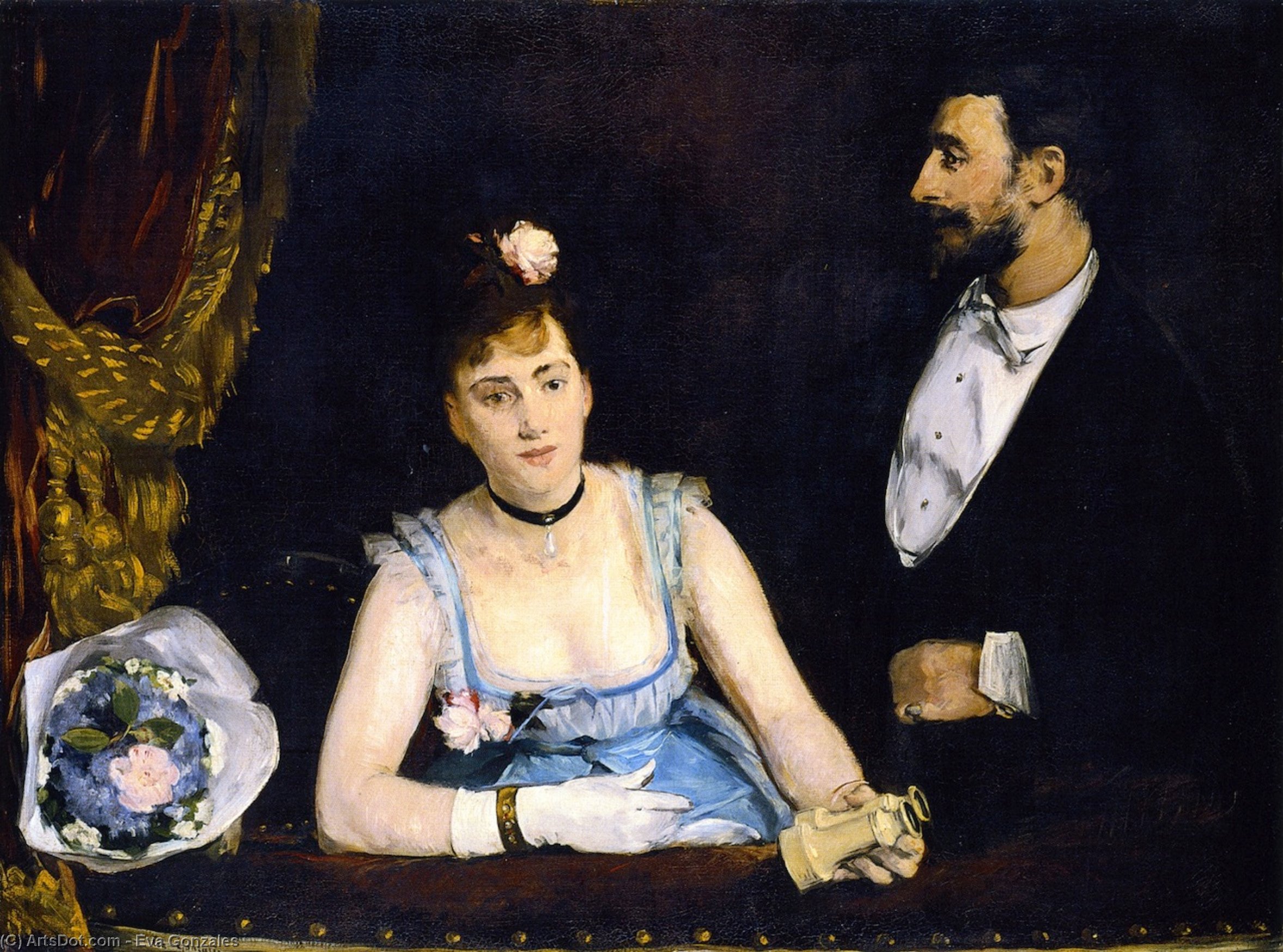
A Loge in the Theatre des Italiens
 Oil On Canvas
- WallArt
- Impressionism
 1874
1874 98.0 x 130.0 cm
 Musée d'Orsay
 Read More
Purchase a high-resolution, enhanced digital image, far superior to the online preview.
Each file is meticulously prepared by our in-house specialists using advanced tools and expert manual retouching. We ensure every image has exceptional clarity, precise color accuracy, and fine detail.
The final file is delivered via email within 72 hours, optimized for immediate use in professional, editorial, and print environments. This is the same quality trusted by top-tier design studios, publishers, and galleries.
Digital Image
Download a high-resolution file for personal display, printing, and creative projects. ( Buy Print Buy Hand Made Painting)
Included in Every Digital Image Order
Expert Digital Delivery, Guaranteed
When you choose ArtsDot.com, you're not just getting an image - you're receiving a professionally enhanced digital artwork, crafted with precision and backed by a satisfaction guarantee. Here's everything that comes with your order, automatically:

Fast Email Delivery
Your high-resolution digital image file will be emailed to you within 72 hours of ordering - ready for immediate use.

AI-Enhanced Digital File
Your artwork is professionally optimized using advanced AI tools and manual editing, ensuring maximum detail, clarity, and color accuracy.

Free Lifetime Re-Delivery
Accidentally deleted or lost your file? No worries - we'll resend it to you anytime, free of charge.

No Import Fees - Ever
Enjoy your artwork instantly with zero customs, duties, or delivery fees - digital downloads are always tax-free.

Color Accuracy Guarantee
We ensure your digital image reflects the original colors as closely as possible using professional tools and color management.

60-Day Satisfaction Guarantee
If you're not satisfied with your digital image, we'll revise it or refund 100% within 60 days - no questions asked.

100% Money-Back Guarantee
Not satisfied? Get a full refund within 60 days of receiving your digital file - no questions asked.

Bulk Order Discounts
Buy 3 images, save 10% - Buy 5, save 15% - Buy 10+, save 20%. Great for creative projects, galleries, and agencies.
A Window Into Parisian Elegance: Eva Gonzalès’s “A Loge in the Theatre des Italiens”
The painting "A Loge in the Theatre des Italiens" by Eva Gonzalès isn't merely a depiction of an afternoon gathering; it’s a carefully crafted snapshot of Belle Époque Paris, imbued with subtle nuances that speak volumes about its era and the artist’s distinctive Impressionist vision. Completed in 1874, this oil on canvas masterpiece resides within the Musée d'Orsay, offering visitors a glimpse into a world where artistic innovation wrestled with societal conventions – a world reflected beautifully in Gonzalès’s brushstrokes.The Artist’s Context: Navigating Artistic Boundaries
Eva Gonzalès emerged from a milieu that simultaneously championed intellectual curiosity and imposed strict social expectations upon women. Born into a literary family, she benefited from her father's connections to the Société des gens de lettres, affording her access to influential artistic circles where discussions about Impressionism were gaining momentum. Yet, as a woman pursuing an artistic career in the late 19th century, Gonzalès faced considerable obstacles – prejudices regarding female creativity and limited opportunities for professional advancement. Despite these challenges, she persevered, honing her skills and establishing herself as a respected artist whose work captured the spirit of her time. Her determination to express herself authentically solidified her place within the artistic landscape of Paris.Impressionistic Technique: Capturing Fleeting Light
Gonzalès’s approach to painting exemplifies the core tenets of Impressionism. Unlike academic traditions that prioritized meticulous detail and idealized representations, she sought to convey the immediacy of experience—the ephemeral quality of light and color as perceived by the eye. Notice the soft, diffused illumination bathing the loge interior; it's achieved through layering thin glazes of pigment, allowing light to penetrate and shimmer across surfaces. The artist skillfully utilizes broken brushstrokes – short, choppy marks that blend together optically—to create a sense of movement and vibrancy. This technique isn’t about replicating reality exactly but rather capturing its essence, conveying the atmosphere and mood of the scene.Composition and Symbolism: An Intimate Dialogue
The painting's composition is deceptively simple yet remarkably effective. Two figures occupy the central space, seated comfortably in a loge box overlooking the Theatre des Italiens. The woman, dressed in a striking shade of blue—a color associated with nobility and serenity—turns slightly towards her companion, creating a visual dialogue that draws the viewer into their conversation. A vase filled with flowers sits on the table between them, symbolizing beauty and refinement – elements characteristic of Parisian aristocratic culture. Above all, the painting speaks to the importance of human connection amidst the grandeur of urban life. The clock hanging on the wall serves as a reminder of time passing, subtly emphasizing the fleeting nature of moments and experiences.Emotional Resonance: A Moment Frozen in Time
“A Loge in the Theatre des Italiens” transcends mere visual representation; it evokes a palpable sense of warmth and intimacy. Gonzalès’s masterful use of color—particularly the dominant blues and yellows—creates an atmosphere that is both elegant and inviting. The subtle shading and tonal variations contribute to the painting's depth, drawing the viewer into the scene and fostering empathy for the figures depicted. It’s a portrait not just of people but of a particular mood – one of quiet contemplation and shared companionship—a testament to Gonzalès’s ability to translate emotion onto canvas. This artwork remains an enduring symbol of Parisian sophistication and artistic innovation, continuing to inspire admiration centuries later.Related Artworks


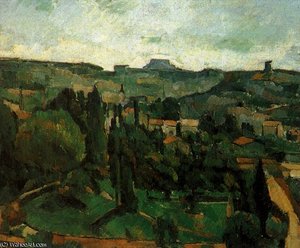
Artist Biography
A Parisian Life in Paint: The World of Eva Gonzalès
Eva Gonzalès, born into the vibrant cultural landscape of 1849 Paris, occupies a fascinating yet often understated position within the history of Impressionism. While frequently mentioned alongside luminaries like Monet, Renoir, and Degas, her story is one of navigating societal expectations and forging an artistic identity in a world that wasn’t always ready to acknowledge female talent. Daughter to writer Emmanuel Gonzalès and a mother skilled in music, she was immersed from childhood in the intellectual and artistic circles of Parisian society. This privileged upbringing provided access – through her father's connections within the Société des gens de lettres – to a network of influential figures who shaped the burgeoning art scene. It wasn’t merely exposure; it was an invitation into a world brimming with new ideas about representation, light, and the very purpose of art itself. Her formal artistic training began at sixteen under Charles Chaplin, a respected portraitist, but her trajectory truly shifted in 1869 when she became the only formal student of Édouard Manet.Under Manet’s Wing: Formation and Early Works
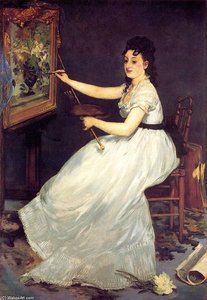
The relationship between Gonzalès and Manet was pivotal. He painted her portrait in 1870, a work titled *Mlle E.G.* that, while celebrated for its depiction of a modern woman artist, inadvertently highlighted the challenges she faced. The painting presents Gonzalès at an easel, yet critics often remarked on the incongruity between her elegant attire and the perceived practicality of artistic labor. This sparked commentary suggesting she was more model than creator, a beautiful adornment to Manet’s world rather than an independent force. Despite this initial reception, Manet's influence on Gonzalès was profound. She absorbed his techniques – the loose brushwork, the emphasis on tonal values, and the focus on contemporary life – but she wasn’t simply a mimic. Even in her early works, like *Enfant de troupe* (1870), a clear nod to Manet's *Le Fifre*, Gonzalès began to infuse her paintings with a delicate sensibility and an attention to detail that would become hallmarks of her style. She skillfully balanced the lessons learned from Manet with her own emerging artistic voice, exploring themes of domesticity, portraiture, and the everyday lives of women.A Unique Impressionist Voice: Style and Subject Matter
Gonzalès’s work distinguishes itself within the broader Impressionist movement through its intimate scale and focus on interior scenes. While many of her contemporaries sought to capture fleeting moments outdoors, she often turned inward, depicting women in private settings – reading, sewing, or simply lost in thought. Her paintings are characterized by a refined palette, subtle harmonies, and a remarkable sensitivity to light and texture. Critics frequently noted a “feminine technique” in her work, sometimes as praise, other times as a dismissive categorization. However, this perceived delicacy shouldn’t be mistaken for weakness. Her painting *Une loge aux théâtre italiens* (1874), rejected by the Salon jury for its "masculine vigor" – ironically questioning its authenticity as a woman's work – demonstrates a boldness and compositional strength that defied expectations. She consistently received positive reviews, with critics like Louis Leroy and Émile Zola praising her intuitive approach to art and technical skill. Maria Deraismes championed Gonzalès for challenging conventional views of female painters, recognizing her contribution to the evolving Parisian art scene.Legacy and Historical Significance
Though she never exhibited with the Impressionists themselves – preferring the more traditional venue of the Salon – Eva Gonzalès is rightfully considered a part of their circle. Her untimely death in 1883, just five days after Manet’s passing, at the age of thirty-four cut short a promising career. A retrospective exhibition held in 1885 showcased eighty-eight of her works, but it was often overshadowed by discussions of her association with Manet. For decades, Gonzalès remained somewhat obscured by the more prominent figures of Impressionism. However, recent scholarship has begun to reassess her contributions, recognizing her as a significant artist in her own right. Her paintings offer a unique perspective on 19th-century Parisian life, filtered through the lens of a woman navigating both artistic ambition and societal constraints. Her legacy lies not only in the beauty and sensitivity of her work but also in her quiet defiance of expectations, paving the way for future generations of female artists to claim their place within the art historical canon. Her paintings, such as *Nanny and Baby* and *Portrait of Jeanne Gonzalès in Profile*, continue to captivate viewers with their intimate charm and subtle power, reminding us that the story of Impressionism is richer and more complex than often portrayed.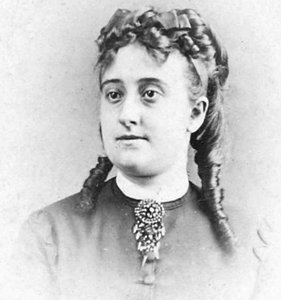
Eva Gonzalès
1849 - 1883 , France
Quick Facts
- Artistic Movement Or Style: Impressionism
- Artists Who Influenced This Artist:
- Édouard Manet
- Charles Chaplin
- Date Of Birth: 1849
- Date Of Death: 1883
- Full Name: Eva Gonzalès
- Nationality: French
- Notable Artworks:
- Mlle E.G.
- Enfant de troupe
- Box at the théâtre des italiens
- Nanny and Baby
- Jeanne Gonzales in Profile
- Place Of Birth: Paris, France

