 Preview
 Send
Send Share
Share
 Details

 Download
 Similars
 X-Ray
X-Ray Diaporama
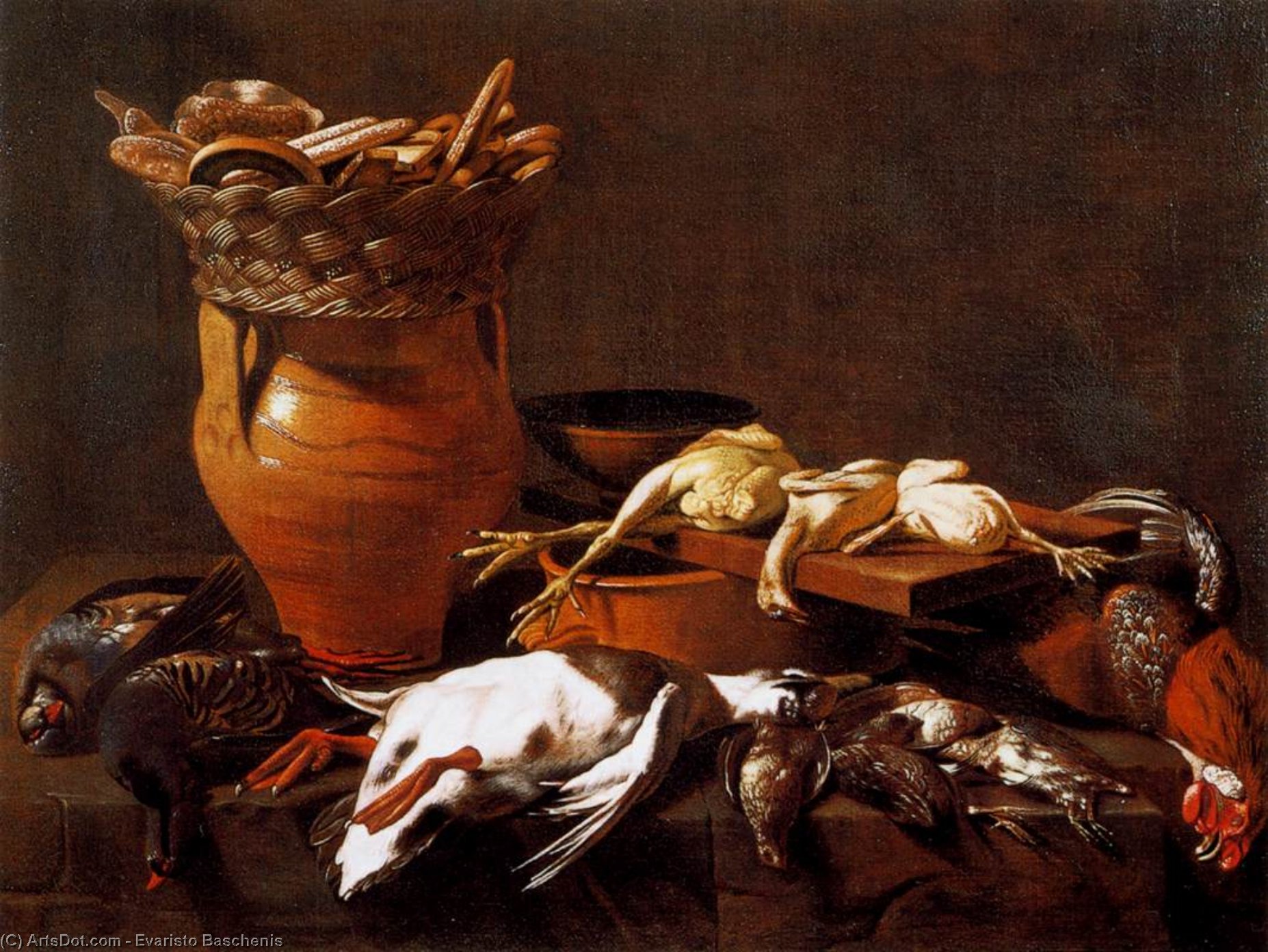
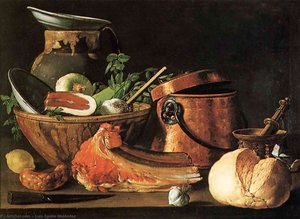
Kitchen Still-Life
 1654
1654 73.0 x 97.0 cm
 Read More
Hand Made Oil Reproduction
Hand-painted oil on canvas in your size and frame, made to order by our artists. ( Buy Print Buy Image)




































Pick from our preset sizes that match the artwork's original proportions.

You may enter your own dimensions to fit a specific frame or space. If your selected size does not match the original image's proportions, we will either crop the artwork or extend the painting with additional hand-painted elements. A digital mockup will be sent for your approval before production begins.
Please note that the on-screen preview does not reflect the actual cropping or extension. Only the mockup will accurately show the final composition.
While custom sizes are available, we recommend selecting a dimension from the predefined list to preserve the original proportions.
After order, ArtsDot.com team will email client for instructions and provide a mockup preview
Worldwide Delivery () in 3/4 weeks instead of standard 5 weeks. (17 August). No compromise on quality.

Free Worldwide Express Shipping

High-Quality Linen Canvas

Full Shipping Insurance

Customs Tax Refund Guarantee

True Color Matching Guarantee

60-Day Return Policy (Defects Only)

100% Money-Back Guarantee

Bulk Discount Offer
 Glass option is only available in size under 110 CM

Kitchen Still-Life
Reproduction Medium
Reproduction Size
-


Total Price
$ 263
Artwork Description
Composition and Symbolism
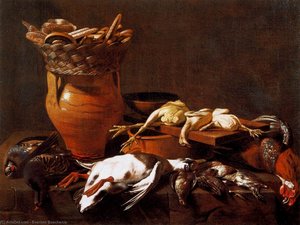
In the foreground, several dead birds are depicted with lifelike detail, showcasing their feathers and textures. Behind them, a large basket filled with kitchen utensils such as knives, spoons, and bowls adds to the rustic feel of the scene. A large clay pot on the right side of the basket contrasts with the lighter colors of the birds and utensils, drawing attention to its presence in the composition. The background features a dark wall that serves to highlight the objects in the foreground, creating a sense of space within the painting. Baroque still life art is characterized by its attention to detail and realistic depiction of everyday objects. The use of light and shadow, along with the careful arrangement of the objects, creates a sense of realism that was highly valued in this period of art history. Other notable examples of Baroque still life paintings include The Fruit Basket by Frans Snyders and Breakfast Still Life by Willem Claesz Heda.Artist and Style
Evaristo Baschenis was a prominent Italian painter of the Baroque period, known for his still life works. His style is characterized by its use of warm colors and meticulous attention to detail. The Kitchen Still-Life is a prime example of his skill and artistry, showcasing his ability to create a sense of depth and perspective in a two-dimensional work.- For more information on Evaristo Baschenis and his works, visit the ArtsDot.com website.
- To learn more about Baroque art and its characteristics, see the Wikipedia article on Baroque.
The Kitchen Still-Life by Evaristo Baschenis is a masterpiece of Baroque art, showcasing the artist's skill and attention to detail. Its use of warm colors and meticulous realism creates a sense of depth and perspective, drawing the viewer into the world of the painting. As a prominent example of Baroque still life art, it continues to inspire and captivate audiences today.
Related Artworks
Artist Biography
Evaristo Baschenis: A Provincial Maestro of Still Life
Evaristo Baschenis (1617–1677) stands as a singular figure in the Baroque landscape of Bergamo, Italy—a testament to artistic innovation emerging from unexpected corners. Born into a family steeped in artistic tradition, he inherited a legacy that would profoundly shape his distinctive style and contribute to the burgeoning fascination with unconventional subjects within Italian painting. Unlike many of his contemporaries who focused on grand narratives of religion or mythology, Baschenis carved out a niche for himself through meticulously crafted still lifes, primarily depicting musical instruments—a genre largely unexplored by painters prior to the 17th century. This preoccupation wasn’t merely coincidental; it resonated deeply with his familial connections to prominent violin makers from Cremona, fostering an environment ripe for experimentation and observation.- Early Life & Family Influence: Baschenis's upbringing instilled in him a deep appreciation for artistic craftsmanship and visual representation—qualities that would become hallmarks of his oeuvre. His family’s involvement in the violin trade undoubtedly fueled his interest in capturing the beauty and complexity of manufactured objects, mirroring the meticulous attention to detail characteristic of Dutch painters.
- Style & Technique: Baschenis's approach to still life differed markedly from prevailing artistic trends. Rather than striving for dramatic grandeur or emotive expression, he prioritized geometric precision and subtle tonal gradations—drawing inspiration perhaps from Caravaggio’s early depiction of peaches and the contemplative aesthetic of Dutch masters. He sought to convey a sense of quiet contemplation, emphasizing the inherent beauty found within seemingly mundane subjects.
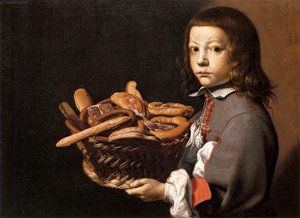
- Notable Works: Baschenis gained recognition for several captivating pieces, including “Kitchen Still-Life,” “Boy with a Basket of Bread,” and “Agliardi Triptych (right).” These works exemplify his signature style—characterized by carefully arranged objects bathed in diffused light, creating an atmosphere of serene stillness.
- Influence & Legacy: Baschenis’s influence extended beyond Bergamo, notably impacting Bartolomeo Bettera, a younger colleague who adopted similar stylistic sensibilities. Furthermore, he appears to have fostered connections with Cristoforo Munari and Carlo Ceresa—artists whose careers benefited from his pioneering vision of still life as an artistic medium.
The Provincial Genius: Exploring Baschenis’s Unique Vision
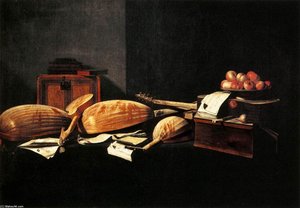
Baschenis's stylistic choices represent a deliberate departure from the dominant Baroque conventions, prioritizing form and texture over narrative complexity. He eschewed theatrical displays of emotion or monumental scale, instead focusing on capturing the essence of his subjects—musical instruments—through geometric precision and tonal subtlety. This approach aligns with observations about Caravaggio’s early paintings and Dutch artistic sensibilities, suggesting a broader engagement with visual culture beyond the confines of Bergamo. His meticulous attention to detail—evident in the rendering of surfaces and textures—demonstrates an unwavering commitment to capturing the inherent beauty of manufactured objects.Connections & Collaborations: Shaping Artistic Dialogue
Baschenis’s artistic journey was interwoven with collaborative relationships that broadened his creative horizons. His kinship with Cremona violin makers fostered a stimulating environment for observation and experimentation—a connection mirrored in the stylistic tendencies of Bartolomeo Bettera, who similarly embraced a contemplative aesthetic reminiscent of Baschenis's own approach. Moreover, his interactions with Cristoforo Munari and Carlo Ceresa facilitated artistic exchange and contributed to the dissemination of innovative ideas within the Bolognese art scene.Historical Significance: A Counterpoint to Grand Manner Tradition
Evaristo Baschenis’s contribution to Baroque art lies in his courageous assertion of stylistic independence—a refusal to conform to prevailing trends that prioritized narrative grandeur and emotive expression. He championed a visual language rooted in geometric precision and tonal subtlety, establishing himself as a pivotal figure in the development of still life painting during a period dominated by religious iconography and mythological narratives. His legacy endures as a reminder that artistic brilliance can flourish even outside the established centers of power—a testament to the transformative potential of provincial creativity.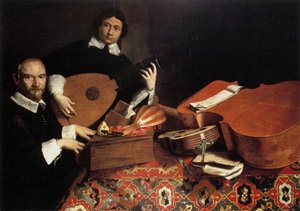
Evaristo Baschenis
1617 - 1677 , Italy
Quick Facts
- Artistic Movement Or Style: Baroque
- Artists Or Movements Influenced By This Artist:
- Bartolomeo Bettera
- Cristoforo Munari
- Artists Who Influenced This Artist:
- Caravaggio
- Dutch painters
- Date Of Birth: Bergamo, Italy (1617)
- Date Of Death: 1677
- Full Name: Evaristo Baschenis
- Nationality: Italian
- Notable Artworks:
- Kitchen Still-Life
- Boy with a Basket of Bread
- Agliardi Triptych (right)
- Place Of Birth: Bergamo