 Preview
 Send
Send Share
Share
 Details

 Download
 Similars
 X-Ray
X-Ray Diaporama
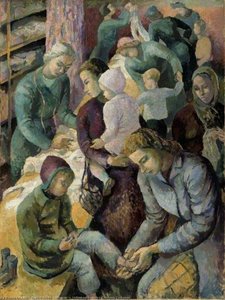
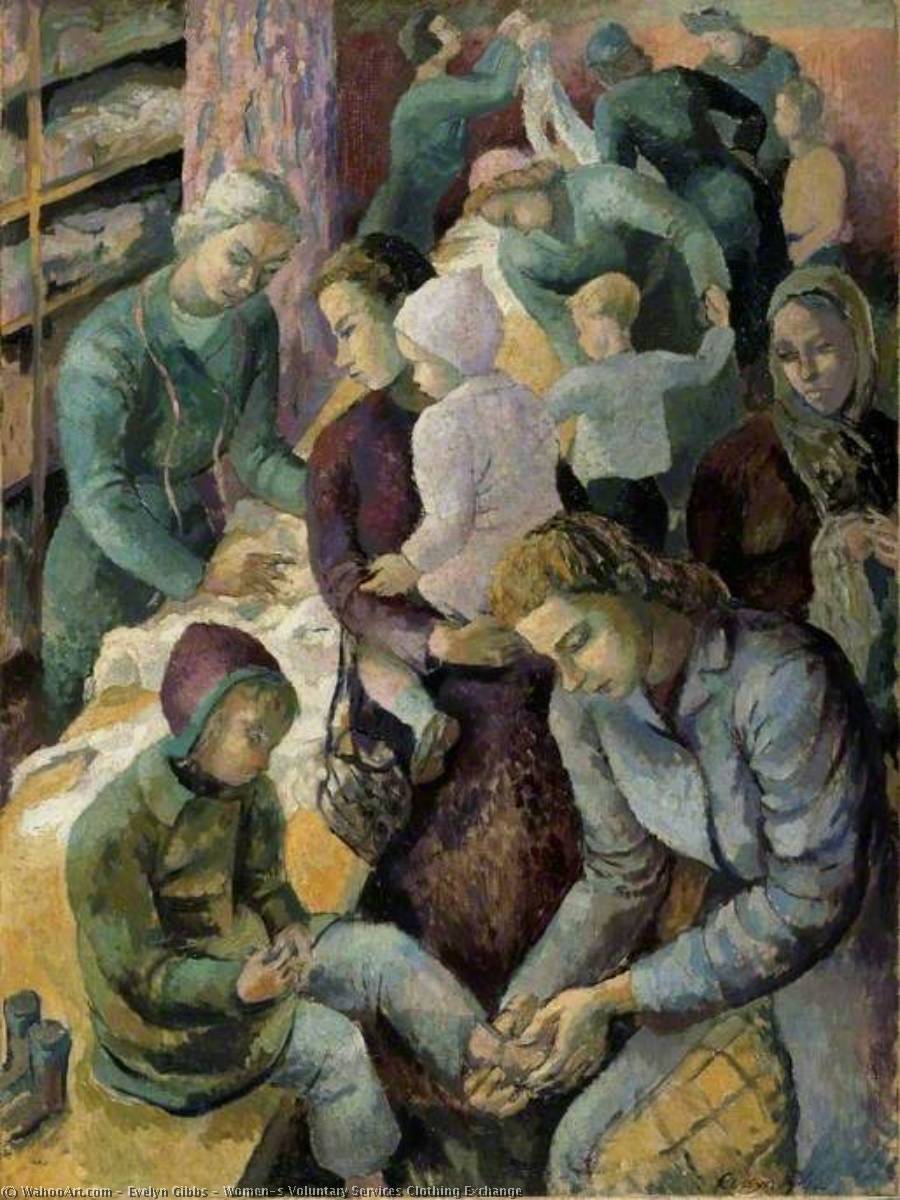
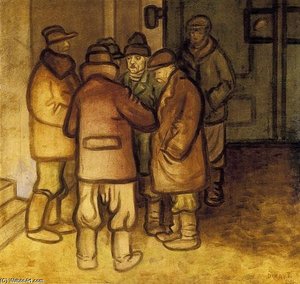
Women's Voluntary Services Clothing Exchange
 Post-Impressionism
 1943
1943 102.0 x 76.0 cm
 Read More
Giclée / Art Print
Museum-quality giclée or canvas print with fast production and flexible finish options. ( Buy Hand Made Painting Buy Image)




































Pick from our preset sizes that match the artwork's original proportions.

You may enter your own dimensions to fit a specific frame or space. If your selected size does not match the original image's proportions, we will either crop the artwork or extend the image with a mirrored or solid-fill edge. A digital mockup will be sent for your approval before production begins.
Please note that the on-screen preview does not reflect the actual cropping or extension. Only the mockup will accurately show the final composition.
While custom sizes are available, we recommend selecting a dimension from the predefined list to preserve the original proportions.
Worldwide Delivery () in 2 weeks instead of standard 4/5 weeks. (26 August)

Free Worldwide Express Shipping

High-Quality Linen Canvas

Full Shipping Insurance

Customs Tax Refund Guarantee

True Color Matching Guarantee

60-Day Return Policy (Defects Only)

100% Money-Back Guarantee

Bulk Discount Offer
 Glass option is only available in size under 110 CM

Women's Voluntary Services Clothing Exchange
Giclée / Art Print
Reproduction Size
-


Total Price
$ 63
Related Artworks

Artist Biography
A Legacy of Resilience: The Art and Spirit of Evelyn Gibbs
The story of Evelyn Gibbs is one where the boundaries between fine art and social responsibility dissolve into a singular, profound mission. Born in Liverpool on May 3, 1905, Gibbs emerged from a rigorous classical training that would define her technical mastery while simultaneously preparing her to capture the raw, human pulse of a nation in crisis. Her journey began at the Liverpool School of Art, followed by transformative years at the Royal College of Art, where her talent was recognized with the prestigious Prix de Rome scholarship for engraving in 1929. This pivotal achievement transported her to the sun-drenched landscapes of Italy, a period of two formative years that infused her work with an appreciation for light, texture, and the enduring influence of Impressionistic techniques.
As her career matured, Gibbs became much more than a printmaker or draughtsman; she became a chronicler of the British spirit during some of its most turbulent decades. While her technical foundation was rooted in the precision of engraving and the expressive potential of oil painting, her heart was deeply embedded in the community. During the Second World War, when Goldsmiths College was evacuated to Nottingham, Gibbs did not merely retreat from the chaos; she leaned into it. She founded the Midlands Group of Artists in 1943, a visionary collective that sought to transform empty spaces into vibrant galleries and to use art as a tool for social engagement and local pride.
The Muralist of Nottinghamshire
Perhaps the most enduring aspect of Gibbs’s contribution to British art lies in her ambitious mural projects. Through the Midlands Group, she undertook monumental works across five locations in Nottinghamshire, documenting the resilience and quiet heroism of a region navigating the hardships of wartime. These murals were not merely decorative; they were narrative tapestries that celebrated the strength of the local populace. Though time and the ravages of history claimed many of these works, the remarkable rediscovery of two murals at St. Martin’s Church in Bilborough in 2013 served as a poignant reminder of her ability to immortalize the ephemeral moments of wartime life.
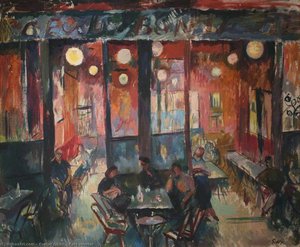
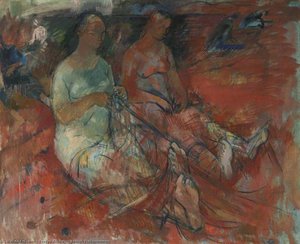
Her repertoire also extended into intimate, evocative oil paintings that captured the textures of daily existence. Works such as “Women’s Voluntary Services Clothing Exchange” (1943) showcase a masterful blend of realism and Post-Impressionist style, reflecting the communal warmth and necessity of the era. Whether she was depicting the bustling energy of a “Café Interior” or the rugged dignity of “Spanish Fisherwomen,” Gibbs possessed a unique ability to imbue her subjects with a sense of nostalgic charm and profound humanity.
A Visionary Educator and Lasting Impact
Beyond the canvas and the plaster of her murals, Evelyn Gibbs left an indelible mark on the landscape of art education. She was a pioneering educationalist who understood that the cultivation of talent required both discipline and inspiration. Her published work, The Teaching of Art in Schools (1934), remained a cornerstone of pedagogical thought for nearly three decades, reflecting her belief in nurturing creativity from a young age. As a lecturer at Goldsmiths College, she bridged the gap between professional practice and academic instruction, ensuring that the next generation of artists possessed both the technical skill and the emotional depth required to face their own eras.
The significance of Evelyn Gibbs lies in her multifaceted identity as an artist, a teacher, and a community builder. Her life’s work represents a seamless integration of personal excellence and public service. Through her paintings, engravings, and educational leadership, she ensured that art remained a vital, breathing part of the social fabric, even amidst the shadows of war. Today, her legacy continues to illuminate the cultural history of Britain, reminding us that true art is found not only in the beauty of the image but in the strength of the community it seeks to represent.
evelyn gibbs
1905 - 1991
Quick Facts
- Artistic Movement Or Style: Post-Impressionism
- Artists Or Movements Influenced By This Artist: ['Midlands Group Artists']
- Artists Who Influenced This Artist:
- Georges Seurat
- Paul Cézanne
- Date Of Birth: 5 May 1905
- Date Of Death: 27 February 1991
- Full Name: Evelyn May Gibbs
- Nationality: English
- Notable Artworks:
- Café Interior
- Women’s Voluntary Services Clothing Exchange
- Place Of Birth: Liverpool, England
Related Articles
Beyond Light & Color: Impressionism vs. Post-Impressionism for the Discerning Collector
Explore the nuances of Impressionism & Post-Impressionism with . Expert insights for collectors on style, investment, and acquiring museum-quality reproductions.

The Enduring Legacy of Oil on Canvas: Technique, History & Aesthetic Impact
Explore the rich history & techniques of oil painting – from Renaissance masters to Impressionism. Discover pigments, layering methods, and why this timeless medium endures. Expert insights for artists & art enthusiasts.
Post-Impressionism's 10 Defining Masterpieces: Art for Your Home |
Journey through Post-Impressionism's 10 defining masterpieces – Van Gogh, Monet & more. Explore iconic paintings, art history & find museum-quality reproductions for your home at . Discover all masterpieces online!
Beyond Impressionism: Exploring the Emotional Depth of Post-Impressionist Painting
Explore the profound emotional depth & innovative techniques of Post-Impressionism with ArtsDot. Discover Cézanne, Van Gogh, Gauguin & more – and their lasting impact on modern art.

Cézanne's Masterpieces: 25 Iconic Artworks to Transform Your Space
Journey through 25 iconic artworks by Paul Cézanne – a master of Impressionism and Post-Impressionism. Explore his landscapes, still lifes, and the stories behind these timeless masterpieces. Discover museum-quality reproductions & curated decor at ArtsDot.com.