 Preview
 Send
Send Share
Share
 Details

 Download
 Similars
 X-Ray
X-Ray Diaporama
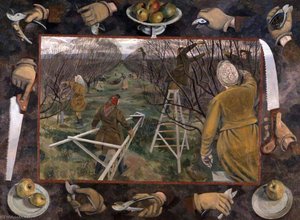
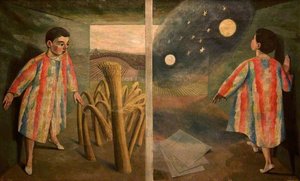
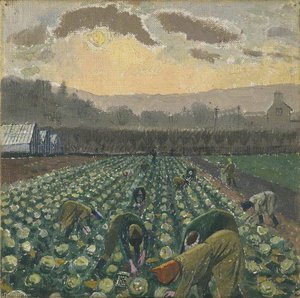
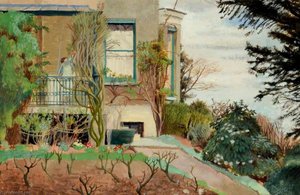
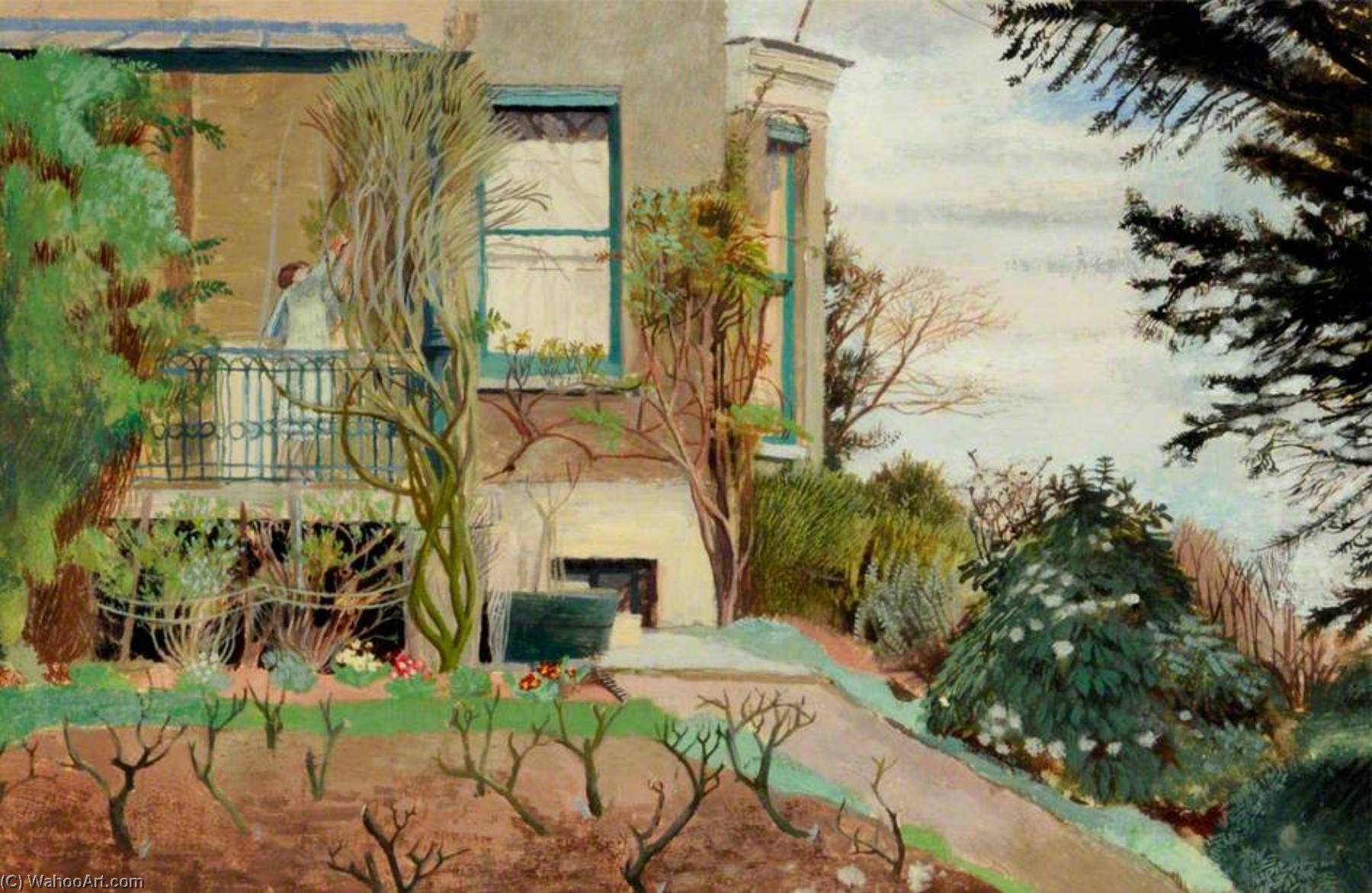
The Garden
 21.0 x 33.0 cm
 Read More
Hand Made Oil Reproduction
Hand-painted oil on canvas in your size and frame, made to order by our artists. ( Buy Print Buy Image)




































Pick from our preset sizes that match the artwork's original proportions.

You may enter your own dimensions to fit a specific frame or space. If your selected size does not match the original image's proportions, we will either crop the artwork or extend the painting with additional hand-painted elements. A digital mockup will be sent for your approval before production begins.
Please note that the on-screen preview does not reflect the actual cropping or extension. Only the mockup will accurately show the final composition.
While custom sizes are available, we recommend selecting a dimension from the predefined list to preserve the original proportions.
After order, ArtsDot.com team will email client for instructions and provide a mockup preview
Worldwide Delivery () in 3/4 weeks instead of standard 5 weeks. (21 August). No compromise on quality.

Free Worldwide Express Shipping

High-Quality Linen Canvas

Full Shipping Insurance

Customs Tax Refund Guarantee

True Color Matching Guarantee

60-Day Return Policy (Defects Only)

100% Money-Back Guarantee

Bulk Discount Offer
 Glass option is only available in size under 110 CM

The Garden
Reproduction Medium
Reproduction Size
-


Total Price
$ 263
Related Artworks










Artist Biography
Evelyn Mary Dunbar: A Quiet Observer of Wartime Resilience
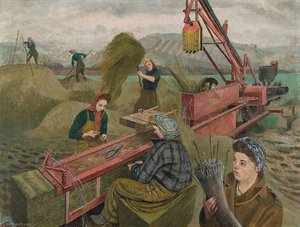
Evelyn Mary Dunbar (1906-1960) was a British artist, illustrator, and teacher whose work quietly documented the vital contributions of women during World War II, primarily focusing on the Women’s Land Army. Despite her modest demeanor and relative obscurity outside mainstream art circles—a factor that has hindered scholarly recognition until recent years—Dunbar left an indelible mark through her evocative paintings and murals, capturing the spirit of everyday life with remarkable sensitivity and meticulous detail. Her artistic vision was deeply rooted in a profound appreciation for the Kent landscape, reflecting both personal passion and a stylistic preference for realism.
Born in Reading, Berkshire, Dunbar descended from Scottish ancestry—her father, William Dunbar, originating from Cromode, Morayshire—and grew up within a family that valued artistic pursuits. Her mother, Florence Murgatroyd, was an amateur still-life artist and a devout Christian Scientist, shaping Dunbar’s worldview and fostering her lifelong commitment to spiritual contemplation alongside creative expression. Educated at Rochester Grammar School for Girls, she excelled academically, securing a Kent County Council scholarship that propelled her towards formal artistic studies. She pursued rigorous training at the Rochester School of Art and the Chelsea School of Art, honing her skills under influential tutors like Charles Mahoney, which culminated in an Associate Royal College of Art qualification in 1933.
Artistic Style and the Spirit of the Land
Dunbar’s artistic style was characterized by a meticulous realism that prioritized capturing the nuances of human experience within specific environments. Her paintings frequently depicted landscapes—particularly those of Kent—infused with atmospheric perspective and textured brushstrokes, reflecting her deep connection to the region's natural beauty. This technique allowed her to transform ordinary scenes into something profound and enduring. In works such as Winter Garden (1929), she utilized muted tones and an almost impressionistic touch to evoke a sense of serene, rural stillness, demonstrating her ability to find magic in the quietude of nature.
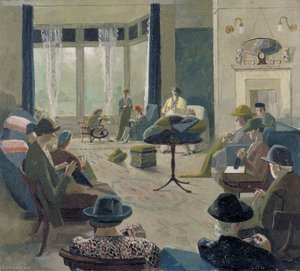
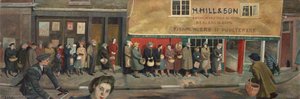
Beyond the landscape, her work often centered on the human element of the British home front. She possessed a unique talent for portraying the dignity of labor and the subtle rhythms of daily life during times of immense social upheaval. Whether depicting the communal wait in The Queue at the Fish Shop or the structured beauty of local vistas like Rochester from Strood, her art serves as a poignant historical record. Her ability to blend the monumental with the mundane allowed her to create a visual language that celebrated resilience and the quiet strength found in community and duty.
Legacy and Historical Significance
The significance of Evelyn Mary Dunbar’s oeuvre lies in its role as a witness to a transformative era in British history. While many war artists focused on the grand scale of combat, Dunbar turned her gaze toward the domestic and agricultural front, ensuring that the labor of women in the Women's Land Army was etched into the visual memory of the nation. Her contributions to mural painting and illustration further expanded her reach, bringing fine art into more accessible, communal spaces.
Though she remained somewhat overlooked for decades following her death in 1960, recent years have seen a resurgence of interest in her talent. Today, she is recognized not just as a chronicler of war, but as a master of the figurative and landscape traditions. Her legacy continues to inspire through:
- Documentary Value: Providing an intimate, ground-level view of the social shifts during World War II.
- Technical Mastery: A sophisticated use of light, texture, and composition that bridges realism and atmospheric expression.
- Cultural Connection: Her deep, spiritual connection to the English landscape and its role in shaping national identity.
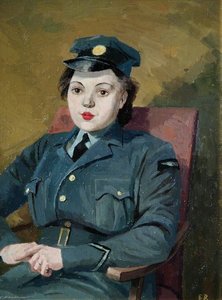
Evelyn Mary Dunbar
1906 - 1960 , United Kingdom
Quick Facts
- Artistic Movement Or Style: Realist painting
- Artists Or Movements Influenced By This Artist: ['Social Realism']
- Artists Who Influenced This Artist: ['Charles Mahoney']
- Date Of Birth: 1906
- Date Of Death: 1960
- Full Name: Evelyn Mary Dunbar
- Nationality: British
- Notable Artworks:
- Sprout Picking, Monmouthshire
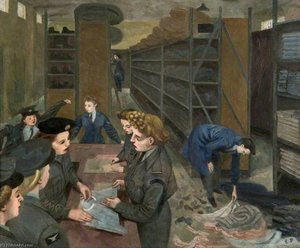
- Women’s Auxiliary Air Force Store
- An Army Tailor and an Auxiliary Territorial Service Tailoress
- Place Of Birth: Reading, United Kingdom