 Preview
 Send
Send Share
Share
 Details

 Download
 Similars
 X-Ray
X-Ray Diaporama
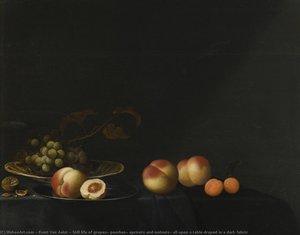
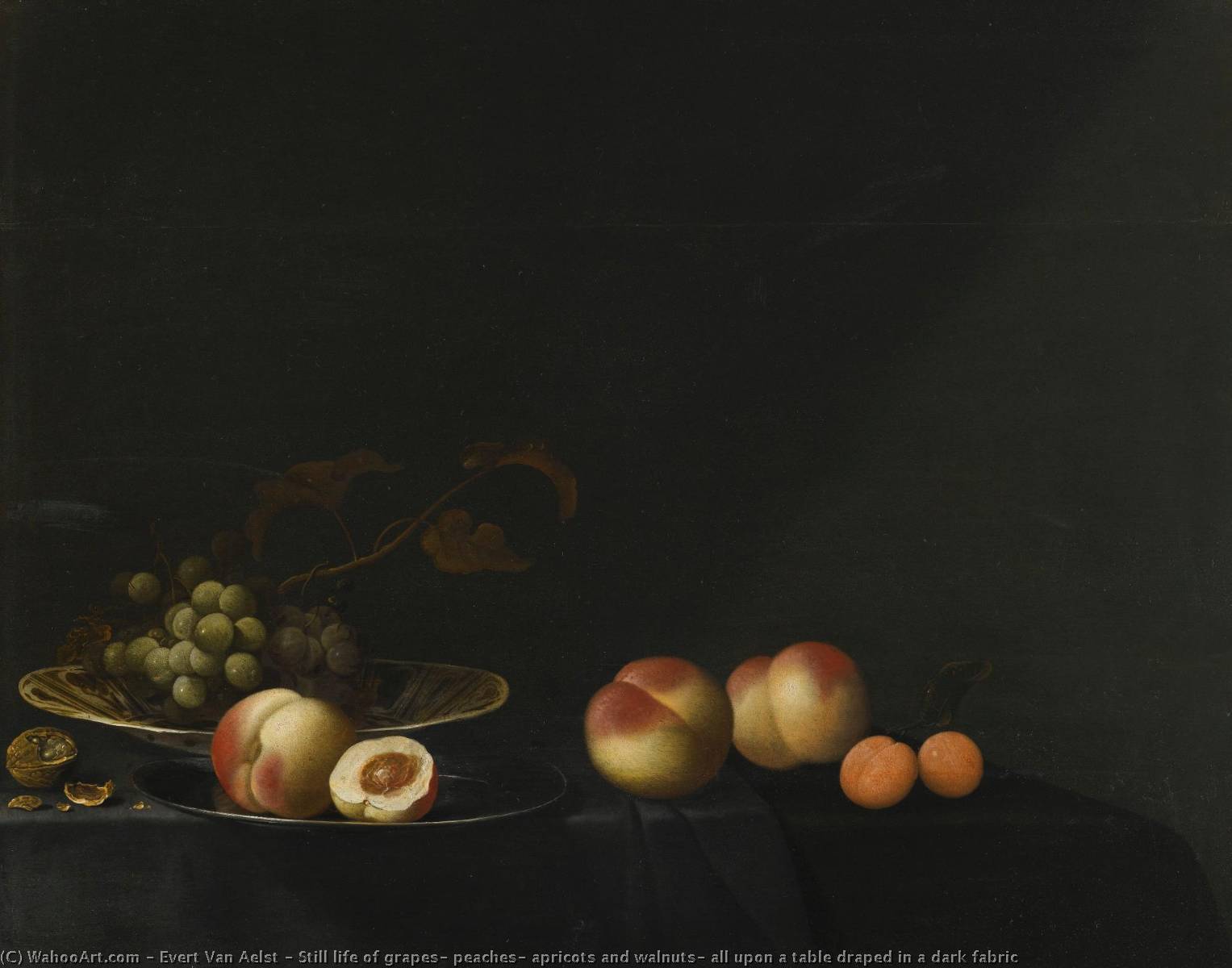
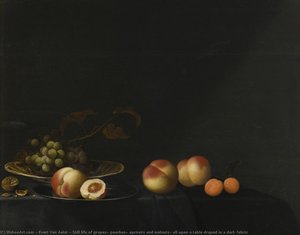
Still life of grapes, peaches, apricots and walnuts, all upon a table draped in a dark fabric
 52.0 x 65.0 cm
 Read More
Hand Made Oil Reproduction
Hand-painted oil on canvas in your size and frame, made to order by our artists. ( Buy Print Buy Image)




































Pick from our preset sizes that match the artwork's original proportions.

You may enter your own dimensions to fit a specific frame or space. If your selected size does not match the original image's proportions, we will either crop the artwork or extend the painting with additional hand-painted elements. A digital mockup will be sent for your approval before production begins.
Please note that the on-screen preview does not reflect the actual cropping or extension. Only the mockup will accurately show the final composition.
While custom sizes are available, we recommend selecting a dimension from the predefined list to preserve the original proportions.
After order, ArtsDot.com team will email client for instructions and provide a mockup preview
Worldwide Delivery () in 3/4 weeks instead of standard 5 weeks. (27 August). No compromise on quality.

Free Worldwide Express Shipping

High-Quality Linen Canvas

Full Shipping Insurance

Customs Tax Refund Guarantee

True Color Matching Guarantee

60-Day Return Policy (Defects Only)

100% Money-Back Guarantee

Bulk Discount Offer
 Glass option is only available in size under 110 CM

Still life of grapes, peaches, apricots and walnuts, all upon a table draped in a dark fabric
Reproduction Medium
Reproduction Size
-


Total Price
$ 263
Related Artworks








Artist Biography
Evert van Aelst: Master of Still Life and Dutch Golden Age Elegance
Evert van Aelst (1602 – 19 February 1657) stands as a pivotal figure in the Dutch Golden Age, renowned for his exquisitely rendered still life paintings that captured the beauty and fleeting nature of the natural world. Unlike many contemporaries who focused on grand landscapes or portraits, Van Aelst dedicated himself to portraying commonplace objects—fruit, flowers, insects, glassware—transforming them into canvases brimming with meticulous detail and luminous color palettes.
- Early Life & Training: Born in Delft, Van Aelst’s artistic lineage traced back to Willem van Aelst, his uncle who served as a teacher and instilled in him a profound appreciation for classical art principles. This formative influence shaped his stylistic trajectory, grounding it firmly within the traditions of Italian Mannerism.
- Influence of Pieter Claesz.: Van Aelst’s artistic vision was significantly molded by Pieter Claesz., whose masterful use of chiaroscuro—the dramatic interplay between light and shadow—became a hallmark of Van Aelst's oeuvre. Claesz.’s emphasis on atmospheric perspective and subtle tonal gradations served as an invaluable guide for achieving realism and conveying emotion.
- Travels & Patronage: Recognizing the importance of artistic inspiration, Van Aelst embarked on extensive journeys to France and Italy during the 1630s and 1640s. These expeditions exposed him to new artistic trends and broadened his understanding of humanist ideals. Notably, he secured the patronage of Grand Duke Ferdinand II of Tuscany, who commissioned numerous paintings reflecting the intellectual fervor of the era.
Technique & Style: Van Aelst’s technique was characterized by painstaking observation and meticulous execution. He employed a glazing method—applying thin layers of translucent paint over underlying colors—to achieve unparalleled luminosity and depth. This approach allowed him to capture the subtle nuances of texture and surface sheen, creating images that seemed to vibrate with life.
- Composition & Symbolism: Van Aelst’s compositions were carefully constructed to convey symbolic meanings beyond mere visual representation. Recurring motifs—such as skulls, hourglasses, and decaying fruit—served as reminders of mortality and the transience of earthly existence – a concept central to the “Vanitas” genre.
- Notable Works: Among his celebrated paintings are “Still Life with Fruit,” “Floral Still Life,” and “Insect Still Life,” each demonstrating Van Aelst’s exceptional skill in capturing the beauty of botanical specimens. These works exemplify the meticulous attention to detail that defined his artistic practice and cemented his reputation as one of the foremost still life painters of his time.
Legacy & Significance: Evert van Aelst's contribution to Dutch art history is undeniable. He embodies the spirit of the Golden Age—a period marked by intellectual curiosity, artistic innovation, and a humanist worldview. His paintings continue to inspire admiration for their technical brilliance and profound contemplation on themes of life, death, and beauty. Van Aelst’s legacy resides not only in his individual masterpieces but also in his influence on subsequent generations of artists who embraced the principles of Mannerism and pursued excellence in portraying the natural world.
evert van aelst
1602 - 1657
Quick Facts
- Artistic Movement Or Style: Golden Age Painting
- Artists Or Movements Influenced By This Artist: Vanitas paintings
- Artists Who Influenced This Artist: Pieter Claesz.
- Date Of Death: 1657
- Full Name: Evert van Aelst
- Nationality: Dutch
- Notable Artworks: ['Still Life with Fruit and Flowers']
- Place Of Birth: Delft, Netherlands