 Preview
 Send
Send Share
Share
 Details

 Download
 Similars
 X-Ray
X-Ray Diaporama
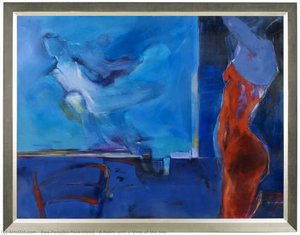
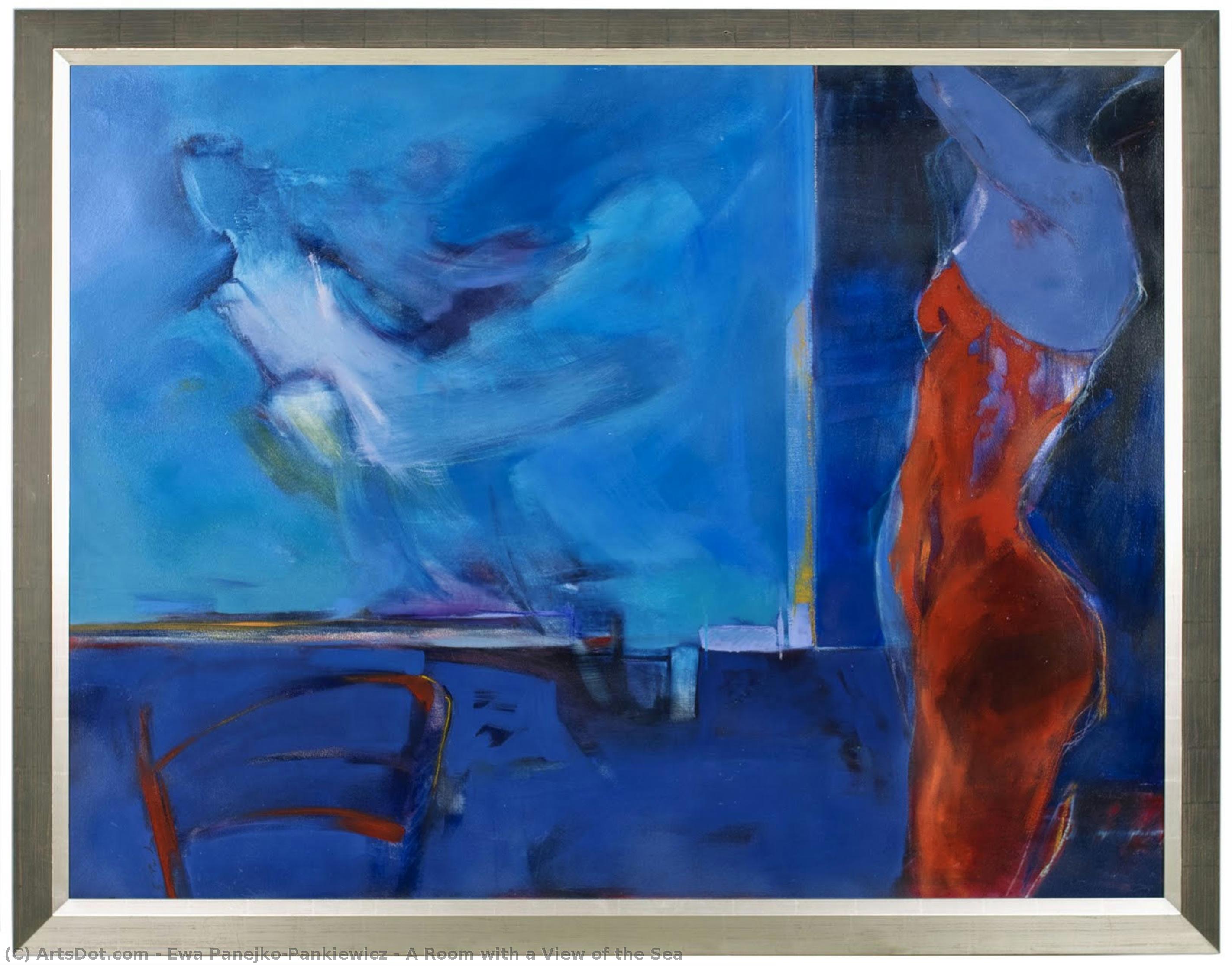
A Room with a View of the Sea
 140.0 x 1007.0 cm
 Centre of Contemporary Art Znaki Czasu
 Read More
Giclée / Art Print
Museum-quality giclée or canvas print with fast production and flexible finish options. ( Buy Hand Made Painting Buy Image)




































Pick from our preset sizes that match the artwork's original proportions.

You may enter your own dimensions to fit a specific frame or space. If your selected size does not match the original image's proportions, we will either crop the artwork or extend the image with a mirrored or solid-fill edge. A digital mockup will be sent for your approval before production begins.
Please note that the on-screen preview does not reflect the actual cropping or extension. Only the mockup will accurately show the final composition.
While custom sizes are available, we recommend selecting a dimension from the predefined list to preserve the original proportions.
Worldwide Delivery () in 2 weeks instead of standard 4/5 weeks. (31 August)

Free Worldwide Express Shipping

High-Quality Linen Canvas

Full Shipping Insurance

Customs Tax Refund Guarantee

True Color Matching Guarantee

60-Day Return Policy (Defects Only)

100% Money-Back Guarantee

Bulk Discount Offer
 Glass option is only available in size under 110 CM

A Room with a View of the Sea
Giclée / Art Print
Reproduction Size
-


Total Price
$ 63
Related Artworks



Artist Biography
Introduction: A Life Painted in Layers
Joan Mitchell (1925–1992) stands as a pivotal figure within the abstract expressionist movement, yet her artistic journey was profoundly shaped by experiences far beyond the purely formal concerns of color and form. Born in Chicago on February 12, 1925, into a family that valued art—a household filled with symphonies, museum visits, and poetry readings—Mitchell’s early exposure fostered a deep appreciation for creative expression. This foundation, coupled with a year spent studying in France during her formative years, laid the groundwork for an artistic approach characterized by a remarkable sensitivity to landscape, human emotion, and the evocative power of music and literature. Her work wasn't simply about depicting external reality; it was a deeply personal exploration of internal landscapes, rendered through bold colors, dynamic brushstrokes, and a willingness to embrace spontaneity—a hallmark that distinguished her from many of her contemporaries. Mitchell’s career spanned over four decades, marked by consistent innovation and a refusal to be confined by stylistic boundaries, solidifying her place as one of the most significant artists of the post-war era.Early Influences and Artistic Development
Mitchell's artistic development began with formal training at the School of the Art Institute of Chicago, where she graduated in 1947. However, it was her year abroad in France that proved transformative. This period allowed her to immerse herself in European art movements—particularly Surrealism and Abstract Expressionism—and to develop a more abstract approach to painting. Returning to New York in late 1949, she quickly became integrated into the vibrant “New York School” of painters and poets, participating in the influential “9th Street Show” of 1951. This exhibition marked her emergence as a leading voice within the burgeoning Abstract Expressionist scene. Her early works were characterized by a restrained palette and a focus on capturing the essence of landscapes—particularly those of the American Southwest—through layered washes of color and gestural marks. However, it was through her engagement with poetry and music that Mitchell began to explore more emotionally charged subjects, evident in paintings like “Red Figure” (1958) and "The Seed" (1960), which demonstrate a shift towards greater abstraction and a willingness to convey complex emotions through purely visual means.A Unique Approach to Abstraction
What truly set Joan Mitchell apart was her distinctive approach to abstraction. Unlike some of her peers who sought to create purely intellectual or conceptual works, Mitchell’s paintings were deeply rooted in sensory experience. She described her process as “painting from feeling,” allowing herself to be guided by the emotional resonance of a landscape, a piece of music, or a poem. Her canvases became sites for translating these internal states into vibrant color fields and dynamic brushstrokes—a technique that prioritized physicality and immediacy over precise representation. Mitchell’s use of color was particularly noteworthy; she employed a wide range of hues, often juxtaposing contrasting colors to create a sense of tension and dynamism. Her paintings weren't simply decorative; they were imbued with a palpable energy, reflecting the intensity of her emotional engagement with the subject matter. The influence of Japanese Sumi-e painting—particularly its emphasis on capturing atmosphere and suggestion rather than detailed representation—can also be discerned in Mitchell’s work.Later Years and Legacy
In the later years of her career, Mitchell continued to explore a wide range of subjects—including portraits, still lifes, and abstract compositions—while maintaining her distinctive approach to color and gesture. She spent time in France, where she developed a deep appreciation for the landscape and culture of Provence, and her paintings from this period reflect a shift towards greater lyricism and emotional depth. Joan Mitchell’s work has been exhibited extensively throughout the world, and her paintings are held in numerous prestigious collections—including the Museum of Modern Art (MoMA) in New York, the Tate Gallery in London, and the National Gallery of Art in Washington, D.C. Her influence on subsequent generations of artists is undeniable, and she remains a vital figure in the history of American art. Her legacy lies not only in her stunningly beautiful paintings but also in her unwavering commitment to artistic honesty and emotional expression—a testament to the power of painting as a means of exploring the complexities of human experience.Notable Works
* **Red Figure (1958):** A powerful example of Mitchell’s early abstract landscapes, characterized by layered washes of color and dynamic brushstrokes. * **The Seed (1960):** Demonstrates her growing interest in conveying complex emotions through purely visual means. * **Provencal Landscape (1978):** Reflects her deep appreciation for the landscape and culture of Provence, France. * **Untitled (1985):** A later work that showcases her continued exploration of color and gesture.
ewa panejko-pankiewicz
1951 - , Poland
Quick Facts
- Artistic Movement Or Style: Abstract Expressionism
- Artists Or Movements Influenced By This Artist:
- Barnett Newman
- Color Field Painting
- Artists Who Influenced This Artist:
- Stuart Davis
- Picasso
- Klee
- Date Of Birth: Feb 12, 1925
- Full Name: Joan Mitchell
- Nationality: American
- Notable Artworks:
- Winter Dark
- Red Rock
- Blue Hills
- Place Of Birth: Chicago, IL, USA