 Preview
 Send
Send Share
Share
 Details

 Download
 Similars
 X-Ray
X-Ray Diaporama
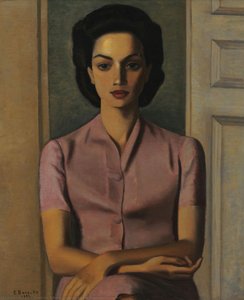
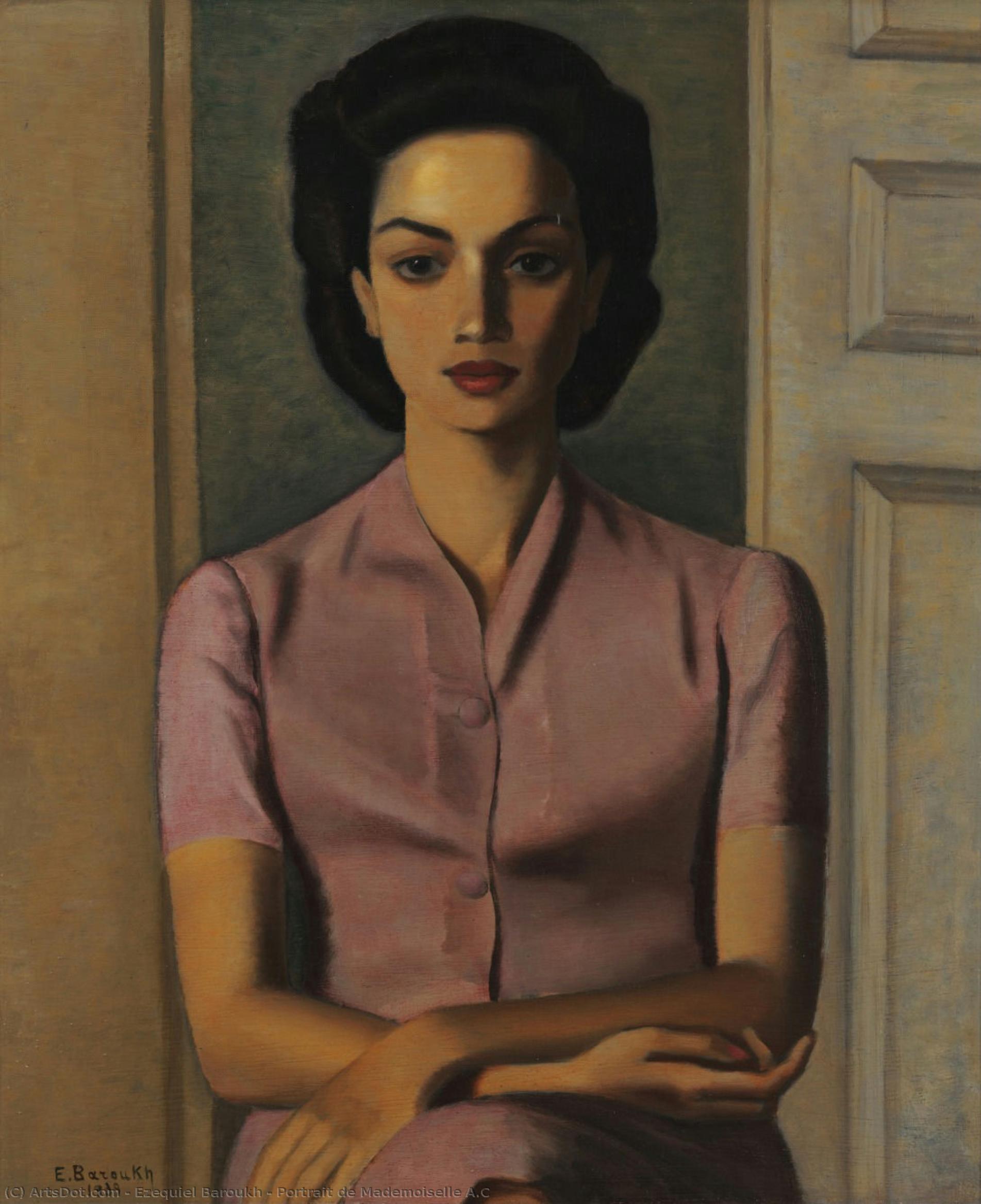
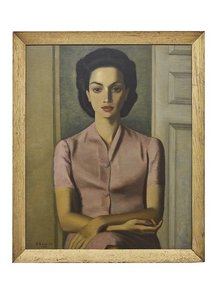
Portrait de Mademoiselle A.C
 80.0 x 65.0 cm
 Barjeel Art Foundation
 Read More
Giclée / Art Print
Museum-quality giclée or canvas print with fast production and flexible finish options. ( Buy Hand Made Painting Buy Image)




































Pick from our preset sizes that match the artwork's original proportions.

You may enter your own dimensions to fit a specific frame or space. If your selected size does not match the original image's proportions, we will either crop the artwork or extend the image with a mirrored or solid-fill edge. A digital mockup will be sent for your approval before production begins.
Please note that the on-screen preview does not reflect the actual cropping or extension. Only the mockup will accurately show the final composition.
While custom sizes are available, we recommend selecting a dimension from the predefined list to preserve the original proportions.
Worldwide Delivery () in 2 weeks instead of standard 4/5 weeks. (27 August)

Free Worldwide Express Shipping

High-Quality Linen Canvas

Full Shipping Insurance

Customs Tax Refund Guarantee

True Color Matching Guarantee

60-Day Return Policy (Defects Only)

100% Money-Back Guarantee

Bulk Discount Offer
 Glass option is only available in size under 110 CM

Portrait de Mademoiselle A.C
Giclée / Art Print
Reproduction Size
-


Total Price
$ 63
Related Artworks









Artist Biography
Ezekiel Baroukh: A Pioneer of Egyptian Abstract Expressionism
Born in Alexandria, Egypt, in 1909, Ezekiel Baroukh’s life and artistic journey represent a fascinating confluence of Egyptian heritage and European modernism. His early years were steeped in the vibrant cultural landscape of his native city, an environment that would profoundly shape his aesthetic sensibilities. Baroukh's formative education took place at the prestigious Academy of Fine Arts in Rome, a period crucial to his development as an artist. There, he was exposed to a diverse range of artistic styles – from classical techniques to burgeoning avant-garde movements – laying the groundwork for his unique and ultimately groundbreaking approach.
The interwar years witnessed a significant shift in Baroukh’s trajectory. Returning to Egypt during World War II, he became deeply involved in the nascent Egyptian art scene, contributing to its growth and evolution. This period saw him experimenting with various styles, absorbing influences from both traditional Egyptian motifs and the emerging currents of European modernism. However, it was his subsequent relocation to France in 1946 that truly cemented his position as a leading figure in abstract painting. Paris offered him access to a wider artistic community and provided the space for him to fully explore his own distinctive vision.
The Surrealist Influence and Abstract Development
Baroukh’s time in Paris proved transformative, aligning him with the influential Surrealist group, Art and Liberty. This association profoundly impacted his work, imbuing it with a dreamlike quality and a focus on subconscious imagery. His paintings frequently depicted fantastical landscapes, distorted forms, and symbolic narratives – hallmarks of Surrealism. Yet, Baroukh’s style never fully embraced the rigid dogma of the movement; instead, he skillfully integrated surrealist elements within a broader framework of abstraction.
Following his time with Art and Liberty, Baroukh embarked on a deliberate exploration of pure abstraction. He moved away from overtly representational imagery, focusing instead on the expressive potential of color, line, and form. His canvases became characterized by bold brushstrokes, vibrant palettes – often incorporating rich reds, blues, and yellows evocative of the Egyptian desert – and dynamic compositions. This shift reflected a desire to distill art down to its essential elements, creating works that resonated with viewers on an emotional and intuitive level.
Egyptian Roots and Artistic Signature
Despite his embrace of abstraction, Baroukh’s artistic identity remained inextricably linked to his Egyptian heritage. He skillfully wove traditional Egyptian motifs – geometric patterns, stylized figures, and symbolic imagery – into his abstract compositions. This fusion created a unique visual language that was both distinctly modern and deeply rooted in the country's rich cultural history. His work often evoked the vastness of the desert landscape, the intensity of its colors, and the spiritual significance of ancient Egyptian art.
Baroukh’s distinctive style is immediately recognizable through his use of layered brushstrokes, creating a sense of texture and movement across the canvas. He frequently employed circular forms and rhythmic patterns, reminiscent of traditional Egyptian designs. Furthermore, he incorporated elements of Cubism, particularly in his fragmented representations of figures and objects – a technique likely influenced by his studies in Rome.
Notable Works and Legacy
Ezekiel Baroukh’s artistic career spanned several decades, during which he produced a substantial body of work. His participation in the Venice Biennale in 2024 marked a significant milestone, bringing his art to an international audience. His paintings are held by esteemed institutions such as the Somerville College in Oxford, showcasing his enduring influence on modern art.
Beyond specific artworks, Baroukh’s legacy lies in his pioneering role in establishing Egyptian abstract painting as a distinct and significant artistic movement. He demonstrated that it was possible to synthesize traditional cultural influences with contemporary artistic trends, forging a unique path for Egyptian artists on the global stage. His work continues to inspire generations of artists seeking to explore the intersection of personal expression and cultural heritage.
Further Exploration
- Portrait de Mademoiselle A.C: (/en/art/ezequiel-baroukh-portrait-de-mademoiselle-a-c-D95G4C-en/) – A captivating example of Baroukh’s early figurative work, showcasing his technical skill and attention to detail.
- Ezekiel Baroukh: (/en/artists/ezequiel-baroukh-en/) – A comprehensive overview of the artist's life, career, and artistic style on ArtsDot.com.
- Join group - Facebook: https://www.facebook.com/groups/307839875934636/posts/3882103341841587/ – Historical context of Baroukh’s birth in Alexandria.
- Ezekiel Baroukh - Biography - askART: https://www.askart.com/artist/Ezekiel_Baroukh/11014177/Ezekiel_Baroukh.aspx – Detailed biographical information and auction records from askART.
- Ezequiel Baroukh - Art (2024) - La Biennale di Venezia: https://www.labiennale.org/en/art/2024/portraits/ezekiel-baroukh/ – An analysis of his work featured at the 2024 Venice Biennale.
ezequiel baroukh
1909 - 1984 , Egypt
Quick Facts
- Artistic Movement Or Style: Abstract, Surrealism
- Artists Or Movements Influenced By This Artist: ['Cubism']
- Artists Who Influenced This Artist: ['André Lhote']
- Date Of Birth: 1909
- Date Of Death: 1984
- Full Name: Ezequiel Baroukh
- Nationality: Egyptian
- Notable Artworks:
- Baigneuse
- Portrait de Mademoiselle A.C
- Place Of Birth: Alexandria, Egypt