 Preview
 Send
Send Share
Share
 Details

 Download
 Similars
 X-Ray
X-Ray Diaporama
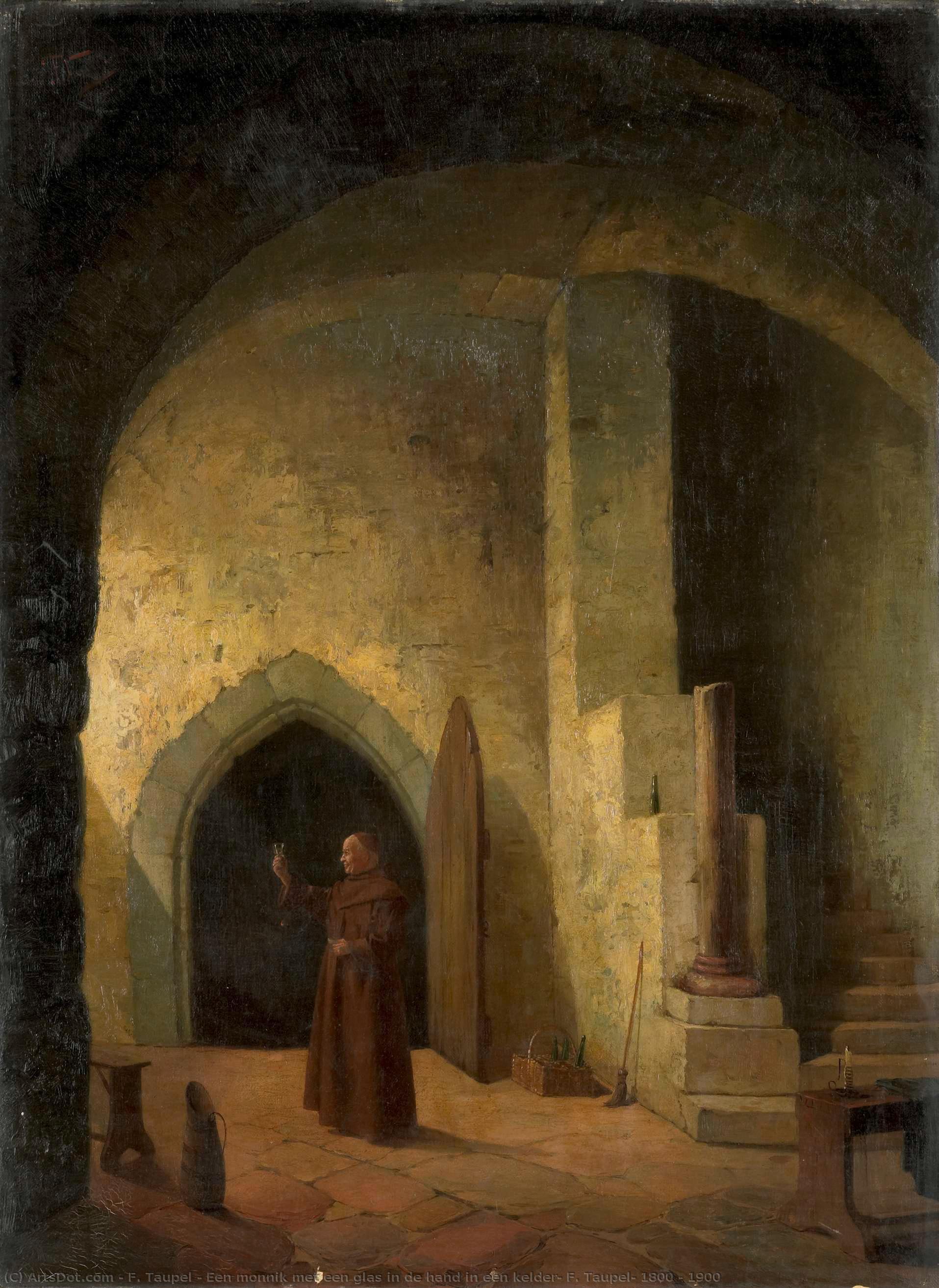
Een monnik met een glas in de hand in een kelder, F. Taupel, 1800 - 1900
 1900
1900 47.0 x 35.0 cm
 Read More
Hand Made Oil Reproduction
Hand-painted oil on canvas in your size and frame, made to order by our artists. ( Buy Print Buy Image)




































Pick from our preset sizes that match the artwork's original proportions.

You may enter your own dimensions to fit a specific frame or space. If your selected size does not match the original image's proportions, we will either crop the artwork or extend the painting with additional hand-painted elements. A digital mockup will be sent for your approval before production begins.
Please note that the on-screen preview does not reflect the actual cropping or extension. Only the mockup will accurately show the final composition.
While custom sizes are available, we recommend selecting a dimension from the predefined list to preserve the original proportions.
After order, ArtsDot.com team will email client for instructions and provide a mockup preview
Worldwide Delivery () in 3/4 weeks instead of standard 5 weeks. (2 September). No compromise on quality.

Free Worldwide Express Shipping

High-Quality Linen Canvas

Full Shipping Insurance

Customs Tax Refund Guarantee

True Color Matching Guarantee

60-Day Return Policy (Defects Only)

100% Money-Back Guarantee

Bulk Discount Offer
 Glass option is only available in size under 110 CM

Een monnik met een glas in de hand in een kelder, F. Taupel, 1800 - 1900
Reproduction Medium
Reproduction Size
-


Total Price
$ 263
Related Artworks







Artist Biography
The Enigmatic World of F. Taupel: A Glimpse into 19th-Century Dutch Genre Painting
F. Taupel remains a somewhat elusive figure in the landscape of 19th-century Dutch painting, yet his works offer a compelling window into the everyday lives and intimate moments of the era. While biographical details are scarce, piecing together information from art databases and auction records reveals an artist active between approximately 1800 and 1900, specializing in genre scenes that capture a quiet realism often imbued with subtle narrative tension. Taupel’s paintings weren't grand historical statements or sweeping landscapes; instead, he focused on the interior world – the dimly lit cellars, modest dwellings, and contemplative figures that populated Dutch society. This dedication to the commonplace elevates his work beyond mere documentation, transforming ordinary scenes into evocative studies of human experience.A Master of Light and Shadow: Taupel’s Artistic Style
Taupel's artistic style is characterized by a masterful use of light and shadow – a technique deeply rooted in the Dutch Golden Age tradition. He demonstrates a keen ability to render textures realistically, from the rough-hewn stone walls of cellars to the worn fabrics of clothing. His palette tends towards muted earth tones, punctuated by carefully placed highlights that draw the viewer’s eye to key elements within the composition. “Een monnik met een glas in de hand in een kelder” (A Monk with a Glass in Hand in a Cellar), perhaps his most well-known work, exemplifies this approach. The single source of light illuminates the monk's face and the glass he holds, creating a dramatic contrast against the surrounding darkness. This chiaroscuro effect not only enhances the visual impact but also imbues the scene with a sense of mystery and introspection. The painting isn’t simply *about* a monk drinking; it’s about the quiet contemplation, perhaps even solitude, suggested by the setting and the play of light on his features. Taupel's brushwork is generally smooth and refined, indicative of careful observation and meticulous technique.Themes and Influences: Genre Painting in 19th-Century Holland
Taupel’s work aligns with a broader trend in 19th-century Dutch painting – a revival of genre scenes that harkened back to the masters of the 17th century, such as Johannes Vermeer and Pieter de Hooch. This period saw a growing interest in depicting everyday life, often with an emphasis on moralizing themes or social commentary. While Taupel’s paintings don't explicitly preach a particular message, they do offer glimpses into the customs and conditions of the time. The choice of subject matter – monks, cellars, domestic interiors – suggests a fascination with hidden worlds and private moments. It is plausible that he was influenced by contemporary Realist painters who sought to portray life as it truly was, without idealization or romanticism. However, unlike some of his more overtly political contemporaries, Taupel’s focus remains on the aesthetic qualities of light, texture, and composition.Legacy and Rediscovery: A Quiet Voice from the Past
Despite not achieving widespread fame during his lifetime, F. Taupel's work continues to resonate with viewers today. His paintings offer a valuable insight into 19th-century Dutch life, providing a counterpoint to more grandiose historical narratives. The relative scarcity of information about him only adds to the intrigue surrounding his art.- His works are increasingly sought after by collectors and museums.
- Online platforms like ArtsDot.com and My Open Museum are playing a crucial role in bringing his paintings to a wider audience.
- The availability of high-quality reproductions allows art enthusiasts to appreciate his masterful technique and evocative compositions.