 Preview
 Send
Send Share
Share
 Details

 Download
 Similars
 X-Ray
X-Ray Diaporama
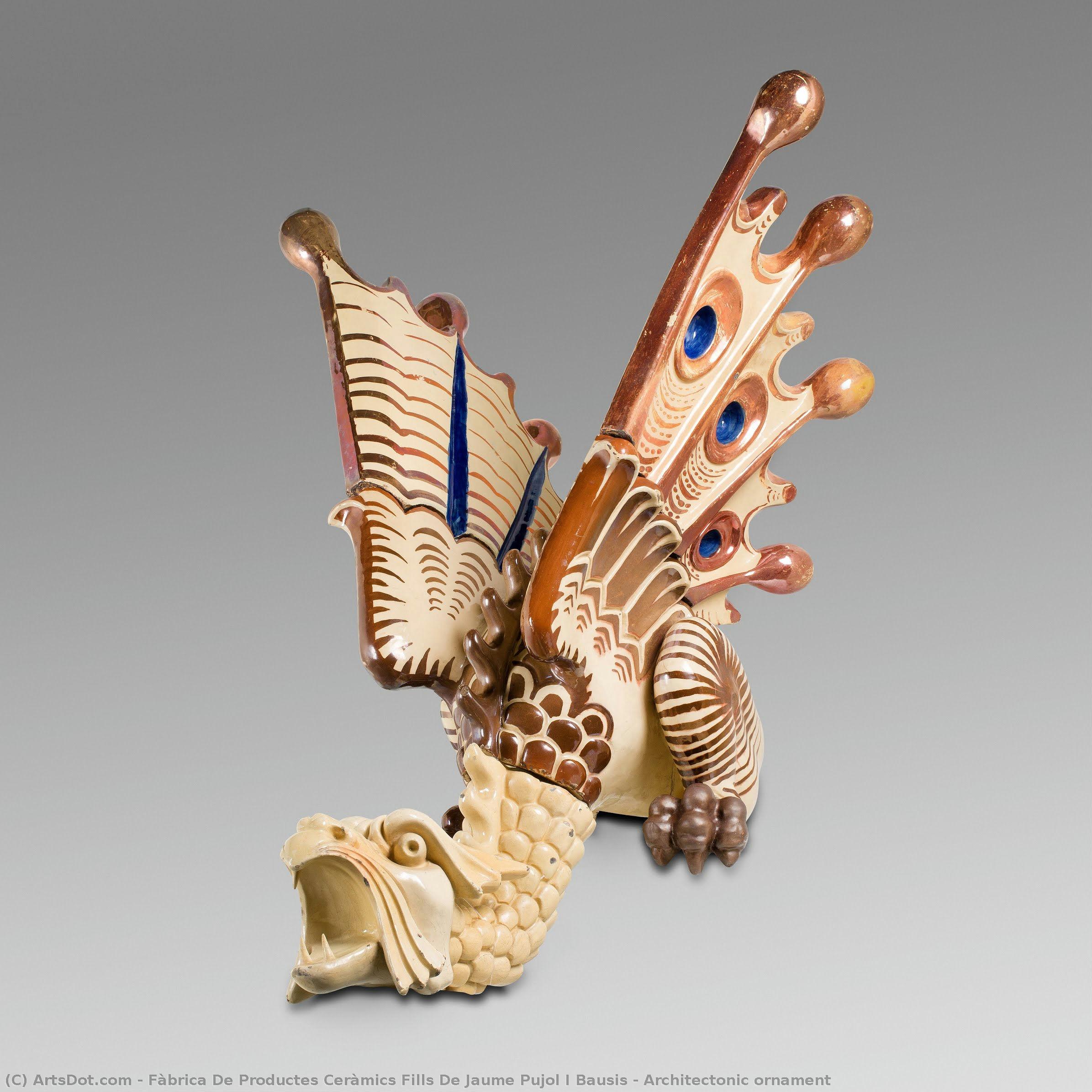
Architectonic ornament
 1900
1900 94.0 x 74.0 cm
 Design Museum of Barcelona
 Read More
Giclée / Art Print
Museum-quality giclée or canvas print with fast production and flexible finish options. ( Buy Hand Made Painting Buy Image)




































Pick from our preset sizes that match the artwork's original proportions.

You may enter your own dimensions to fit a specific frame or space. If your selected size does not match the original image's proportions, we will either crop the artwork or extend the image with a mirrored or solid-fill edge. A digital mockup will be sent for your approval before production begins.
Please note that the on-screen preview does not reflect the actual cropping or extension. Only the mockup will accurately show the final composition.
While custom sizes are available, we recommend selecting a dimension from the predefined list to preserve the original proportions.
Worldwide Delivery () in 2 weeks instead of standard 4/5 weeks. (2 September)

Free Worldwide Express Shipping

High-Quality Linen Canvas

Full Shipping Insurance

Customs Tax Refund Guarantee

True Color Matching Guarantee

60-Day Return Policy (Defects Only)

100% Money-Back Guarantee

Bulk Discount Offer
 Glass option is only available in size under 110 CM

Architectonic ornament
Giclée / Art Print
Reproduction Size
-


Total Price
$ 63
Related Artworks





Artist Biography
The Enduring Legacy of Fàbrica de Productes Ceràmics: A Catalan Tile Tradition
In the heart of Catalonia, a name resonates with the artistry and innovation of modernist ceramics: Fàbrica de Productes Ceràmics fills de Jaume Pujol i Bausis – often known simply as “La Rajoleta.” More than just a factory, this establishment, rooted in Esparregué, Spain, became a crucible for architectural embellishment, profoundly shaping the aesthetic landscape of Barcelona and beyond. Its story is one of evolving craftsmanship, familial dedication, and an unwavering commitment to quality that spanned nearly a century and a half.
The origins of La Rajoleta trace back to the mid-19th century, initially established in 1858 as a modest tile factory by Màrius Jourdan and Joan Terrada. Early production focused on “thin tiles and crockery tiles,” laying the groundwork for what would become a far more ambitious enterprise. However, it was Jaume Pujol i Bausis’s acquisition of the factory in 1876 that truly ignited its ascent. Under his leadership, La Rajoleta began to cultivate a reputation for exceptional ceramic quality, attracting attention from leading architects of the burgeoning Modernisme movement.
A Catalyst for Catalan Modernisme
The late 19th and early 20th centuries witnessed an explosion of artistic creativity in Catalonia, with Modernisme – the Catalan interpretation of Art Nouveau – taking center stage. La Rajoleta found itself perfectly positioned to become a vital partner in this cultural revolution. The factory’s ceramics weren't merely decorative elements; they were integral components of architectural visions. Architects like Antoni Gaudí, Lluís Domènech i Montaner, and Josep Puig i Cadafalch increasingly turned to La Rajoleta for the realization of their elaborate designs.
Gaudí’s relationship with the factory was particularly significant. His iconic structures—from Casa Batlló to Park Güell—bear testament to the vibrant, organic forms and intricate detailing made possible by La Rajoleta's skilled artisans. The factory wasn’t simply fulfilling commissions; it fostered a collaborative spirit, often working directly with architects on custom designs and innovative techniques. This willingness to embrace experimentation led to the development of unique glazing methods, relief patterns, and color palettes that defined the Modernisme aesthetic.
Generations of Craftsmanship
The success of La Rajoleta wasn’t solely attributable to Jaume Pujol i Bausis's vision. His son, Pablo Pujol Vilà, continued the legacy, steering the factory through its golden age during the height of Modernisme. Under his guidance, production flourished, and the demand for their ceramics soared. The factory office in Barcelona at 9 Tallers street served as a hub for artistic exchange, attracting not only architects but also artists like Adrià Gual and Alexandre de Riquer who contributed to ceramic projects.
Even after the Spanish Civil War (1936-1939), La Rajoleta adapted, transforming into a public limited company under Narciso Vallvé Bonany. While diversifying into new product lines like electrical insulators, the factory maintained its commitment to ceramic artistry. The subsequent leadership of his son, Narciso Vallvé Asenjo, continued this trajectory until the factory’s closure in 1984.
Preserving a Cultural Treasure
Though La Rajoleta ceased production decades ago, its impact endures. Recognizing the historical and artistic significance of the site, the town hall of Esplugues acquired the property in the 1980s. This acquisition paved the way for the establishment of the “Ceramic Museum ‘La Rajoleta’”, a dedicated space to preserve and celebrate the factory's rich heritage.
The museum houses an extensive collection of ceramic tiles, utensils, tools, molds, and archival documentation—including drawings, sketches, and project watercolors. It offers visitors a glimpse into the intricate processes, artistic collaborations, and innovative spirit that defined La Rajoleta’s legacy. The recovery of early varnished tiles and “thin tiles” alongside later modernist masterpieces provides a comprehensive overview of the factory's evolution.
Today, La Rajoleta stands as a powerful symbol of Catalan artistry and industrial innovation. Its ceramics continue to adorn iconic buildings, inspiring awe and admiration. The museum serves not only as a repository of historical artifacts but also as a vibrant testament to the enduring power of craftsmanship and the collaborative spirit that shaped one of Catalonia’s most beloved cultural treasures.
Quick Facts
- Artistic Movement Or Style: Modernisme
- Artists Or Movements Influenced By This Artist:
- Antoni Gaudí
- Lluís Domènech i Montaner
- Full Name: Fàbrica de Productes Ceràmics Fills de Jaume Pujol i Bausis
- Nationality: Spanish
- Notable Artworks:
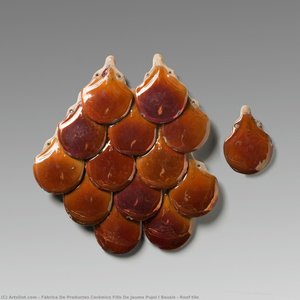
- Roof tile
- Architectonic ornament
- Place Of Birth: Esparregué, Spain