 Preview
 Send
Send Share
Share
 Details

 Download
 Similars
 X-Ray
X-Ray Diaporama
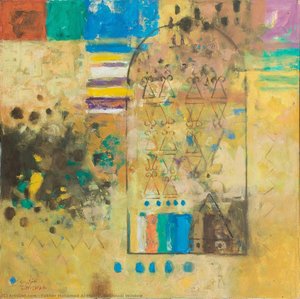
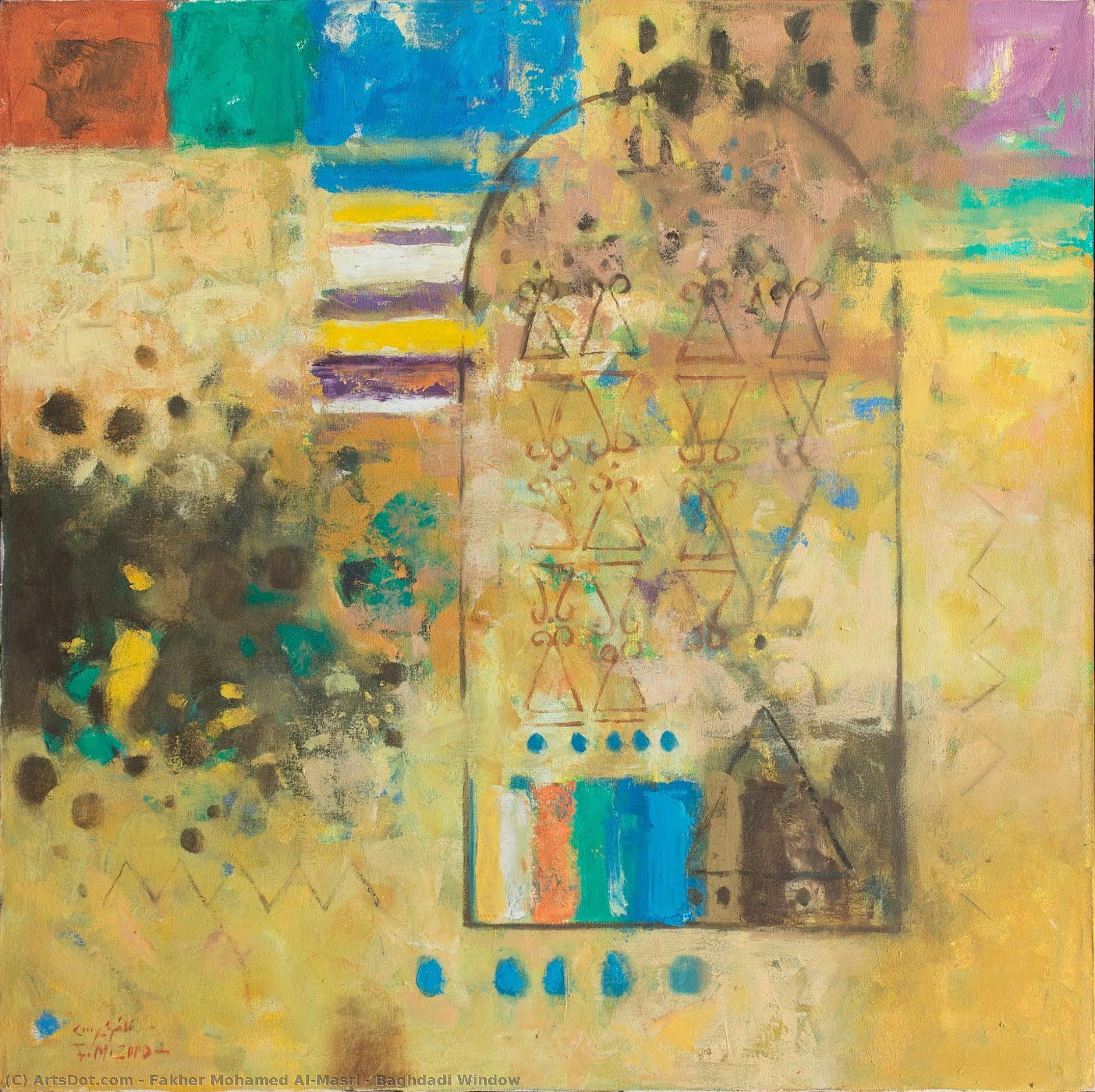
Baghdadi Window
 Acrylic On Canvas
- WallArt
- Contemporary Abstraction
 2000
2000- Contemporary
 80.0 x 80.0 cm
 Ibrahimi Collection
 Read More
Giclée / Art Print
Museum-quality giclée or canvas print with fast production and flexible finish options. ( Buy Hand Made Painting Buy Image)




P118B $10

P118H $10

P118W $10

P438Z $10

P508JH $12

P508YH $12

P805H $10

P805Z $10

P919BZ $10

P919G $10

P919XJ $10

P959ZH $10

P968JZ $12

W106C $8

W218G $10

W218JH $8

W218Y $10

W307PJ $10

W316G $10

W316PJ $8

W316Y $10

W398PJ $8

W4111J $10

W500HY $15

W500JH $15

W692G $12

W849H $8

W940BG $15

W953PJ $8




Pick from our preset sizes that match the artwork's original proportions.

You may enter your own dimensions to fit a specific frame or space. If your selected size does not match the original image's proportions, we will either crop the artwork or extend the image with a mirrored or solid-fill edge. A digital mockup will be sent for your approval before production begins.
Please note that the on-screen preview does not reflect the actual cropping or extension. Only the mockup will accurately show the final composition.
While custom sizes are available, we recommend selecting a dimension from the predefined list to preserve the original proportions.
Worldwide Delivery () in 2 weeks instead of standard 4/5 weeks. (17 August)

Free Worldwide Express Shipping

High-Quality Linen Canvas

Full Shipping Insurance

Customs Tax Refund Guarantee

True Color Matching Guarantee

60-Day Return Policy (Defects Only)

100% Money-Back Guarantee

Bulk Discount Offer
 Glass option is only available in size under 110 CM

Baghdadi Window
Giclée / Art Print
Reproduction Size
-


Total Price
$ 63
Collectible Description
A Window into Gaza’s Soul: Fakher Mohamed Al-Masri's "Baghdadi Window"
Fakher Mohamed Al-Masri’s “Baghdadi Window,” created in 2000, is more than a painting; it’s an immersive experience, a vibrant echo of memory and resilience. Measuring 80 x 80 cm, this abstract work immediately captivates with its bold palette – a luminous yellow backdrop punctuated by the cool blues of a stylized window design, fiery reds, and verdant greens. The piece speaks to a profound sense of displacement and longing, rooted in Al-Masri’s origins in Gaza, a city steeped in history and perpetually marked by conflict.
- Subject Matter: While categorized as abstract, the central motif – the window – carries significant symbolic weight. Windows represent portals, transitions, and glimpses into other worlds. In this context, it suggests a yearning for connection to a lost homeland, a desire to break through barriers, and perhaps, an invitation to contemplate the stories held within.
- Color as Emotion: Al-Masri masterfully employs color not merely decoratively but emotionally. The dominant yellow evokes warmth and hope, tempered by the melancholic blues of the window, representing both memory and sorrow. The strategic use of red and green adds further layers – passion, life, and a subtle nod to the fertile land that Gaza once was.
Technique and Artistic Process
Al-Masri’s technique is characterized by a confident application of paint, suggesting a direct engagement with the canvas. The brushstrokes are visible, contributing to the painting's textural richness and conveying a sense of immediacy. The layering of colors – particularly in the window design – creates depth and complexity, drawing the viewer into the artwork’s intricate composition. This approach aligns with contemporary abstract expressionism while retaining a distinctly personal and evocative style. The artist’s background, informed by formal training at institutions like North Texas and Syracuse University, undoubtedly contributes to this skillful execution.
Symbolic Resonance and Historical Context
Born in Gaza in 1962, Fakher Mohamed Al-Masri's work is inextricably linked to the Palestinian experience. The "Baghdadi Window" can be interpreted as a reflection of the city’s rich heritage – Baghdad, once a center of learning and culture – juxtaposed against the realities of contemporary life in Gaza. The inclusion of figures scattered throughout the painting adds another layer of complexity, potentially representing individuals or collective memories. This element resonates with the broader artistic tradition of using symbolic imagery to convey narratives of displacement, resistance, and cultural identity.
Collecting and Displaying “Baghdadi Window”
"Baghdadi Window" is a compelling addition to any art collection, offering both aesthetic pleasure and intellectual engagement. Its vibrant colors and evocative composition make it suitable for a wide range of interior design styles – from modern minimalist spaces to more eclectic settings. This hand-painted reproduction captures the essence of Al-Masri’s original vision, ensuring that you can experience the emotional power and artistic brilliance of this significant work.
Related Artworks

Artist Biography
Deborah Roberts: Unveiling the Layers of Black Subjecthood
Deborah Roberts, born in Austin, Texas, in 1962, is a profoundly significant contemporary artist whose work has reshaped our understanding of representation and identity within American art history. Her journey began with formal training at the University of North Texas and Syracuse University, equipping her with both a grounding in traditional techniques and a critical eye for challenging established norms. Roberts’s artistic practice isn't simply about depicting subjects; it’s an active engagement with the complexities of race, gender, and belonging—themes that resonate powerfully across her diverse body of work. Initially focused on figurative collage, she has evolved to incorporate painting, drawing, and mixed media, always striving to disrupt conventional notions of beauty and elevate marginalized voices. Roberts's art is a testament to the power of visual storytelling, inviting viewers to confront uncomfortable truths and contemplate their own perspectives.Early Life and Artistic Foundations
Roberts’s childhood in Austin provided an early exposure to both artistic expression and the realities of racial inequality. Growing up during a period of significant social change, she developed a keen awareness of the complexities surrounding identity and representation. Her education at North Texas and Syracuse University solidified her technical skills while simultaneously fostering a critical approach to art-making. Crucially, her studies were influenced by Hoyt Sherman, a professor at Ohio State University who instilled in her a method for organizing composition and seeing beyond surface appearances. This emphasis on underlying structure and conceptual depth would become a hallmark of her later work. Roberts’s early influences included the works of Rembrandt, Daumier, and Picasso—artists she admired for their ability to capture human emotion and social commentary – but she quickly sought to forge her own path, questioning established canons of taste and challenging traditional artistic conventions.The Language of Collage: Exploring Black Subjecthood
Roberts’s signature style is rooted in the art of collage—a technique that allows her to juxtapose disparate images, textures, and fragments to create layered narratives. She masterfully combines found photographs, magazine clippings, and hand-drawn elements, often depicting young Black boys and girls. These figures are not presented as passive subjects but rather as active agents navigating a world shaped by systemic racism and societal expectations. Roberts’s work deliberately confronts the history of racial representation in art—a tradition that has historically marginalized or misrepresented Black individuals. By elevating these subjects to the center of her compositions, she challenges viewers to reconsider their own assumptions about beauty, identity, and worth. Her use of collage is not merely a stylistic choice; it's a deliberate strategy for dismantling dominant narratives and creating space for alternative perspectives.Exhibitions and Recognition
Roberts’s work has garnered widespread recognition through numerous exhibitions both nationally and internationally. She has been featured at prestigious institutions such as the Whitney Museum of American Art, the Brooklyn Museum, the Studio Museum in Harlem, and LACMA (Los Angeles County Museum of Art). Her 2023 Texas Medal of Arts Award Honoree for Visual Arts underscores her significant contribution to the art world. A particularly notable exhibition, “Deborah Roberts: I’m,” traveled extensively across the United States and Europe, bringing her powerful work to a wider audience. The inclusion of her pieces in exhibitions like *Women Painting Women* at the Modern Art Museum of Fort Worth further solidifies her position as a leading voice in contemporary art. Her ongoing presence in museum collections—including those of the Whitney, Brooklyn Museum, and Studio Museum—testifies to the enduring value and impact of her artistic vision.Legacy and Continuing Influence
Deborah Roberts’s work transcends mere aesthetic appeal; it is a vital commentary on American history and contemporary social issues. Her innovative use of collage, coupled with her unflinching exploration of Black subjecthood, has profoundly influenced generations of artists. She continues to push boundaries, challenging viewers to confront uncomfortable truths and engage in critical dialogue about race, identity, and representation. Roberts’s legacy lies not only in the beauty of her art but also in its capacity to spark meaningful conversations and inspire social change. Her work serves as a powerful reminder that art can be a catalyst for understanding, empathy, and ultimately, a more just and equitable world.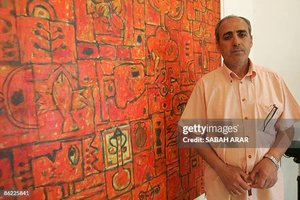
fakher mohamed al-masri
1962 - , Palestine
Quick Facts
- Artistic Movement Or Style: Mixed media collage
- Artists Or Movements Influenced By This Artist: ['Contemporary art']
- Artists Who Influenced This Artist:
- Paul Klee
- Contemporary artists
- Date Of Birth: November 1962
- Full Name: Deborah Roberts
- Nationality: American
- Notable Artworks: ['I’m']
- Place Of Birth: Austin, Texas, USA
Related Articles
Slate Blue Masterpieces: 10 Iconic Paintings & Timeless Home Decor Ideas
Immerse yourself in the captivating world of slate blue! Explore 10 iconic paintings by Monet, Van Gogh & Renoir. Discover their stories, techniques & find museum-quality art reproductions for your home at .

Kandinsky's Masterpieces: 25 Paintings That Define Abstract Art | ArtsDot
Journey through Wassily Kandinsky's 25 most iconic abstract paintings. Explore his revolutionary use of color, form & spiritual expressionism. Find museum-quality Kandinsky reproductions and elevate your home decor with ArtsDot.com. Discover all masterpieces on ArtsDot.com!
Abstract Expressionism's 10 Defining Masterpieces |
Explore 10 defining Abstract Expressionism masterpieces by Pollock, Rothko & de Kooning. Discover the stories behind these iconic paintings and find museum-quality art reproductions to elevate your home decor on .

Geometric Abstraction's 10 Defining Masterpieces | Art for Your Home - ArtsDot
Explore 10 defining masterpieces of Geometric Abstraction! Discover Kandinsky, Mondrian & Malevich’s iconic works. Find museum-quality art reproductions and curated decor ideas to elevate your home at ArtsDot.com.
The Allure of Azure: Exploring the Symbolic & Aesthetic Depths of Blue in Art History
Explore the rich history of blue in art! Discover its symbolism, from ancient pigments to modern masterpieces by Kandinsky & Seurat. Uncover the psychological impact and cultural meanings behind this captivating hue.