
- Home

- Digital Image
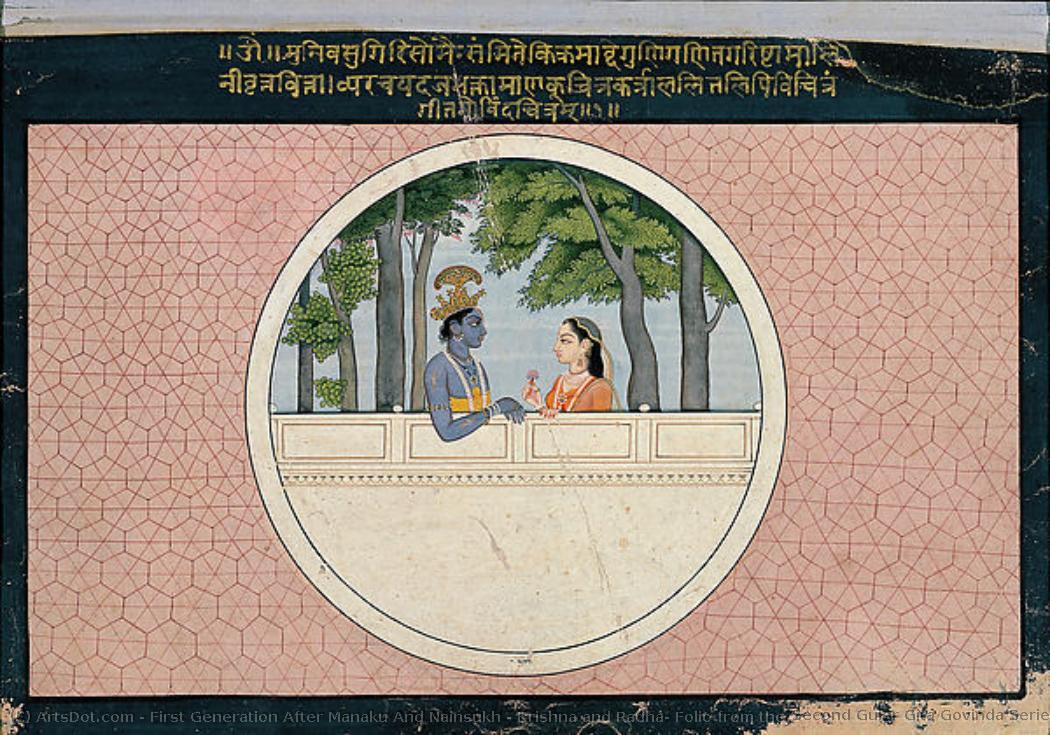
- family of indian painters who were active in the pahari region, mainly in the kangra valley, from around 1740 to 1830
 Preview
 Send
Send Share
Share
 Details

 Download
 Similars
 X-Ray
X-Ray Diaporama
 Stats
StatsUntitled (D2X76Q)
 1775
1775 18.0 x 27.0 cm
 Read More
Purchase a high-resolution, enhanced digital image, far superior to the online preview.
Each file is meticulously prepared by our in-house specialists using advanced tools and expert manual retouching. We ensure every image has exceptional clarity, precise color accuracy, and fine detail.
The final file is delivered via email within 72 hours, optimized for immediate use in professional, editorial, and print environments. This is the same quality trusted by top-tier design studios, publishers, and galleries.
Digital Image
Download a high-resolution file for personal display, printing, and creative projects. ( Switch to Print Buy Hand Made Painting)
Included in Every Digital Image Order
Expert Digital Delivery, Guaranteed
When you choose ArtsDot.com, you're not just getting an image - you're receiving a professionally enhanced digital artwork, crafted with precision and backed by a satisfaction guarantee. Here's everything that comes with your order, automatically:

Fast Email Delivery
Your high-resolution digital image file will be emailed to you within 72 hours of ordering - ready for immediate use.

AI-Enhanced Digital File
Your artwork is professionally optimized using advanced AI tools and manual editing, ensuring maximum detail, clarity, and color accuracy.

Free Lifetime Re-Delivery
Accidentally deleted or lost your file? No worries - we'll resend it to you anytime, free of charge.

No Import Fees - Ever
Enjoy your artwork instantly with zero customs, duties, or delivery fees - digital downloads are always tax-free.

Color Accuracy Guarantee
We ensure your digital image reflects the original colors as closely as possible using professional tools and color management.

100-Day Satisfaction Guarantee
If you're not satisfied with your digital image, we'll revise it or refund 100% within 100 days - no questions asked.

100% Money-Back Guarantee
Not satisfied? Get a full refund within 100 days of receiving your digital file - no questions asked.

Bulk Order Discounts
Buy 3 images, save 10% - Buy 5, save 15% - Buy 10+, save 20%. Great for creative projects, galleries, and agencies.
Related Artworks








Artist Biography
The Legacy of the Kangra School: Exploring the Artistic Family Behind Pahari Miniature Painting
The Kangra School, nestled in the verdant Himalayan foothills of Himachal Pradesh, stands as a beacon of Indian miniature painting—a tradition profoundly shaped by the artistic endeavors of a remarkable family. Emerging around 1740 and flourishing until approximately 1830, this lineage represents the first generation following the legendary masters Pandit Seu and Nainsukh, establishing itself as one of the most influential forces in Himalayan art history. To understand their contribution is to delve into a world where individual talent was inextricably linked to familial heritage, creating a cohesive yet diverse aesthetic that captured the very soul of the Pahari region. The foundations of this dynasty were laid by Pandit Seu, the patriarch whose meticulous approach and dedication to portraying Hindu mythology—particularly the enchanting legends of Krishna—became the cornerstone of the Kangra style. His workshop in Guler served as a crucible for artistic excellence. This tradition was further refined by his nephew, Nainsukh, a painter of unparalleled brilliance who dared to experiment with innovative techniques. By skillfully blending the grandeur of Mughal influences with traditional Pahari sensibilities, Nainsukh expanded the stylistic repertoire available to his descendants, imbuing images with an unprecedented emotional depth and a gift for precise observation.A Collaborative Vision: The Six Younger Artists
The true breadth of this family's impact is best seen through the collective work of the six younger artists: Khushala, Kama, Gaudhu, Nikka, Ranjha, and Fattu. As the sons of Manaku and Nainsukh, these painters inherited a prestigious workshop and a shared artistic vocabulary. While they faced the inevitable challenges of limited patronage and the necessity of seeking opportunities in various small courts across the region, their prolific output remains a testament to their consistent vision. Their work demonstrates a fascinating evolution, where the more angular and monochrome tendencies seen in some early works gradually transitioned into the refined, lyrical, and emotionally resonant style that defines the peak of the Kangra School. The movement of these artists was often dictated by the political landscape of the time. As Nainsukh himself left the family workshop in Guler to find work in Jasrota and later Basohli, his kin followed similar paths, seeking new patrons among the Rajput rulers. This dispersion, while challenging for a centralized school, allowed the Kangra style to permeate different courts, leaving an indelible mark on the artistic landscape of the entire valley.Artistic Mastery and Historical Significance
The achievements of this family extend far beyond mere technical skill; they captured the essence of human emotion and divine romance. Their oeuvre includes celebrated series such as the Gita Govinda, the Bhagavata Purana, and the Ramayana, works that utilized a sophisticated language of color and line to narrate sacred stories. The mastery of their "absolutely assured hand" allowed them to convey subtle nuances of facial expression and the delicate textures of nature, making their miniatures windows into a spiritual and romantic ideal. The historical significance of this group lies in their role as bridge-builders between eras and styles. They successfully integrated the sophisticated elements of Mughal painting—such as refined portraiture and complex compositions—into the local Pahari tradition, which had previously been more focused on religious iconography. In doing so, they created a unique aesthetic that was both cosmopolitan and deeply rooted in the Himalayan landscape. Today, the legacy of these painters remains a vital chapter in the history of Indian art, representing a period of unparalleled harmony between technical innovation and spiritual devotion.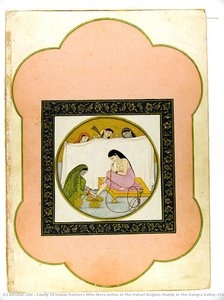
Quick Facts
- Artistic Movement Or Style: Pahari art
- Artists Or Movements Influenced By This Artist: ['European Romanticism']
- Artists Who Influenced This Artist:
- Pandit Seu
- Nainsukh
- Date Of Death: Living
- Full Name: Family of Indian painters
- Nationality: Indian
- Notable Artworks:
- Churning of the ocean Manthan
- The Palace of the Pandava Brothers Set
- Place Of Birth: Guler, India