


 Preview
 Send
Send Share
Share
 Details

 Download
 Similars
 X-Ray
X-Ray Diaporama
Orchids and the Rock
 364.0 x 49.0 cm
 National Gallery Singapore
 Read More
Giclée / Art Print
Museum-quality giclée or canvas print with fast production and flexible finish options. ( Buy Hand Made Painting Buy Image)




































Pick from our preset sizes that match the artwork's original proportions.

You may enter your own dimensions to fit a specific frame or space. If your selected size does not match the original image's proportions, we will either crop the artwork or extend the image with a mirrored or solid-fill edge. A digital mockup will be sent for your approval before production begins.
Please note that the on-screen preview does not reflect the actual cropping or extension. Only the mockup will accurately show the final composition.
While custom sizes are available, we recommend selecting a dimension from the predefined list to preserve the original proportions.
Worldwide Delivery () in 2 weeks instead of standard 4/5 weeks. (23 August)

Free Worldwide Express Shipping

High-Quality Linen Canvas

Full Shipping Insurance

Customs Tax Refund Guarantee

True Color Matching Guarantee

60-Day Return Policy (Defects Only)

100% Money-Back Guarantee

Bulk Discount Offer
 Glass option is only available in size under 110 CM

Orchids and the Rock
Giclée / Art Print
Reproduction Size
-


Total Price
$ 63
Related Artworks
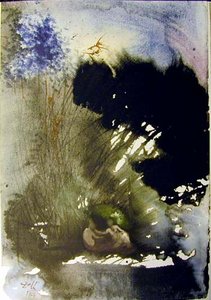






Artist Biography
A Bridge Between Worlds: The Life and Art of Fan Chang Tien
Fan Chang Tien, also known as Chua Ek Kay, was a pivotal figure in Singaporean art history, a painter who eloquently synthesized the traditions of Chinese ink painting with the principles of Western modernism. Born in Guangdong, China, in 1947, his artistic journey began not in formal academies but within the vibrant cultural milieu of his family’s migration to Singapore in the early 1950s. This relocation proved formative, immersing him in a unique blend of Eastern heritage and burgeoning Western influences that would ultimately define his distinctive style. From a young age, he demonstrated an aptitude for calligraphy and poetry, skills nurtured by his father and honed through dedicated practice. These foundational elements – the expressive power of brushstrokes, the lyrical quality of verse – became integral to his artistic vocabulary. He initially studied under his father before embarking on more formal training with Fan Chang Tien (his namesake mentor), a master of the Shanghai school ink painting tradition.The Fusion of East and West
Chua Ek Kay’s breakthrough lay in his ability to transcend stylistic boundaries, forging a path that resonated deeply within Singapore's evolving art landscape. While steeped in the techniques of traditional Chinese ink wash painting – the delicate gradations of tone, the emphasis on capturing essence rather than literal representation – he wasn’t content with mere replication. He sought to infuse this ancient medium with the dynamism and conceptual rigor of Western art theories. This exploration led him to experiment with spontaneous brushwork, often employing quick, truncated strokes that conveyed a sense of immediacy and energy. His work became characterized by an almost calligraphic abstraction, where forms dissolved into suggestive shapes and textures. The artist’s genius resided in his ability to balance control and chance, allowing the ink to flow freely while maintaining a cohesive artistic vision. He wasn't simply *applying* Western techniques; he was fundamentally rethinking how Chinese ink could be used to express modern sensibilities.Themes of Place and Memory
The subject matter of Chua Ek Kay’s paintings often reflected his personal experiences and observations. His iconic Chinatown series captured the bustling street life of Singapore with a poignant blend of nostalgia and vitality. These weren't merely depictions of physical spaces; they were evocative portraits of a community, imbued with the sights, sounds, and spirit of the locale. Beyond these urban scenes, he found inspiration in the natural world, particularly his mesmerizing Lotus Pond series. The lotus flower, a symbol of purity and enlightenment in Asian cultures, became a recurring motif, rendered not as precise botanical studies but as ethereal impressions – fleeting moments captured with remarkable sensitivity. Later in his career, he turned to abstract works inspired by Australian Aboriginal cave paintings, demonstrating a fascination with primal forms and ancient artistic expressions. This exploration suggests a broader interest in universal themes of human creativity and the enduring power of visual language.Recognition and Legacy
Chua Ek Kay’s contributions were widely recognized during his lifetime and continue to be celebrated today. He received numerous awards, including the prestigious UOB Painting of the Year Award (Grand Prize) in 1991 and the Philip Morris Group of Companies ASEAN Art Awards Juror's Choice award in 1998. In 1999, he was honored with Singapore’s Cultural Medallion for Art, a testament to his significant impact on the nation’s artistic heritage. He also served as a juror and curator, actively promoting emerging talent and fostering dialogue within the art community. His passing in 2008 marked a profound loss, but his legacy endures through his captivating paintings and his enduring influence on generations of Singaporean artists.A Lasting Impact
- Pioneering Style: Chua Ek Kay’s unique blend of Chinese ink painting with Western techniques established him as a leading figure in the development of modern Singaporean art.
- Thematic Depth: His paintings explored themes of place, memory, and cultural identity with sensitivity and nuance.
- Cultural Bridge: He successfully bridged the gap between Eastern and Western artistic traditions, fostering a greater appreciation for both.
- Enduring Influence: His work continues to inspire artists and captivate audiences worldwide, solidifying his position as an iconic figure in Southeast Asian art history. His ability to convey emotion through minimalist strokes remains profoundly influential.
- “He essentially became to Chinese ink painting what Monet was to European Impressionism,” a testament to his skill in capturing the spirit of nature and infusing it with meditative quality.
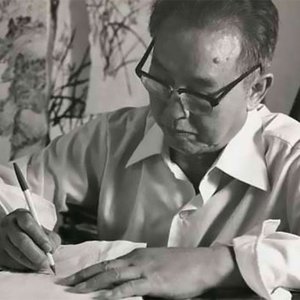
fan chang tien
1947 - 2008 , Singapore
Quick Facts
- Artistic Movement Or Style: Chinese ink & Western tech.
- Artists Who Influenced This Artist: ['Fan Chang Tien']
- Date Of Birth: 1947
- Date Of Death: 2008
- Full Name: Fan Chang Tien
- Nationality: Singaporean
- Notable Artworks:
- Chinatown scenes
- Lotus series
- Abstract works
- Place Of Birth: Singapore, Singapore


