 Preview
 Send
Send Share
Share
 Details

 Download
 Similars
 X-Ray
X-Ray Diaporama
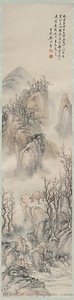
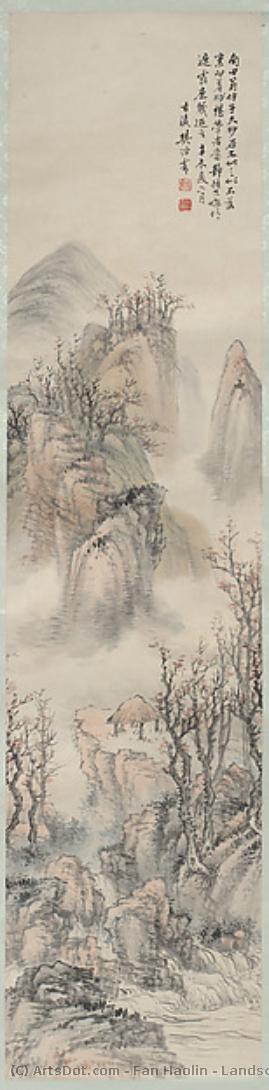
Landscape inspired by Yun Shouping studying Huang Gongwang
 1931
1931 131.0 x 27.0 cm
 Read More
Hand Made Oil Reproduction
Hand-painted oil on canvas in your size and frame, made to order by our artists. ( Buy Print Buy Image)




































Pick from our preset sizes that match the artwork's original proportions.

You may enter your own dimensions to fit a specific frame or space. If your selected size does not match the original image's proportions, we will either crop the artwork or extend the painting with additional hand-painted elements. A digital mockup will be sent for your approval before production begins.
Please note that the on-screen preview does not reflect the actual cropping or extension. Only the mockup will accurately show the final composition.
While custom sizes are available, we recommend selecting a dimension from the predefined list to preserve the original proportions.
After order, ArtsDot.com team will email client for instructions and provide a mockup preview
Worldwide Delivery () in 3/4 weeks instead of standard 5 weeks. (24 August). No compromise on quality.

Free Worldwide Express Shipping

High-Quality Linen Canvas

Full Shipping Insurance

Customs Tax Refund Guarantee

True Color Matching Guarantee

60-Day Return Policy (Defects Only)

100% Money-Back Guarantee

Bulk Discount Offer
 Glass option is only available in size under 110 CM

Landscape inspired by Yun Shouping studying Huang Gongwang
Reproduction Medium
Reproduction Size
-


Total Price
$ 263
Artwork Description
Related Artworks









Artist Biography
A Brush with Tradition: The Life and Art of Fan Haolin
Fan Haolin (1885–1962) remains a compelling, though often overlooked, figure in 20th-century Chinese painting. Born into a period of immense social and political upheaval, his life mirrored the turbulent transition China underwent, and his art became a poignant reflection of both enduring traditions and the anxieties of a changing world. While biographical details remain somewhat sparse—a common fate for artists navigating the complexities of modern Chinese history—enough evidence exists to paint a picture of a dedicated scholar-painter deeply rooted in classical aesthetics yet subtly responsive to contemporary currents. He was not merely a preserver of artistic heritage, but an active participant in its evolution.Early Life and Scholarly Foundations
Fan Haolin’s early life was steeped in the rich cultural environment of his time. Though specific details regarding his upbringing are limited, it is known that he received a traditional education, focusing on calligraphy, literature, and painting—the essential skills for aspiring scholar-officials. This foundation proved crucial to his artistic development. He demonstrated an early aptitude for ink wash painting, particularly landscape, a genre deeply revered in Chinese art history. The landscapes of the Song Dynasty masters – artists like Fan Kuan and Guo Xi – likely served as formative influences, instilling in him a profound appreciation for capturing the essence of nature through meticulous brushwork and atmospheric perspective. This period was characterized by a commitment to mastering technique, absorbing the principles of composition, ink tonality, and the expressive power of line. He wasn’t simply copying styles; he was internalizing a visual language that would become uniquely his own.A Synthesis of Styles: Landscape and Calligraphy
Fan Haolin's artistic output primarily centered around landscape painting, often incorporating calligraphy as an integral element. His works frequently feature scenes depicting misty mountains, flowing rivers, and secluded pavilions—motifs deeply symbolic within Chinese culture. These landscapes weren’t intended as literal representations of specific places but rather as expressions of philosophical ideas about humanity’s relationship with nature. The red maple flutters in the breeze, soon dusk will arrive on the clear stream – a sentiment found inscribed on one of his works at the Metropolitan Museum of Art—evokes a sense of tranquility and contemplation. He often worked in the folding fan format, mounting them as album leaves, demonstrating a mastery of miniature painting techniques.- His landscapes are characterized by delicate brushwork and subtle ink washes.
- Calligraphy is not merely decorative but an essential component of his compositions, adding layers of meaning and poetic resonance.
- He frequently employed the use of seals—personal stamps that served as signatures and expressions of artistic identity.
Navigating a Changing China
The mid-20th century was a period of profound upheaval in China, marked by war, revolution, and political instability. While Fan Haolin’s art doesn't overtly engage with these events, it is impossible to ignore the context in which he worked. The emphasis on traditional values—harmony, balance, and spiritual contemplation—can be seen as a subtle form of resistance against the forces of modernization and social change. His dedication to classical aesthetics may have been a way of preserving cultural identity during a time when it felt threatened.Legacy and Historical Significance
Although Fan Haolin’s work is not widely known in the West, he holds an important place within the narrative of modern Chinese painting. He represents a generation of artists who sought to reconcile tradition with contemporary life, maintaining a commitment to classical principles while subtly adapting to changing times. His landscapes offer a glimpse into a world of refined scholarship and artistic contemplation—a world that was rapidly disappearing in the face of modernization. His art serves as a reminder of the enduring power of tradition, and his dedication to craftsmanship continues to inspire artists today. The delicate balance between technical mastery, philosophical depth, and poetic expression makes Fan Haolin a significant figure worthy of greater recognition. His works are held in prestigious collections like The Metropolitan Museum of Art, ensuring that his legacy will continue to resonate with future generations.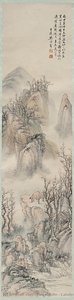
Quick Facts
- Artistic Movement Or Style: Chinese Painting
- Date Of Death: Living
- Full Name: Fan Haolin
- Notable Artworks:
- Landscape (1934)
- Calligraphy/Bamboo