- Home

- Oil Painting Reproduction
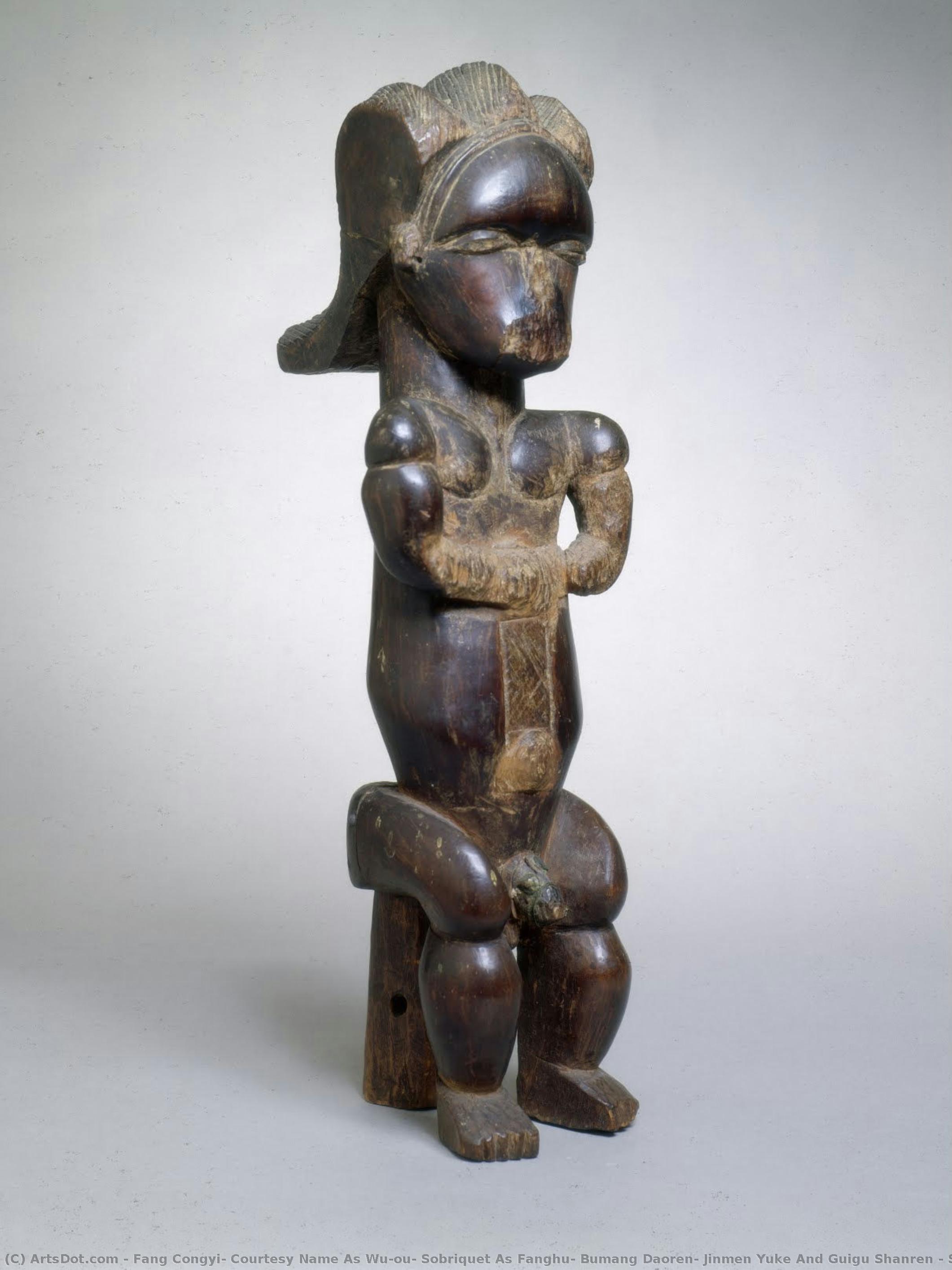
- Fang Congyi, Courtesy Name As Wu'ou, Sobriquet As Fanghu, Bumang Daoren, Jinmen Yuke And Guigu Shanren
 Preview
 Send
Send Share
Share
 Details

 Download
 Similars
 X-Ray
X-Ray Diaporama
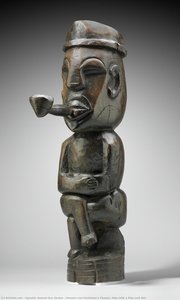
Seated Male Figure from a Reliquary Ensemble (Bieri)

 Read More
Hand Made Oil Reproduction
Hand-painted oil on canvas in your size and frame, made to order by our artists. ( Buy Print Buy Image)




































Pick from our preset sizes that match the artwork's original proportions.

You may enter your own dimensions to fit a specific frame or space. If your selected size does not match the original image's proportions, we will either crop the artwork or extend the painting with additional hand-painted elements. A digital mockup will be sent for your approval before production begins.
Please note that the on-screen preview does not reflect the actual cropping or extension. Only the mockup will accurately show the final composition.
While custom sizes are available, we recommend selecting a dimension from the predefined list to preserve the original proportions.
After order, ArtsDot.com team will email client for instructions and provide a mockup preview
Worldwide Delivery () in 3/4 weeks instead of standard 5 weeks. (1 September). No compromise on quality.

Free Worldwide Express Shipping

High-Quality Linen Canvas

Full Shipping Insurance

Customs Tax Refund Guarantee

True Color Matching Guarantee

60-Day Return Policy (Defects Only)

100% Money-Back Guarantee

Bulk Discount Offer
 Glass option is only available in size under 110 CM

Seated Male Figure from a Reliquary Ensemble (Bieri)
Reproduction Medium
Reproduction Size
-


Total Price
$ 263
Related Artworks





Artist Biography
The Enigmatic Journey of Bumang Daoren: A Life Woven in Ink and Spirit
The name Bumang Daoren – literally “Layman of the Wandering Clouds” – evokes a sense of profound detachment, a life deliberately distanced from the conventional currents of society. This is fitting for an artist whose work consistently grapples with themes of transience, spiritual seeking, and the inherent beauty found in imperfection. While biographical details remain frustratingly scarce, shrouded in intentional obscurity, Bumang Daoren emerged onto the art scene as a compelling figure in the mid-20th century, quickly gaining recognition not merely for his technical skill but for the deeply meditative quality of his paintings. He is known by several aliases – Fanghu, Jinmen Yuke, and Guigu Shanren among them – suggesting a deliberate cultivation of multiple personas, perhaps reflecting the multifaceted nature of his artistic exploration. Born in China (the exact year remains undocumented), Bumang Daoren’s early life appears to have been steeped in traditional Chinese culture, though details are elusive. It is believed he received rigorous training in calligraphy and landscape painting from an early age, a foundation that would become powerfully evident in his mature work. However, rather than adhering strictly to established conventions, he embarked on a path of self-discovery, blending classical techniques with a distinctly modern sensibility.A Synthesis of Tradition and Transcendence: The Evolution of a Style
Bumang Daoren’s artistic development wasn't a linear progression but rather a series of deliberate departures and re-engagements with the past. His early paintings, while demonstrating considerable technical proficiency in *shan shui* (mountain-water) painting, already hinted at a dissatisfaction with mere replication of nature. He began to subtly incorporate elements of abstraction, dissolving forms into atmospheric mists and emphasizing the expressive potential of ink wash. This period saw him experimenting with different brushstrokes, textures, and compositional approaches, seeking a visual language that could convey not just *what* he saw but *how* he felt. The influence of Chan (Zen) Buddhism is palpable in his work from this time onwards. He wasn’t interested in depicting idyllic landscapes for their aesthetic appeal alone; instead, he used the natural world as a vehicle for exploring themes of emptiness, impermanence, and enlightenment. Later works demonstrate an increasing willingness to embrace spontaneity and chance. He often employed unconventional tools – rags, sponges, even fallen leaves – alongside traditional brushes, allowing the ink to flow freely across the paper, creating unpredictable patterns and textures. This wasn’t a rejection of control but rather a surrender to it, a recognition that true beauty often emerges from unexpected sources.The Language of Ink: Key Themes and Techniques
Central to Bumang Daoren's artistic vision is the mastery of ink – not merely as a medium but as an expressive force in its own right. He understood the subtle nuances of ink wash, manipulating its density, viscosity, and flow to create a wide range of effects, from delicate washes that evoke ethereal mists to bold, dramatic strokes that suggest rugged mountain peaks. His palette is typically restrained, dominated by shades of black, gray, and white, with occasional touches of muted color. This limited palette forces the viewer to focus on the interplay of light and shadow, texture and form, and the expressive power of line. Recurring motifs in his work include solitary trees clinging to rocky cliffs, distant mountains shrouded in clouds, and flowing rivers that symbolize the passage of time. These images are not simply representations of nature but rather metaphors for the human condition – our struggles, aspirations, and ultimate connection to the universe. The concept of *wu wei* (non-action), a core principle of Taoism, is also deeply embedded in his work. He sought to create paintings that were effortless and natural, allowing the brushstrokes to flow freely from his inner spirit without conscious intervention.Historical Significance and Enduring Legacy
Bumang Daoren’s impact on contemporary Chinese painting is significant, though often understated. He resisted easy categorization, refusing to align himself with any particular school or movement. This independence allowed him to forge his own unique path, blending tradition and modernity in a way that resonated deeply with audiences seeking an alternative to the prevailing artistic trends of the time. His work challenged conventional notions of beauty, embracing imperfection and spontaneity as essential elements of artistic expression. He paved the way for a new generation of artists who were willing to experiment with different techniques and approaches, pushing the boundaries of traditional Chinese painting. While he remained largely reclusive throughout his life, preferring to live in relative isolation, his paintings have been exhibited internationally, gaining recognition from collectors and critics alike. Today, Bumang Daoren is celebrated as a master of ink wash painting, an artist whose work continues to inspire awe and contemplation. His legacy lies not just in the beauty of his individual paintings but also in his unwavering commitment to spiritual seeking and his profound understanding of the interconnectedness between art, nature, and the human spirit.- Influence on Modern Chinese Art: Bridged traditional techniques with modern abstraction.
- Zen Buddhist Philosophy: Incorporated themes of emptiness and impermanence into his landscapes.
- Mastery of Ink Wash: Elevated ink beyond a medium to an expressive force.