 Preview
 Send
Send Share
Share
 Details

 Download
 Similars
 X-Ray
X-Ray Diaporama
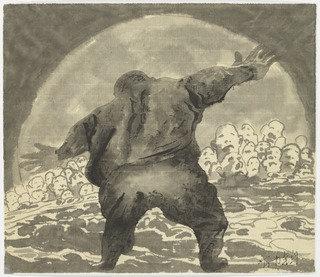
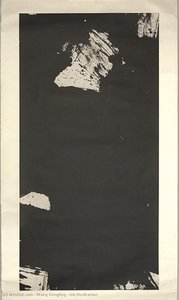
Ink and Wash Painting No. 25
 Contemporary Realism
 2004
2004 38.0 x 44.0 cm
 Read More
Giclée / Art Print
Museum-quality giclée or canvas print with fast production and flexible finish options. ( Buy Hand Made Painting Buy Image)




P118B $10

P118H $10

P118W $10

P438Z $10

P508JH $12

P508YH $12

P805H $10

P805Z $10

P919BZ $10

P919G $10

P919XJ $10

P959ZH $10

P968JZ $12

W106C $8

W218G $10

W218JH $8

W218Y $10

W307PJ $10

W316G $10

W316PJ $8

W316Y $10

W398PJ $8

W4111J $10

W500HY $15

W500JH $15

W692G $12

W849H $8

W940BG $15

W953PJ $8




Pick from our preset sizes that match the artwork's original proportions.

You may enter your own dimensions to fit a specific frame or space. If your selected size does not match the original image's proportions, we will either crop the artwork or extend the image with a mirrored or solid-fill edge. A digital mockup will be sent for your approval before production begins.
Please note that the on-screen preview does not reflect the actual cropping or extension. Only the mockup will accurately show the final composition.
While custom sizes are available, we recommend selecting a dimension from the predefined list to preserve the original proportions.
Worldwide Delivery () in 2 weeks instead of standard 4/5 weeks. (21 August)

Free Worldwide Express Shipping

High-Quality Linen Canvas

Full Shipping Insurance

Customs Tax Refund Guarantee

True Color Matching Guarantee

60-Day Return Policy (Defects Only)

100% Money-Back Guarantee

Bulk Discount Offer
 Glass option is only available in size under 110 CM

Ink and Wash Painting No. 25
Giclée / Art Print
Reproduction Size
-


Total Price
$ 63
Related Artworks
Artist Biography
Fang Lijun: A Voice of Disquiet in Contemporary China
Born in 1963 into a privileged background in Hebei province, Fang Lijun’s artistic journey is inextricably linked to the tumultuous shifts occurring within China during the 1990s. His early life, marked by access to education and cultural experiences, provided a stark contrast to the realities faced by many artists at the time – a period defined by economic hardship, political uncertainty, and the burgeoning cynicism that became known as “Cynical Realism.” This movement, of which Fang Lijun was a pivotal figure, sought to capture the disillusionment and anxieties simmering beneath the surface of rapidly modernizing China, rejecting idealized portrayals in favor of raw, often unsettling depictions of everyday life.
Fang’s artistic education began at a young age. Attending Children Cultural Place school exposed him to watercolors, oil paints, and ink – foundational tools that would later become central to his distinctive style. A pivotal encounter with Li Xianting, a prominent art critic, further shaped his perspective, introducing him to the critical discourse surrounding contemporary Chinese art. Despite initially pursuing ceramics at Hebei Light Industry Technology School, Fang’s passion lay firmly in oil painting, leading him to meticulously prepare for and ultimately succeed in gaining admission to the Central Academy of Fine Arts in Beijing – a significant achievement considering the competitive nature of the institution.
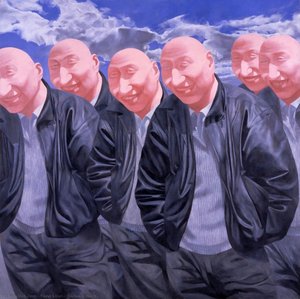
The early 1990s witnessed Fang’s relocation to Yuanmingyuan village, a haven for artists seeking creative freedom away from the constraints of state control. This period was characterized by immense challenges; artists like Fang Lijun struggled with limited resources and the constant pressure to sell their work simply to survive. Forced to paint for a living, he developed his signature style – most notably, his series of “bald heads.” These haunting portraits, often rendered in muted tones, became instantly recognizable symbols of Chinese society, representing not just physical appearance but also the perceived emptiness and vulnerability within individuals grappling with societal pressures and personal anxieties.
The Symbolism of Bald Heads
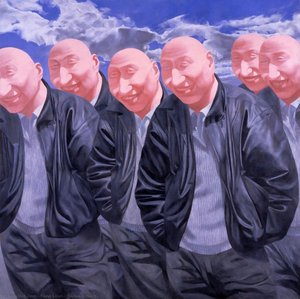
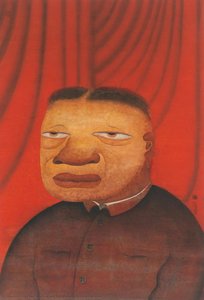
The "bald head" motif is arguably Fang Lijun’s most enduring contribution to contemporary art. Initially conceived as a commentary on traditional Chinese values – where a shaved head signified humility, poverty, or even madness – Fang subverted this symbolism by presenting these figures in both traditional and modern settings. He deliberately stripped them of their context, forcing viewers to confront the inherent ambiguity of identity and social status. The bald heads are not simply representations of individuals; they embody a broader critique of societal expectations, highlighting the pressures faced by those who deviate from established norms.
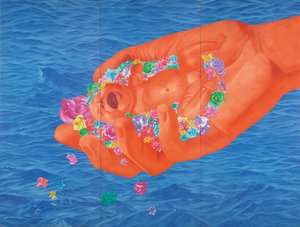
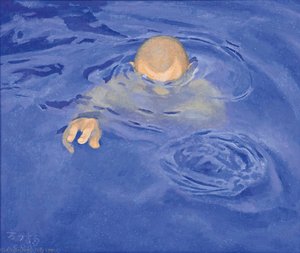
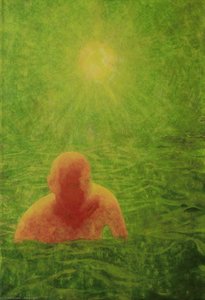
Beyond the bald heads themselves, Fang’s work is deeply infused with water imagery. He frequently depicts figures submerged in water – sometimes drowning, sometimes floating serenely – using it as a potent metaphor for life, death, and the overwhelming forces of society. As he himself explained, water represents both fluidity and constraint, mirroring his own artistic process and reflecting his observations about the complexities of Chinese culture. The recurring motif suggests a sense of being adrift, struggling to maintain one’s identity in an increasingly turbulent world.
Technique and Style
Fang Lijun's technique is characterized by a deliberate restraint and a masterful control of color and texture. He often employs monochromatic palettes – particularly shades of gray and brown – which contribute to the somber mood of his work. His brushwork is precise yet expressive, conveying both meticulous detail and a sense of underlying emotion. He frequently utilizes woodblock printing alongside oil painting, creating layered compositions that combine traditional techniques with contemporary sensibilities.
His early works were heavily influenced by Western art movements, particularly Expressionism, evident in the distorted figures and emotionally charged landscapes. However, Fang’s style evolved over time, incorporating elements of Chinese calligraphy and folk art while retaining a distinctly personal voice. The deliberate imperfections and subtle variations within his paintings reflect his belief that beauty can be found even in moments of vulnerability and uncertainty.
Recognition and Legacy
Despite facing considerable obstacles throughout his career, Fang Lijun’s work gained international recognition in the early 1990s, largely thanks to its inclusion in the “China Avant-Garde” exhibition in Berlin. This marked a crucial turning point, introducing his art to a wider Western audience and establishing him as one of the leading figures of Cynical Realism. Since then, Fang’s work has been exhibited extensively around the world, solidifying his place as a significant voice in contemporary Chinese art.
Fang Lijun continues to create new works, exploring themes of identity, memory, and social commentary. His enduring legacy lies not only in his distinctive visual style but also in his willingness to confront difficult truths about China’s past and present, offering a poignant reflection on the human condition within a rapidly changing world.
Fang Lijun
1963 -
Quick Facts
- Artistic Movement Or Style: Cynical Realism
- Artists Or Movements Influenced By This Artist: ['Cynical Realism']
- Artists Who Influenced This Artist: ['Li Xianting']
- Date Of Birth: 1963
- Full Name: Fang Lijun
- Nationality: Chinese
- Notable Artworks:
- 1996 No. 11 15
- Untitled
- 1997. 7
- Place Of Birth: Beijing, China
Related Articles
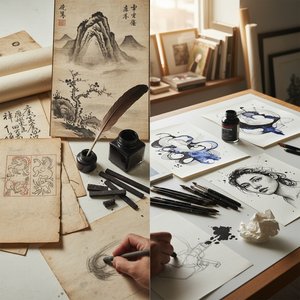
Ephemeral Expressions: Exploring the Nuances of Ink on Paper Through History & Contemporary Art
Explore the captivating world of ink wash painting – from its ancient origins to contemporary masters. Discover techniques, symbolism & conservation insights with ArtsDot.com.
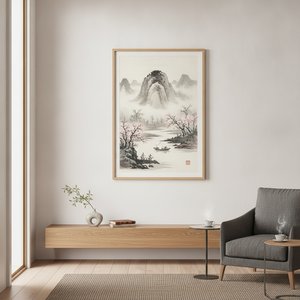
The Beauty of Ink Wash: Discover Serene & Soulful Art for Your Home
Discover the tranquil beauty of ink wash painting. Explore how Sumi-e and monochrome landscapes bring Zen-inspired serenity and soulful elegance to your home decor through expert curation and timeless East Asian aesthetics.
Xie Zhiliu: A Legacy of Ink Wash Painting & Modern Chinese Literati Tradition
Explore the legacy of Xie Zhiliu, a master of Chinese ink wash painting & prominent figure in modern art. Discover his techniques, influences, and contributions to literati tradition. A guide for discerning collectors.

Dark Masterpieces: 10 Iconic Paintings Dominated by Black Tones |
Explore 10 iconic paintings dominated by black tones, from Rembrandt’s chiaroscuro to Goya's dark expressions. Discover the stories behind these masterpieces & find museum-quality art reproductions for your home at .
Pu Xinyu's 'Puru': A Legacy of Literati Painting & Emotional Resonance
Explore the captivating world of Pu Xinyu (Puru), the last great literati painter. Discover his imperial heritage, masterful ink wash techniques & enduring legacy – a valuable addition to any discerning art collection.