

 Preview
 Send
Send Share
Share
 Details

 Download
 Similars
 X-Ray
X-Ray Diaporama
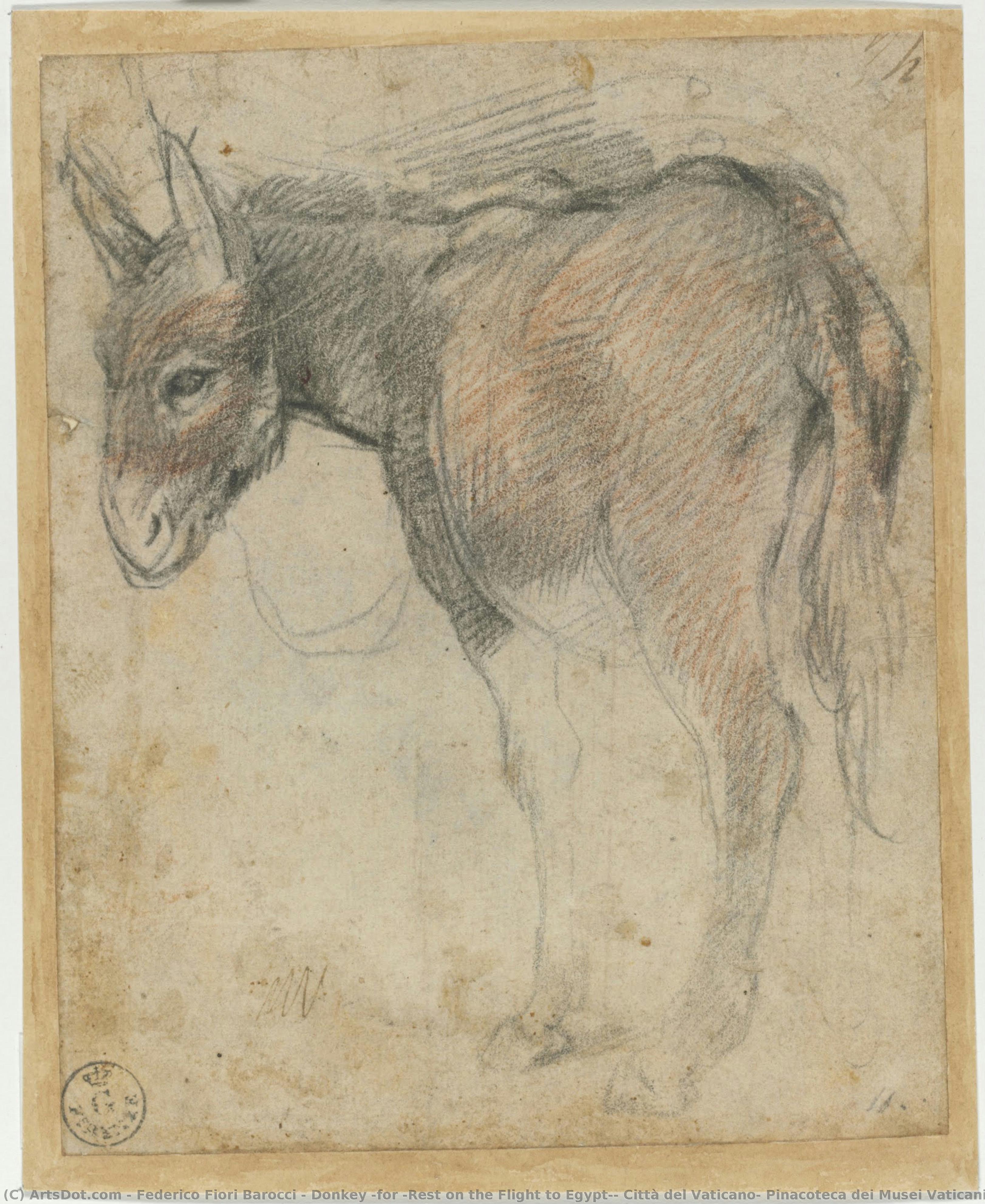
Donkey (for “Rest on the Flight to Egypt”, Città del Vaticano, Pinacoteca dei Musei Vaticani)
 Graphite Pencil
- Baroque
 1573
1573- Renaissance
 16.0 x 12.0 cm
 Galleria degli Uffizi
 Read More
Purchase a high-resolution, enhanced digital image, far superior to the online preview.
Each file is meticulously prepared by our in-house specialists using advanced tools and expert manual retouching. We ensure every image has exceptional clarity, precise color accuracy, and fine detail.
The final file is delivered via email within 72 hours, optimized for immediate use in professional, editorial, and print environments. This is the same quality trusted by top-tier design studios, publishers, and galleries.
Digital Image
Download a high-resolution file for personal display, printing, and creative projects. ( Buy Print Buy Hand Made Painting)
Included in Every Digital Image Order
Expert Digital Delivery, Guaranteed
When you choose ArtsDot.com, you're not just getting an image - you're receiving a professionally enhanced digital artwork, crafted with precision and backed by a satisfaction guarantee. Here's everything that comes with your order, automatically:

Fast Email Delivery
Your high-resolution digital image file will be emailed to you within 72 hours of ordering - ready for immediate use.

AI-Enhanced Digital File
Your artwork is professionally optimized using advanced AI tools and manual editing, ensuring maximum detail, clarity, and color accuracy.

Free Lifetime Re-Delivery
Accidentally deleted or lost your file? No worries - we'll resend it to you anytime, free of charge.

No Import Fees - Ever
Enjoy your artwork instantly with zero customs, duties, or delivery fees - digital downloads are always tax-free.

Color Accuracy Guarantee
We ensure your digital image reflects the original colors as closely as possible using professional tools and color management.

60-Day Satisfaction Guarantee
If you're not satisfied with your digital image, we'll revise it or refund 100% within 60 days - no questions asked.

100% Money-Back Guarantee
Not satisfied? Get a full refund within 60 days of receiving your digital file - no questions asked.

Bulk Order Discounts
Buy 3 images, save 10% - Buy 5, save 15% - Buy 10+, save 20%. Great for creative projects, galleries, and agencies.
Collectible Description
A Study in Quiet Devotion: The Donkey Sketch
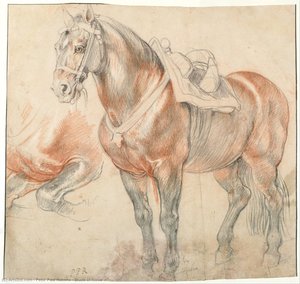
To gaze upon this pencil sketch of a donkey is to encounter a moment suspended in time—a quiet breath drawn from the grand narrative of religious art. Created by Federico Fiori Barocci in 1573, this piece transcends mere animal portraiture; it is an exercise in profound observation. The subject, rendered with meticulous care, commands attention through its sheer fidelity to life. It possesses a grounded stillness, suggesting not just the weight of an animal, but perhaps the quiet endurance of a journey itself. Barocci’s hand guides us into the texture of the creature's coat and the subtle musculature beneath, inviting contemplation on the nature of patience.
Mastery in Graphite: Technique and Realism
The technical brilliance displayed here is nothing short of remarkable. This work is a masterclass in dry media drawing, executed primarily with graphite pencil on paper. Barocci employs sophisticated techniques such as hatching and cross-hatching—the careful layering of parallel and intersecting lines—to build volume and achieve nuanced tonal variation. Observe how the artist manipulates pressure; some areas are lightly suggested, allowing the white of the paper to breathe, while others are densely shaded, creating deep pockets of shadow that give the donkey an almost palpable three-dimensionality. This commitment to realistic rendering places the sketch within a lineage of Renaissance anatomical study, yet it retains a unique intimacy.
Historical Echoes and Symbolic Weight
This drawing was created for the context of “Rest on the Flight to Egypt,” linking this seemingly simple study to one of the most significant narratives in Christian art. In that sacred journey, the donkey assumes symbolic weight—representing not only burden or transport, but also loyalty, steadfastness, and the humble strength required to endure hardship alongside divine purpose. For collectors and designers alike, owning such a piece connects them tangibly to the artistic currents of the late Renaissance, offering a sophisticated nod to devotional art without the overt drama of a fully painted altarpiece. It is history rendered in graphite whispers.
Bringing Quiet Strength Home
For those seeking an artwork that speaks volumes through its subtlety, this reproduction offers unparalleled depth. Its delicate scale (16 x 12 cm) makes it perfectly suited for intimate display—perhaps nestled on a scholar's desk, mounted within a gallery setting, or placed where quiet contemplation is encouraged. It does not shout for attention; rather, it invites the viewer to lean in, to study the precise curve of the ear and the gentle slope of the back. It is an object that rewards close looking, transforming a simple sketch into a profound meditation on endurance and grace.
Related Artworks

Artist Biography
Early Life and Training
- Born: Urbino, Italy (1535)
- Died: 1612
- Federico Fiori Barocci, an Italian Renaissance painter and printmaker, was born in 1535 in Urbino, Italy.
- His original name was Federico Fiori, and he was nicknamed "il Baroccio," which means a two-wheel cart drawn by oxen in northwestern Italian dialects.
- Barocci received his earliest apprenticeship with his father, Ambrogio Barocci, a sculptor of some local eminence.
- He was then apprenticed with the painter Battista Franco in Urbino. This training laid the foundation for his future success.
Artistic Career and Influences
- Barocci's work was highly esteemed and influential, foreshadowing the Baroque style of Peter Paul Rubens.
- He worked in the pre-eminent studio of Taddeo and Federico Zuccari in Rome, where he was exposed to various artistic influences.
- His first notable work was a "St. Margaret" executed for the confraternity of the Holy Sacrament.
- He was invited by Pope Pius IV to assist in the decoration of the Vatican Belvedere Palace at Rome, where he painted the Virgin Mary and infant, with several saints and a ceiling in fresco, representing the Annunciation.
- Barocci's style was characterized by a mix of Mannerism and Baroque elements.
Notable Works and Legacy
- Five Studies of Male Figure and two of His Right Hand and Arm (Uffizi Gallery, Florence, Italy) - A testament to Barocci’s skill in capturing the human form.
- Composition Study (for “Circumcision”, Paris, Musée du Louvre) – Demonstrates his ability to balance composition and emotion.
- Man’s Head (for “Calling of Saint Andrew”, Bruxelles, Musées Royaux des Beaux-Arts de Belgique) - Showcases Barocci's attention to detail and expression.
- The Nativity (1597 oil painting at the Prado).
- Madonna del Popolo (Uffizi Gallery, Florence, Italy).
- The Madonna of the Cat (La Madonna del Gatto)
- Annunciation (1582)
Artistic Impact and Followers
- Barocci's influence can be seen in the work of various artists, including Peter Paul Rubens, who was inspired by Barocci’s dramatic and emotive brushwork.
- His legacy continues to be celebrated through his numerous works, now housed in museums such as the Uffizi Gallery (Florence, Italy) and the Musée du Louvre (Paris, France).
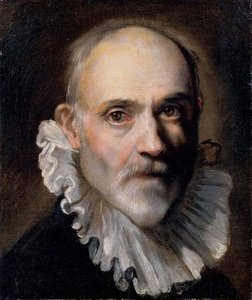
Federico Fiori Barocci
1535 - 1612 , Italy
Quick Facts
- Artistic Movement Or Style: Renaissance, Baroque
- Artists Or Movements Influenced By This Artist: ['Peter Paul Rubens']
- Artists Who Influenced This Artist: ['Battista Franco']
- Date Of Birth: 1535
- Date Of Death: 1612
- Full Name: Federico Fiori Barocci
- Nationality: Italian
- Notable Artworks:
- The Nativity
- Madonna del Popolo
- Annunciation
- Stigmatization of Saint Francis
- Rest on the Flight to Egypt
- Place Of Birth: Urbino, Italy

