 Preview
 Send
Send Share
Share
 Details

 Download
 Similars
 X-Ray
X-Ray Diaporama
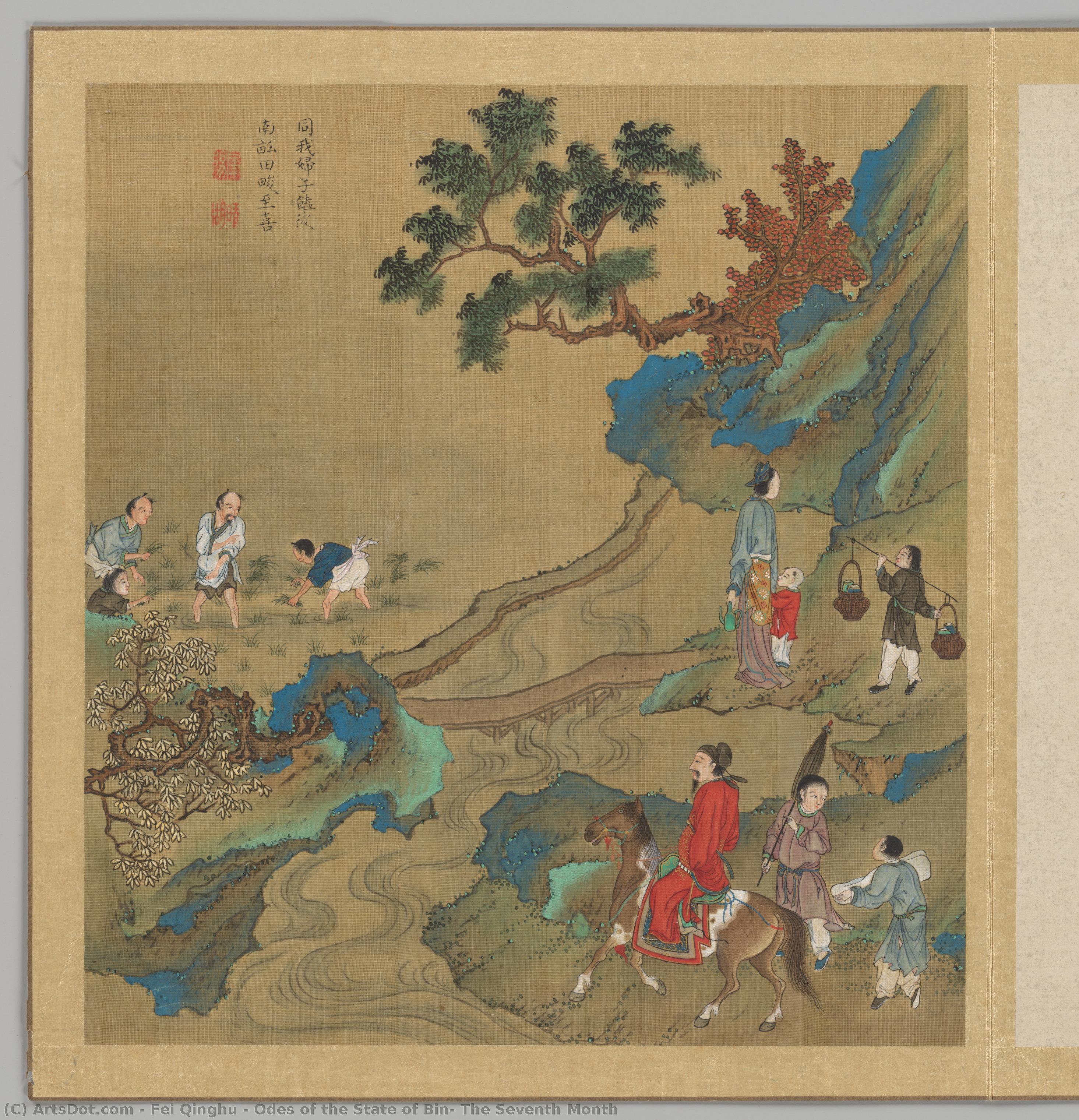
Odes of the State of Bin: The Seventh Month
 801
801 30.0cm x 27.0cm
 Read More
Giclée / Art Print
Museum-quality giclée or canvas print with fast production and flexible finish options. ( Buy Hand Made Painting Buy Image)




































Pick from our preset sizes that match the artwork's original proportions.

You may enter your own dimensions to fit a specific frame or space. If your selected size does not match the original image's proportions, we will either crop the artwork or extend the image with a mirrored or solid-fill edge. A digital mockup will be sent for your approval before production begins.
Please note that the on-screen preview does not reflect the actual cropping or extension. Only the mockup will accurately show the final composition.
While custom sizes are available, we recommend selecting a dimension from the predefined list to preserve the original proportions.
Worldwide Delivery () in 2 weeks instead of standard 4/5 weeks. (2 September)

Free Worldwide Express Shipping

High-Quality Linen Canvas

Full Shipping Insurance

Customs Tax Refund Guarantee

True Color Matching Guarantee

60-Day Return Policy (Defects Only)

100% Money-Back Guarantee

Bulk Discount Offer
 Glass option is only available in size under 110 CM

Odes of the State of Bin: The Seventh Month
Giclée / Art Print
Reproduction Size
-


Total Price
$ 63
Introduction to Fei Qinghu and Bunjinga Art Movement
Fei Qinghu was a Chinese painter who lived during the Tang Dynasty (618-907). He is known for his album of twenty scenes depicting moments from “In the Seventh Month,” a lengthy poem about the yearly agricultural cycle taken from China’s most ancient poetry collection, the Book of Odes (Shijing 詩經). The painting 'Odes of the State of Bin: The Seventh Month' is an excellent example of Bunjinga art movement.Bunjinga Art Movement
Bunjinga, also known as literati painting or Nanga, is a style of Japanese painting that emerged during the Edo period (1603-1868). It was heavily influenced by Chinese literati painting and calligraphy, which emphasized individual expression and personal interpretation over technical skill. The Bunjinga Art Movement gained popularity among Japanese intellectuals and artists during the Edo period as it offered an alternative to more rigid styles of traditional Japanese painting.The Painting 'Odes of the State of Bin: The Seventh Month'
The painting 'Odes of the State of Bin: The Seventh Month' by Fei Qinghu is a 30.5cm x 27.3cm silk painting created in 801. It depicts moments from “In the Seventh Month,” a lengthy poem about the yearly agricultural cycle taken from China’s most ancient poetry collection, the Book of Odes (Shijing 詩經). The artist used the bright blue-green mineral palette associated in Chinese painting with antiquity to create scenes of human labor in tune with the land: the reaping of crops in summer; the harvesting of ice in the winter; the performance of ritual offerings in the spring.Conclusion
The painting 'Odes of the State of Bin: The Seventh Month' by Fei Qinghu is an excellent example of Bunjinga art movement, which emphasized individual expression and personal interpretation over technical skill. It reflects cultural changes and artistic movements during the Edo period in Japan and offers a glimpse into this unique and expressive art movement. Fei Qinghu:Odes of the State of Bin: The Seventh Month (30.5cm x 27.3cm,Silk,)More details about Bunjinga Art Movement can be found here.
Related Artworks









Artist Biography
Fei Zhaoyang: Echoes of the Past in Imperial Landscapes
The world of 18th-century Chinese painting is a rich tapestry woven with threads of tradition, philosophical contemplation, and exquisite craftsmanship. Within this vibrant landscape emerges Fei Zhaoyang – more commonly known as Fei Qinghu – a master whose work offers a poignant glimpse into the era’s artistic sensibilities and cultural values. Though biographical details surrounding his life remain somewhat elusive, his enduring legacy rests primarily on his stunning album of twenty leaves, “Odes of the State of Bin: The Seventh Month,” currently housed at The Metropolitan Museum of Art in New York City. This remarkable piece serves as a window into his artistic vision and provides invaluable insight into the broader context of Chinese art during the late Qing Dynasty.
Fei Zhaoyang’s work is inextricably linked to the tradition of *shanshui* painting – landscape art – which had evolved significantly over centuries. However, unlike many of his contemporaries who focused solely on capturing the grandeur and sublime beauty of nature, Fei Qinghu sought to imbue his landscapes with a deeper symbolic resonance. His paintings aren’t merely representations of scenery; they are visual narratives that draw upon classical poetry, particularly the “Odes,” offering a meditative exploration of human existence within the cyclical rhythms of the seasons. This approach aligns him closely with the artistic ideals of the literati – scholar-officials – who dominated Chinese painting during this period, valuing intellectualism and philosophical reflection alongside technical skill.
The "Odes of the State of Bin" Album: A Visual Poem
“Odes of the State of Bin: The Seventh Month” is a remarkable achievement in album painting. These twenty leaves depict scenes from the poem, each meticulously rendered with a delicate balance of ink and color. The palette is notably restrained, dominated by shades of blue-green – a deliberate choice that evokes the antiquity and timelessness associated with traditional Chinese art. This use of *qing*, or ‘blue-green,’ was not merely aesthetic; it signified an engagement with the past, referencing earlier artistic styles and embodying a reverence for tradition.
The scenes themselves are deceptively simple yet profoundly evocative. They capture moments of rural life – harvesting crops in summer, gathering ice in winter, performing ritual offerings to deities – all interwoven with references to the poem’s themes of agricultural cycles, social harmony, and the interconnectedness of humanity and nature. Each leaf is a miniature tableau, carefully composed to convey not just visual information but also emotional resonance. The artist's signature, often found within the compositions, adds another layer of intrigue, suggesting a personal connection to the subject matter.
Technique and Influences
Fei Qinghu’s technique demonstrates a mastery of traditional Chinese painting methods. His brushwork is fluid and expressive, conveying both precision and spontaneity. He skillfully employed *shidu* – a wet-brush technique – to create subtle gradations of tone and texture, lending depth and luminosity to his landscapes. The composition of each leaf is carefully balanced, utilizing the principles of asymmetry and negative space to achieve visual harmony.
While Fei Zhaoyang’s work is firmly rooted in tradition, it also reveals influences from earlier artistic movements. His emphasis on literary themes echoes the court painters of the Yuan Dynasty (1271–1368), who frequently incorporated poetry and calligraphy into their paintings. Furthermore, his restrained palette and focus on everyday scenes align with the aesthetic preferences of the Ming Dynasty (1368–1644), particularly during the reign of the Yongle Emperor, when landscape painting reached new heights of sophistication.
Historical Significance and Legacy
Fei Zhaoyang’s “Odes of the State of Bin: The Seventh Month” is more than just a beautiful artwork; it's a cultural artifact that offers valuable insights into the intellectual and artistic climate of late 18th-century China. His work exemplifies the literati’s desire to synthesize art, literature, and philosophy, creating paintings that are both visually stunning and intellectually stimulating. Despite the scarcity of biographical information, Fei Qinghu remains an important figure in Chinese art history, a testament to the enduring power of tradition and the profound beauty of landscape painting.
His legacy continues to resonate today, inspiring artists and scholars alike to explore the rich cultural heritage of China. The Metropolitan Museum’s acquisition of this album underscores its significance as a national treasure and ensures that Fei Zhaoyang's artistic vision will be appreciated for generations to come.
fei zhaoyang
China
Quick Facts
- Artistic Movement Or Style: Late 18th-century Chinese painting
- Full Name: Fei Zhaoyang / Fei Qinghu
- Nationality: Chinese
- Notable Artworks: ['Odes of the State of Bin: The Seventh Month']
- Place Of Birth: China