

 Preview
 Send
Send Share
Share
 Details

 Download
 Similars
 X-Ray
X-Ray Diaporama
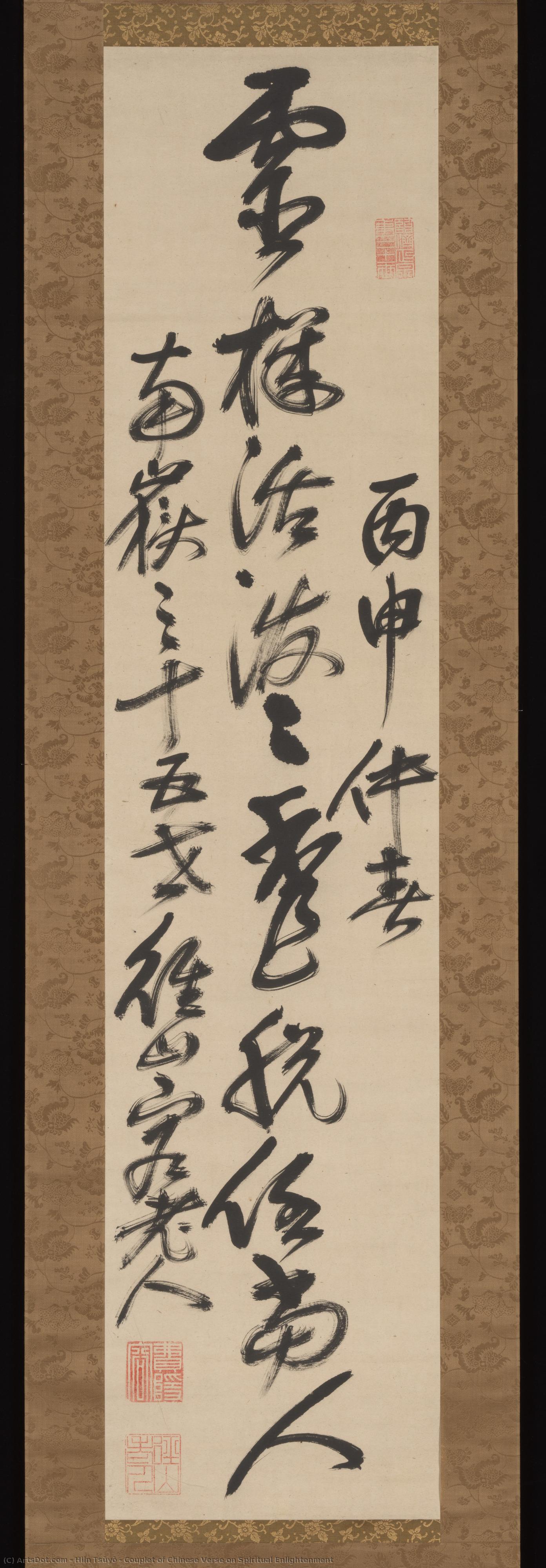
Couplet of Chinese Verse on Spiritual Enlightenment
 1656
1656 127.0 x 29.0 cm
 Read More
Purchase a high-resolution, enhanced digital image, far superior to the online preview.
Each file is meticulously prepared by our in-house specialists using advanced tools and expert manual retouching. We ensure every image has exceptional clarity, precise color accuracy, and fine detail.
The final file is delivered via email within 72 hours, optimized for immediate use in professional, editorial, and print environments. This is the same quality trusted by top-tier design studios, publishers, and galleries.
Digital Image
Download a high-resolution file for personal display, printing, and creative projects. ( Buy Print Buy Hand Made Painting)
Included in Every Digital Image Order
Expert Digital Delivery, Guaranteed
When you choose ArtsDot.com, you're not just getting an image - you're receiving a professionally enhanced digital artwork, crafted with precision and backed by a satisfaction guarantee. Here's everything that comes with your order, automatically:

Fast Email Delivery
Your high-resolution digital image file will be emailed to you within 72 hours of ordering - ready for immediate use.

AI-Enhanced Digital File
Your artwork is professionally optimized using advanced AI tools and manual editing, ensuring maximum detail, clarity, and color accuracy.

Free Lifetime Re-Delivery
Accidentally deleted or lost your file? No worries - we'll resend it to you anytime, free of charge.

No Import Fees - Ever
Enjoy your artwork instantly with zero customs, duties, or delivery fees - digital downloads are always tax-free.

Color Accuracy Guarantee
We ensure your digital image reflects the original colors as closely as possible using professional tools and color management.

60-Day Satisfaction Guarantee
If you're not satisfied with your digital image, we'll revise it or refund 100% within 60 days - no questions asked.

100% Money-Back Guarantee
Not satisfied? Get a full refund within 60 days of receiving your digital file - no questions asked.

Bulk Order Discounts
Buy 3 images, save 10% - Buy 5, save 15% - Buy 10+, save 20%. Great for creative projects, galleries, and agencies.
Related Artworks










Artist Biography
Giuseppe Arcimboldo: The Master of Impossibility
Born in Milan in 1527, Giuseppe Arcimboldo wasn’t simply a painter; he was a visual architect of the imagination. His life and career unfolded during a period of immense artistic transition – the waning years of the Renaissance and the burgeoning arrival of Baroque style – and his unique approach to portraiture defied convention, establishing him as one of the most singular figures in Italian art history. Arcimboldo’s legacy rests not on grand historical narratives or religious commissions, but on an astonishing ability to transform everyday objects—fruits, vegetables, flowers, books, even musical instruments—into remarkably lifelike and captivating human faces. These weren't mere still lifes; they were elaborate, theatrical representations of individuals, often dignitaries and nobility, demanding a level of visual ingenuity rarely seen before or since.
His early training began under his father, Biagio Gentileschi, a painter for the Milanese Duomo. This foundation in stained glass design proved crucial, as it instilled within him an understanding of composition, color theory, and the meticulous detail required to create intricate visual narratives. Arcimboldo’s career initially focused on decorative arts – he designed elaborate window panels for churches and palaces – but his ambition quickly outgrew these commissions. He sought opportunities that allowed him to fully explore his inventive spirit, leading him to serve various patrons throughout Italy, including the powerful Duke Federico II of Mantua and later, Charles I of England.
The Art of Assemblage: Technique and Symbolism
Arcimboldo’s technique was deceptively simple in its execution, yet profoundly complex in its realization. He began with a traditional portrait sketch, meticulously planning the arrangement of his chosen objects. Then, using oil paints on wood panels, he built up layers of color and texture to mimic the appearance of natural materials – the smooth skin of fruit, the rough bark of branches, the delicate petals of flowers. Crucially, he didn’t merely *place* these elements; he integrated them seamlessly, creating a unified whole that resembled a living face. The depth of field was carefully considered, with objects placed closer to the viewer appearing larger and more prominent, while those further back receded into the background.
Beyond the technical mastery, Arcimboldo’s work is laden with symbolism. Each assemblage carried multiple layers of meaning, often reflecting the personality or role of the subject. For example, a portrait composed entirely of books might signify erudition and intellectual pursuits, while an arrangement of musical instruments could represent a musician's dedication to his craft. The use of seasonal elements—fruits in winter, flowers in spring—also held symbolic weight, referencing cycles of life, death, and rebirth. His portraits were not simply likenesses; they were carefully constructed statements about the individual’s character and status.
Notable Works and Influences
Arcimboldo's most famous works include his elaborate courtly portraits for Charles I, such as “Vertumnus” (1600) and “Diana,” which showcase his mastery of creating believable faces from seemingly disparate objects. The "Winter Trionfo" (1563), a monumental altarpiece commissioned by the Duke of Mantua, is another prime example of his inventive spirit, depicting allegorical figures representing the seasons arranged within a single, unified composition. His later works, particularly those created during his time in England, demonstrate a shift towards greater abstraction and a more playful use of materials – he even incorporated severed heads into some portraits, a shocking display for the period.
Arcimboldo’s work was influenced by several sources. The Renaissance tradition of *tronie* paintings—genre scenes depicting solitary figures in various poses—provided a foundation for his portraiture. He also drew inspiration from still life painting, particularly the works of Pieter Claesz and Ambrosius Bosschaert, who skillfully rendered the textures and colors of fruits and flowers. However, Arcimboldo’s genius lay in his ability to synthesize these influences into something entirely new – a unique visual language that challenged conventional notions of portraiture and captivated audiences with its imaginative power.
Legacy and Historical Significance
Giuseppe Arcimboldo died in 1593, leaving behind a body of work that continues to fascinate and inspire. His innovative approach to portraiture paved the way for later artists who explored themes of illusion and transformation, including René Magritte and Salvador Dalí. Arcimboldo’s portraits are not merely decorative; they are profound meditations on identity, perception, and the relationship between art and reality. He demonstrated that a single object could hold an entire world of meaning, transforming the humble into the extraordinary and solidifying his place as one of the most inventive and enduring figures in the history of Western art.
feiyin tongrong
1593 - 1661 , China
Quick Facts
- Artistic Movement Or Style: Baroque
- Artists Or Movements Influenced By This Artist: ['Italian Renaissance']
- Artists Who Influenced This Artist: ['Caravaggio']
- Date Of Birth: 1527-04-05
- Date Of Death: 1593-07-11
- Full Name: Giuseppe Arcimboldo
- Nationality: Italian
- Notable Artworks:
- Susanna and Elders
- Winter Garden
- Monarchs
- Place Of Birth: Milan, Italy

